高二英语上学期上册试题
Would it surprise you to learn that, like animals, trees communicate with each other and pass on their wealth to the next generation?
UBC Professor Simard explains how trees are much more complex than most of us ever imagined. Although Charles Darwin thought that trees are competing for survival of the fittest, Simard shows just how wrong he was. In fact, the opposite is true: trees survive through their co-operation and support, passing around necessary nutrition “depending on who needs it”.
Nitrogen(氮) and carbon are shared through miles of underground fungi(真菌)networks, making sure that all trees in the forest ecological system give and receive just the right amount to keep them all healthy. This hidden system works in a very similar way to the networks of neurons(神经元)in our brains, and when one tree is destroyed, it affects all.
Simard talks about “mother trees”, usually the largest and oldest plants on which all other trees depend. She explains how dying trees pass on the wealth to the next generation, transporting important minerals to young trees so they may continue to grow. When humans cut down “mother trees” with no awareness of these highly complex “tree societies” or the networks on which they feed, we are reducing the chances of survival for the entire forest.
“We didn't take any notice of it.” Simard says sadly . “Dying trees move nutrition into the young trees before dying, but we never give them a chance.” If we could put across the message to the forestry industry, we could make a huge difference towards our environmental protection efforts for the future.
29. What would be the best title for the passage?
A. Old Trees Communicate Like Humans
B. Young Trees Are In Need Of Protection
C. Trees Are More Complex Than You Think
D. Trees Contribute To Our Society
30. In Simard's opinion, trees _______ .
A. depend on each other B. protect their own wealth
C. compete for survival D. provide support for dying trees
31. We can learn from the passage that
A. “mother trees” are usually of no use to other trees.
B. Charles Darwin had the same thought as Simard.
C. people know much about the complex “tree societies”.
D. if “mother trees” are cut down, the survival for the entire forest will be affected.
32. The underlined word “it” in the last paragraph refers to .
A. how trees grow old B. how “tree societies” work
C. how forestry industry develops D. how young trees survive
Thomas Edison was one of ten said to be the greatest genius(天才) of his age. There are only a few men in all of the history, who have changed the lives of other men as much as the inventor of the first useful electric light. But Edison could never be happy only because someone said he was a genius. “There is no such thing as genius,” Edison said. He said that what people called genius was mostly hard work.
But Edison was a dreamer as well as a worker. From his earliest days as a child he wondered about the secrets of nature. Nature, he often said, is full of secrets. He tried to understand them; then, he tried to learn what could usefully be done with them.
Edison enjoyed thinking. He knew that most people will do almost anything instead of the difficult work of thinking, especially if they do not think very often. But he knew, too, that thinking can give men enjoyment and pleasure.
Edison could not understand how anyone could be uninterested in life. As he loved to think, he also loved to work. On the day he became 75 years old, someone asked him what ideas he had about life. “Work,” he answered. “Discovering the secrets of nature and using them to make men happier.” He said he had enough inventions in his mind to give him another 100 years of work.
9. Edison thought ____________.
A. he could be happy if he was a genius
B. genius plays the most important part in one’s success
C. hard work could do better than genius
D. genius could do better than hard work
10. In Edison’s opinion, ____________.
A. thinking can supply people with enjoyment and pleasure as well as help
B. people’s success lies mostly in genius
C. hard work is the second important thing in making people successful
D. there are few secrets for him to discover later
11. The last sentence in the passage most probably implies(暗示) ____________.
A. life is too short for Edison to invent more for human beings
B. Edison made 100 inventions in his life
C. Edison was able to live and work for 100 years
D. People of his time were ready to give Edison another 100 years’ work
What she is addicted ________ her feel better temporarily and reduces the pain of separation.
| A.to making | B.makes | C.to makes | D.to make |
Winter city breaks in Europe: readers' tips
 Snow and ice is a strong characteristic in our readers' winter break tips, but it's not a complete white-out; your body temperature will be lifted by gingerbread and chestnuts everywhere.
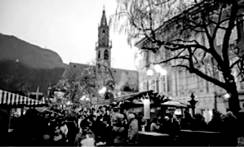
Winning tip: Bolzano, Italy
The buildings are as gothic and spiky as anything across the Austrian border in this 25% German-speaking town, the largest in South Tirol. It's known as the Christmas Capital of Italy: it's snowy in winter, and the Germanic influence means there are Christmas markets and gingerbread everywhere. And there are other wintry things on offer if the markets and mulled wine aren't enough, including several cable cars running into the hills, taking you up to walks in the Renon hills (also known as the Ritten) and views of the Dolomites and the world-famous Ötzi the Iceman, sealed (密封) in ice in about 3,300BC, discovered in 1991 and on show in the South Tyrol Museum of Archaeology.
Ice skating in Red Square, Moscow
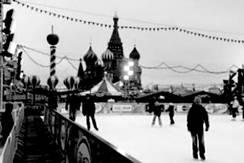
There's nothing quite like celebrating Christmas in a country that once banned it. New Year is Russia's biggest holiday, but you don't have to wait until 31 December to go ice skating in Red Square. The famous skating spot is open from November 30 until March 9—and return flights from Gatwick to Moscow with EasyJet cost little more than £100 at present. After your festive skate, warm up with a hot chocolate and a walk around GUM: once a state department store, now home to popular stores and cafes.
21.Where is Ötzi the Iceman?
A.On a hill.
B.In a museum.
C.On a square.
D.In a department store.
22.What is typical of Russian celebration of New Year?
A.Christmas markets.
B.Mulled wine.
C.Walks in the hills.
D.Ice skating.
23.In which section can you read this text?
A.Environment.
B.Business.
C.Travel.
D.Lifestyle.
A Book Review—The Snake-Stone by Berlie Doherty
The setting: Urban England (the cities), but also rural England (the countryside) including remote English villages.
The theme: The main theme is a teenage search of self-discovery, in this case the search for a mother from whom the hero was separated at an early age. Its other concerns are love, getting on with others, being persistent (不屈不挠的)and courageous and trying to deal with doubts, troubles and worries. As the book moves to a close, James’ swimming coach says to him: “You are not like a kid obeying instructions any more. You are diving like a young man who knows where he is going.”
The characters: James is the hero of the story. He is a championship diver, and has a comfortable life with his foster parents (养父母). Yet he also has the qualities to take him on a long journey to find his birth mother. The other characters in The Snake-Stone, James’ parents, his diving instructor, best friend, the villagers, people he meets on his journey, are pictured realistically.
The turning point: The turning point in the story comes while James’ foster parents are away in London, and he wonders about the identity of his birth mother. The only clue he has is a fossil, “the snake stone” which she left behind along with a note on which she had written: “Take good care of Sammie. It was written on a torn envelope with parts of an address still there.
The journey: Instead of going to London, James decides to find his birth mother. With help from his geography teacher, James sets out for the remote country village where his mother might be found. James has painful, challenging, but also humorous and happy travels. The mother he finally meets, Anne, has a minor yet powerful voice in the novel. He comes to understand why she left him at a stranger’s door fifteen years before. Although the meeting is not long, it leaves him with a feeling of completeness. As a journey of self-discovery The Snake-Stone also provides its readers with a happy ending. Its hero says, on returning to his foster parents, “I was home.”
46. What is the main theme of the novel?
A. Life with foster parents. B. Life in the world of diving.
C. A journey of self-discovery. D. A travel around the country.
47. What do the coach’s words in Paragraph 2 suggest?
A James is a successful diver. B. James is a hopeful swimmer.
C. James is an outgoing young man. D. James is an independent young man.
48. The snake stone in the novel is .
A. a stone with an address on it B. a clue left by the birth mother
C. a gift from the swimming coach D. a fossil left by the foster parents
49. Which of the following is true about the novel?
A. The story has a sad ending. B. The story takes place in the city of London.
C. The characters are vividly described. D. The turning point comes after the hero meets his birth mother.
50. It can be concluded that James’ journey is _________.
A. worthwhile B. boring
C. comfortable D. disappointing
Long ago there was a poor farmer called Fred. Fred and his wife Doris lived __61 (happy) together in their small old house. One winter night, the Luck Fairy visited __62
“Fred, you’re a good farmer. I’d like to give you a wish,” said the Luck Fairy.
“A wish?” said Fred.
Fred and Doris smiled __63 each other. Then Fred said, “Thank you, Luck Fairy. We’re very healthy and happy.”
“You work very hard __64 you make very little money. Would you like some gol d coins?” asked the Luck Fairy.
“We’re poor, but we have enough food __65 (eat).” replied Fred.
“You can use the gold coin to buy__66 clothes. The winter here is very cold,” said Luck Fairy.
“___67 we haven’t got many clothes, we’ve got enough.” said Doris.
“Well, what about 68 _ nice new house?” asked Luck Fairy.
“Thank you, but I love my small old house very much. I__69 (live) here since I was born. We don’t need a new house,” said Fred.
“You’re quite different__70 others. I like you very much,” said the Luck Fairy. “I wish you happy forever.” Then the Luck Fairy disappeared and never came back.
下面短文共有10处语言错误,每句话最多有两处,每处错误仅涉及一个单词的增加、删减或修改。
增加:在缺词处加漏词附(∧),并在下面写上该加的词;
删除:把多余的词用斜线(\)划掉;
修改:在错词下面划一横线,并在该词下面写出修改后的词。
Students today should do more reading. Indeed, the importance of reading can never be very stressed. First of all, reading, especial out-of-class reading, enrich our mind and broadens our horizons. Through reading, we learn what can’t be learnt in our classrooms. Beside, reading is also a way of relaxation. This is very refreshing to read a story before going to bed, or after a day of the study. There were many famous sayings about reading, like “Reading is to the mind that exercise is to the body.” Then how can we develop the habit of reading? In the first place, I believe we should start from an early age, then stick on it and never give up. Secondly, we should read what we are interested and also what is proper for us.
51.White has been always a ______(象征) of purity in Western cultures.
52.Lucy won a ______ ( 奖学金) to study at Oxford. .
53.Colors like red ______ (传达 ) a sense of energy and strength.
54.At school the other children always ____ ( 取笑, 逗弄 ) me because I was fat.
55.Mr. Li is a heavy smoker, that is, he is ______ ( 上瘾 ) to smoking.
56.His problem is not physical but _________. ( 精神的).
57.I ______ (比较) the copy with the original, but there wasn’t much difference.
58.Nobody knows how this world came into _________ ( 存在 ).
59.More help in the office would ___________( 减轻) me from some of this responsibility.
60.Some books are to be tasted, others to be ___________( 吞咽), and some few to be chewed and digested.
You may be able to_____ photography later if you’re interested.
A. turn on B. insist on C. take on D. concentrate on
Beijing’s markets will soon be flooded with more and cheaper colorful fruit such as orange, mangos and green durian(榴莲)all year round.
Thanks to a new free trade agreement signed last Monday between China and the Association of Southeast Asian Nations(ASEAN),more and more tropical Southeast Asian fruit will enter the country.
The agreement means that from July 1,2005, China and ASEAN countries will begin to cut tariffs. There are about 7,000 products included in the cuts. As global communication develops, countries are trading more and more goods with each other. When products are sold across national borders, countries put a tax on them. This type of tax is called a tariff. Just like removing an obstacle from the path of these goods, the reduction of tariffs will encourage trade between China and ASEAN countries. It means more products and lower prices.
The agreement will bring real benefits for Chinese customers, said a Chinese Foreign Ministry spokesman. “In the Beijing markets you will easily find more tropical fruit like durian, which used to very, very, very expensive. Now they will be cheaper.” The current tariff rate on durian is 22 per cent but will fall to zero in 2005.
In the first 10 months of this year China did US$84.6 billion of trade with ASEAN countries. Experts believe this may reach US$100 billion next year. Founded in 1967, ASEAN now includes Indonesia, Malaysia, Singapore, the Philippines, Thailand, Brunei, Vie t Nam, Myanmar, Cambodia and Laos.
29.A tariff is money paid ________ .
A.when buying goods
B.to sell or buy products of foreign brand names
C.to sell or buy goods across the border of the country
D.to go through the customs
30.Which of the following statements about the agreement is NOT true?
A.It will result in an increase in trade between China and ASEAN countries.
B.In might cause the prices of ASEAN products to fall.
C.It may greatly benefit the Chinese customers.
D.It won’t bring any benefits to producers of ASEAN countries.
31.We can infer from the story that ________ .
A.China lacks fruit
B.tariffs are an important factor in foreign trade
C.tropical countries have cheaper fruit
D.China prefers to trade with ASEAN countries
—Did you hear Tom was criticized for his spelling mistakes in his English composition?
—Yes, but a more careful person ______ so many mistakes.
A. wouldn’t make B. needn’t have made
C. shouldn’t make D. wouldn’t have made
Light for the City
Edison and his assistants came to New York to set up an electric power system. They hoped it would provide enough electricity to light up a part of the great city.
They bought several machines with them. These were called generator(发电机), which produced electricity power for lamps in Edison’s building.
Soon there were lights for the building. Edison lived in a room facing the street and he often worked over night. The light burned brightly and steadily and he often worked over night. People often came and stopped their horse-drawn carriage to look. Everyone knew that Thomas Edison was in town.
First, the inventor and his assistants produced several large generators. A great deal of power would be needed to light up even a small part of the city.
Then the workers were busy digging deep trenches(深沟) in the hard earth below the city streets, and Edison had fourteen miles of wire laid into the trenches. The wire connected each building to a generator.
Setting up an electric power system was not an easy job. It took a year and a half. In September, 1882, the job was finished.
A small group of men stood around Edison inside the power house. The big moment came at last. The inventor, taking a deep breath, pulled a switch. The electric lights flashed up.
“Very good! Very good!” a man nearby shouted to praise Edison for what he had done.
“Sir,” said Edison, “this is only the beginning!” And Edison was right. Soon Edison’s lamp were lighting up cities all over the world.
11. The generators they brought with them could produce as much as electricity as
______ needed.
A. Edison’s building B. a small part of the city C. the whole city D. the world
12. At that time carriages ______ by horse could be seen in the street.
A. draw B. drew C. drawn D. drawing
13. Trenches were dug to ______.
A. set up generators B. lay wires C. built city streets D. build a power house
14. It took a year and a half to ______.
A. set up the electric system B. produce several large generators
C. dig the deep trenches D. lay fourteen miles of wire into the trench
15. Edison took a deep breath before pulling a switch, which showed that he was ______.
A. excited B. frightened C. uneasy D. light-hearted
假设你是晨光中学的高二1班学生李华。你校拟选拔一些优秀学生,利用暑假到晨曦希望小学Chenxi Hope School为学生辅导英语。你希望参加此活动。请根据一下提示,用英语给校评选组写一封申请信:
1. 对此活动的认识(如对本人、学生及社会的益处等)
2. 个人优势(如性格、独立生活能力、语言能力等)
【写作要求】120词左右
【评分标准】句子结构准确,信息内容完整,篇章结构连贯。
Edward Wilson is America's, if not the world's, leading naturalist. In The Future of Life, he takes us on a tour of the world's natural resources. How are they used? What has been lost? What remains and is it able to continue with the present speed of use? Wilson also points out the need to understand fully the biodiversity(生物多样性)of our earth.
Wilson begins with an open letter to the pioneer in environment protection, Henry David Thoreau. He compares today's Walden Pond with that of Thoreau's day. Wilson will use such comparisons for the rest of the book. The problem is clear: man has done great damage to his home over the years. Can the earth, with human help, be made to return to biodiversity levels that will be able to support us in the future?
Biodiversity, Wilson argues, is the key to settling many problems the earth faces today. Even our agricultural crops can gain advantages from it. A mere hundred species(物种) are the basis of our food supply, of which but twenty carry the load. Wilson suggests changing this situation by looking into ten thousand species that could be made use of, which will be a way to reduce the clearing of the natural homes of plants and animals to enlarge farming areas.
At the end of the book, Wilson discusses the importance of human values in considering the environment. If you are to continue to live on the earth, you may as well read and act on the ideas in this book.
32. We learn from the text that Wilson cares most about .
A. the environment for plants
B. the biodiversity of our earth
C. the waste of natural resources
D. the importance of human values
33. How many species are most important to our present food supply?
A. Twenty B. Eighty C. One hundred D. Ten thousand
34. Wilson suggests that one way to keep biodiversity is to .
A. learn how to farm scientifically
B. builds homes for some dying species
C. makes it clear what to eat
D. use more species for food
35. We can infer that the text is
A. description of natural resources
B. a research report
C. a book review
D. an introduction to a scientist
With his leg lame(瘸的)and his teeth uneven, the boy almost thought of himself as the most unfortunate child in the world. He 16 played with his classmates, and when asked to answer questions, he always 17 his head without a word.
One spring, his father brought home some saplings(树苗). 18 of his children would plant a sapling and he promised, “Whoever 19 his sapling best shall get a favorite gift.” The boy certainly wanted to get his father’s gift. 20 seeing his brothers and sisters watering the trees, an idea 21 him: he hoped the tree he planted would die soon. So watering it once or twice, he never 22 it.
Several days later, when the little boy went to see his tree again, he was 23 to find it not only didn’t die, but also grew so many fresh 24 . Compared with those of his brothers and sisters, his appeared greener. His father kept his 25 , bought the little boy one of his favorite gifts and said from the tree he planted, he would surely become an outstanding 26 when he grew up.
From then on, the little boy slowly became 27 and confident. One night, he suddenly 28 his biology teacher once said that plants 29 grow at night. Why not go to see his tree?
When he came to the courtyard, he found his father was working near his tree! Instantly he 30 : his father had been secretly 31 his small tree! He returned to his room, with tears 32 in his eyes.
Decades passed. The little boy didn’t become a botanist. 33 , he became the U.S. president. His name was Franklin Roosevelt.
34 is the best nourishment(滋养品)of life. 35 it is just a bucket of water, it can make the tree of life grow well!
16.A. ever B. seldom C. still D. often
17.A. held B. raised C. lowered D. covered
18.A. Both B. None C. One D. Each
19.A. likes B. protects C. grows D. watches
20.A. And B. So C. Before D. But
21.A. cared for B. got rid of C. occurred to D. put forward
22.A. appealed to B. attended to C. adapted to D. turned to
23.A. surprised B. frightened C. disappointed D. amused
24.A. roots B. leaves C. branches D. seeds
25.A. word B. balance C. agreement D. opinion
26.A. teacher B. gardener C. president D. botanist
27.A. satisfied B. certain C. optimistic D. independent
28.A. believed B. recalled C. repeated D. knew
29.A. generally B. hardly C. recently D. voluntarily
30.A. remembered B. understood C. wondered D. admitted
31.A. cutting B. decorating C. watering D. fertilizing
32.A. welling B. falling C. dropping D. crying
33.A. Therefore B. Besides C. Moreover D. Instead
34.A. Love B. Water C. Disability D. Father
35A. So long as B. If only C. Now that D. Even though
The Open Hand — a Universal Sign
When meeting people at the airport, 36 We know that a smile is usually a sign that people feel friendly and happy, but what if we don’t know who the new person is? 37 What if we are meeting a stranger in an unfamiliar place? Sometimes people are dangerous and humans have to find ways to protect themselves. We have to make sure we can trust people we do not know, 38 Showing our hands means that we are not armed(武装). In many cultures today, the Western custom of shaking hands is used. We use our right hand, which is usually stronger than the left one. If we are using our hand this way, it cannot be holding a knife or a gun. It shows that we trust the other person, 39
Not all cultures use the handshake, 40 Japanese people might cover one hand with the other and, depending on whom they are greeting, bow slightly or quite low. In India, Hindu people join their hands in front of their faces and bow their heads. A Muslim will touch his heart, mouth and forehead(前额)to show respect. Even young people in the West now give each other the “high five”, when they slap(拍)each other’s hands high in the air. They are all keeping their hands busy. In almost  all cultures, to smile and show an open right hand means, “Welcome, you are safe with me.”
A. What if I want to show that I am bored?
B. most people smile and shake hands with people they meet.
C. and that the other person can trust us.
D. What if we are not introduced by a friend?
E. and people in many Asian cultures do not always touch another person.
F. and we have to show that we are not dangerous.
G. nor are they comfortable in the same way with touching or distance between people.
1.He recognizes her from the airport and says “Hello”, but Annie can only r with another “Hello” before flying.
2. I hope I can be a to Zhejiang University in three years.
3. Today, Christmas is a global festival, r of religion and location
4. It is said that the (身份) of the woman is still unclear.
5. She was very beautiful but she did not like being (嫉妒) by so many people.
6. (假装)to know what you don't really know is bad for you!
7.What you said just now did hurt her feelings, and you'd better a to her immediately.
8. The two sides had a fierce d before they reached an agreement.
9. People in Germany put their garbage into different bags and then r (重新利用) it.
10. Many farmers welcomed using chemical fertilizers as a great way to stop crop disease and increase (产量)
Not so long ago, a sailor sailing across the cold waters of the northern Pacific Ocean might have had every chance of being confronted by a sea cow. This cow would have measured 10 meters long, and weighed between five and ten tones. And it would spend most of its day cruising the seas, eating grass growing underwater. The cow in question was known as Steller’s sea cow, which is now extinct.
Today, many people are unaware that such an extraordinary creature once existed, or don’t know its incredible story. But scientists have discovered many fundamental facts about this mystical animal.
Surprisingly, the first recorded sighting of a Steller’s sea cow didn’t happen until 1741, when a sailing expedition was stuck on an uninhabited island, later named Bering Island. The sailor survived by hunting and eating the huge sea cow. Like its modern relatives, the sea cow lived in herds. That and its slow-moving behaviour made it easy to be caught.
Those sailors that escaped Bering Island spread word of the bounty(大量) of meat to be found off its shores. As a result, more and more expeditions came to hunt the animals. One report stated that one sea cow could feed 33 men for a month.
Incredibly, just 27 years after the island and species had been discovered by modern man, the last sea cow was reported killed. That makes the Steller’s sea cow one of the few truly large mammals known to have been driven extinct in the modern age.
29.Which of the following words can be used to describe the Steller’s sea cow?
A. Huge B. Fierce C. Aggressive D. Mild
30. The underlined word “That ” refers to the fact that _________.
A. the sailor escaped Bering Island
B. the sea cow was a kind of social animal
C. more expeditions came to hunt the sea cow
D. one sea cow could feed 33 men for a month
31. In which year did the Steller’s sea cow become extinct?
A. In 1741 B. In 1768 C. In 1785 D. In 1876
32. What is the main idea of the passage?
A. Why did expeditions hunt the Steller’s sea cow?
B. When did the Steller’s sea cow become extinct?
C. How did the Steller’s sea cow become extinct?
D. What do we know about the Steller’s sea cow?
Picking up a few hiking safety tips will probably save your life. There are many things that can be done to help keep you and your loved ones safe.
u Research the area you will hike.
Research the place where you will be hiking and see what you find. Hike in areas that are kept in good condition. 36 Even though some places are reported to be safe, remember that terrain (地形) is always changing.
u Research weather patterns in the area.
Look at recent weather before you leave to see how it may have affected the area. 37 Rainfall may also result in loose ground. Remember to bring the appropriate clothing for conditions such as wind, rain or extreme heat.
u 38
Know where you are going and let a family member or close friend know where you are heading. Give this person a detailed description of where you plan to be. Give an expected departure and arrival time and do your best to hike where you will have radio signal or cellphone service.
u 39
If possible, choose a place that at least one of you is familiar with to avoid surprises. Hike with somebody who can give you first aid or make sure you take a first aid class before your trip. When it comes to hiking, you are better safe than sorry!
u Pack for all situations.
40 However, some of these necessities will finally come in handy: a full water bottle, energy food, a map, a compass, materials to start a fire, an extra blanket, a radio/cellphone and basic first aid equipment.
A. Plan in advance.
B. Pay attention to safety.
C. Always hike with a partner or group.
D. It may seem like extra weight on a hike.
E. Be sure to choose commonly used paths.
F. Keep others informed of your hike.
G. Flooding and fallen trees are always a possibility.
Easy Ways to Keep Your Brain Sharp
Everyone is forgetful, but as we age, we start to feel like our brains are slowing down a bit — and that can be a very annoying thing. 36 Read on for some techniques worth trying.
1. 37
People who regularly made plans and looked forward to upcoming events had a 50 percent reduced chance of Alzheimer's disease(早老性痴呆症), according to a recent study. 38 Something as simple as setting a goal to have a weekly coffee date with a friend will do. There’s evidence that people who have a purpose in life or who are working on long or short-term goals appear to do better. In other words, keep your brain looking forward.
2. Go for a walk.
Mildly raised glucose(葡萄糖)levels  can harm the area of the brain that helps you form memories and physical activity can help get blood glucose down to normal levels. In fact, exercise produces chemicals that are good for your brain. 39
3. Learn something new.
Take a Spanish class online, join a drawing club, or learn to play cards. A study found that mental stimulation(刺激)limits the weakening effects of aging on memory and the mind. But the best thing for your brain is when you learn something new an d are physically active at the same time. 40 Or go dancing with your friends.
A. Focus on the future.
B. This can be especially harmful to the aged.
C. It should be something like learning gardening.
D. So take a few minutes each day to do some reading.
E. But don’t worry if your schedule isn’t filled with life-changing events.
F. Luckily, research shows there is a lot you can do to avoid those moments.
G. In other words, when you take care of your body, you take care of your brain.
- 中国属于亚洲六个地区中的( ) A 东亚 B 北亚 C 东南亚 D 南亚
- 右图表示细胞中各种化合物占细胞鲜重的含量,按1 2 3 4顺序排列,正确的是 A.水、蛋白质、糖类、脂质 B.蛋白
- 杭州 23.阅读下面这首古诗,完成(1)(2)两小题。(5分) 春山夜月 唐·于良史 春山多胜事,赏玩夜忘归。 掬水月在
- 被严复评价为“此事乃吾国数千年中莫大之举动,沿其重要,直无异古者之废封建,开阡陌”的废科举制,是中国教育史上的一件大事。
- 美国发达的工业为商品谷物农业生产提供了 ①丰富的劳动力资源 ②先进的农业科技 ③生产环节由机械操作 ④优质化肥、农药
- 生活中常用湿润的PdCl2试纸来检测CO对环境的污染情况。已知CO与PdCl2溶液反应的化学方程式:CO + PdCl2
- It's said that the hotel to be completed can________ more th
- 联合国粮农组织2007年预警,全球正在走出粮食供应的丰富期,进入短缺时期。世界经济论坛最新发布的2008年报告,更将“粮
- 如图所示,PQ和MN为水平放置的平行金属导轨,间距为l=1.0m,导体棒ab跨放在导轨上,棒的质量为m=20g,棒的中点
- 号称“世界人种大熔炉”的是哪个大洲( ) A.北美洲 B.欧洲
- 元素周期表短周期中的X和Y两种元素可组成化合物XY3,下列说法正确的是( ) A.XY3一定是离子化合物
- 我国内蒙古地区畜牧业也较发达,但并没有形成大牧场放牧业的生产模式,其原因有①该地草场质量不高 ②该地地形崎岖 ③
- 在如图所示的电路中,R1、R2和R3皆为定值电阻,电源的电动势为E,内阻为r。设理想电流表A的读数为I,理想电压表V的
- — You _____ stop me. — Even if you _____ it, I won’t allow y
- 下列词语中,加点的字的读音全都正确的一项是( )A.给(jí)予 干瘪(biě) 晦(huì)涩 迥(ji
- 已知数列{an}的首项a1=5,前n项和为Sn,且Sn+1=Sn+n+5(n∈N*),求证:数列{an+1}是等比数列.
- 我国领土的最北端在( ) A.黑龙江与乌苏里江江岸上B.黑龙江省漠河以北黑龙江江岸上 C.黑龙江省漠河以北黑龙江中
- (8分)如图所示,匀强电场强度E=,方向水平向右,一点电荷q=,沿半径R=20cm的圆周,从A点移动到B点。已知,且OB
- 某县县长在回答农民“今年种什么”的问题时说:“什么赚钱种什么” 若县长回答“市场需要什么种什么”则A.能提高农业劳动生产
- 若圆上至少有三个不同点到直线:的距离为,则直线的斜率的取值范围是 ( ) A.[] B.


