阅读理解 知识点题库
We may laugh at home robot today, but some day they may see and hear better than humans do. We humans can only see certain wavelengths(波长) of light, and hear certain sounds. That's because the abilities of our eyes and ears are limited. Robots, however, need not have the same limits as we have. Robot may also be equipped with devices that pick up information humans can't. To understand what their sensing devices(传感器) pick up is a hard job. Remember, man—made brains handle(处理)information, including all kinds of data, as zeroes and ones. Imagine the difficulty in trying to explain to a robot what a football looks like—using only zeroes and ones.
-
(1) From the passage, we can see that factory robots _________.A . help to improve other types of robots B . are most active in industrial revolution C . are playing a more important role than other types of robots D . are the tallest type among robots
-
(2) It seems that home robots are __________________.A . more widely used than factory robots B . less common than factory robots C . capable of doing any kind of housework D . free from making mistakes while performing(执行) duties
-
(3) Robots may deal with information that humans can't. Which of the following is not one of the reasons?
A . They do not have so many limits as humans do. B . They have man-made brains. C . They may be equipped with a special kind of sensing device. D . They handle information by using zeroes and ones. -
(4) The development of robots suggests that _________.A . science and technology are developing fast B . people are interested in new inventions C . machines are more capable than humans D . robots can be very interesting
-
(5) According to this passage, present home robots ________.A . are better than human in seeing and hearing B . are as capable as those in Star Wars C . can pick up objects more quickly than humans D . sometimes perform wrong actions
Gou Jian was put into a small black stone house which was full of terrible smell and was made to raise(饲养) horses. Gou worked hard and tried to keep himself quiet, but he never forgot his pain. Many years later, he was set free. Gou secretly trained his army after he went back to his own state. In order to make himself strong-minded he slept on firewood and ate a gall bladder before having dinner and going to bed every night. After a few years, his country became strong once more. Then Gou took hold of a golden chance to fight against Wu and won the war in the end.
If one voluntarily(自愿) works very hard and voluntarily stands up to pains and difficulties in order to succeed, we might call him a“Gou Jian”, and his story, a“Gou Jian's story”.
-
(1) Three years later _______ was caught and taken to the state of Wu.A . Gou Jian B . Fu Chai C . Gou Jian's father D . Fu Chai's father
-
(2) Gou Jian ________ when he was in the state of Wu.A . ate gall bladders B . raised horses C . trained his army D . forgot his pain
-
(3) Which of the following is TRUE ?A . The gall bladders tasted good. B . Gou Jian loved horse-raising. C . Finally Gou Jian was set free. D . Finally Fu Chai was set free.
-
(4) The story mainly tells us that________.A . a country without a strong army is easy to defeat B . if someone attacks you , you should just fight back C . if you fail in doing something, it's better for you to forget the pain D . if you face difficulties bravely without giving up , you’ll finally succeed
If you look carefully at the plants around you, you will find that there are two kinds of plants: flowering plants and non-flowering(不开花的) plants.
Flowering plants can make seeds(种子). The seeds are protected by the fruits. Some fruits have one seed, some have two, three or four, and some have many seeds. But a few fruits have no seeds at all. An example of a fruit without seeds is the banana fruit.
Most non-flowering plants do not grow from seeds. They grow from spores(孢子). Spores are very, very small. Some spores are so small and light that they can float in the air. We may say that spores are quite the same as seeds. When these spores fall on wet and shady(阴凉的) places, they usually grow into new plants.
-
(1) What fact does the passage lead you to believe?A . Of all living things, animals are most important. B . Spores are seeds. C . All fruits of flowering plants have seeds. D . Without plants, man will die out.
-
(2) The paragraph following the passage will be about ________.A . how plants can make food from air B . how spores grow into new plants C . why some plants have no seeds D . why non-flowering plants are more important than flowering plants
-
(3) This passage is most likely to be taken from ________.A . a story book B . a novel C . a science magazine D . a laboratory report
根据短文内容选择正确答案。
-
(1) The English traveler knew he would ________ in two days.A . be back home B . buy some food to eat C . travel everywhere in Europe D . enjoy himself in the ship
-
(2) The first day he _________ to have lunch and dinner.A . stole B . sold C . refused D . missed
-
(3) He didn't go to the dining hall because __________.
A . he was ill B . he was not feeling well C . he was not hungry D . he had no money -
(4) The next day he decided to ________ at last.A . stay in his room B . be thrown into the sea C . have dinner D . run away
-
(5) The English traveler _________ that he had no meal on the first day.A . was excited B . was sad C . was glad D . was told
I've loved my mother's desk since I was just tall enough to see above the top of it as mother sat writing letters. Standing by her chair, looking at the ink bottle, pens, and white paper, I thought that the act of writing is the coolest thing in the world.
Years later, during her final illness, my mother kept different things for my sister and my brother.“ But the desk,” She said, “it's for Helen.”
Although I knew she loved me and she only showed it in action, I wanted hearttoheart talks between mother and daughter. But they never happened. And a gulf opened between us. I was “too emotional (易动感情的)”,but she lived “on the surface”.
I had my own family later. I loved my mother and thanked her for our happy family. I wrote to her in careful words and asked her to let me know in any way she chose that she forgave me. I posted the letter and waited for her answer. It didn't come.
My hope turned to disappointment, then little interest and finally, peace—it seemed that nothing happened. I wasn't even sure if the letter had got to mother. I only knew that I had written it, and I never heard from her!
Now the present of her desk told, as she'd never been able to, that she was pleased that writing was my chosen work. I cleaned the desk carefully and found some papers inside—a photo of my father and a onepage letter, folded and refolded many times.
Give me an answer, my letter asks, in any way you choose. Mother, you always chose the act that speaks louder than words.
-
(1) The writer began to love her mother's desk ________.A . when mother gave it to her B . before she was badly ill C . when she was a child D . after mother died
-
(2) From the passage, we can know that the writer's mother ________.A . was cold on the surface but kind in her heart to her daughter B . was too serious about everything her daughter had done C . cared much about her daughter in words D . wrote to her daughter in careful words
-
(3) The underlined word “gulf” means “________” in Chinese.A . 理解 B . 鸿沟 C . 沟通 D . 港湾
-
(4) What did mother do with her daughter's letter asking forgiveness?A . She had never received the letter. B . For years, she often talked about the letter. C . She didn't forgive her daughter at all in all her life. D . She read the letter again and again till she died.
-
(5) What's the best title of the passage?A . My Letter to Mother B . Mother and Children C . My Mother's Desk D . Talks between Mother and Me
When you are learning English, you find it not clever to put an English sentence, word for word, into your own language. Take the sentence "How do you do?" for example. If you look up each word in the dictionary, one at a time, what is your translation? It must be a wrong sentence in your own language.
Languages don't just have different sounds; they are different in many ways. It's important to master the rules for the word order in the study of English, too. If the speaker puts words in a wrong order, the listener can't understand the speaker's sentence easily. Sometimes when the order of words in an English sentence is changed, the meaning of the sentence changes. But sometimes when the order is changed, the meaning of the sentence doesn't change. Let's see the difference between the two pairs of sentences.
"She only likes apples." "Only she likes apples." "I have seen the movie already." "I have already seen the movie."
When you are learning English, you must do your best to get the spirit of the language and use it as the English speaker does.
-
(1) From the passage we know that ________ when we are learning English.A . we shouldn't put every word into our own language B . we should look up every word in the dictionary C . we need to put every word into our own language D . we must read word by word
-
(2) The writer thinks it is _______ in learning English.A . difficult to understand different sounds B . possible to remember the word order C . important to master the rules for the word order D . easy to master the rules for the word order
-
(3) Which is the best title for this passage?A . Different Orders, Different Meanings B . How to speak English C . How to Put French into Our Own Language D . How to Learn English
A lot of teenagers are good at art at school, but how would you feel if people called you “the new Picasso(毕加索)” or if presidents and other famous people collected your paintings?
Alexandra Nechita was ten when her paintings became famous all over the world. She visited Britain, France, Italy, Japan, Australia, New Zealand and her family's native place (祖籍) Romania where 5,000 fans came to see her at the airport. Alexandra said, “When it all started, I was moved. It was very exciting and I loved the traveling, but I got very tired. And I missed home.”
Alexandra is a good student. Her studies always come first. She only starts painting after she's done her homework. She works on two or three paintings at a time. The paintings sell for thousands and Alexandra's parents have given up their jobs to work for their daughter. Life for the Nechita family is very different from what it was like a few years ago. Alexandra's father Nike left Romania for political (政治的)reasons in 1985. At first he tried his best to learn English and had different kinds of low-paid jobs. In 1987, he brought his wife and Alexandra, who was then 18 months old, to America. The family was very poor. Alexandra began to draw at the age of three.
She was drawing for four or five hours a day. Soon people offered(提出) to buy her paintings and she had her first art show at the age of eight. Stories about this child appeared(出现) in the newspapers and television. They now live in a large house with a swimming pool. Her mother said, “We started without anything, but thanks to Alexandra, we have everything we ever dreamed of.”
-
(1) Alexandra became well-known all over the world for her paintings at the age of _____A . ten B . eight C . 18 months D . three
-
(2) Which country does Alexandra live?A . Britain. B . France. C . America. D . Romania.
-
(3) Alexandra's painting _________.A . made her fall behind others in studies at school B . took her a lot of time at school C . made her drop out of school D . didn't influence(影响) her studies at school
-
(4) When her family arrived in America in 1987, _________.A . Alexandra began to draw her painting B . her parents left their jobs and worked for her C . they lived by selling Alexandra's paintings D . their life was very hard
-
(5) From the passage, we can learn ________.A . Alexandra's parents were good at English B . Alexandra's success changed her family's life C . Alexandra's stories appeared often on the radio and TV D . Alexandra was not interested in travelling
What do you think of black cats? Are they unluckier than cats of other colors? Many people in Western countries think so. Scientists at the University of California, Berkeley (UC Berkeley), did a study on cat colours and people's understandings of cat personalities.
The study found that people do judge(判断) cat personalities by color. Scientists did a survey(调查) on the Internet. There were 49 statements (描述) matching five cat colorings with 10 personalities. People think orange and bi-colored (双色的) cats are friendly, tri-colored (三色的) cats are not generous, and white cats are calm, lazy and shy. As for black cats, people think they don't have special personalities.
But why do so many people dislike keeping black cats as pets? People think black cats have less special personalities, which might be because of their bad reputation (口碑). They think black cats may bring bad luck, especially at Halloween. Movies and television shows also make people believe that.
Although people have these ideas, UC Berkeley scientists give another reason: people don't think black cats are pretty enough. After all, nothing can show black cats are unluckier than other cats. “You can't judge a cat by its color, because it's the personality of the cat, not the color, that will let you know if the cat is right for you,” Cathy Marden, a scientist said.
-
(1) Many people in Western countries may think black cats are ______.A . lovely animals B . a sign of bad luck C . a sign of good luck D . unfriendly animals
-
(2) The main idea of paragraph 2 is that ______.A . people often complain(抱怨) about black cats on the Internet B . people think cats of different colors have different personalities C . black cats are less popular than other cats D . the study is a great success
-
(3) According to the study, people think that______.A . black cats have special personalities B . orange and bi-colored cats are generous C . cats with three colors are friendly D . white cats are calm, lazy and shy
-
(4) People don't like black cats for the following reasons EXCEPT ______.A . black cats often appear in TV shows B . black cats bring bad luck to people C . black cats have bad reputations D . they don't think black cats are beautiful
-
(5) The passage mainly talks about ______.A . why black cats are popular in movies B . why people are not willing to keep black cats as pets C . different color cats have different personalities D . different people have different ideas on black cats
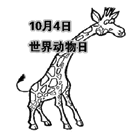
Many children go to the zoo on October 4 to see elephants, monkeys and tigers because that day is World Animal Day.
Now, more children like animals and want to make friends with them. In the zoo, they learn about animal life. They don't need to go out to show their love of animals. They have pets(宠物)at home.
Mark is a middle school student. He has a black cat. He gives it milk to drink and meat to eat. The cat is his true friend. Jane is also a middle school student. She has two tortoises. They are as big as her hand. Every day, she changes(换)the water for them. She likes to watch them.
-
(1) October 4 is___________.A . World Water Day B . World Air Day C . World Animal Day D . World Children Day
-
(2) Lots of kids like to go to the zoo because they want to______.A . show their love of animals B . learn how to look after animals C . learn about animal life D . play games in the zoo
-
(3) Mark's pet may be a______.A . cat B . dog C . tortoise D . fish
-
(4) Which of the following is NOT true?A . More and more children like to make friends with animals these days. B . Mark's pet likes to drink milk. C . Jane likes to look after her pets and watch them. D . Children must go to the zoo to show their love of animals.
TV Programs
Channel 1 Channel 2
18:00 Around China 17:45 computer today
18:30 Children's programs 18:10 Foreign arts
19:00 News 18:30 English classroom
19:30 Weather report 19:00 Animal world
19:40 Around the world 19:25 China 99
20:10 TV play: sisters 20:20 Sports
21:00 English for today 21:00 TV play: Guo Lanying
21:15 Popular music 21:45 English news
21:55 Talk show 22:05 On TV next week
-
(1) If you want to watch a football game the best program for you would be _____A . TV play B . Sports C . Around the world D . Talk show
-
(2) The program of _____ will let you know much about western countries.A . Sisters B . Around China C . Around the world D . On TV next week
-
(3) If you want to know something about tigers, elephants and monkeys, the best program is _____.A . Around China B . Animal world C . TV play D . Foreign arts
-
(4) English classroom is a program that ______.A . let you know something about classroom B . tells you something about students C . let you know something about school life D . teaches you English
-
(5) The program at the end of Channel 2 means ____ on TV next week.A . news B . program C . people D . places
Mike always loves ships. When he was older, he said, “I'm going to be a soldier.” But his eyes were not very1and he did not get in.
Then he said, “I'm going to2a small boat and I'm going around the world.” But boats were very expensive, and Mike did not have enough3
Last summer Mike found a swimming4near his house. The lessons did not cost very5 and Mike began going to the school at every end of the week and having6. Now he is a good swimmer.
Last week a little boy said to him, “You're a very good swimmer. How do7learn to swim so well?”
“I'm not good at all,” Mike said and he smiled. “8 I'm in the water, I say to myself, “There are 9fishes behind me!” Then I'm very afraid, and I10quickly.”
(Renee—a beautiful princess Broo—a blue bear Nahloo—a magical place)
When the Princess Renee heard about Broo, she came down from her astle. She found Broo while he was busy eating honey.
"Mr. Bear," the Princess said, "you are welcome in Nahloo. Here we share with each other. We don't take things from each other."
Broo thought about it for a moment and knew that he had made a mistake. "Well," he said, "maybe drinking all that milk wasn't the best idea."
The Princess went on, "Mr. Bear you can drink and eat but you won't feel good because you have never made any contribution(贡献)to anyone else. I think you'll find that it is better to be full in your heart not just in your stomach." After saying this the Princess went back to the castle leaving Broo alone.
One day Broo was going to take lots of cookies from the rabbits, and then he remembered what the Princess said to him. So Broo decided not to eat the cookies. The rabbits were surprised and said "Thank you for your kindness, Mr. Bear. Now these cookies will taste sweeter because they are given by you, my friend. If you like, come back tomorrow and we can have the cookies together."
Broo was filled with joy and went through the land. He gave back everything he had taken. In return, he received a promise(承诺)from everyone to share their food with him. Broo was so glad that he started dancing in the moonlight with the Princess as his partner.
-
(1) In Nahloo, .A . the Princess Renee stayed with Broo all the time B . everyone was happy to share with each other C . Broo took a lot of cookies from rabbits D . Broo never knew his mistake
-
(2) Broo felt after he gave the cookies back to the rabbits.A . sad B . surprised C . happy D . hungry
-
(3) What can we learn from the passage?A . It's better to give than to receive. B . Every dog has its day. C . The early bird catches the worm. D . Many hands make light work.
-
(4) The passage may come from .A . a science book B . a tour guide C . a comic book D . a story book
Japanese kids always like flying kites in holidays. And every year, they can enjoy a Kite Festival.
When the festival is coming ,you can see fish-shaped(鱼形的) flags all over Japan. Paper or cloth kites, or banners(横幅), are hung outside boys' homes. Seeing the fish makes people feel happy .It looks like they are swimming in the sky. The black fish represents the father, the red for the mother, the smaller blue ones for the sons. Japanese people believe the fish is an important symbol. They think it is strong and brave .In front of some homes there will be a fish for each son. The largest fish will be for the oldest son. On this day, many kids like to fly kites, especially fish-kites.
-
(1) What can you see when the Kite Festival is coming in Japan?A . Paper B . Cloth C . Banners D . Fish-shaped flags.
-
(2) What does the phrase "all over" mean in the passage?A . 那边 B . 遍布 C . 全部 D . 上面
-
(3) Why do families hang fish-shaped flags outside their homes?A . Because they want their sons to be handsome. B . Because they want their sons to be strong and brave. C . Because they want to show they are rich. D . Because it is a symbol of the country.
-
(4) What color are the fish-shaped flags?A . They are black, red and blue. B . They are black, red and pink. C . They are black, yellow and blue. D . They are green, red and blue.
-
(5) What is the smallest fish-shaped flag for?A . It is for the little daughter. B . It is for the whole family. C . It is for the oldest son. D . It is for the youngest son.
My grandfather Jack is 96 years old, and he has an interesting life. He has travelled a lot in his life in the Far East. He visited the Taj Mahal in India and the Pyramids, in Egypt. He hunted (狩猎) lions in Africa, and rode a camel in the Sahara Desert. He says the most beautiful place he has travelled to is Kathmandu in Nepal.
Jack has married twice. His first wife died when she was 32. He met his second wife Maria while he' was cycling round France. They have been married for 50 years, and they have lived happily in a small village since they got married.
Jack says that he has never been ill in his life. The secret of good health, according to my grandfather, is exercise. He goes swimming every morning. He has done this since he was a boy. He also has a glass of wine every night! Perhaps that is his secret!
-
(1) What kind of life does Jack live?A . A short life. B . An interesting life. C . A lonely life. D . A poor life.
-
(2) Which of the following does Jack think is the most beautiful place?A . Kathmandu. B . The Pyramids. C . The Sahara Desert. D . Taj Mahal.
-
(3) How many times has Jack married?A . Once. B . Twice. C . Three times. D . Four times.
-
(4) Where did Jack meet Maria?A . In India. B . In Nepal. C . In France. D . In Egypt.
We live on Earth. It's our home. But how much do you know about it? Let me tell you something about our Earth.
The Earth is like a huge ball. Like the other seven planets, the Earth is running around the sun. It's the third nearest one to the sun. It takes the Earth about 365 days to run around the sun. At the same time, the Earth is going around itself. If you are in space, you can see lots of white clouds over the surface of the Earth. Through the clouds, you can see the blue colour of the oceans, and the brown colour of the land. About 70% of the Earth is covered(覆盖)with water.
Why do we have day and night? When the half of the Earth is facing the sun, it's daytime. As the Earth turns, and this half is away from the sun, night is coming. And it's daytime(白天) for the other half.
-
(1) How many planets are running around the sun?A . Seven. B . Eight. C . Nine. D . Ten.
-
(2) _________ of the Earth is covered with water.A . 70% B . 30% C . About 70% D . About 30%
-
(3) Which of the following sentences is RIGHT?A . All the planets and stars are running around the sun. B . The Earth is the nearest planet to the sun. C . It takes the Earth about 365 days to run around the sun. D . The Earth only runs around the sun.
-
(4) When _________, it's daytime.A . the Earth is running around the sun B . the Earth is away from the sun C . the half of the Earth is away from the sun D . the half of the Earth is facing the sun
-
(5) Where can you read this passage?A . Storybooks. B . Science Magazines. C . Cartoon books. D . Picture books.
What is a typical day like for a high school student in the United States? Well, everyone's is very different. I can describe my normal day in high school for you,
Our school day usually went from 8:30 am to 5: 30 pm. However
some days I had cheerleading(啦啦队) practice or play practice at 6:30 am. If I had cheerleading practice, I got ready at school, and if I had time, I ate breakfast at the school dining hall.
Then I would go towards my locker and get my books for the first period. Each class went for about 50 minutes and we had 4 minutes to get to the next class. We studied everything from science to maths and Spanish to PE.
I played the flute(长笛) in band, so one of my class periods was used for that. Lunchtime would be at 12:30 pm and then we had some time to hang out outside or by our lockers. At the end of the day there was a seminar(研讨会) period. It could be used for studying or meetings.
After school, I would cheer at a basketball game, be a lifeguard(救生员) at work or has speech practice. My family always tried to have dinner together at 7 pm, but there wasn't always time. I would finally start studying at 8 or 9 pm.
So there you have it! That's my typical day in high school.
-
(1) How long did the writer usually stay at school on her schoolday?A . For seven hours. B . For eight hours. C . For nine hours. D . For ten hours.
-
(2) Where did the writer eat breakfast if she had time?A . At school. B . At home. C . Ina restaurant. D . In a park.
-
(3) When did the writer hang out with her classmates?A . After the first class. B . After lunch. C . After breakfast. D . After school.
-
(4) Which of the following is NOT the writer's after school activity?A . Having meetings. B . Cheering at a game. C . Being a lifeguards. D . Practising speeches.
-
(5) What does the passage mainly talk about?A . Our school day. B . Everyone's life is different. C . The after school life in the US. D . A typical day in high school in the US.
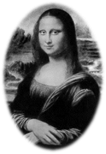
As he walked out of the Louvre Museum in Paris, France, he looked like a normal repairman. But what he carried was very unusual. Under his jacket, Vincenzo Perugia was carrying Mona Lisa, one of the most famous paintings in the world. And he was stealing it!
It sounds difficult to believe, but it's a true story. On August 20, 1911, Perugia went into the museum and hid. He waited 15 hours until the next morning. On the day of the crime, the museum was closed for repairs. Perugia walked out into the museum wearing the same kind of clothes as the other repairmen. No one paid attention to him as he walked out the door.
Police looked all over the world—Russia, Japan, and Brazil. They even interviewed Perugia, but they let him go! Police continued to look for the painting. Two years passed before Perugia brought Mona Lisa to a man in Florence, Italy, who dealt in art. Florence is the city where Leonardo da Vinci painted Mona Lisa. Unfortunately for Perugia, the art dealer called the police, who arrested(逮捕) him.
Perugia said he wanted to return Mona Lisa to its "real" home. The police believed he wanted to sell copies of the painting and keep the original for himself. To this day, nobody really knows why he did it.
-
(1) Perugia dressed himself as a ________ in order to steal Mona Lisa.A . repairman B . policeman C . visitor D . dealer
-
(2) The police got Mona Lisa back because ________.A . Perugia hid in the museum for 15 hours B . they interviewed Perugia C . Da Vinci painted it in Florence D . an art dealer helped them
-
(3) Where was Perugia arrested?A . In France. B . In Russia. C . In Brazil. D . In Italy.
-
(4) What is the correct order in which these events happened?
a. The police looked for Mona Lisa for 2 years. b. Perugia walked out the Louvre Museum.
c. Perugia took the painting to an art dealer. d. Perugia went into the museum and hid.
A . b — d — a — c B . b — d — c — a C . d — b — a — c D . c — d — b — a
Nancy and Sheila are in the same class. They are friends. Nancy wants to invite Sheila to have dinner on Sunday. But Sheila doesn't know the way. Now Nancy is telling her.
"You can take the No. 4 bus. After you get off(下车) at Red Road, cross it and take the first turning on the left. Walk along the road for about five minutes, and then you'll see a big tree. Go straight on for about a hundred metres, and you will see a big red house. This is not my home. Go past the big house, and you'll see a small yellow house beside a little tree one hundred metres away. Then you can open the door with your foot."
"With my foot?" asks Sheila. "Why?" Well, you won't come to my house empty-handed(空手地), right?" answers Nancy.
-
(1) Nancy asks Sheila to__________.A . have supper with her B . go to a big red house C . go to the cinema together D . go shopping together
-
(2) Which of the following is true?A . Nancy and Sheila are classmates. B . Sheila should take the No. 5 bus first. C . Nancy asks Sheila to come to her home on Saturday. D . Sheila knows Nancy's home very well.
-
(3) How far is it from the big tree to the small yellow house?A . It's five minutes' walk. B . It's a hundred minutes' ride. C . It's about two hundred metres. D . It's about five hundred metres.
-
(4) Where is Nancy's house?A . It's beside a big red house. B . It's beside a little tree. C . It's on the right side of Red Road. D . It's behind a small yellow house.
-
(5) Why does Nancy ask Sheila to open the door with her foot?A . Because she thinks Sheila should carry a lot of presents in both hands. B . Because she thinks Sheila should bring her family members to her home. C . Because she thinks Sheila should bring other classmates to her home. D . Because she thinks Sheila will be afraid to open the door with her hands.
A father and his son went to a kite-flying festival. The son was happy when he saw the sky filled with colorful kites. The father bought a kite for his son. The son started to fly the kite. Soon, his kite was high up in the sky. After a while, the son said, "Father, it seems that the string is stopping the kite from flying higher. If we cut it, it will be free and fly even higher." The father cut the string. The kite started to go higher.
But slowly, the kite started to come down. It soon fell to the ground. The son was surprised to see this. He asked his father, "I thought that after cutting the string, the kite would fly higher. Why did it fall down?" The father said, "The string was not stopping the kite from going higher, but was helping it stay in the sky. But when you cut the string, it could no longer help the kite."
Sometimes, we may feel like some things are holding us back and stopping us from growing. But in fact, these might be the things that help us the most.
-
(1) The boy wanted to cut the kite string because _______.A . he wanted the kite to fly even higher B . he wanted to watch the kite fall down C . he saw that many others cut the string D . he wondered what would happen after cutting
-
(2) After the father cut the string, the kite _______.A . fell down right away B . flew higher first, then fell down C . was broken heavily D . flew higher and higher
-
(3) The underlined word "string" means _______ in Chinese.A . 竹条 B . 线轴 C . 油纸 D . 线
-
(4) What does the writer want to tell us?A . Flying kites is really fun. B . We should not cut kite strings. C . Sometimes we will lose our way without guidance. D . The things that seem to hold us back can sometimes help us the most.
Lots of times, Pap would lock me in the wooden house and go away. Pap was pretty careful not to leave a knife or anything in the cabin while he was gone. But I finally got something — a saw, and started sawing hard to help myself out. As soon as I heard Pap coming up from town, I hid the saw and waited. He came in angrily, "Get out to the boat and get what I brought from town."
It was good to be outside again, even if it was for just a few minutes. If I wanted to, I could take off running right now. I'd just run away, but that's when Pap yelled, "Boy, are you asleep or drowned?"
At dinner time, Pap'd drank too much and fell asleep on the floor. I thought about taking the key from his pocket quietly, but he was having a restless sleep. I waited for him to settle down, but then I got too tired and fell asleep.
It was after sunup when Pap woke me. "Get out there and catch us some fish," he ordered. I headed out and saw something else floating toward me in the river. It was a canoe (独木舟). I jumped in and swam over to it. It was empty inside, then I had a good idea. I pulled that canoe up and hid it behind some bushes. When I had my chance, I'd go down the river in the canoe. No one would ever find me.
Pap got angry when he saw me back, wet all over. So I got locked inside the cabin again. Once Pap set off for town, I had my chance.
When I was ready to run off through the hole I cut with the saw, I realized Pap would know I'd run away. So I smashed the door with an ax. Then I found a wild pig lying dead in the woods and dripped some of its blood on the cabin floor. I pulled out some of my hair and dropped it on the floor, too.
-
(1) According to the story, Pap is ____________.A . rude and impatient B . careless and selfish C . serious and hardworking D . lazy and forgetful
-
(2) What can we learn from the story?A . "I" was quite good at hunting wild pigs. B . "I" planned to escape with the help of the canoe. C . Pap left nothing sharp in the cabin to protect "me". D . Pap asked "me" to wait for him to wake up after dinner.
-
(3) What does the underlined word "restless" mean?A . 打鼾的. B . 辗转反侧的. C . 香甜的. D . 平躺的.
-
(4) It is suggested in Paragraph 6 that "I" did all these things because ____________.A . "I" was very naughty and was playing a trick B . "I" wanted to make Pap worried and care for "me" C . Pap would think "me" dead and stop looking for "me" D . Pap would be afraid and not lock "me" in the cabin any more
- 右图是人体呼吸系统结构的示意图,请根据图回答问题:(1)[⑥] 是呼吸系统的主要器官,它是
- 稳定是福,战乱是祸。追求和谐稳定是人民永远的梦想。我国古代历史上一些社会生产生活安定、经济繁荣、政治比较清明的历史时期可
- 不同的商品生产者,总是自发地改进技术,改善经营管理,想方设法地提高劳动生产率。这主要是因为率先提高劳动生产率可以使___
- “三效催化转换器”可将汽车尾气中有毒气体处理为无毒气体.下图是该反应的微观示意图,其中不同的球体代表不同的原子,下列说法
- 1.下列各句中,加点的成语使用正确的一项是 A.俄罗斯对叙利亚境内“伊斯兰国”目标的打击行动取得了成效,美国及其盟友的空
- 了解物理规律的发现过程,学会像物理学家那样观察和思考,往往比掌握知识本身更重要。以下符合物理学史实的是A牛顿发现了万有引
- 巴尔扎克自称是法国社会的“书记员”,这主要是指他的作品 A.体现了真正的乐观主义精神 B.描写了法国人民反抗侵略的战争场
- 选出对加横线的词解释错误的项(单选题) ①尔其无忘乃父之志(你) ②悉使赢兵负草填之,骑乃得过(才
- “是先有鸟还是先有蛋,你不知道,我不知道,只有鸟知道;是鸟先消失还是蛋先消失,你知道,我知道,只有鸟不知道。”,“送人玫
- 随州曾侯乙墓出土的全套编钟的历史年代在 A.西周时期 B.春秋时期 C.战国时期
- 阅读下面文段 看完电视以后,老王一整夜都没睡好。第二天一大早就往武汉打电话,直到9点,那端才响起儿子的声音:“爸,什么事
- “最后一碗米饭用来做军粮,最后一尺布用来缝制军装,最后的老棉被盖在担架上,最后的亲骨肉送到战场上。”这首流行于解放战争
- (本小题满分12分) 已知等比数列中,,,且公比. (Ⅰ)求数列的通项公式;(Ⅱ)设,求的最大值及相应的值.
- 卡文迪许巧妙地利用扭秤装置,第一次在实验室里测出了万有引力常量的数值,在他的实验装置中,下列哪些措施是为了测量极小的引力
- (02年全国卷)在光滑水平地面上有两个相同的弹性小球A、B,质量都为m。现B球静止,A球向B球运动,发生正碰。已知碰撞过
- 张聪同学的午餐如下,其中富含蛋白质的食品是 A.大米饭 B.鱼香肉丝 C.炒白菜
- 阅读下面的文字,完成下题。 缺乏变动的文化里,长幼之间发生了社会的差次,年长的对年幼的具有强制和权力.这是血缘社会的基础
- 阅读下列图文资料,回答问题。 材料一:世界某区域略图 材料二:西雅图是美国飞机制造业的基地,波音公司举世闻名。由波音公司
- Could you tell me ______ it ispolite to speak ______ at the
- 图甲是某零件的直观图,则它的主视图为() A.B.C.D.


