阅读理解 知识点题库
Henry was from the United States and he had come to London for a holiday.
One day he was not feeling well. So he was to the clerk at the desk of his hotel and said, “I want to see a doctor. Can you give me the name of a good one?” The clerk looked in a book, and said, “Dr. Grey.”
“Is he expensive?”
“Well,” the clerk answered, “he always asks for his patients two pounds for their first visit to him, and 1.5 pounds for later visit.”
Henry decided (决定) to save 50 pence. When he went to see the doctor he said, “I’ve come again, doctor.”
For a few seconds the doctor looked at his face carefully without saying anything. Then he nodded and said, “Oh, yes.” He examined (检查) him and then said, “Everything's going as it should do. Just continue (继续)with the medicine (药) I gave you last time.”
-
(1) Henry came to London___________.A . to do some shopping B . to visit friend C . to spend his holiday D . to find a job
-
(2) He wanted to see a good doctor because__________.A . he was feeling bad B . he could save 50 pence C . he wanted to take some medicine home D . a good doctor was very expensive
-
(3) The first visit to the doctor cost_____________ later visit.A . as much as B . less than C . more than D . no more than
-
(4) Henry tried to make the doctor believe that___________.A . he wasn’t ill B . It is the second time for him to go to his clinic(门诊部). C . he saw a friend of his D . he wasn’t feeling well
One Tuesday morning, Harry saw all ad(广告) in a window. It said, "Wanted, the Best Salesman in the World. Top Pay." Harry thought he was a great salesman and went to ask for the job. "I am the best salesman in the world," he said to the manager, "Give me the job."
"You must prove you're the best," the manager said.
"OK, I will!" Harry answered.
"Good!" The manager took a box of sweets out of his desk. "Last week I bought a thousand boxes of sweets. If you can sell them all before the end of the week, you can have the job," said the manager.
"That's easy," Harry said. He took the boxes of sweets and left the office.
Every day and all day, he went from shop to shop, trying to sell the boxes of sweets. But he couldn't sell one. The sweets were too bad for him to sell. At the end of the week, he went back to the manager. "I'm sorry, Sir." he said. "I was wrong about myself. I'm not the best salesman in the world, but I know who is."
"Oh," said the manager, "Who?" The person who sold you a thousand boxes of these sweets," Harry said.
-
(1) Harry went to ask for the job because he was himself at first.A . afraid of B . wrong with C . sure of D . worried about
-
(2) If Harry wanted to get the job, he would have to .A . buy all the sweets from the manager B . sell out all the sweets in a few days C . eat up all the sweets D . sell the sweets at the weekend
-
(3) Choose the right order(顺序)of this story.
①Harry went to ask for the job.
②Harry told the manager who the best sales man was.
③Harry saw an ad in a window.
④Harry went to sell the sweets.
A . ①一②一③一④ B . ④一③一②一① C . ③一①一④一② D . ③一④一①一② -
(4) From this story we can see that .A . Harry didn't get the job B . Harry was a good seller C . the manager was a good seller D . the ad was a good one
-
(5) According to(根据) the story, which of the following is TRUE?A . Harry sold some of the sweets. B . The sweets were too expensive. C . The manager was not wise at all. D . The sweets were terrible.
“I think you could help to wash Mom's and Dad's cars,” Greg said, “Some of the neighbors could pay you to wash theirs, too. It's getting colder and no one wants to wash the cars themselves.”
Michael agreed, but he shivered(哆嗦)at the thought of washing cars and getting wet in cold weather.“Maybe this isn't a good idea.”
“Don't worry,” Greg said. “I have some golf(高尔夫)gloves(手套).You can use them to wash cars. and I will even help you to wash the cars.”“Thank you!”Michael said.
After spending the day washing cars, Michael got enough money and went to the store with Greg. He found the game he wanted quickly, but as he took it off the shelf he saw a golf video game next to it. He knew Greg loved golf and wouldn't play golf in winter, so he put his game back and decided to buy the golf video game.
“What are you doing?” Greg asked. “I thought this game would be more fun.” said Michael. “We can play it together.”
-
(1) For what purpose did Michael want to make money?A . To help support his family. B . To buy a gift for his Mom. C . To buy a new computer game. D . To buy some golf gloves.
-
(2) How could Michael make money in Greg's opinion?A . By asking Mom for a little. B . By washing cars for others. C . By washing their father's car. D . By designing a computer game.
-
(3) Which of the following is TRUE according to the passage?A . Michael enjoyed playing with cold water. B . Michael asked his brother to buy a golf video game. C . Michael bought a golf video game for his brother and himself. D . Michael had difficulty finding the computer game he wanted.
-
(4) What's the passage mainly about?A . Michael's childhood. B . Michael and his neighbors. C . How Michael made money D . How Michael and Greg helped each other.
A
Introduction Speaking English is not only about using proper grammar. To use English correctly, you need to understand the culture in which it is spoken. Here are a number of important tips (告诫) to remember when speaking English in the USA. | |
General Points to Remember Most Americans only speak English: While it is true that more and more Americans speak Spanish, most Americans only speak English. Americans have difficulties under-standing foreign accents (口音): Many Americans are not used to foreign accents. | Conversation Tips Speak about location (位置). Talk about work: Americans commonly ask "What do you do?" It's not thought impolite (as in some countries) and is a popular topic to discuss between strangers. Talk about sports. |
Addressing (称呼) People Use last names with people you do not know. Always use "Ms" when addressing women. Many Americans prefer first names. Americans prefer informal: In general, Americans prefer informal greetings and using first names or nicknames when speaking with workmates and friends. | Public Behavior Always shake hands. Look your partner in the eyes. Don't hold hands: Same sex friends do not usually hold hands or put their arms around each other in public in the USA. Smoking is Out! Smoking, even in public places, is strongly disagreed by most modern Americans. |
-
(1) What is necessary to know when we speak English besides using grammar?A . The culture. B . Introduction. C . Grammar. D . Topics.
-
(2) "When speaking to strangers, ask them where they are from and then make a connection (联系) with that place" can be used as a sentence to .A . talk about work B . talk about sports C . address people D . speak about location
-
(3) If you are introduced to a woman called Peal S. Buck, how should you address her usually?A . Madam Buck. B . Miss Pearl S. C . Mrs. Pearl. D . Ms Buck.
-
(4) According to the passage, which of the following is RIGHT?A . Smoking is not allowed in the modern United States. B . Americans shake hands only when greeting same sex friends. C . When you speak to others, it's polite to look into their eyes. D . Different sex friends should hold hands when first meeting.
-
(5) What can we learn from the passage?A . American English tips. B . The different language culture. C . Language differences. D . American customs.
D
Lisa likes going shopping very much. She often goes to clothes stores with her classmates on weekends. One day she sees a colorful sweater in the Fashion Clothes Store. It's a red-blue-yellow sweater. There is a card on it. It says 80 yuan. Lisa goes home quickly and collects(搜集) all her money. But she feels sad. She's only got 65 yuan.
After two weeks, the Fashion Clothes Store has sweaters at very good prices——only 80%. Lisa thinks she can buy the sweater with 64 yuan. When she sees the card, it says 100 yuan.
Some weeks later, the store says their sweaters are on sale. You can only pay(支付) 50% for the sweater. Lisa thinks she can get the sweater this time, because it only costs 40 yuan. But when she sees the card, she is very angry. It is 160 yuan.
-
(1) Lisa is________.A . a teacher B . a nurse C . a manager D . a student
-
(2) There are________ colors in the sweater.A . two B . three C . four D . five
-
(3) How much should(应该) Lisa pay for the sweater some weeks later?A . 40 yuan. B . 64 yuan. C . 80 yuan. D . 160 yuan.
-
(4) Lisa doesn't buy the sweater because______.A . She doesn't have enough money. B . She doesn't like it. C . The store doesn't have the sweater. D . The sweater has no color.
Some days, don't you think, "Wouldn't it be nice if the laundry would just do itself?” Self-cleaning clothes may sound crazy. But Australian researchers have found a way to make something like this possible!
A team at RMIT University in Melbourne, Australia, found a way to put special nanostructures (纳米结构) into clothing, which can then clean the clothes. When sunlight hits the nanostructures, they break down the dirt and stains (污渍) that don't belong on your clothes.
The nanostructures don't break down the actual clothing because cotton and the other clothing materials are too strong to be broken down. According to CNN, the researchers cover the clothing in a solution made of silver and copper (铜) nanostructures. All it takes is 40 minutes of sunlight and your clothes will look as good as new.
So if you spill on yourself during lunch, you can step outside for a walk, and it will be clean by the time you go inside. It not only makes your life easier, but it can also be good for the environment.
According to the US Department of Energy, the average load of laundry uses about 25 gallons (about 94 liters) of water. Water is a very important resource, so using less of it to wash clothesis better for the environment. But one of the scientists at RMIT University knows more needs to be done.
“There's more work to do before we can start throwing out our washing machines,” said Dr Rajesh Ramanathan, “but this is a strong foundation .”
So what's the next step? Ramanathan wants to either start selling the solution by itself or convincing clothing makers to treat the clothing with the solution while clothes are being made.
-
(1) What do Paragraphs 4-5 talk about?A . What advantages the self-cleaning clothes have. B . How the self-cleaning clothes work. C . How the self-cleaning clothes are made. D . What helps the self-cleaning clothes work.
-
(2) What does the underlined word “solution”in the last paragraph mean?A . Machines B . Clothes. C . Silver. D . Design.
-
(3) What can we learn from the passage?A . Silver and copper sell well. B . The solution is not put into practice. C . Clothing makes certainly like the solution. D . We don't need washing machines any more.
Robert De Niro is an American actor. He has acted in a lot of famous films. He is one of the greatest actors in film history.
Robert De Niro was born in 1943 in New York City. He left high school at the age of sixteen. He wanted to have a career in acting. He dreamt of appearing in Hollywood films.
His first major film role came in 1973. It was in the film Bang the Drum Slowly. Later, he got a role in the film The Godfather Part Ⅱ. The film is one of the greatest films in history. He won his first Oscar (奥斯卡金像奖) for this role. It was the start of a great career. After this, he got many other important film roles.
On his way to career success, he became good friends with Martin Scorsese. Scorsese is a famous director (导演). They began to work together often. Their first film together was Mean Streets in 1973. It was a big Success. In 1980, he acted in the film Raging Bull. Scorsese was the director again. And for this role. Robert De Niro won his second Oscar.
His acting career continued. In 1990s, 2000s and 2010s, he kept acting in a lot of films. Robert De Niro is a really great actor. If you are interested, you can see his films on the Internet!
-
(1) When did Robert De Niro leave high school?A . In 1943. B . In 1946. C . In 1959. D . In 1963.
-
(2) Robert De Niro's first major film role was in _______.A . Raging Bull B . Mean Streets C . Bang the Drum Slowly D . The Godfather Part Ⅱ
-
(3) What do Robert De Niro and Martin Scorsese have in common?A . They both are successful. B . They were born in the same year. C . They both are friends of a famous director. D . They shared the same dream when they were small.
-
(4) What does the underlined word "continued" in the last paragraph mean in Chinese?A . 浪费 B . 消失 C . 改善 D . 继续
-
(5) The writer writes this passage to _______.A . show what a good friend is like B . tell the life story of Robert De Niro C . teach others how to be a good actor D . ask people to see Robert De Niro's films
Amsterdam is the bike capital of the world. Biking is a fun and easy way of getting around Amsterdam.
Students go to school by bicycle. People ride their bicycles to work. Travelers ride bicycles freely around the city. Even police work on bicycles. You can see these every day in Amsterdam.
There are many roads and traffic signs(标记)for bicycles. There are also many places for bicycle parking.
If you travel in Amsterdam, you don't need to take a bus or taxi, just a bicycle. You can ride the bicycle along the roads and the streets enjoying the scenery(风景). The city has a lot of bicycle shops to choose from. If you do not want to buy a bicycle, you can go to rent(租赁)a bicycle. They are in almost every part of the city. Going for a ride is enjoyable. It's a good idea to find an experienced guide. Because he would take you to some of the city's most beautiful places. Riding bicycles in Amsterdam is of great fun and relaxing; just remember to follow the traffic rules.
-
(1) If a traveler wants to stay in Amsterdam for days, he can choose to_________.A . take a bus B . rent a bicycle C . take a taxi D . follow the guide
-
(2) What does the underlined word "experienced" mean in Chinese?A . 经历丰富的 B . 懒惰的 C . 肥胖的 D . 强壮的
-
(3) Which of the following is NOT true according to the passage?A . It's easy for people to park their bicycles in Amsterdam. B . Most people in Amsterdam ride bicycles to work or school, except police. C . Amsterdam is famous as a bicycle city. D . People can find bike rentals everywhere in Amsterdam.
-
(4) What's the best title for the passage?A . How to Travel in Amsterdam. B . The City of Bicycles — Amsterdam. C . How to Rent a Bicycle in Amsterdam. D . A Beautiful City.
What was discovered by accident? The answer is penicillin(青霉素). It kills germs. By killing germs, it saves lives. Suppose you are sick. You go to a doctor. She examines you. She says you have a "staph" infection(葡萄球菌感染). She gives you some medicine. You take it. The medicine knocks out the staph. Soon you are well. Before penicillin, this would not happen. Staph was almost sure death.
Everyone wanted a medicine. Laboratories worked day and night. They grew the staph in small dishes. Then they tried to kill it. Nothing worked.
The laboratory dishes had covers on them. They kept things from falling into dishes. Molds(霉菌)were a big worry. They are always in the air. You can't see them. They're too small .There are thousands of different molds. Molds can make an experiment (实验)fail. That's why dishes are covered.
Dr. Alexander Fleming was working to kill the staph germ. He worked for years. One day he took a cover off a dish. He looked inside. There was a thick growth of staph germ. There was also some mold. Then he saw something strange. Where the mold was, there was no growth of staph. This is what Fleming probably thought. "By accident, I found a mold to kill the dreaded staph."
This is how penicillin was found. But here's the real miracle(奇迹). There are thousands of kinds of molds. But only one kind can kill staph. The mold must have fallen into the dish a few days before. The cover was probably off only a few seconds(秒). In those few seconds the right mold fell into the right dish. Another mall might have thrown the dish away. But Fleming was very careful and smart. He understood what the mold did. How lucky the humans were!
-
(1) During the experiments to find a medicine for staph infections,A . the dishes were not covered B . staph and mold were put together C . mold was kept in small dishes D . staph was grown in small dishes
-
(2) The word "dreaded" means " ".A . famous B . scary C . health D . endangered
-
(3) The last paragraph suggests that .A . accidents happen to everyone B . the careful person does not have accidents C . the careless person will miss valuable chances D . luck is enough when doing scientific experiments
-
(4) This passage is mainly about ?A . medicine for a staph infection B . useful accidents C . Dr. Fleming's research D . discovering penicillin
One day, Mr. Smith is going to take a train to his hometown. When the train starts, one of his shoes falls to the ground. The train is running faster and faster and he can't pick it up. Then he quickly takes off(脱下) the other one and throws it on the ground near the fallen shoe. A little boy on the train asks him, "Why do you do that?" "I've already lost one shoe." Mr. Smith answers. "If a man picks them up, he may get a pair of shoes."
-
(1) Mr. Smith is going to his hometown____________.A . by bus B . by train C . by bike D . on foot
-
(2) What happens to the man when the train starts?A . He loses his bag. B . He loses his watch. C . He loses one of his shoes. D . He loses nothing.
-
(3) Mr. Smith can't pick up the fallen shoe because__________.A . he doesn't want to take it B . the little boy has picked it up C . it's too old D . the train runs too fast
-
(4) Which of the following is true?A . The boy wants the shoes. B . Mr. Smith doesn't want the shoes. C . Mr. Smith thinks a man may get a pair of shoes to wear if he throws the other near the fallen shoe. D . Mr. Smith wants to get back the shoes.
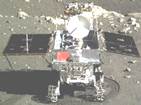
In ancient Chinese stories, the moon is home to Chang'e and her pet rabbit Yutu. Now, Chang'e and Yutu are really there!
On Dec. 2, 2013, the Chang'e-3 lunar probe(月球探测器)took off from Sichuan, China. On Dec. 14, 2013, it landed successfully on the moon. Several hours later, Yutu, China's first moon rover(月球车), "walked" out of the probe and onto the moon.
Yutu is a big robot that weighs 140 kg. It is about 1.5 meters long and 1.1 meters tall. It has six wheels and travels at 200 meters per hour.
There are cameras on both Yutu and Chang'e-3. They can take pictures of each other. That's how Yutu got is first picture on the moon.
Yutu and Chang'e-3 will explore(探索)the moon.
Yutu can walk around and work for three months. It can look for natural resources(资源)on the moon. Chang'e-3 can work at the landing site for one year and it can watch the space from the moon.
They both get energy from the sun. So they "get up" to work when the sun rises, and "go to sleep" at night.
China is now the third country in the world to soft-land on the moon after the US and the former Soviet Union.
Also, China is planning to send its Chang'e-5 lunar probe around 2017. The probe will fly back to the Earth and bring natural resources from the moon.
When will China fly a human to the moon? There's no plan yet. But the door is now open.
-
(1) The Chang'e-3 lunar probe was sent into space to .A . land on Mars B . explore the moon C . build a space station D . carry the astronauts into space
-
(2) According to the passage, Yutu can .A . fly around in space B . look for natural resources C . watch the space from the moon D . bring natural resources to the Earth
-
(3) Yutu can work on the moon for .A . six years B . one year C . three months D . two weeks
-
(4) Which of the following is NOT true according to the passage?A . Yutu is a big robot with six wheels. B . Yutu and Chaang'e-3 work day and night. C . Yutu and Chaang'e-3 can take photos of each other. D . The Chaang'e-5 lunar probe won't carry a human to the moon.
In this August, I had a trip called "Cultural Trip: Germany, Italy & France" to go to Europe with a group of American students.
This was not my first time to other countries, but it was unusual one. Why do I think the trip Unusual? Travel agencies (旅行社)usually have travel buses for tourists, What about us ? For five days, we traveled along Germany by bike. We were tired but happy! For some times on the trip, something went wrong with someone's bicycle. But at the end of the trip, everyone was safe and happy.
In Italy, we went to a kitchen to learn to cook Italian dishes, we made a great dinner and ended by making the chocolate cake. I gave full marks to that night!
France was the last stop, we went to the capital of France, Paris. We went to the Eiffel tower and we even got onto it. The tower is 324 meters tall, It has three levels(层) for visitors. There are restaurants on the first and second levels. The top level is 276 meters above the ground. If you climb from ground level to the first level, you need to climb over 300 steps. There are another 300 steps from the first level to the second level. That's why people usually get onto the top level by lift.
-
(1) Which of the following countries did NOT the writer talk about in this passage ?A . Germany B . Italy C . The UK D . France
-
(2) According to the 2nd paragraph, why was the writer's trip in Germany unusual?A . Because it was the writer's first time to go to the other countries. B . Because they traveled by buy for 5 days without any stop. C . Because they traveled along Germany y bike for five days. D . Because nothing exciting or happy happened on the trip.
-
(3) What did the writer and his group do in Italy?A . They took a trip on a beautiful bus. B . They rode bikes for five days. C . They made a dinner and a chocolate cake. D . They climbed over 300 steps.
-
(4) Jack wants to climb from the ground level to the second level of the Eiffel Tower, How many steps does he have to climb ?A . 324 B . 276 C . over 300 D . Over 600
Jan Mela was born in Poland and he lost an arm and a leg in an accident in 2002. But that didn't stop him. The 15-year-old boy from Poland walked to the North Pole(北极) in 2004.
"If I can do it, other people can do great things, too," Mela said before he went. Polish newspaper said Mela was the youngest person and the first disable(残疾) person to walk to the North Pole. Mela walked to the North Pole with the help of a man-made leg.
After the accident, Mala felt sad for himself. But he didn't lose hope. One day, he met Marek Kaminski. In 1996, Kaminski went to the North Pole and the South Pole in the same year. Mela wanted to see the North Pole, too. So Mela asked Kaminski if they could go together the next time. Kaminski said yes.
It took Mela twenty-one days to get to the North Pole. The last three or four days were really hard because of the bad weather. But Mela didn't give up going.
-
(1) What happened to Mela in 2002?
-
(2) How old was Mela when he got to the North Pole?
-
(3) Who did Mela go to the North Pole with?
-
(4) How long did it take Mela to get to the North Pole?
-
(5) Did Mela give up walking because of the bad weather?
-
(6) What do you think of Mela?
Studies have shown it takes a doctor about 18 seconds to stop a patient after he begins talking.
It was Sunday. I had one last patient to see. I came close to her room in a hurry and stood at the doorway. She was an older woman, sitting at the edge of the bed, trying to put socks on her swollen feet. I spoke quickly to the nurse, saw her chart saying she was in stable condition. I was almost in the clear.
She asked if I could help put on her socks. Instead, I began a long speech that went something like this: "How are you feeling? Your blood sugar and blood pressure were high but they're better today. The nurse said you can't wait to see your son who's visiting you today. It's nice to have family visit from far away. I'm sure you really look forward to seeing him."
She stopped me with a serious voice. "Sit down, doctor. This is my story, not your story."
I was surprised and ashamed. I sat down. I helped her with the socks. She began to tell me that her only son lived around the corner from her, but she had not seen him in five years. She believed that the pressure of this caused greatly to her health problems. After hearing her story and putting on her socks, I asked if there was anything else I could do for her. She shook her head and smiled. All she wanted me to do was to listen.
Listening to someone's story costs less than expensive diagnostic testing but is key to healing. I often thought of what that woman taught me—the importance of stopping, sitting down and truly listening. And, not long after, unexpectedly, I became the patient, with a diagnosis of sclerosis at age 31. Now, 20 years later, I sit all the time—in a wheelchair.
For as long as I could, I continued to see patients from my chair, but I had to give up my job when my hands were influenced. I still teach medical students and other health care professionals, but now from the view of doctor and patient.
I tell them I believe in the power of listening. I tell them I know firsthand that huge healing takes place within me when someone stops, sits down and listens to my story.
-
(1) The first paragraph of the passage is intended to .A . describe a phenomenon B . present a survey C . introduce a topic D . give an example
-
(2) What does the underlined part "I was almost in the clear" mean?A . I thought everything was clearly. B . I was about to finish my work. C . I almost made myself understood. D . I was very quickly out of her sight.
-
(3) From the 4th paragraph, we can infer the woman from the way she said.A . showed her anger and impatience B . refused to listen to the doctor C . liked giving orders to people D . could not wait to break in
-
(4) What is the best title of the passage?A . Care—a key to treatment B . An unforgettable experience C . A lesson given by a patient D . Listening—a powerful medicine
Why Do People Blink (眨眼) Their Eyes?
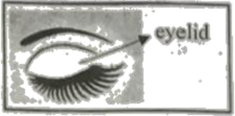
People blink their eyes tens of thousands of times every day. Scientists have long believed blinking was an involuntary movement and served mainly to keep the eyeballs wet. But a new study suggests it has a more important purpose.
An international team of scientists from the University of California at Berkeley studied the blinking of human eyelids. The journal Current Biology published their findings. The team said they found that blinking "repositions our eyeballs so we can stay focused" on what we are seeing. They said that when we blink our eyelids, the eyes roll back into their sockets—the bony area that surrounds and protects the eyes. However, the researchers found the eyes don't always return to the same position (位置). They said this causes the brain to tell the eye muscles (肌肉) to reorganize our eyesight.
Gerrit Maus is the lead writer of the report. He serves as an assistant professor of psychology at Nanyang Technological University in Singapore. Maus said, "Our eye muscles are quite sluggish (迟缓的) and imprecise (不精确的), so the brain needs to constantly adapt (改编) its motor signals to make sure our eyes are pointing where they should be. Our findings suggested that the brain measures the difference in what we see before and after a blink, and orders the eye muscles to make the needed corrections." The researchers said that without such corrections our surroundings would appear unclear and even jumpy. They said the movement acts "like a steadicam (摄影稳定器) of the mind."
The researchers said they asked volunteers to sit in a dark room while storing at a small dot on a flat surface. They used special cameras to follow the volunteer's blinks and eye movements. After each blink, the dot was moved one centimeter to the right. The volunteers did not notice this, but the brain did. It followed the movement and directed the eye muscles to refocus on the dot. After the dot was moved in this way 30 times, the volunteers' eyes changed their focus to the place where they predicted it would be.
Professor Maus said. "Even though the volunteers did not consciously register that the dot had moved, their brains did, and adjusted (调整)with the corrective eye movements. These findings add to our understanding of how the brain constantly adapts to (适应) changes directing our eye muscles to correct for errors in our bodies' own hardware."
-
(1) According to the new study, blinking eyes can ________.A . serve keep the eyeballs wet B . reposition eyeballs to stay focused C . consciously correct eye movements D . make our eyes adapt to motor signals
-
(2) From the experiment, we can learn that ________.A . the brain directed the eye muscles to refocus on the dot B . volunteers could see the moving dot with special cameras C . the eyeballs could stay in the place as they were predicted D . volunteers were aware of the dot's movements to the right
-
(3) The underlined word "register" in Paragraph 5 probably means ________.A . reason B . refocus C . realize D . reserve
-
(4) This passage shows that ________.A . eye muscles are quite inactive and imprecise B . the research is of great value in the eye movement C . the brain plays an important role in seeing things clearly D . volunteers control their blinks to follow the changes of the dots
This is Monica's day. And she thinks it is interesting and helpful. Let's read it together.
|
Monica's Day |
|
|
6:00-6:10am |
Get up and get dressed |
|
6:00-6:30am |
Brush teeth and wash face |
|
7:00-8:00am |
Watch news on TV and have breakfast |
|
8:30-12:00 |
Have classes |
|
12:00-1:00pm |
Lunch time at school |
|
1:00-4:30pm |
Have classes |
|
5:00-6:30pm |
Do homework and have dinner |
|
7:00-9:00pm |
Paint and listen to music |
|
9:00pm |
Go to bed |
-
(1) When does Monica have lunch?A . At 11:00 B . At 11:30 C . At 12:10 D . At 13:00
-
(2) Which is the best time for Monica to go to school?A . At 7:20am B . At 6:30am C . At 8:30am D . At 8:05am
-
(3) Monica watches news _______ .A . over the video B . on TV C . in the afternoon D . in the evening
-
(4) Monica have lunch______.A . at school B . at a restaurant C . at home D . We don't know
-
(5) How long does Monica have classes?A . Six hours B . Eight hours . C . Seven hours D . Nine hours
An old man was sitting on the sofa with Mike, his 45-year-old son. Suddenly a dove(鸽子) landed on the ground.
The father asked his son, "What is this?"
The son replied, "It is a dove."
After a few minutes, the father asked his son for the second time, "What is this?"
The son said, "Father, I have just told you. It's a dove."
After a little while, the old father asked his son for the third time, "What is this?"
This time Mike could not control his anger and shouted, "It's a dove, a dove. Why do you keep asking me the same question again and again? I have told you so many times ‘IT IS A DOVE' Don't you understand this?"
The old man silently took out an old diary, turned to a page and showed it to Mike. Though a little impatient(不耐烦), Mike began to read it.
"Today my little son aged three was sitting with me on the sofa, when a dove landed on the ground, and my son asked me what it was. I smiled at him, said it was a dove and hugged him. After a while Mike asked me again and I did the same. Pointing to the same dove, little Mike asked me what it was 23 times and I kept on answering his question and hugging him every time."
Something gently touched Mike's heart. His face turned red with shame for being so impatient to his father and he hugged him tightly(紧紧地).
Your parents have given you many things in their lifetime, but you may not realize that until they are gone.
-
(1) Why did the old man ask his son the question again and again?A . He didn't know the dove. B . He liked to ask questions. C . He couldn't remember anything. D . He tried to teach his son something in his lifetime.
-
(2) How many times did the father ask his son the same question?A . Twice. B . Three times. C . Five times. D . Twenty-three times.
-
(3) What did the father do after Mike asked him the question?A . Shouting at him. B . Hugging him. C . Keeping silent. D . Being angry with him.
-
(4) Why did Mike's face turn red?A . He was shy. B . He felt surprised. C . He felt shamed. D . He was afraid of his father.
-
(5) What really touched Mike's heart according to the passage?A . His father's diary. B . His father's love. C . His father's answers. D . His father's hugs.
A businessman lost his wallet. There was plenty of money in it. So he made a promise(诺言), "If someone finds my wallet and returns it to me, I'll give half the money to him." A dustman(清洁工) found the wallet in a dustbin(垃圾箱). He sent it back to the loser. But the businessman changed his mind.
"There was still a diamond ring(钻戒) in my wallet," said the loser. "I won't give half the money in my wallet to you until you return it to me!"
"I've never seen a diamond ring in the wallet," said the dustman.
They began to quarrel. The businessman didn't do what he had said. The dustman became angry and took him before a judge(法官).
After the judge heard what had happened to them, he said to the businessman, "I'm sure you are an honest man. It's true that you have lost a wallet in which there was a diamond ring. But it's also clear that there is only a lot of money in this wallet. I don't think it's yours. Wait for some time. Perhaps someone will be able to return your wallet to you!"
Then the judge turned to the dustman and said, "Take the wallet home. If the loser doesn't go to get it back in three days it will belong to you!"
-
(1) The wallet the businessman lost .A . was found in a shop B . was sent to the judge C . was found in a dustbin D . was never to be found
-
(2) The businessman was eager(渴望的) to get back the wallet because________.A . there was the address of an important judge in it B . there was a lot of money in it C . he put in it a diamond ring he had just bought D . it was a very expensive one
-
(3) Which of the following is TRUE according to the story?A . The businessman broke his promise. B . The dustman asked the businessman to give him more money. C . They began to quarrel because the wallet got dirty, D . The dustman kept the diamond ring for himself.
-
(4) Having heard what had happened, the judge__________.A . took the side of the businessman B . made a wise decision C . took pity on the loser D . didn't know what to do
-
(5) Where do you think the diamond ring was?A . The businessman hid it. B . The dustman kept it. C . The judge stole it. D . The story of the ring was nothing but a lie.

I used to watch her from my kitchen window, she seemed so 1 among the tall kids on the playground. The school was 2 the street from my home and I would often watch the kids as they played during a break. She would 3 dribbling (控球) and shooting over and over again.
One afternoon I asked her 4 she practiced so much. She smiled, "I want to go to University of California. The only way I can go is to get a scholarship (奖学金). I like basketball a lot. I believed that if I were 5 enough to play college basketball, I would get a scholarship. My Dad told me if the dream is big enough, the 6 don't count."
Well, she appeared to be very confident. I 7 her from junior into high school.
One day in her senior year, I saw her sitting in the grass 8. I walked to her and asked what was wrong. "Nothing," replied the girl in a 9 voice, " Many people told me that I was too short to play for a top team 10 I should stop dreaming about university.
I asked if her father had known it. She said that her father thought they were 11. They just didn't understand the great 12 of a dream. If she truly wanted a scholarship, then nothing could 13 her except one thing — her own attitude (态度).
The next year, because of her excellent 14 in the California Championship game, she was chosen by a college recruiter (招生人员). She was going to receive the college education that she had 15 and worked toward for all those years.
It's true: If the dream is big enough, the facts don't count.
What is a Chinatown? Is it a town in China? Of course not! It is in a foreign( 外国的) country. It is a place where many overseas(海外的) Chinese live together.
There are lots of Chinatowns in America. The biggest one is in New York. There are about 150,000 people in it. It is the home of Chinese New Yorkers. And it is also a good place to go.
Shopping in Chinatown
Shopping in Chinatown is fun. You can find lots of things there. Most of them are made in China. Mott Street is the best place to shop because the things there are very cheap.
Eating in Chinatown
Chinatown has more than 200 restaurants. You can enjoy traditional Chinese food there. New Silver Palace Restaurant is one of the best restaurants. Why don’t you have breakfast with a cup of green tea in it? You can eat some Shanghai food in Evergreen Restaurant.
Living in Chinatown
Living in Chinatown is comfortable. You can find hospitals, schools, banks, libraries and supermarkets in it. In some schools, students must study Chinese. Many overseas Chinese send their children to these schools. They want their children to learn more about China and its culture.
-
(1) Many overseas Chinese send their children to these schools. They want their children to le The Chinatown in New York has .A . 200,000 people B . no hospitals C . schools but no hospitals D . some shops, restaurants and schools
-
(2) New York has Chinatown in the United States.A . the smallest B . the largest C . the funniest D . the most boring
-
(3) Which sentence is NOT right?A . It is fun to shop in Chinatown. B . Many things in Chinatown are made in the USA. C . The things in Mott Street are cheap. D . The Chinese can have green tea in Chinatown.
-
(4) If you want to eat Shanghai food in Chinatown, you may go to .A . Evergreen Restaurant B . Shanghai Restaurant C . Beijing Restaurant D . New Silver Palace Restaurant
-
(5) Why do overseas Chinese send their children to the schools where they must study Chinese?A . Because their children don't like English. B . Because it is cheap to study in these schools. C . Because there is no English schools for Chinese students there. D . Because they want their children to learn more about China and its culture.
- 如图,有一条长为米的斜坡,它的坡角为,现保持坡高不变,将坡角改为,则斜坡的长为 米.
- 肺炎双球菌的S型具有多糖类荚膜,R型则不具有。下列叙述错误的是( ) A.培养R型活细菌时,加S型细菌的多糖类物质能产生
- 综合性学习 七年级每个班要召开一次“好读书,读好书”主题班会。你作为班里的一员,请你完成下列任务。 在准备活动阶段
- 酚酞,别名非诺夫他林,是制药工业原料,其结构如图所示,有关酚酞说法不正确的是() A.分子式为C20H14O4 B.可以
- . (山东卷22). If we sit near _______ front of the bus, we’ll ha
- 根据反应3NO2 + H2O→ 2HNO3 + X,推断X的化学式为( ) A. N2
- 对下列实验现象的推测中,正确的是( ) A.,将溶液滴入氨水中,振荡,会产生蓝色沉淀 B.溶液中存在平衡:,加入少量稀盐
- Did you ever wonder how some of your favorite foods, product
- 如图是细胞膜的亚显微结构模式图,①一③表示构成细胞膜的物质,下列有关说法错误的是() A. ②所表示的成分在
- 某学生只有下列仪器和用具:烧杯、试管、硬质玻璃管、圆底烧瓶、量筒、铁架台(带铁夹)、酒精灯、集气瓶、玻璃片、水槽、导气管
- 请以“有一种力量,让我泪流满面”为题,写一篇不少丁800字的文章,除诗歌外,文体不限。
- 领导干部要避免漫画中政府官员的这种行为,必须 A.努力提高自身素质,民主执政 B.切实保障人民群众的政治自由 C.树立科
- 小杨用电压表和电流表可以测量标有“3.8 V”灯泡的额定功率.现预测小灯泡的电阻值和小灯泡的电功率(即伏安法测电阻和电功
- Smoking too much may lung cancer and cause other dise
- 下列哪种情况下的遗传不会发生性状分离
- 如图所示,四边形ABCD的对角线相交于点O,若AB∥CD,请添加一个条件 (写一个即可),使四边形AB
- 1、水何澹澹, 。 ,百草丰茂。 2、 ,若出其中
- 建设中国特色社会主义是一项前无古人的崭新事业,是当代世界上最伟大的实践。中国特色社会主义伟大旗帜是指引当代中国发展进步的
- The 115-year-old prestigious (有名望的)Oxford Dictionarywill now
- 在1L溶液中含有Fe(NO3)3和H2SO4两种溶质,其浓度分别为0.2 mol•L-1和1.5mol•L-1,现向该溶


