人文地理类 知识点题库
Arches National Park, located near the town of Moab in eastern Utah, is well known in the world. Experts say this park has the greatest number of arches of any similar geographic area in the world. Arches are formations that look like half a circle above an opening or hole in a rock. Arches can also appear as curved bridges between two large rocks.
Scientists say the area began forming almost two thousand million years ago. As time passed, the area filled with material left by rivers. Other rocks buried the area. Then great pressure deep in the Earth created huge mountains.
A soft rock called sandstone began moving under this pressure. The sandstone moved upwards when it met other, harder rocks. These sandstone structures continued to grow for about one hundred fifty million years.
Arches developed from thin rock walls. They resulted when pieces of sandstone fell away from the formations. Scientists say water is the most important element in creating arches. Water destroys the chemicals that keep rock particles together. The rock breaks as the water freezes and expands. Then the wind blows away the loose rock particles.
Scientists say that most arches seen today developed within the past million years. But they say the land formation continues to change slowly over time. New arches form. Older ones fall away.
The rock formations in Arches National Park are mostly a deep red color. Rocks get their color from minerals. The red color is the result of iron oxide or rust (铁锈).Scientists say the presence of iron in the rock shows that the weather was hot and dry when the rock was first formed.
-
(1) We learn from the passage that Arches National Park .A . lies to the east of the town of Moab of Utah B . looks deep red because of the red soil C . attracts to a lot of tourists for its arches D . gets its name from its long forming history
-
(2) Which of the following shows the characters of arches?A .
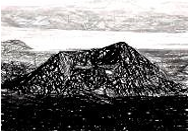 B .
B . 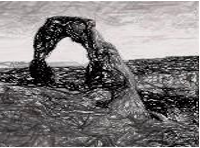 C .
C . 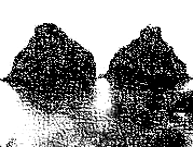 D .
D . 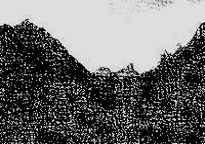
-
(3) What play(s) the most important role in creating arches?A . Wind. B . Water. C . Sandstone. D . Minerals.
-
(4) According to the passage, we learn that .A . most arches seen today haven't changed since they developed B . the weather was cold and dry when the rock was first formed C . it only took a short time to form the arches in Arches National Park. D . the rock formations in Arches National park get a deep red color because of minerals
-
(5) Which of the following shows the correct order of how arches took shape?
① Water destroyed the chemicals in rock walls.
② The sandstone moved upwards under pressure.
③ Rocks buried the area filled with materials left by rivers.
④ The wind blew away loose rock particles.
⑤ Rock walls turned into arches over time.
A . ③②①④⑤ B . ④③①②⑤ C . ②③①④⑤ D . ①④③②⑤
Some American Indians grew corn, sunflowers, beans, and pumpkins in their gardens. To prepare a garden, they first killed trees. Some Indians put a dead fish into the hole where they planted the corn in order to provide food for the corn plant.
The Indians made little progress (进步) during the thousands of years before the Europeans came. One reason for this was that horses, cows, sheep, pigs, and chickens were not found in America. Without horses, the Indians had a hard time digging up the soil, and they could only get animal food by hunting. Another reason for their lack of progress was that they did not know how to use metals to make tools. Stones and flat bones do not make good tools.
Indian hunters would sometimes hunt for days without finding anything. They learned to follow animal tracks (足迹).
They learned to listen. In order to get close to their prey, the Indians had to move quietly. When they were close enough, they could shoot their arrows. Often, the prey got away.
The Mayas were Indians. They were much more civilized ( 文 明 的 ) than American Indians. The Mayas were great builders. They knew how to write down their words, and some of their books still exist.
-
(1) The dead fish in the story was used to .A . kill trees B . provide food for the corn plant C . frighten animals D . keep the corn fresh
-
(2) What does the second paragraph tell us?A . Problems the Indians had. B . How poor the Indians were. C . Reasons for the Indians' lack of progress. D . Indian farming and hunting.
-
(3) The Indians made tools out of .A . metals B . glass C . the bones of horses and cows D . stones and bones
-
(4) The Indians moved quietly so that they .A . would get close to their prey B . would not leave some tracks C . could look at wild animals better D . could follow animal tracks
-
(5) What's TRUE about the Mayas?A . They couldn't find animals. B . They came to Europe years ago. C . They knew how to write down their words. D . They were less civilized than American Indians.
Canada is a wonderful country in North America. It's the second largest country in the world after Russia. In 2012 the population of Canada was around 35 ,0000. Canada's flag(国旗) has a maple leaf(枫叶) because there are many maple trees 1n the country. Toronto is the biggest city in Canada. In Toronto you can see the CN Tower. It is 553 metres high--the tallest building in Canada.
Canada has two official(官方的) languages- English and French. Every Canadian child studies both languages at school. The French-speaking Canadians mainly live in Quebec. The native(土著的) Canadians are the Inuit (once called “Eskimos"). Many still live in the cold places in the north. They follow more traditional ways of living.
Canada is one of the most popular places in the world. Lots of people travel there each year. There are many interesting things to see and to do. The Niagara Falls is the most famous. The waterfalls are between the US and Canada. The Canadian part of the falls is 49 metres high- higher and more exciting than the American part. Lots of people around the world come to see the Niagara Falls every year.
-
(1) What trees are common in Canada?
-
(2) What is the tallest building in Canada?
-
(3) What languages do the Canadian children study at school?
-
(4) Where do the French-speaking Canadians mainly live?
-
(5) Which part of the Niagara Falls is higher, the Canadian part or the American part?
Melbourne is in Australia. It is a beautiful city with huge gardens, great p and many amazing buildings. Many people come to v it every year.
Melbourne is also an o city in Australia. It has an interesting h of more than 170 years. The first people came in 1835, and in the 1850s, gold was discovered. Because of this, Melbourne became a very r city. Many new buildings were b at that time.
And t , Melbourne is one of the world's greatest cities. It is known for its beauty and its famous universities. It is also Australia's top city for sports. Many of them are very p . For example, young people are mad about f here. In 1956, the Olympic Games came to the city, and for the first time they were showed live on TV around the world.
Melbourne is a nice p and you can always have great fun here.
All over the world, people drink tea. But tea does not mean the same thing to everyone.
In different countries people have different ideas about different tea.
In China, people like to have tea with their friends. It may be at any time of a day. They only put tea leaves in their cups. They prefer (更喜欢) tea without anything else.
Tea is also important in Japan. It is very popular there. People drink tea everyday. But they have it in a way different from that in China.
In the USA, people drink tea at breakfast or after meals. They usually use tea bags to make their tea. Making tea with tea bags is faster and easier than making it with leaves in teapots.
-
(1) Do the people in the world drink tea in the same way?
-
(2) When do Americans have their tea?
-
(3) How do Americans make their tea?
-
(4) Is tea also important in Japan?
-
(5) Who do Chinese people like to have tea with?
You may have heard of the famous saying, "East or west, home is the best." What does the word "home" mean to you? How do you say the word in French? In Chinese? In your language? Even if (尽管) people usually know what the word means, it sometimes has no exact translation. It's not surprising, because the idea of home is different from country to country, and from person to person. A home is more than a roof (屋顶)and four walls. It's cooking, eating, talking, playing and sleeping that go on inside. And at home you usually feel safe and relaxed.
Homes look different in different countries. They also have different things inside. For example, in cold northern Europe, there's a fire in the living room or kitchen and all the chairs face it. In the south, where the sun shines a lot and it's more important to keep the heat out, there are small windows and cool stone floors.
We asked some people about their homes. How often do people move house in your country? "In my country many people don't stay in one place for a very long time. They often move every ten years or so."
— Cherry, Boston, USA
What are features (特点) of homes in your country?
"In Britain, even in town, there's always a garden. We have separate (各自的) bedrooms and living rooms. But we don't often have balconies. The weather isn't warm enough!
— Pat. Exeter, England
-
(1) The word "home" sometimes has no exact translation because .A . people can't find this word in the dictionary B . no one knows what it is C . it has different meanings in different countries D . people can't understand each other very well
-
(2) According to the passage, you can do everything except (除了) at home.A . making friends B . cooking and eating C . playing and talking D . sleeping and relaxing
-
(3) Why is it important to keep the heat out of the houses in southern Europe?A . Because they want to breathe (呼吸) fresh air outside. B . Because there's a fire in the living room. C . Because they wear heavy clothes all day long. D . Because the sun there shines a lot.
-
(4) From the second paragraph, what kind of homes people have depends on .A . whether they are rich or not B . the climate (气候) they have C . how old they are D . whether they live in the city or the countryside
-
(5) Which one of the sentences below is TRUE?A . People in Britain seldom have balconies because it's so hot outside. B . Some Americans move house several times during their lifetime. C . Homes look the same in different countries. D . Houses in northern Europe have big windows and cool stone floors.
In England, people often talk about the weather because you can experience four seasons in one day. In the morning the weather is warm just like in spring. An hour 1 black clouds come, and then it rains hard. The weather gets 2 cold. In the late afternoon the sky will be clear, the sun will begin to shine and it will be summer at this time of a day.
In England, you can also have summer in winter, 3 have winter in summer. So in 4 you can swim sometimes, and in summer sometimes you should wear warm clothes.
When you go to England, you will see some English people take umbrellas or rain-coats with them on the 5 morning, but you shouldn't laugh at them. If you don't take an umbrella or a raincoat, you will regret later in the day.
What will the weather be like? Some people say they can know what the weather will be like from birds. If they see birds fly high out to the sea, they know it is a nice day. Because birds don't like to fly out when it will rain. When the weather will be bad, the birds come back to the beach. A big wind may come with a rain. Birds do not like to fly in a big wind. They may sit in a tree when rain is coming. Other animals can also tell the weather. If it's a cloudy day and the rain is coming, chickens aren't quiet, and they are running here and there. Frogs are making big noise in the pool. If it is a nice day, the frogs will come out of the water.
-
(1) What's the best title(题目) for the passage(短文)?A . Weather B . Birds C . Sea D . Rain
-
(2) How many kinds of animals can we find in the passage?A . One. B . Two. C . Three. D . Four.
-
(3) We can play beach soccer when birds .A . fly in the sky B . come back C . play on the beach D . B and C
-
(4) When there is rain, frogs are not .A . in the pool B . out of the water C . making a big noise D . swimming in the water
The Tower of London is in the north bank of the River Thames. According to the history, King Edward of England had promised to give the throne to William, Duke of Normandy. But at last he gave the throne to Harold Godwinson, his English brother in law.
William was quite angry that he was not the king. He sent his army to fight against England and on October 14, 1066, the Duke's Norman soldiers won, and later, William became the king. At the beginning, the new king thought the people of London did not obey rules. And the new king felt that he needed to protect himself and keep the wild people of London in line. So he built the Tower of London soon.
The tower was a changing project for the kings of England. King after king built upon the Tower adding walls and smaller towers around it. Around the year 1240 King Henry III made the Tower of London his home. He whitewashed the tower, widened the grounds to include a church, and added a great hall and other buildings. The Normans called the tower "La Tour Blanche(White tower)".
As time went by, the addition of other smaller towers, extra buildings, walls and walkways, became the splendid example of castle, fortress, prison, palace and finally museum that we enjoy today.
-
(1) The underlined word "throne" probably means " ".A . the position of being a king B . the position of being a soldier C . the right to use the power D . the right to lead the army
-
(2) The Tower of London has a history of about .A . 600 years B . 700 years C . 800 years D . 1, 000 years
-
(3) Why did William fight against England according to the passage?A . King Edward didn't keep his promise. B . William hated the people of London. C . King Edward died in England. D . William had the strongest army.
-
(4) Who built the Tower of London first?A . Kind Edward. B . William C . Harold Godwinson D . King henry III.
-
(5) What can we infer from the passage about the Tower of London?A . It has been made bigger over the centuries. B . It is the biggest prison in the world. C . It is the tallest Building in the world. D . It is in the north of London.
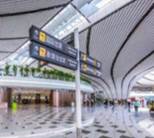
Have you ever taken a flight from Beijing Daxing International Airport (BDIA)? After opening on Sept.25, BDIA drew attention not just for its design, but also for its many high-tech facilities (设施) and services.
The new airport, seated in the southernmost part of Beijing is made up of a main terminal (航站楼), a supporting service building and a parking lot. Together, they cover an area of about 1.4 million square meters, which is equal to(等同于) 63 Tian'anmen Square, according to Beijing Review.
The new airport is expected to handle 45 million passenger trips a year by 2022 and 72 million by 2025, China Daily reported. With more runways (飞机跑道) planned, the new airport will eventually handle more than 100 million passengers each year. That's around the total population of the UK and Canada combined.
The airport has many new technologies that make it smarter and more efficient (有效率的). It is the world's first airport with a double-deck departure and arrival (双进双出) design for its terminal building. "It's more efficient for passengers than any other larger airport terminal of the same size in the world," Guo Yanchi, the chief engineer in charge of (主管) construction (建造), told China Daily.
According to the civil Aviation Administration of China, 86 percent of check-ins can be done through self-service check-in kiosks (自助值机一体机) and 76 percent of luggage can be checked automatically (自动地) with the help of self-service bag-drop machines. Other technologies, such as a facial recognition system(人脸识别系统), allow passengers to have a quicker check-in and boarding process.
The airport will also use a robot-operated (机器人操作的) parking system. Drivers just need to park their cars in given areas. Robots will then carry them to an empty space. When collecting their cars, drivers simply need to scan (扫描) a parking ticket to find out where to collect their cars.
-
(1) What do we know about BDIA?A . It's very large. B . It's in Beijing's city center. C . It's not completed yet. D . The airport doesn't have many new technologies.
-
(2) BDIA is expected to eventually handle ____________ passengers every year.A . 45 million B . 72 million C . 85 million D . 100 million
-
(3) What do we know from Paragraph 5?A . Robots will help passengers board (登机). B . Passengers will spend less time boarding at BDIA C . Passengers won't need to check in in person. D . Machines will replace human workers at the airport.
-
(4) The smart parking lot shows us ______________.A . that it's not convenient to park cars at BDIA B . how new technologies make BDIA more efficient C . that BDIA is the largest airport in the word D . that building the airport was difficult
Hello. We are students from Thailand, and we want to save the elephants. The elephant is one of Thailand's (symbol). Our (one) flag had a white elephant on it. This is a symbol good luck.
Elephants are smart animals. They can play soccer or music. They can also draw very (good). People say that "an elephant never forgets". Elephants can walk for long time and never get (lose). They can also remember places with food and water. This helps (they) to live.
But elephants are in great (dangerous). People cut down many trees elephants are losing their homes. People also kill elephants for their ivory. Today there are only about 3 000 elephants (over 100 000 before). We must (save) the trees and not buy things made of ivory. Remember that March 13th is Thai Elephant Day.
Breakfast dishes in China are widely different in different areas. Here we introduce some traditional, popular, and famous Chinese breakfast foods. These dishes are easily found in streets every morning.
|
|
Soybean Milk and Deep-Fried Dough Sticks Taste: sweet Price: 4 yuan This breakfast set usually appears together. The two parts are the most common breakfast mixtures. Some locals also like to have deep-fried dough sticks with rice porridge. You can eat one as it is or put it in some soybean milk, which has a better taste. |
|
|
Steamed Buns Filled with Meat, Soup, or Nothing Taste: salty or sweet Price: 2 yuan each; steamed buns filled with soup are more expensive at 15 yuan for 8 buns. There is an almost endless variety of tastes, both salty and sweet. They are also very easy for a take-out. Stores can sell steamed buns separately, fifty cents each. |
|
|
Wheat Noodles Taste: salty Price:5-10 yuan In northern China, where wheat is more commonly eaten, a bowl of hot wheat noodles is a popular breakfast dish. In Wuhan, hot-and-dry noodles are eaten at breakfast by almost everyone. The people in Lanzhou also enjoyed noodles. |
|
|
Rice Noodles Taste: salty Price:5-10 yuan Rice noodles are more commonly eaten in the south, especially in Guangxi and Yunnan provinces. In Guilin, Guilin rice noodles are a very famous and popular cheap meal. Local people eat the dish not just for breakfast, but also for lunch or dinner. |


-
(1) What can we learn about from soybean milk and deep-fried dough sticks?A . Soybean milk and deep-fried dough sticks are salty. B . This breakfast set is the most common breakfast mixtures. C . Soybean milk and deep-fried dough sticks are the cheapest. D . Deep-fried dough sticks with rice porridge aren't traditional Chinese breakfast.
-
(2) How much does he pay if a student wants to buy 8 steamed buns?A . 2 yuan B . 4 yuan. C . 8 yuan. D . 15 yuan.
-
(3) Where may wheat noodles be popular?A . Yunnan. B . Jiangxi. C . Guangxi. D . Gansu.
-
(4) What may the people in Guilin have for three meals?A . Rice noodles. B . Wheat noodles. C . Steamed buns filled with meat. D . Soybean milk and deep-fried dough sticks.
-
(5) Which section is the text most probably from on the website?A . Health and lifestyles. B . Sports and science. C . Food and diets. D . Art and culture.
|
| The Temple of Heaven, in southern Beijing, was first built in 1420 and was rebuilt during the Ming and Qing Dynasties. It was the place where the emperors of the Ming Qing Dynasties would admire the god and hope for good harvest (收获)It is the largest group of buildings in the world to pay homage(致敬)to god 。 |
| | The Potala Palace was built in the seventh century and it has a long history of over 1300 years. In 641, Songtsan Gambo, the ruler of the Tubo kingdom, asked his people to build it for princess Wencheng of the Tang Dynasty. It has 13 floors and is 117 meters high. And it is made of wood and stone. |
| | Terracotta Warriors and Horses (兵马俑)is the greatest historical and cultural site(遗址)in Lintong, X'ian, Shaanxi Province. Emperor Qin Shi Huang began to build it at the age of 13. It took 11 years, The terracotta figures (秦俑) have the same size as a real man. They have different heights, clothes and hairstyles because of their different levels. |
| | The Mogao Caves (莫高窟)is formed by 492 temples, 25 meters southeast of the center of Dunhuang. It is also called the Caves of a Thousand Buddhas (千佛洞)。The largest statue (雕像)in front of the cave wall is 34. 5 meters high and the smallest is only 2 cm high. The art of Dunhuang covers more than 10 major forms, such as wall paintings, music and dance and so on. |
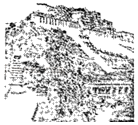
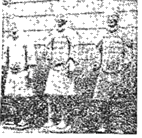
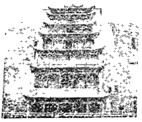
-
(1) The Temple of Heaven was first built 。A . in 492 B . in 641 C . in 1311 D . in 1420
-
(2) Songtsan Gambo built the Potala Palace for 。A . the god B . princess Wencheng C . his people D . Emperor Qin Shi Huang
-
(3) You can visit if you are in Xi'an.A . the Temple of Heaven B . the Potala Palace C . the Terracotta Warriors and Horses D . the Mogao Caves
-
(4) The smallest statue of the Caves of a Thousand Buddhas is 。A . 2 cm B . 34. 5 m C . 25 km D . 13 cm
-
(5) Which of the following is TRUE according to the passage?A . The Potala Palace is made of wood and stone. B . The TeiTacotta figures are bigger than real men. C . The Mogao Caves is in the southest of Dunhuang. D . The emperors admired the people in the Temple of Heaven.
If you go to Brisbane, Australia, you can easily get a small book called "Discover Brisbane" free. The book tells you almost everything in Brisbane: the restaurants, the shops, the cinemas, the streets, the buses, the trains, the banks, etc. Here is something about on page 49:
|
the Name of the Bank |
Address |
Telephone |
Banking Hours: |
|
ANZ Banking Group |
Corner of Greek & Queen Street |
228 3228 |
Mon. - Thurs., 9:30 a.m. to 4 p.m. Fri., 9:30 a.m. to 5 p.m. All banks close on Sat. Sun. & Public holidays. |
|
Bank of New Zealand |
410 Queen Street |
221 0411 |
|
|
Bank of Queensland |
229 Elizabeth Street |
229 3122 |
|
|
Commonwealth Banking Group |
240 Queen Street |
237 3111 |
|
|
National Australia Bank Ltd. |
225 Adelaide Street |
221 6422 |
|
|
Westpac Banking Corp. |
260 Queen Street |
227 2666 |
-
(1) From the material, we can know ________.A . Brisbane is a city in Australia B . "Discover Brisbane" is expensive C . "Discover Brisbane" has about 49 pages
-
(2) ________ seems to be the banking center in Brisbane.A . Greek Street B . Elizabeth Street C . Queen Street
-
(3) In Australia, the banks have their longest service hours on ________.A . Mondays and Thursdays B . Fridays C . weekends
A city's landmark is usually the first thing that causes tourists' attention. It is a symbol of the city. Different cities have different styles of architecture. But a landmark means the most famous of it.
|
|
The Elizabeth Tower. Commonly known as Big Ben, has seen the history of the city of London, the UK. The tower was set up in 1858. The clock weighs 13. 5 tons. It's the biggest clock in Britain. The sound of Big Ben is part of London people's lives. For over a hundred years, people have listened to its sound. They think of it as an old friend. |
|
|
The Sydney Opera House is the symbol of Sydney and Australia. Its sail shape attracts visitors around the world. But few people know it has an interesting story. Its designer Utzon got the idea by peeling an orange. It took 14 years to build it, and was finished in 1973. |
|
|
When you see this pencil-shaped building, you'll know you are in New York. The Empire State Building has 102 floors, which is about 443 meters tall. It took only410 days to build it, and was completed in 1931. The building shows the ambition of humans to build a tower that could reach for the sky. |
|
|
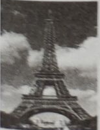
The Eiffel Tower in Paris stands for French people's creativity and imagination. It was built in 1889. At that time, the tower was thought to be a monster, because it was quite different from the traditional buildings with dome tops. But later it turned out to be a miracle of metal architecture. Now it becomes one of the Europe's most famous tourist attractions. |
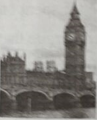

-
(1) The people of ________ regard their city's landmark as an old friend.A . London B . Sydney C . New York D . Paris
-
(2) Which building has the longest history?A . The Eiffel Tower. B . The Sydney Opera House. C . The Elizabeth Tower. D . The Empire State Building.
-
(3) The text mainly introduces some ________ around the world.A . great cultures B . interesting cities C . strange traditions D . famous landmarks
Columbus was an Italian. He believed the world was round, though few people knew or believed it at that time. He thought if he always went west, he would at last get to India. His friend, Isabella, the queen of Spain, gave him support which made it possible for him to start his journey.
On August 3, 1492, Columbus started from Spain with three small ships. He and his men stepped into what was then an unknown sea. Many thought that they would never come back. On and on they went with their ships, not knowing where they were going!
For a long time there was nothing but wide waters all around them. Day after day, and night after night passed by. The men who were with him became scared, and tried to force him to return. But Columbus was brave and would not turn back. At last, a land appeared.
When the people of the island saw Columbus's ships, they were very surprised. They had never heard of Europe or the people who lived there. Columbus and his men filled their ships with fruits, vegetables, plants and animals. He even took some island people with him as he returned to Spain.
When the other countries of Europe heard of the great discovery of a new world, they wanted to share in its riches. So many things like bananas, sugar and cotton were brought into Europe from there. And these things changed Europe a lot.
The potato plant which was taken back to Europe also changed Europe. As it grew easily in Europe, it meant more food for the people there and so the population of Europe increase.
-
(1) Columbus started his journey with the help of ___________.A . the king of Italy B . his people C . people in the island in the sea D . the queen of Spain
-
(2) The men with Columbus tried to force him to return _______.A . after they saw the island B . after they filled their ships with fruits C . because they felt scared D . because they took some island people
-
(3) In the last paragraph, the writer mainly wants to tell us ________.A . people could grow potatoes easily in Europe B . the population of Europe increased very fast C . potatoes were of great importance to Europe D . there were more foods to choose in Europe
-
(4) We can infer(推断)that _________.A . after Columbus returned, some Asian countries sent out ships to the new land B . Columbus became very important in European history because of his discovery C . when the people of the island saw the ships of Columbus, they were very happy D . Columbus took fruits, animals and even some people with him when he got to the island
Can you imagine a sea of sand three times bigger than India? This is the Sahara Desert, the largest desert in the world. It covers 11 countries in North Africa and is over 9 million square kilometers. That's more than 25% of Africa.
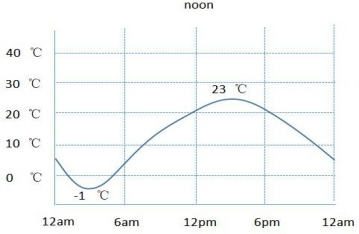
In the Sahara, temperatures are very different during the day and at night. It is much hotter during the day than at night. During the day, the hottest time is between 2 pm and 4 pm, when temperature rises to 33℃. But it is very cold at night—the coldest time is at 4 am, when temperatures fall to -1℃. The Sahara is very dry. The average precipitation (降水) in a year is only 70 millimeters.
How to stay alive in the Sahara Desert?Marco Rivera, our survival expert, has some tips.
Take warm clothes and a blanket. You will need a hat, long trousers and a woollen jumper to keep you warm at night. During the day, cover your body, head and face. Clothes protect you from the sun and keep water in your body. You will also need a warm blanket at night. It can get cold very quickly. When the temperature drops, it can be a shock and make you feel even colder.
A car is easier to see than a person walking in the desert. You can also use the mirrors from your car to signal to planes and other cars. You can use your car tyres to make a fire. A fire is easy to see. It will help people find you and it will keep you warm at night.
Try to drink some water at least once every hour. You need your water to last as long as possible. Drink only what you need. When you talk, you lose water from your body. Keep your mouth closed and do not talk.
If you eat, you will get thirsty and drink all of your water more quickly. You can eat a little, but only to stop you from feeling very hungry. Eat very small amounts of food and eat very slowly. You can live for three weeks with no food, but you can only live for three days without water.
-
(1) The writer leads the topic in Paragraph 1 by .A . telling stories B . listing numbers C . giving examples D . making a survey
-
(2) According to Paragraph 2, which of the following is RIGHT?A .
 B .
B . 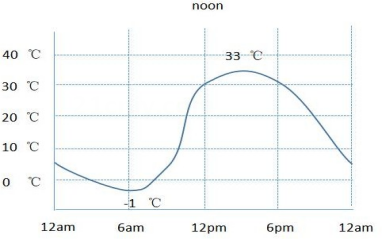 C .
C . 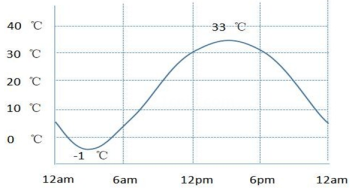 D .
D . 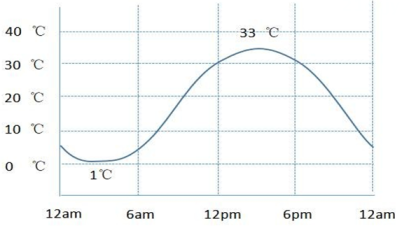
-
(3) How many pieces of tips does Marco Rivera offer?A . Three. B . Four. C . Five. D . Six
-
(4) Who would be interested in reading this passage most?A . Someone who likes music. B . Someone studying history. C . Someone good at taking photos. D . Someone studying geography.
I LOVE SHANGHAL I think I fell in love with the city even before I came here. In the Western mind, Shanghai (think) of as both strange and beautiful. It was known as the "City of Adventurers" and the "Pearl of the East." And when I arrived, I wasn't disappointed." western visitors can see, the city is really shining as a beautiful pearl(珍珠).
That was many years ago, but my love of Shanghai has not grown (little); it has grown more. The city that interests me so much has never stopped improving and it is now ranked among the ten best cities in the world. And the Shanghai government hopes (make) it the best city in the world by 2035. But what makes a city the "best"?
I don't know you agree with me or not. First of all, it has to have a good economy(经济) where young people can find good jobs. It also has to be a healthy place with a good environment. And, third, it has to be a place where people can relax and enjoy themselves. Most of all, a great city has to have great people.
Jack is an American student. He is interested in Chinese culture, especially the 24 solar terms. At the same time, he is a food lover. He'd like to know the traditional food on certain days. Can you help him?
Start of Spring (1st solar term), February 3, 4, or 5. After Start of Spring, the weather gets warm and everything turns green. In many parts of China, people eat to welcome spring.
Clear and Bright (5th solar term), April 4, 5 or 6. After this solar term, the sun shines bright, the temperature rises, and the rain starts to increase (增加). People usually fly kites and eat at this time.
Summer Solstice (10th solar term), Jun.21 or 22. When the sun is at its northernmost point, this day has the longest day time of the year in the Northern Hemisphere (半球). As the days become hotter and hotter, people can eat .
Winter Solstice (22nd solar term), Dec.21, 22 or 23. After that, the days become longer and the nights become shorter. Traditionally, families and friends get together and enjoy .
Lesser Cold (23th solar term), Jan.5, 6 or 7. After it, the weather starts to enter the coldest days. People around China are going to prepare for the coming new year. In order to keep warm, it's better to eat food that can provide heat like hot pot and .
|
A. Dumplings B. Spring pancakes C. Green rice balls D. Cold noodles E.Laba porridge |
In some western countries. many children do housework to get pocket money(零用钱). They usually start to do this when they are ten years old.
School students have to do homework and study for tests. They don't have much free time on weekdays. They often do housework on weekends.
Young kids only do easy housework. So they don't get much money. But that's enough(足够的). Many of them only want to buy candy. And candy is cheap! They often help wash the dishes, clean the floor. or fed(喂养)the pet cat or dog.
When they get older, they want to buy more and more things. They want more expensive things than candy. So they have to work harder! They often help their parents wash the family car, cut the grass. or cook meals.
Some jobs are difficult. But it is a good way for children to learn new things. For example, they can learn how to use a lawnmower(割草机)or how to cook delicious food. Of course, their parents help them at first.
-
(1) What do the western children do to get pocket money?
-
(2) How old are the western children when they usually start to do housework?
-
(3) When do the school students often do the housework?
-
(4) What do the young kids only want to buy when they get the money?
-
(5) Who help the children do the difficult jobs at first?
- 今年,我国发现婴儿食用了含有三聚氰胺奶粉,导致大批患儿出现肾结石,并发生肾衰竭,甚至出现死亡的事件。不法分子所以向奶粉中
- ________ with a slow economic situation overseas,more Chine
- 以下词组可以用来概括中国新民主主义革命的主要关节点,按时间先后排列正确的是 A.五四起风雷 遵义定决策 卢沟燃烽火
- 19世纪末20世纪初,帝国主义形成两大对立的军事集团,其中三国同盟是指( )A.英国、法国、俄国
- 下列图中能产生感应电流的是
- 用游标为20分度的游标卡尺测量某一工件长度,示数如图甲所示;用螺旋测微器测其直径d,示数如图乙所示,则此工件长的测量值为
- 分析下图所示的四个装置,其中结论正确的是()A.(1)(2)中Mg作负极,(3)(4)中Fe作负极 B.(2)中Mg作正
- 在电场中某点放一试探电荷,其电荷量为q,试探电荷受到的电场力为F,则该点电场强度为E=F/q.那么下列说法正确的是()
- 下列几种技术中,应用光的干涉原理的是 ( ) A.杨氏双缝实验测光波波长
- 右图所示,小试管中装有石灰石,滴管内装有稀盐酸,U形管内盛有食用菜籽油。反应前U形管两侧的液面持平。把滴管内的稀盐酸滴入
- An American program called the President’sEmergency Plan f
- 请根据所给材料,把下列两个语句补充完整。要求对材料内容分别进行概括。 地震、风灾、冰灾、海啸等灾难的发生,是不以人类的意
- 将用导线相连的两个铂电极插入KOH溶液中,然后向两极分别通入CH3OH(甲醇)和O2,则发生了原电池反应。该原电池反应的
- 10.某种鼠中,黄鼠基因Y对灰鼠基因y为显性,短尾基因T对长尾基因t为显性,且基因Y或t纯合时都能使胚胎致死,这两对基因
- 阅读下面的文字,完成下列各题。(9分,每小题3分) 消费也有个道德问题 如今,在市场经济条件下,人们的物质生活和精神生活
- 设计表格,归纳知识,是学习历史的有效方法。八年级的一位同学设计了如下表格,其中不正确的一项是
- 下列词语中没有错别字的一组是 () A.部署恢弘计日程功缄口不语B.妥帖 坐阵 郑重其事 真知灼见 C.账目悍卫一筹
- (原创)一般来说,动物细胞体外培养需要满足以下条件 ①无毒的环境 ②无菌的环境 ③合成培养基需加血清、血浆 ④
- 设,二次函数的图象可能是 ( )
- 某战士在抢险时下肢受伤,伤及静脉,血液连续不断从伤口流出。此时应该 ()A、压迫伤口近心端一侧的血管 B、


