月考专区(九年级下) 知识点题库
Remembering names is an important social skill. Here are some ways to master it.
When you hear a person's name, repeat it. Immediately say it to yourself several times without moving your lips. You could also repeat the name in a way that does not sound you are forced to.
You can let other people help you remember their names. After you've been introduced to someone,ask that person to spell the name and pronounce it correctly for you. Most people will be pleased by the effort you're making to learn their names.
To be honest to say that you can't remember someone's name can actually make people relaxed. Most of them will feel sympathy if you say, “I'm working to remember names better. Yours is right on the tip of my tongue. What is it again?”
Consider going early to meetings, parties and classes. Sometimes just a few people show up on time. That's fewer names for you to remember. And as more people arrive, you can hear them being introduced to others -- an automatic review for you.
When meeting a group of people, concentrate on remembering just two or three names. Free yourself from remembering every one. Few of the people in mass introductions expect you to remember their names. Another way is to limit yourself to learning just first names. Last names can come later.
A. Limit the number of new names you learn at one time. B. Recite and repeat in conversation. C. Tell the truth that you don't know. D. Remember names as many as possible E. Go early. F. Ask the other person to recite and repeat. |
— Usually at the Thanksgiving Festival.
Most Visited Museums in the World
|
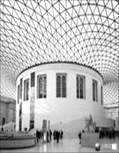
The British Museum, London, UK
It is one of the world's greatest museums of human history and culture. It was opened on Jan. 15, 1759. And now it has about eight million things, from the stone tools of early men to 20th century inventions. Some famous inventions are on show there, such as the bicycle, the telephone, the television and so on. |
|
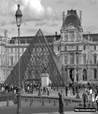
Musee du Louvre, Paris, France
It was first built in 1204, but as a museum, it was opened in 1793. Once a palace that was homes to kings of France, the Louvre is now the world's most famous museums. Millions of visitors go to the museum every year. It's famous for some of the best pieces of art in the world. |
|
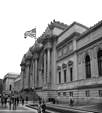
The Metropolitan Museum of Art, New York, US
The museum is one of the world's largest museums. It was opened in 1872. There are over 2 million things of art. You can see many interesting things from Africa and the Middle East. Of course, it has a great collection of American art. If you are interested in American history, don't miss it. |
-
(1) How many things are there in the British Museum now?A . 2 million B . 8 million C . 5 million D . 7 million
-
(2) When was Musee du Louvre opened as a museum?A . 1759 B . 1204 C . 1793 D . 1872
-
(3) In the passage, we know the Metropolitan Museum of Art is __________.A . in New York B . once a palace C . not interesting D . famous for science
C
I will never forget what my old headmaster taught me when I was only 15 years old. Every time I drift off course, I get reminded of this story.
It was a normal Monday morning, and he was making a speech to the students on important things in life and about devoting ourselves to what is important to us. This is how the story went.
An old man lived in a certain part of London, and he would wake up every morning and go to the subway. He would get the train right to Central London, and then sit at the street corner and beg. He would do this every single day of his life. He sat at the same street corner and begged for almost 20 years. His house was dirty, and a stench came out of the house and it smelled horrible. The neighbors could not stand the smell any more, so they asked the police officers to clean the place. The officers knocked down the door and cleaned the house. There were small bags of money all over the house that he had collected over the years.
The police counted the money, and they soon realized that the old man was a millionaire. They waited outside his house to tell the good news to him. When he arrived home that evening, he was met by one of the officers who told him that there was no need for him to beg any more as he was a rich man now, a millionaire. He said nothing at all. He went into his house and locked the door. The next morning he woke up as usual, went to the subway, got into the train, and sat at the street corner and continued to beg. Obviously, this old man had no great plans, dreams or anything important for his life. We learn nothing from this story other than staying focused on the things we enjoy doing.
-
(1) The headmaster told the story to the students to__________.A . make the students relaxed in the lesson B . remind the students to think deeply C . show how poor the old man was D . encourage the students to become rich
-
(2) After hearing what the officer said, the old man_________.A . believed the officer was playing a joke on him. B . didn't know many people respected him a lot. C . was very angry to find his house broken into. D . was not so excited as the officer had expected.
-
(3) Which word can best describe the author's attitude towards the old man?A . Happiness. B . Disappointment. C . Respect. D . Anger.
-
(4) What did the author learn from the story?A . One should devote himself to his dream. B . The old man was foolish not to stop begging. C . What the headmaster taught was very important. D . People must have a plan before taking action.
Daniel Olin was 11 years old when his parents moved to Canada. He liked his new school and made friends there, but then things at home started to change. His mum and dad began to argue and the arguments got worse and worse until one day, Daniel's mum left. With his father working long hours, Daniel felt very lonely and very unhappy. He wanted to escape, to run away. And that's what he did.
Very early one terribly cold morning when the snow was deep on the ground, he packed a bag with some clothes, some chocolate and a map of Canada and set off to a forest. He ran and ran until he could hardly breathe. His feet were heavy with the snow but he still walked on through deep snow, not even watching where he was going.
Then, disaster struck. A rock hidden by the deep snow caught his feet and Daniel fell to the ground. He had broken the bone. He was very cold and was starting to feel tired, but he knew that if he fell asleep in the snow, he would certainly die from the cold.
A tree shook ahead. From within the branches, a pair of yellow eyes watched Daniel. The puma had been following him. A puma is a large wild cat with claws that could tear. Daniel into pieces. But instead of moving in for the kill, the puma walked up to Daniel and lay across his chest, arms and legs. Daniel was too frightened to move, but soon the warmth of the animal reached Daniel and he began to feel better. From time to time, the puma pressed his muzzle against Daniel and rocked his head gently. Clearly, the puma knew that Daniel must not fall asleep. This animal should have been a real danger to Daniel and yet the boy began to feel safe.
They remained like that for several hours until Daniel and the puma heard voices. The rescue team had found them.
-
(1) Daniel ran away from home because ______.A . he had a big argument with his father B . he wanted to learn to be independent C . he didn't get enough care from his parents D . his parents were always arguing at home
-
(2) What was the ‘disaster'?A . Daniel lost his way in the forest. B . The heavy snow blocked the way. C . Daniel fell down and got hurt. D . A puma wanted to attack Daniel.
-
(3) Why didn't Daniel notice the rock that caused him to fall?
-
(4) What is the best title for the story?A . Puma in danger B . A caring puma C . Rescue of a boy D . A homeless boy
D
Audrey Hepburn won an Academy Award as Best Actress for her first major American movie, Roman Holiday, which was showed in 1953. But she is remembered as much for her help as for her acting.
Born in Belgium in 1929, Audrey's father was British and her mother was Dutch. Audrey was sent to live at a British school for part of her childhood. During World war Ⅱ, she lived and studied in the Netherlands. Her mother thought it would be safe from German attacks. Audrey studied dance as a teenager and during college. But when she returned to London after the war she realized she wasn't going to be a ballet dancer. So she began taking acting parts in stage shows. Later she began to get small parts in movies.
But it was Audrey Hepburn's move to America that made her truly famous. In 1951 she played the character "Gigi" in the Broadway play Gigi andwon popular praise. Two years later, Roman Holiday made her a star at the age of 24.
Audrey made more than 25 movies. Among her most popular roles was "Hoolly Golinghtly" in Breakfast at Tiffany's in 1961. Three years later she played "Eliza Doolittle" in My Fair Lady. She was married twice. In 1989, the UN Children's Fund named Audrey a goodwill ambassador. She travelled all over the world in support of UNICEF(联合国儿童基金会) projects. The UN agency said she was a tireless worker. She often gave 15 interviews a day to raise money and get support for UNICEF projects.
Audrey Hepburn often said her love to UNICEF was the result of her experiences as a child during World War II. She said she knew what it was like to be hungry and to be saved by international help. She was a goodwill ambassador until her death in 1993 from cancer.
-
(1) Why did Audrey live and study in Netherlands?A . She was born there. B . The schools were better there. C . She could stay away from war. D . Her parents wanted her to study ballet there.
-
(2) How old was Audrey when she acted in Breakfast at Tiffany's?A . 32. B . 25. C . 24. D . 15.
-
(3) What made Audrey work so hard to support UNICEF?A . Her parents' wish. B . Her love to children. C . Her wish to be famous. D . Her own early experiences.
-
(4) What can we learn from the passage?A . Audrey lived in America in the 1950s. B . Audrey's parents were both British. C . The character "Gigi" was her most popular role. D . Audrey gave up dancing when she went to college.
-
(5) In what order did Audrey do the following?
①She began to appear in movies.
②She returned to London from the Netherlands.
③She played "Eliza Doolittle" in My Fair Lady.
④She won an Academy Award as Best Actress.
⑤She travelled all over the world in support of UNICEF projects.
A . ①②③④⑤ B . ②①④③⑤ C . ①②④③⑤ D . ②①③④⑤
-
(1) What can Jeff NOT do?A . Play the piano. B . Play the violin. C . Play the guitar.
-
(2) How long is the art club open every Sunday afternoon?A . For an hour. B . For ninety minutes. C . For two hours.
-
(3) How many students are there in the art club?A . 22. B . 25. C . 27.
-
(4) What does Jeff most likely think of his mother?A . He thinks his mother is strict. B . He thinks his mother is friendly. C . He thinks his mother is outgoing.
If you're tired, you'd better not (stay) up late.
Sleep is lovely—enjoy it! Have a fixed bedtime. It makes you feel calm if everything is in order before you sleep. So brush your (tooth), wash your face, open the window and go to bed. Your mind will take in all the cue(提示) that it's time (go) to the land of dreams and you'll be sleeping a baby in no time. Go to bed when you're tired! If you're feeling really tired, go to bed. Don't stay up to watch a late show, don't try to do bit more work, and don't plan to stay at your (friend) place too late. Go to bed.
Say yes to milk
If you want a bedtime snack, have something calming and sleepy. A glass of warm milk will help to sleep (good). And try not to eat a big meal too close to bedtime, which keeps you awake.
Turn off the TV
TV programs make you excited. Don't watch (something) for an hour you go to bed. Listen to some relaxing music instead! It will send you to sleep in no time at all.
All the tips above (be) for a good night's sleep. Your body's going to thank you very much for it.
|
known for/ known as/ separate/ attend/ pulled down/ stuck |
-
(1) Many people areat home because of the novel corona-virus.
-
(2) Wuhan is the Yellow Crane Tower.
-
(3) It is hard to from your friends.
-
(4) The president will the meeting though he isn't feeling well.
-
(5) The windows and doors come from old buildings that were .
 B .
B .  C .
C . 
-
(1) How is Tina's day today?A . Exciting. B . Busy. C . Terrible.
-
(2) How did Tina go to school?A . By car. B . On foot. C . By bus.
-
(3) When did Tina get into her house?A . At 5:40. B . At 5:00. C . At 4:20.
Green invaders (入侵者) are taking over America. Not invaders from space, but plants! You might not think of plants as dangerous, but in this case they are becoming a great threat (威胁) to the nature's food chain (食物链) . The invaders are plants brought here by people from other countries to make gardens and yards look pretty. Now there are so many of those plants, they are crowding out the native plants that have lived here since before human settlers arrived.
And that's a problem, says Dr Doug Tallamy, an insect expert at the University of Delaware. He explains that almost all the plant-eating insects in the United States eat only certain plants. Monarch butterfly caterpillars (幼虫) , for example, eat milkweed. If people cut down milkweed and replace it with another plant, the butterflies will have no food to be alive. But the trouble doesn't stop there. When insects can't get the right plants to eat and they die off, then the birds don't have enough bugs for their meals. Tallamy points out that almost all migrating (迁徙) birds depend on insects to feed their young.
"We can't let the plants and animals around us disappear," says Tallamy. "The way to protect them is to give them food to eat. But when we plant non-native plants, we are breaking the food chain, because then we don't have the insects the birds need to live." That's bad for the Earth. We need different kinds of living things to keep the planet healthy and beautiful.
The good news is: garden centers sell native plants. "Just google 'native plants' and your location, and you can find out which plants really belong where you live," says Tallamy.
-
(1) How did green invaders arrive in America?A . They fell down from space. B . They were carried to America by birds. C . They had grown here before human settlers arrived. D . They were brought in by people from foreign countries.
-
(2) According to Dr Tallamy, which of the followings about the insects in the US is NOT true?A . Almost all the plant-eating insects eat only certain plants. B . Monarch butterfly caterpillars can't live without milkweed. C . If insects can't eat the right plants, they will find other ones. D . The insects' death will greatly influence the migrating birds.
-
(3) We can know whether a plant is native by .A . googling it on the Internet B . asking Dr Doug Tallamy C . looking it up in the dictionary D . searching for it in the garden
-
(4) What is the best title of the passage?A . Green Invaders—Threat to Local Nature B . Green Invaders—Local Living Things C . Green Invaders—Dangerous Food Chain D . Green Invaders—Environmental Protectors
Mark had been a hard-working student. But in high school he made friends with some bad guys and changed. Neither did he work hard, (也不) listened to his parents. Finally he (不及格) in one subject. Inside he sensed a strong (悲伤) but never talked to anyone.
One day, the headmaster met him by the fireplace. They (保持不变) silent for 10 minutes. Then the headmaster took out a burning piece of wood and put it in the soil. It kept (加热) for a while and then went out. The headmaster said (耐心地), "Son, staying out for some time didn't make it useless. Let me put it in the fireplace again." Of course, it started burning again.
The headmaster (继续), "Mark, you are just like that piece of wood. Earlier you were an excellent student. Then you fell into bad company. However, that wood found its (价值) again after being put back in the fire. In the same way, you can become one with great achievements."
Hearing that, Mark (后悔) what he had done and made up his mind to make his future. Two years later he was admitted to Princeton University and everyone was (骄傲的) of him.
One day, Peter found a treasure map. "Hurray! I'm going to find this treasure and have some adventure!" he said.
Peter 1. He walked and met Lion. "You are 2 and brave," said Peter to Lion. "Will you come with me?" Lion agreed. The forest was dark. Peter was 3 but with Lion by his side, he made it through.
When they reached the mountain, they met Eagle (鹰). "You have excellent4, and can find dangers easily," said Peter to Eagle, "will you come with us? We are 5 a treasure!" Eagle agreed. When Lion fell down, Peter was6enough to help him. Eagle, with his excellent eyes, 7 every step they took.
Soon, they met 8. "Will you join us?" Peter asked Sheep, "and keep us 9when it's cold?" Sheep agreed. When a cold wind came, they 10hugged (拥抱) Sheep who kept them warm.
The four 11 reached the ocean where they met Turtle. "Can you help us cross the water?" Turtle agreed. There was strong wind and the ocean seemed to be very dangerous, 12 Turtle successfully helped them cross the water.
After that, they met Owl. "Congratulations, you have found the treasure." Owl said. "Where is it?" they all answered in 13. "You have overcome many difficulties with friends. You would 14 have done it without one another." They all realized that Owl was right. They had found 15! Indeed, they had found the greatest treasure ever!
- 物质检验时,首先对试样进行外观观察,试样的外观主要是指______________________;若试样是固体时,应先
- 如图,AD是△ABC的角平分线,DE∥CA,交AB于点E,DF∥BA,交AC于点F.∠1与∠2相等吗?为什么?
- 配制100 mL 1 mol·L-1氢氧化钠溶液,下列操作错误的是 A.在托盘天平上放两片大小、质量一样的纸,然后将氢氧
- 我国拥有较丰富的地热资源,其开发利用前景广阔。下列关于地热能说法正确的是() ①可以用于洗浴、发电以及供暖等方面 ②与煤
- 如图所示,在绳下端挂一物体,用力F拉物体使悬线偏离竖直方向的夹角为α,且保持其平衡.保持α不变,当拉力F有最小值时,F与
- 质量分别为mA=0.2kg,mB=0.4 kg的两滑块A、B由轻弹簧相连接,置于光滑水平面上,用一轻绳把两滑块拉至最近,
- 工业革命中,在动力的发明和使用上,具有开创意义的成就是( ) A、蒸汽机车的发明
- 已知集合P={平面直角坐标系下直线的倾斜角},Q={两非零向量的夹角},R={二面角的大小},S={平面上两直线所成的角
- 生活离不开化学,请用相关序号填空:A.纯碱 B.白醋 C.烧碱 D.生石灰 E.食盐 F.熟石灰.回答下列问题: (
- 已知,则的大小关系是( ) A. B. C. D.
- (09年湛江二中月考)(17分)在绝缘水平面上,放一质量为m=2.0Χ10-3kg的带正电滑块A,所带电量为q=1.0Χ
- 下列计算正确的是(). A.x4·x4=x16 B.(a3)2·a4=a9 C.(ab2)3÷(-ab)2=-ab4 D
- The winter comes, it is ________ snow everywhere, and the bi
- 写出同时具备下列两个条件的一次函数(正比例函数除外)表达式 ________.(写出一个即可)(1)随着的增大而减小;(
- 如图5所示,直线A为电源口的路端电压与电流的关系图象,直线B为电源b的路端电压与电流的关系图象,直线C为一个电阻R的两端
- .用右图的简易净水器处理河水,下面对该净水器分析正确的是 ( ) A.
- 原江西省翻省长胡长清因贪污受贿被严惩。这个改革开放以来第一个被严惩的省部级官员。他死前曾说:“组织的监督和管理对我而育,
- 若η=2ξ+3,且ξ的分布列为ξ1234P,则Dη等于A. B.4 C.
- 如图,已知在△ABC中,AB=4,BC=2,以点B为圆心,线段BC长为半径的弧交边AC于点D,且∠DBC=∠BAC,P是
- 早在2000多年,我国古人就提出了“大同社会”的理想:“大道之行也,天下为公,选贤举能,讲信修睦。故人不独亲其亲,不独子


