高二英语上学期上册试题
Taking good notes is a time-saving skill that will help you to become a better student in several ways. _36 Second, your notes are excellent materials to refer to when you are studying for a test. Third, note-taking offers variety to your study time and helps you to hold your interest.
You will want to take notes during classroom discussions and while reading a textbook or doing research for a report. _37 Whenever or however you take notes, keep in mind that note-taking is a selective process. __38__
The following methods may work best for you.
● Read the text quickly to find the main facts and ideas in it.
● Carefully read the text and watch for words that can show main points and supporting facts.
● Write your notes in your own words.
● __39__
● Note any questions or ideas you may have about what was said or written.
As you take notes, you may want to use your own shorthand(速记). When you do, be sure that you understand your symbols and that you use them all the time.__40__
A. Use words, not complete sentences.
B. There are three practical note-taking methods.
C. You must write your notes on separate paper.
D. Otherwise, you may not be able to read your notes later.
E. you will also want to develop your own method for taking notes.
F. That means you must first decide what is important enough to include in your notes.
G. First, the simple act of writing something down makes it easier for you to understand and remember it.
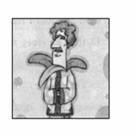
You may know the English letters A,B and C,but do you know there are people called ABCs?You may like eating bananas,but do you know there is such a thing as “a banana person”?How strange!Are these people from another earth?No.They are just Chinese people like you and me.
ABC means Americaborn Chinese.An ABC is a Chinese,but was born in the US.Sometimes,people call an ABC “a banana person”.A banana is yellow outside and white inside.So,when a person is a banana,he or she is white inside—thinking like a westerner and yellow outside—looking like a Chinese.
Do you know why?Usually,ABCs know little about China or the Chinese language.Some of them can not speak Chinese.Also,they are not interested in Chinese politics.
But if ABCs can’t speak Chinese,can we still call them Chinese people?Yes,of course.They are Chinese.They are overseas Chinese.These people may be citizens of another country like the US,Canada or Singapore,but they have Chinese blood.Their parents,grandparents or even greatgrandparents were from China.They all have black eyes and black hair.
But they are not Chinese citizens.They are not people of the People’s Republic of China.For example,we all know the famous scientist C.N.Yang (杨振宁).He got the Nobel Prize for physics in 1957.Chinese people love him.But he is an American citizen.
36.“ABC”in the passage stands for________.
A.3 English letters B.a kind of banana
C.Chinese born in America D.Americans born in China
37.Chinese in western countries are called “banana persons” because________.
A.their bodies are white inside but yellow outside
B.they think like westerners but look like Chinese
C.they were born in China but go to study in America
D.they like to eat bananas
38.This passage mainly talks about________.
A.different kinds of bananas B.overseas Chinese
C.the Nobel Prize D.the life story of C.N.Yang
Many questions were asked, particularly ______ the cost of the new plan.
A. in reply to B. in relation to C. in act to D. in addition to
There is difference between reading for information and reading for understanding. 36
The first sense is the one in which we read newspapers, magazines, or anything else.
37 Such materials may increase our store of information, but t hey cannot improve our understanding. And clearly we don't have any difficulty in gaining the new information, for our understanding was equal to them before we started. Otherwise, we would have felt the shock of puzzlement.
The second sense is the one in which we read something that at first we do not completely understand. Here the thing to be read is at the first sight better or higher than the reader. The writer is communicating something that can increase the reader’s understanding. 38 Otherwise one person could never learn from another. Here “learning” means understanding more, not remembering more information.
What are the conditions in this kind of reading? First, there is inequality (不平等) in understanding.
39 Besides, his book must convey something he possesses and his potential readers lack. Second, the reader must be able to overcome this inequality in some degree. And he should always try to reach the same level of understanding with the writer. If the equality is approached, success of communication is achieved.
40 It is the least demanding and requires the least amount of effort. Everyone who knows how to read can read for entertainment if he wants to. In fact, any book that can be read for understanding or information can probably be read for entertainment as well.
A. The writer should have a better communicating skill.
B. Such communication between unequals must be possible.
C. We can get access to the content of those materials easily.
D. The writer must be “higher” than the reader in understanding.
E. Thus, we can employ the word “reading” in two different senses.
F. Reading for entertainment is capable of increasing our understanding for information.
G. Besides gaining information and understanding, there’s another goal of entertainment.
He Made It!
One Sunday, Gavin, a teenager, went skiing at Sugarloaf Mountain in Maine. In the early afternoon, when he was planning to go home, a fierce snowstorm swept into the area. Unable to see far, he accidentally turned off the path. Before he knew it, Gavin was lost, all alone! He didn’t have food, water, a phone, or other supplies. He was getting colder by the minute.
Gavin had no idea where he was. He tried not to panic. He thought about all of the survival shows he had watched on TV. It was time to put the tips he had learned to use.
He decided to stop skiing. There was a better chance of someone finding him if he stayed put. The first thing he did was to find shelter from the freezing wind and snow. If he didn’t, his body temperature would get very low, which could quickly kill him.
Using his skis, Gavin built a snow cave. He gathered a huge mass of snow and dug out a hole in the middle. Then he piled branches on top of himself, like a blanket, to stay as warm as he could.
By that evening, Gavin was really hungry. He ate snow and drank water from a nearby stream so that his body wouldn’t lose too much water. Not knowing how much longer he could last, Gavin did the only thing he could — he huddled (蜷缩) in his cave and slept.
The next day, Gavin went out to look for help, but he couldn’t find anyone. He followed his tracks and returned to the snow cave, because without shelter, he could die that night. On Tuesday, Gavin went out again to find help. He had walked for about a mile when a volunteer searcher found him. After two days stuck in the snow, Gavin was saved.
Gavin might not have survived this snowstorm had it not been for TV. He had often watched Grylls’ survival show Man vs. Wild. That’s where he learned the tips that saved his life. In each episode (一期节目) of Man vs. Wild, Grylls is abandoned in a wild area and has to find his way out.
When Grylls heard about Gavin’s amazing deeds, he was super impressed that Gavin had made it since he knew better than anyone how hard Gavin had to work to stay alive.
29. What happened to Gavin one Sunday afternoon?
A. He hurt his eyes B. He caught a cold.
C. He got lost. D. He broke his skis.
30. How did Gavin keep himself warm?
A. He found a shelter. B. He built a snow cave.
C. He lighted some branches. D. He kept on skiing.
31. On Tuesday, Gavin ______.
A. got stuck in the snow B. stayed where he was
C. returned to his shelter safely D. was saved by a searcher
32. Gavin left Grylls a very deep impression because he ______.
A. was very hardworking
B. watched Grylls’ TV program regularly
C. did the right things in the dangerous situation
D. created some tips for survival
Yesterday and Today
Life in the twenty-first century will be different from life today. Between then and now many changes will take place, but what will the changes be?
The population is growing fast. There will be many people in world and most of them will live longer than people live now.
Computers will be much smaller and more useful, and there will be at least one in every home. And computer studies will be one of the important subjects in schools then.
People will work fewer hours than they do now and they will have more free time for sports, watching TV and travel. Traveling will be much cheaper and easier. And many more people will go to other countries for holidays.
There will be changes in our food, too. More land will be used for building new towns and houses for all the people. Then there will be less room for cows and sheep, so meat will be more expensive. Maybe no one will eat it every day. Instead they will eat more fruit and vegetable. Maybe people will be healthier.
Work in the future will be different, too. Dangerous and hard work will be done by robots. Because of this, many people will not have enough work to do. This will be a problem.
28. In the next century people don’t have to .
A. work long hours B. work fast
C. walk on foot D. eat meat
29. People may not eat as much as they do today.
A. fruit B. fish
C. meat D. rice
30. One big problem in the future is that .
A .many people don’t have to work
B. many people will not be able to find work
C. people won’t have enough food to eat
D. all the work will be done by robots
31. In the future
A. traveling will be more expensive
B. computers will be less important
C. people will be too busy to do sports.
D. computers will be much smaller.
Sure, we’ve all heard that we should get more sleep. The realities of life often make it become "we should get more sleep later." 36 The result is that you wake up the next day feeling like a role of The Walking Dead. Here are four ways you can adjust your biology in order to pay less for staying up.
● Move around.
Exercising before bed is a sure way to keep awake. That’s why you shouldn’t do it when you want to go to sleep, and it is also why hitting the gym, or even some fast push-ups can tell your body that it’s not time for bed. Being physically exhausted isn’t fun when you are trying to stay up late. 37 .
● Eat more protein.
Few people think about the fact that the brain and body use a lot more energy when were awake. If you are pulling an all-nighter, you’re going to need a lot more food than you are used to eating. 38 . To stay awake, plan to eat larger meals than normal and to eat them more frequently.
● Drink the right stuff.
It’s tempting (诱人) to switch to sugary caffeine drinks like Red Bull, but the sugar will lead to a crash. Instead, if you want to use caffeine, drink early in the evening so it’ll wear off by the time you want to sleep. 39 Don’t make it worse by drinking sugar.
40 ______________
Turn the lights down at night because bright lights keep you awake. For three or four hours after you’re exposed to bright white light, your body won’t make melatonin, a must for deep sleep. You will sleep better if you turn the lights a little bit down.
A. Turn the lights off.
B. Just do enough to get energetic.
C. And your body can never bear something like that.
D. Your brain can use up to 25 percent of your total calories.
E. When you stay up late, your blood sugar becomes abnormal.
F. There is either more work to be done, or more fun to be had, or both.
G. Avoid bright lights.
If you miss this chance, it may be years ____ you get another one.
A. as B. before
C. since D. after
Will it be ages ______ he goes back to school? I'm so worried about him.
A. before B. after
C. when D. as
下面短文中有10处语言错误。请在有错误的地方增加、删除或修改某个单词。
增加:在缺词处加一个漏符号(∧),并在其下面写出该加的词。
删除:把多余的词用斜线(﹨)划掉。
修改:在错的词下划一横线,并在该下面写出修改后的词。
注意: 1. 每句不超过两个错误;
2. 每处错误及其修改均仅限一词;
3. 只允许修改10处,多者(从第11处起)不计分。
My father took me out camping for the first time when I was seven. He wanted teach me about animals, insects and trees. My uncles all come along with bows and arrows for hunting.
One evening at sunset, we sat by the fire, have our barbecue. Just then a bird was flying over us. My uncles immediate jumped up and shot their arrows on the bird. Neither of the arrows hit the target. Suddenly the arrows was flying down at us from the sky—they were looked like rain! We ran to escape but fortunately no one was injured.
That day I didn't learn much about animals, insects or trees, but I learnt a impressive lesson about gravity(地心引力) !
Elias, a poor black worker in South Africa, said that the time when he first met Nelson Mandela was 61 very difficult period of his life. In 1952, he went to see Mandela, a black 62 (law), for advice.
Elias began school at six, 63 he had to leave school two years later because his family couldn’t afford the school fees and the bus fare. 64 a result, he had very little education. At that time 65 was hard for black people to have a passbook to live in Johannesburg. And Elias didn’t have one, because he was not born there. Then Mandela helped him, 66 (tell) him how to get the correct papers to stay in Johannesburg. He became more hopeful about his future and later joined the ANC Youth League 67 (organize) by Mandela. Just as Mandela put it, the blacks were so badly treated that they had reached a stage 68 they had almost no rights at all.
In 1963, he 69 (help) Mandela blow up some government buildings. He was happy to help because he knew they could achieve their dream of being treated 70 (equal) only by answering violence with violence.
Dad was not only my best friend, but my compass (指南针). While he was alive(活着的), he 41 me with his actions and advice. He taught me one important 42 : “Believe in yourself.”
If there was one phrase my dad 43 liked to hear, it was “I can’t.” He never got to finish high school and 44 two jobs to support(支撑) his large family, 45 he never complained(抱怨). Through education and years of hard work, my dad became an excellent journalist.
When I was in high school, I had a 46 time with math. He tried to help me, but I 47 struggled(奋斗). So my math teacher suggested me to meet him at 7:00 each morning before school for 48 help. I told Dad, “That’s 49! I’m tired! I can’t do that!” He replied, “You’re doing it. I’ll send you to school.” Every morning at 6:45, we’d leave the 50 . Despite (尽管) working 12 hours every day, Dad never once 51 driving me to school.
After months of 52 , I was facing the final exam. I was so 53 . On the day of the final, my dad hugged (拥抱)me and said, “Luke, 54 yourself. You can do it.” His words made me realize I needed to trust in my 55 and in the hours of work I’d 56 . When I got my 57 proudly, the first person I called was my father. He cried, “Yes! You deserved(应得) it!”
Even now, whenever I 58 that a task is too much for me, I think back to that exam. No matter how 59 something is, if you’re willing to work, you can succeed. I’m forever 60 to Dad for that lesson.
41. A. understood B. forgave C. guided D. impressed
42. A. history B. lesson C. skill D. language
43. A. always B. almost C. ever D. never
44. A. did B. lost C. left D. finished
45. A. so B. or C. but D. and
46. A. good B. free C. hard D. short
47. A. still B. nearly C. hardly D. probably
48. A. real B. practical C. immediate D. extra
49. A. wonderful B. crazy C. expensive D. necessary
50. A. house B. school C. office D. farm
51. A. suggested B. risked C. enjoyed D. missed
52. A. meeting B. testing C. learning D. interviewing
53. A. excited B. nervous C. happy D. shocked
54. A. stand for B. hold back C. believe in D. look after
55. A. teacher B. luck C. time D. ability
56. A. wasted B. ignored C. picked up D. handed in
57. A. answer B. grade C. pay D. gift
58. A. hope B. forget C. worry D. promise
59. A. different B. important C. hard D. interesting
60. A.thankful B. sorry C. polite D. useful
If yo u want to learn a new language, the very first thing to think about is why. Do you need it for a __41__ reason, such as your job or your studies? __42__ perhaps you are interested in the __43___, films or the music of a different country and you know how much it will help to have a __44___ of the language.
Most people learn best using a variety of __45__, but traditional classes are an ideal(理想的)start for many people. They __46_ an environment where you can practice under the __47_ of someone who’s good at the language. We all lead __48__ lives and learning a language takes __49__. You will have more success if you study regularly, so try to develop a __50__. It doesn’t matter if you haven’t got long. Becoming fluent in a language will take years, but learning to get by takes __51__.
Many people start learning a language and soon give up. “I’m too __52__,” they say. Yes, children do learn languages more __53__ than adults, but research has shown that you can learn a language at any __54__. And learning is good for the health of your brain, too. I’ve also heard people __55__ about the mistakes they make when __56__. Well, relax and laugh about your mistakes __57__ you’re much less likely to make them again.
Learning a new language is never __58__. But with some work and devotion, you’ll make progress. And you’ll be __59__ by the positive reaction of some people when you say just a few words in __60__ own language. Good luck!
41. A. technical B. political C. practical D. physical
42. A. After B. So C. Though D. Or
43. A literature B. transport C. Agriculture D. medicine
44. A view B. knowledge C. form D. database
45. A paintings B. regulations C. methods D. computers
46. A. protect B. change C. respect D. provide
47. A. control B. command C. guidance D. pressure
48. A. busy B. happy C. simple D. normal
49. A. courage B. time C .energy D. place
50. A. theory B. business C. routine D. project
51. A. some risks B.  a lot less C. some notes D. a lot more
52. A. old B. nervous C. weak D. tired
53. A. closely B. quickly C. privately D. quietly
54. A. age B. speed C. distance D. school
55. A. worry B. hesitate C. think D. quarrel
56. A. singing B. working C. bargaining D. learning
57. A. if B. and C. but D. before
58. A. tiresome B. hard C. interesting D. easy
59. A. blamed B. amazed C. interrupted D. informed
60. A. their B. his C. our D your
He spoke for a long time but his meaning did not ___________.
A. come up B. come out C. come on D. come across
There have always been a lot of commonly believed but false ideas about being fat and doing exercise. Some people believe that they can’t help putting on weight as they get older, while others hold that if they stop exercising, their muscles will turn into fat. Here are some more myths:
I’ll never lose weight-I come from a fat family
Wrong! While we can’t change the body type we are born with, we can’t blame our genes for making us fat. There’s plenty of evidence that fatness runs in families, and the main reason is that they share the same habits of eating too much and exercising too little.
I am fat because I burn calories slowly.
Wrong!Fatness is not caused by a slow metabolism(新陈代谢). In fact, although fat people consume more energy than slim people, they also fail to realize how much they eat! Keeping a diary can help you work out your daily food intake more accurately.
Exercise is boring
Wrong! Anything will become boring if you do it repetitively. The key is to develop a balanced and varied program that’s fun as well as progressive. If you enjoy a Sunday walk, take a different route. If you do yoga, try a tai chi class. If you like exercise regularly, set yourself a distance or time challenge.
No pain, no gain
Wrong! Exercise is not meant to hurt. Indeed, pain is your body telling you something’s wrong, and continuing to exercise could lead to serious injury. You may experience mild discomfort as you begin to exercise regularly, but this is your body adapting to the positive changes in your lifestyle and the aches should disappear relatively quickly. If they don’t, rest and seek medical advice.
29.What does the author think about being fat?
A. It is the family genes that make people fat.
B. People are fat because they consume too little  energy.
C. A diary of exercise can prevent people from becoming fat.
D. It is the result of people’s unbalanced lifestyle.
30.According to the author, how can we make exercise more interesting?
A. By taking different exercise. B. By choosing simple exercise.
C. By doing regular exercise. D. By sticking to outdoor exercise.
31.What is the author’s opinion about “No pain, no gain” in exercising?
A. Keeping fit is basically a painful experience
 .
.
B. Exercise should be stopped if continuous pain is felt.
C. Pain in exercise is a must for reaching your goal.
D. Getting used to pain leads to positive changes in your body.
32.What is the purpose of the passage?
A. To show the importance of keeping fit.
B. To make some false ideas about keeping fit clear.
C. To prove what has long been believed about keeping fit.
D. To explain some medical facts about being fat and doing exercise.
Mark felt that it was time for him, to take part in his community, so he went to the neighborhood meeting after work. The area’s city councilwoman(女议员) was leading a discussion about how the quality of life was decreasing. The neighborhood faced many problems.
Mark looked at the charts taped to the walls. There are charts for parking problems, crime, and for problems in vacant buildings. People were supposed to suggest solutions to the councilwoman.
It was too much for Mark. “The problems are too big,” he thought. He turned to the man next to him and said, “I think this is a waste of my time. Nothing I could do would make a difference here.”
Mark thought some more on his way to the bus stop. “People should just take care of themselves,” he decided. “That’s enough to do. I can’t take on all the problems of the world.”
As he neared the bus stop, Mark saw a woman carrying a grocery bag and a baby. She was trying to unlock her car, but she didn’t have a free hand. As Mark got closer, her other child, a little boy, suddenly darted into the street. The woman tried to reach for him, but as she moved, her bag shifted and the groceries started to fall out. Mark ran to take the boy’s arm and led him back to his mother. Then he picked up the groceries while the woman smiled in relief. “Thanks!” she said. “You’ve got great timing!”
“Just being neighborly,” Mark said. As he rode home, he glanced at the walls of the bus. On one of them was “Small acts of kindness add up.” Mark smiled and thought, “Maybe that’s a good place to start.”
21. In Mark’s opinion, _________.
A. nobody was so able as to solve the problems
B. he was not in the position to solve such problems
C. many people were too selfish to think about others
D. he already had more than enough work to do
22. What is the implication of the Words on the bus wall?
A. You should be kind to your neighbors and they will treat you the same way.
B. Everyone can play his own part to make things better.
C. All small acts will add up to kindness.
D. It's a small act to help a person in need.
23. The passage is mainly about ________.
A. how individuals can help make a difference
B. running a neighborhood meeting to solve its problems
C. citizens’ reactions to the problems they face
D. solving problems through group action
下面短文中有10处语言错误。请在有错误的地方增加、删除或修改某个单词。
增加:在缺词处加一个漏字符号(^),并在其下面写出该加的词。
删除:把多余的词用斜线(\)划掉。
修改:在错的词下画一横线,并在该词下面写出修改后的词。
注意:1.每处错误及其修改均仅限—词;
2.只允许修改10处,多者(从第11处起)不计分。
Hello, boys and girls! Today, I am going to talk with what you should do when a fire alarm go off. If you hear the alarm, stand in line at the door and wait your teacher to lead you outside. Stay close to your teacher and classmate. Don't panic or get out of line, and trying to remain quiet and calmly. Soon the firefighters will come and put out a fire. If it’s a false alarm and there is no fire, your teacher will lead us back to the classroom. If you notic that when someone is missing and hurt, tell your teacher immediately.
Martin Luther King Jr.was ________the Nobel Peace Prize of 1964 for advocating (提倡)nonviolence policy in the movement for civil(公民的)rights.
A.awarded B.offered C.rewarded D.Received
Working hard is not only a _____ of a great success, but is among the essential requirements.
A. sign B. signal C. guarantee D. mark
It’s high time the travel agency _______ control of the overflow of travellers on the National Holiday.
A.takes B.take C.took D.had taken
- 下列选项中不属于相对性状的是 () A.番茄的红果与黄果 B.牛身
- 若(a+b+5)2+|2a-b+1|=0,则(b-a)2 019=() A.-1 B.1
- 古代中国科技和文学艺术成就辉煌。下列人物和成就搭配正确的是A. 王羲之——《兰亭序》 B.毕升—
- 默写(5分,每题1分) (1)女之耽兮,。(《卫风.氓》) (2),悠悠我心。(《短歌行》) (3),依依墟里烟。(《归
- 9件产品中,有4件一等品,3件二等品,2件三等品,现在要从中抽出4件产品来检查,至少有两件一等品的种数是( ) A.
- 下列说法正确的是A.氢化物的熔点:NH3<PH3<AsH3B.分子式为CnH2n+2的一切物质(n为不相等的自然数)互为
- We didn’t have a receiver (灵敏的)enough to pick up t
- 常用的电压表和电流表都是由小量程的电流表G(表头)改装而成.若已知某电流表G的内电阻Rg=100 Ω,满偏电流Ig=50
- 如图为人体的生命活动调节示意图,下列有关叙述错误的是()A.饮水过少时,激素D作用的靶器官主要是肾小管和集合管 B.体
- 氢气是一种很有前途的能源物质,以水为原料大量制取氢气的最理想的途径是( ) A.利用太阳能直接使水分解产生氢气
- (本小题共14分) 已知椭圆 经过点其离心率为. (Ⅰ)求椭圆的方程; (Ⅱ)设直线与椭圆相交于A、B两点,以线段为
- 2011年2月25日美国“发现号”航天飞机从肯尼迪航天中心发射升空,这是航天飞机的最后一次服役。发现”号此行的任务期为1
- His ears are highly ______ to any unusual sound in the machi
- 今年4月14日,我国青海玉树地区发生7.1级地震。在灾后防预工作中,常用二氧化氯(化学式:ClO2)作消毒剂。二氧化氯在
- 某工业混合液中可能含有的组分是:乙醚(C4H10O)、乙醇(C2H6O)和水。经分析,液体中各原子数之比为C∶H∶O=1
- 中国文献中最早关于罗马法的记载,是清政府派5大臣出洋考察西洋法制的报告。载泽等人于1906年5月在《考察情形折》中称:“
- 将密封的方便面从平原带到高原时,包装袋鼓起,是因为袋内气体分子 ( ) A、体积增大
- 甲图中①、②、③、④表示不同化学元素所组成的化合物,乙图表示由四个单体构成的化合物。以下说法不正确的是() A.若甲图中
- (2011年湖南邵阳,5题)家庭常用的几种洗涤剂的PH如下表所示,其中碱性最强的是( )物质厕所清洁剂洗发液肥皂水厨房
- 蓝细菌(蓝藻)与酵母菌的相同之处是() A.都有拟核 B.均能进行需(有)氧呼吸 C.都


