科普环保类 知识点题库
Today there are many fires than in the past. Over 100,000 wildfires burn each year in America. Russia has 20,000 to 35,000 wildfires every year. Australia has on average 60,000 each year. These fires destroy(损害)huge areas of forests and burn hundreds of homes.
Many experts believe there are several reasons for this sudden increase in fires. The first reason is climate(气候)change. Recent weather has been warmer and drier. This leads to dangerous fire conditions. When lightening strikes(发生雷电),dry grass easily catches fire. Hot winds add to the problem. The wind spreads a fire quickly. In 2010, Russia had the hottest and driest summer in a century. In just one month, 500 fires destroyed over 2,000 homes. Some people lost their lives.
Traditional fire-fighting practices are another reason for the increase in fires. In America, firefighters used to quickly put out every fire. They didn't allow the grass and trees to burn. As a result, today many forests have thicker vegetation(植被).Thicker vegetation means more fuel(燃料)for fires. Also, without fires from time to time, forests become overcrowded and unhealthy. Some trees are dead. The dead wood then easily catches fire. So surprisingly, America has many more fires today partly because of its past fire-fighting practices.
Scientists now understand that a fire can be a natural part of a healthy forest. As a result, countries like Australia allow more fires to burn naturally. Sometimes, fire fighters even start fires to get rid of(去除)dead wood. Of course, they carefully control the fires. The fire thins out old trees. This allows sunlight to reach the ground. As a result, fires help new trees to grow. Therefore, if a fire is not a serious threat(威胁)to people, firefighters may let it burn naturally.
-
(1) Why did Russia have so many fires in one month in 2010?A . Because lightening spread the fire. B . Because there was much fuel for fires. C . Because there were not enough firefighters. D . Because it was unusually hot, dry and windy.
-
(2) What is the main idea of Paragraph 4?A . Fires are serious threats to human beings. B . Australian firefighters don't put out fires. C . Fires can play an important role I forests. D . It's difficult for firefighters to control the fires.
-
(3) Which of the following is true according to the passage?A . Not all the fires in the forests must be put out. B . People's carelessness leads to dangerous fires. C . Australia allows all the fires to burn naturally. D . There are more fires in Russia than in the USA.
The little cars will cost much less to own and to drive. Driving will be safer, too, as these little cars can go only 65 kilometers an hour. The cars of the future will be fine for getting around a city, but they will not be useful for long trips. Little cars will go 450 kilometers before needing to stop for more gas(汽油).
If big cars are still used along with the small ones, two sets of roads will be needed in the future. Some roads will be used for the big, quick cars and other roads will be needed for the slower, smaller ones.
-
(1) There is much pollution from the cars today because ________.
A . people drive big cars B . the cars go 65 kilometers an hour C . people drive small cars D . the cars can go 450 kilometers an hour -
(2) The usual size of cars today are ________ that of future cars.
A . smaller than B . the same as C . three times as large as D . a little larger than -
(3) We can learn from the passage that ________.
A . big cars cost less to own and to drive B . the cars of the future will be much smaller than today's cars C . big cars are not useful for long trips D . small cars are faster than big ones -
(4) The street will be less crowded in the future because ________.
A . there will be fewer cars B . there will be fewer people in the street C . driving future cars will be safe D . future cars will be much smaller -
(5) Two sets of roads may be needed in the future because ________.
A . there will be too many cars in the future B . more and more people will get around a city C . big cars will be used along with the small ones D . it looks more beautiful to have two sets of roads
Actually, there is nothing wrong with your eyes. This twinkling effect is called scintillation (交光). Scintillation happens because of air movements in the earth's atmosphere (大气). Light is “bent (弯曲的)” when it travels through different parts of the earth's atmosphere. As the air in the earth's atmosphere is moving all the time, the light from the stars looks as if it is moving too.
The same thing also happens to things on the ground. On a very hot and shiny day, if you look at the road, the image in the distance is not clear and things move slightly. You can also see the same effect if you drop a rock into water. The rock appears a little unclear under the moving water.
This twinkling effect causes a lot of problems for astronomers (天文学家) since they cannot observe the stars clearly. A telescope (望远镜) was sent into space so that the air movements in the atmosphere could be avoided (避免). It took a long time to build the space telescope but finally in 1990, a huge space telescope called the Hubble Space Telescope was successfully sent into space. Since then, astronomers have many important observations that have helped people understand space better.
根据短文内容,选择最佳选项。
-
(1) What happens to the light from the stars we see when the air in the earth's atmosphere is moving?
A . It looks even brighter. B . It looks as if it is bent. C . It looks as if it is moving D . It looks like drops of rain. -
(2) Scintillation also happens on according to the passage.A . rainy days B . shiny days C . cloudy days D . windy days
-
(3) What can you see when you drop a rock into the water?A . The rock gets broken B . The rock becomes unclear. C . The water becomes much polluted. D . The water does not move anymore.
-
(4) The underlined word “observe” means “ ”.A . watch B . listen C . draw D . explain
-
(5) Why is scintillation a problem for astronomers?A . The stars never stay still. B . It makes the stars too dark to see. C . It makes astronomers feel too hot to work. D . Astronomers cannot observe the stars clearly.
Q: Why is the sky blue?
A: You probably know white sunlight is made up of seven colors. While it moves in a straight line when going through space, it starts to divide as it hits “raised area” in the atmosphere. The ones with longest wavelengths pass through easily. The blue , however , can be taken in by the gas molecules (分子) because it has a shorter wavelength , which in turn scatters (使分散) it in different directions. That's why when you look up at the sky, it appears to be blue.
Q: Why does the moon sometimes appear during the daytime?
A: The simple answer to that is because just like any other object it is being lit by the sun. As long as it is around 45 degrees or even 90 degrees off the sun, it will receive light and be able to be seen. The only time it is not able to be seen during its 28-day orbit (轨道) around the earth is when it is right between the earth and the sun. That's because its back , which is not lit by the sun, is facing us.
Q: Where do birds/ honeybees go in winter?
A: While the bird part is quite easy, since a lot of them get together and travel, the honeybee part is likely to puzzle your parents. It turns out that these busy insects stop being that active when the temperature drops below 50°F. Instead ,they get together in the lower central area of the hive (蜂巢)and form a ball around their queen. This helps keep both warm enough to survive the cold winter months.
-
(1) The sky looks blue mainly because the color blue in the sunlight_______.A . has the longest wavelength among all the colors B . cannot be taken in by the gas molecules C . doesn't hit “raised area” in the atmosphere D . cannot pass through space successfully
-
(2) How long can't the moon be seen during the daytime in a month?A . 2 B . 28 C . 30 D . 31
-
(3) What do honeybees choose to do when the temperature drops below 50°F?A . They choose to be active in the wild B . They choose to keep themselves warm C . They choose to travel to a warm place D . They choose to get together in the upper central area of the hive
-
(4) What is NOT explained in the passage?A . Why is the sky blue? B . Why is the moon able to be seen during the daytime? C . Why do birds travel in winter? D . Where do honeybees go in winter?
Scientists say life will be very different in 2050.First,there will be no TV channels (频道) . People will choose a programme (节目) from a computer and watch it on the television. We will get information on the computers only.
Second, water will be a big problem. In many places, people won't have water to drink.
Third, cars will use new and clean fuels and they will go very fast. There will be a computer in every car. And computers will control the cars and there won't be any accidents (事故) .
-
(1) Which word can describe (描述) the life in 2050?A . Dull. B . Funny. C . Different. D . Bad.
-
(2) What will be important in our future life?A . Computers. B . Televisions. C . Books. D . Cars.
-
(3) What does the second paragraph (段) tell us?A . Fuel shortage (短缺). B . Food shortage. C . Water shortage. D . Computer shortage.
-
(4) What can we learn about future cars?A . very cheap. B . very light. C . very expensive. D . Very safe(安全).
-
(5) What does the underlined word mean?A . 检修 B . 控制 C . 治理 D . 发动
There are many wetlands in China and some of them have become the world's important wetlands. The Chinese Yellow Sea Wetlands are among them. They are in Yancheng, Jiangsu Province. They are home for many different kinds of birds and animals. The world's largest Milu Deer Nature Reserve(自然保护区) is in them. More than700 milu deer live freely there. There are not many red—crowned cranes in the world, but every winter you can see some in the Red—crowned Cranes Nature Reserve in the Yellow Sea Wetlands.
The temperature in the wetlands is usually neither too high nor too low. There is a lot of rain and sunshine, too. They are usually good places for wildlife. Offering food and home for some special kinds of animals and birds is not the only reason why we need to protect wetlands. Wetlands are important because they also prevent(阻止) flood(洪水). But some people want to change the wetlands to make more space for farms and buildings. This means there will be less and less space for wildlife.
Luckily, more and more people are beginning to realize(意识到) the importance of wetlands and wildlife. Every year, on February 2nd, many activities are held to tell people more about wetlands.
-
(1) The Chinese Yellow Sea Wetlands are in .A . Zhejiang B . Jiangsu C . Jiangxi D . Hubei
-
(2) Usually the weather in the wetlands is .A . not too cold or hot B . cold C . hot D . dry
-
(3) The World Wetlands Day is probably(可能) on .A . April 22 B . June 25 C . February 2 D . March 22
-
(4) We must protect wetlands because .A . they are home for wildlife B . they can prevent flood C . they can offer food to the animals and birds D . all of the above
-
(5) The best title for the passage is .A . China's wetlands have all entered the world's list B . Wetlands—home for wildlife and people C . Special animals in the Chinese Yellow Sea Wetlands D . Wetlands—valuable resources (珍贵资源) of land on the earth
I am an apple. I'm a kind of sweet1You can find me grow in many places of the world, but I can't grow well in very hot places2 very cold places.
I am not like my cousins 3and bananas. I am rounder than a pear and bananas are4than me. I am delicious,5people all over the world like to eat me. They can usually eat me6washing me. They can also cook me to 7all kinds of food, sometimes they put me in cans(罐头)to send me to other places of the world. Almost everyone can have 8 to buy me because I'm so cheap.
I can also help people get9 There is a saying10English: An apple a day keeps the doctor away. Don't you think that I'm very great? I have many vitamins(维生素)inside, they are 11for you. I really wish to make you happy and healthy. so don't forget to 12me as often as possible(尽可能经常地).
But I also need your13, if you want to make me taste better, you must14 me well. Thank you for your love. I'll try to grow well and15sweeter. Then you will like to eat me a lot more.
As the Internet is developing fast,more and more new words and phrases have been created in Chinese. Here are some examples.
One of the most popular words is Dianzan,which is often used when you quite agree with someone. Another example is Renxing.
When you say somebody is Renxing,you mean that they will do whatever they like. The phrase Miaosha first came from online shopping,which means you can complete your shopping orders before others. But now it's widely used when you achieve your purpose in a very short time. If you describe somebody as a Tuhao,you mean that he is very rich.
You can find lots of such new Chinese words. Keep learning and you'll know more about Chinese culture.
-
(1) When you quite agree with someone,you may say .A . Renxing B . Miaosha C . Dianzan
-
(2) What does Renxing mean in English?A . Someone can complete his/her shopping orders before others. B . Someone will do whatever he/she likes. C . He/She is very rich.
-
(3) How many kinds of Internet language are mentioned in the passage?A . Three. B . Four. C . Five.
-
(4) What does the underlined word "purpose" mean in Chinese?A . 目标 B . 讨论 C . 成功
-
(5) Which of the following is Right according to the passage?A . Now,fewer and fewer words and phrases have been created in Chinese. B . Miaosha has been created two meanings in Chinese. C . You can find lots of new Chinese words without learning.
E
Maybe you know floods, earthquakes, sandstorms and so on. But did you hear of typhoons(台风)?
Typhoons are some of the worst storms, usually around the Pacific Ocean(太平洋) and the South China Sea. Most happen in July, August and September.
How does a typhoon happen? When lots of sea water gets hot in the summer sun, it evaporates (蒸发)into the air. This makes the air hotter. When the air gets warm enough, it starts to move higher up into sky. Then cooler air around it rushes in. It fills the space that is left. After the air gets warmer, it starts to move quickly, making wind. The wind goes in circles(圆圈)and it keeps moving higher in the sky. The warmer the air gets, the quicker the wind moves. And when the wind moves faster than 30 meters a second, a typhoon begins.
A typhoon has two parts, one is called the “eye”. In the eye, the wind does not move so fast. The other part is the wall of clouds around the eye. Here are the strongest winds and hardest rains.
Typhoons are very dangerous. In November this year, Typhoon Haiyan killed 5500 people in Philippines. More people are missing(消失).
What to do when a typhoon hits(袭击)?
⒈Stay inside. Close all the windows and stay away from them.
⒉Try to bring all of your things inside. Strong winds could even blow away your bikes!
⒊Listen to the radio or TV for important information.
⒋If you're told to go to a safer place, do it right now.
-
(1) This passage is most probably from .A . an advertisement of a typhoon B . a travel record C . a weather report D . a science magazine
-
(2) Typhoons often happen .A . in the hot season(季节) B . in the cold season C . only in China D . under the sea
-
(3) In which order(顺序)does a typhoon happen?
a. The wind moves fast enough, a typhoon starts.
b. The air moves quickly, making wind.
c. The sun makes sea water hot.
d. The air gets warmer.
A . d-c-b-a B . c-d-b-a C . c-d-a-b D . d-b-a-c -
(4) Which of the following is TRUE according to the passage?A . The warmer the air gets, the slower the wind moves. B . 5500 people died because of Typhoon Haiyan around the world. C . The strongest winds and hardest rains are in the wall of clouds. D . A typhoon will not happen before the wind goes faster than 30 km a second.
Teenagers are known for being creative and full of new ideas. Let's have a look at these teenage inventions that might change the world.
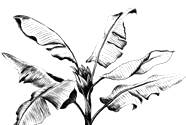
| Banana leaves usually go bad in two or three days. Tenith Adithyaa, a teenager from India, used UV to make the leaves stay fresh for a year. Tenith thinks that one day the leaves will be used for making plates, cups and other things. |
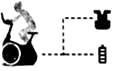
| David Cohen, an American teenager, built an earthworm(蚯蚓) robot. It is able to go into the smallest places, where humans or dogs can't go. It will be used for finding people in a fire or an earthquake. |
| Remya Jose, a 14-year-old from India, found it tiring and boring to handwash clothes in the nearby river. She reused some bicycle parts and created a washing machine that saves time, energy and keeps people fit at the same time. |
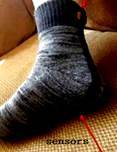
| Kenneth Shinozuku, a 15-year-old from New York, noticed that his grandfather who got Alzheimer's disease(老年痴呆) would often leave home and get lost. So he invented the wearable sensors(感应器) to help people find their family members like his grandfather. |

-
(1) What is the passage mainly about?A . Popular ads. B . Useful machines. C . Strange pictures. D . Teenage inventions.
-
(2) The earthworm robot by David Cohen can _______ .A . make things stay fresh B . help people wash clothes C . go into the smallest places D . take care of the old people
-
(3) Which of the following is TRUE?A . Plates and cups are made of fresh banana leaves. B . Remya's washing machine can also keep people fit. C . David Cohen is a middle school student from India. D . Kenneth's wearable sensors will keep old people at home.
You may know several kinds of police, traffic police and street police. But have you ever heard of energy-saving (节能) police?
A group of 22 new policemen went to work in Beijing. They went around the city to see the use of energy in hotels, office buildings, shopping centres and other public places. One of their aims is to make sure that these places have set their air conditioners (空调) no cooler than 26℃.
They also set up a special phone hotline so that people can tell them which building doesn't follow the rule.
"If everyone sets the air conditioner at 26℃, Beijing will save 400 million kilowatt-hours of electricity in one summer. That's one third of all the usage of the city in the season, said an advertisement."
A show was held in Beijing last week on energy-saving technology (技术) and productions to introduce a green life to the public. Environmentally—friendly machines, like a machine that helps collect used bottles, have attracted lots of attention.
"We want to tell people that there are some ways to protect the environment. Each of us can find effective (有效的) ways to do it in our daily life," said Liu Qianguang, an environmental engineer.
-
(1) The job of the energy-saving policemen is ________.A . to set the air conditioner cooler B . to check (检查) the use of energy in public C . to set up a special phone hotline D . to produce (生产) more energy
-
(2) Beijing will use ________ million kilowatt-hours of electricity in one summer.A . 1, 200 B . 800 C . 400 D . 133
-
(3) The phrase "Environmentally—friendly" most probably means "________".A . 友好的 B . 环境友好的 C . 自动的 D . 有吸引力的
-
(4) According to Liu Qianguang, ________.A . there are few ways to protect the environment B . it's difficult to find good ways to save energy C . it's easy for us to do something good for the environment D . we can save only a little energy in our daily life
Like you, plants need good things like food, water, and minerals in order to grow. Usually they get these important nutrients(营养) from the rich soil(土壤) in which they're planted. But there's another way to grow plants that doesn't use soil. It's called hydrogenic gardening.
"Hydrogenic" means "working with water." In a hydrogenic garden, plants grow with their roots in water, not in dirt. The water is filled with special food for the plants that gardeners have carefully measured and prepared.
Hydrogenic plants grow quickly. In ordinary gardens, plants need time and energy to grow long roots that search the soil for food and water. In a hydrogenic garden, plants can use their energy to grow tall instead. And because there is no soil, there are no weeds and few insect pests(害虫). Gardeners don't need to spray(喷洒) plants with dangerous chemicals. Both the plants and the environment stay healthy.
Scientists hope that, one day, hydrogenic gardens may be able to help hungry people all over the world grow enough food-even in countries that have bad soil, or weather that is too hot, too cold, or too dry. And astronauts hope to take hydrogenic gardens with them to the spaceship they fly to Mars, so that they will always have fresh vegetables, and the fun of growing a garden without dirt.
-
(1) What's the meaning of the underlined word "dirt" in the second paragraph?A . soil B . water C . insect D . food
-
(2) Which of the following is NOT TRUE according to the passage?A . Plants need water and other nutrients to grow. B . There are no weeds in hydrogenic gardens. C . Hydrogenic plants cannot grow in too hot weather. D . Astronauts hope to take hydrogenic gardens to space.
-
(3) What's the passage about?A . Plant growing. B . Space farming. C . Scientific watering. D . hydrogenic gardening.
Thousands of years ago. in the south of ancient China, there lived Shennong, a man who had an ox(牛) head and human body. Seeing that local people were suffering from disease, he built ladders and houses on a high mountain to store hundreds of medical plants. To remember him, people named the place Shennongjia.
The legend(传说) makes Shennongjia in Hubei an inviting place for tourists. Travelling there is a unique experience, as you can see sceneries of the four seasons from different altitudes. “When the bottom of the mountain is summer, the top is spring and while the foothill is autumn, the top is covered with ice," local people say of the special climate of Shennongjia.
Shennongjia is also home to 5, 000 species of animals and plants. Many animals in danger live there, such as the golden monkey, the clouded leopard and the Asian black bear.
One interesting and mysterious thing about Shennongjia is its legend of wild men. Some people once claimed that they saw big footprints or big-foot creatures. Yet so far, scientists haven't proved it is true and some say they are just bears.
The beautiful place has recently received a new title. On July 17, 2016, Shennongjia Forestry District was added to United Nations World Heritage list as a natural site. China now has 52 world heritage sites(遗址),second only to Italy in the world.
-
(1) Which of the following is RIGHT about Shennong?A . Shennong had an ox body. B . Shennong grew medical plants for people. C . Shennong helped the local people. D . Shennong named the place Shennongjia.
-
(2) In Shennongjia, ________________.A . there are many medical stores along the way B . people can experience four seasons up the mountain C . there are 500 species of animals and plants D . scientists have proved there are wild men there
-
(3) What does the underlined word "title" mean in Paragraph 5?A . 标题 B . 景点 C . 称号 D . 职务
-
(4) Which of the following countries has the most world heritage sites?A . Italy. B . The USA. C . China. D . Canada.
-
(5) What's the passage mainly about?A . The legend of Shennong. B . Animals living in Shennongjia. C . The amazing Shennongjia. D . World heritage sites.
Many people like to travel by plane, but I don't like it because an airport is usually far from the city. You have to get there early and wait for hours for the plane to take off and it is often late. You can't open the window. You can't choose the food. Planes are fast, but it still takes hours to get out of the airport and into the city.
I like traveling by train. I think trains are safe. Railway stations are usually in cities. When you are late for a train, you can catch another one. You can walk around in the train and open the windows. You can see many interesting things on your way. I know it takes a little more time.
I also like cars. You can start your journey when you want to, and you don't need to get to a railway station or a bus stop. Also you can take many things with you in a car. But sometimes there are too many cars on the road.
-
(1) Why do many people like to travel by plane?A . Because it is fast. B . Because it is safe. C . Because they can walk around in the plane. D . Because it is cheap.
-
(2) Which is NOT the good thing about the train?A . It is safe. B . It takes a little more time. C . You can open the windows. D . You can walk around in the train.
-
(3) What is the bad thing about the car?A . You take many things with you. B . You can start your journey when you want to. C . There are too many cars on the road. D . You needn't go to a bus station.
-
(4) What does the writer think of the plane, the train and the car?A . He thinks it takes a lot of time to go to and get out of the airport. B . He likes to take a train because it takes a little more time. C . He likes to take a car because he has a car. D . He likes to take a plane because it's fast.
If you look at the top of your phone, you'll usually see a little symbol that says 3G or 4G. The "G" stands for the "generation" of your mobile network. But these symbols will become things of the past after 5G fully arrives.
On March 30th, 2019, Shanghai vice-mayor Wu Qing made the first 5G video call on a Huawei Mate X smartphone, CGTN reported. Shanghai has also become the first city in China to start testing 5G networks.
Now, 4G takes about 100 to 200 milliseconds(毫秒)to send and receive data(数据). But 5G will get it down to 1 millisecond or less. This big change will not only make our mobile Internet faster. It can be used in many other ways as well.
For example, 5G will help to make self-driving cars safer. Today's self-driving test cars have one problem-lag. When the car "sees" an obstacle(障碍物), it sends this information to a data center and receives instructions. However, it takes time to send and receive this information. With this kind of lag,the cars might crash(撞击)because they don't receive instructions in time. With 5G, this lag will be greatly lowered, making the cars safer, according to CNN.
5G could also be used to power the Internet of Things(IOT). This refers to a large online network that connects all things and people. Fast Internet speeds will be the key to developing this technology. For example, with IOT under 5G, your refrigerator could automatically(自动地)place an order online for eggs when it finds that there are no eggs left inside.
All in all, 5G will shape every type of technology that it touches. And you won't have to wait too long for that to happen.
-
(1) From Paragraph ②, we can know that .A . 5G is widely used in Shanghai B . it took lots of efforts to test 5G C . China is working on its 5G networks D . 5G would make it possible to take videos
-
(2) Compared with 4G, 5G could be .A . cheaper B . faster C . safer D . busier
-
(3) The underlined word "lag" probably means " " in Chinese.A . 延迟 B . 迷路 C . 暂停 D . 耗电
-
(4) The refrigerator is mentioned to .A . describe the importance of IOT B . encourage people to try the new product C . introduce how to use the Internet of Things D . show 5G would make IOT more powerful
-
(5) Which of the following would be the best title of the passage?A . Can 5G Go Far? B . How is 5G Changing Our Life? C . 5G is on the Way D . China is leading the World in 5G
Saya was a life—like woman robot. She started her work as a teacher at a primary school in Tokyo, Japan days ago. She gave lessons to the students there. You won't hurt it if you touch(触摸)it, hit or play with it.
The scientist who built Saya said, "We didn't want Saya to do all the work of a teacher, but to build this robot to teach children about technology(技术). And Saya may be a help to the schools which have not enough teachers."
"In some villages and small schools, there are children who know little about new technology. There are also some teachers who can't teach these lessons. So we hope the robot can make the children become interested in new technology." said the scientist.
Many of the children were very excited when Saya came to school. They liked to listen to her report. When class was over, some students touched her face and felt her.
The scientists in Japan hope that they can make some robots to look after the older people in the future.
-
(1) What is Saya?A . A scientist. B . A student. C . A robot. D . An animal.
-
(2) What can Saya do at school?A . She can teach the students technology. B . She can help children do homework. C . She can show her computer program. D . She can play with the students.
-
(3) Why did the scientist build Saya?A . To make money. B . To teach math in the school. C . To become famous. D . To make students become interested in technology.
-
(4) How did the children feel when Saya came to their school?A . Scared. B . Excited. C . Nervous. D . Worried.
-
(5) Which is right according to the passage?A . No one can touch or hit Saya. B . Say a can do all the work of a mother. C . There are enough teachers in schools in Japan. D . Japan hasn't built robots that can take care of the old people.
What do you think the future will be like? Here are some answers from some students.
Mary: If we don't take good care of the earth now, our children and grandchildren will be born into a world with much pollution. There will be fewer trees and more buildings, because there will be more people.
Jack: I agree with Mary. Things will be worse. The weather in the future will be much hotter. Humans(人类) won't be able to live on the earth. They will have to look for another planet to live on.
Linda: I think life in the future will be better. Most people in the world will use "green cars", so there will be less pollution and people will live to be 200 years old. As for space travel, I would say, we will visit Mars in about fifty years.
-
(1) They are talking about________.A . pollution B . weather in the future C . life in the future D . Mars in about fifty years
-
(2) What does Mary think life will be like in the future?A . There will be fewer trees. B . Everybody will have a car. C . People will live longer. D . People will live on Mars.
-
(3) What does the underlined word "planet" mean in Chinese?A . 沙漠 B . 岛屿 C . 星球 D . 海底
-
(4) Why does Jack think humans will have to look for another planet to live on?A . Because there will be too many buildings. B . Because the earth will be too hot to live on. C . Because there will be too many people. D . Because the earth will disappear(消失).
-
(5) How many things does Linda predict(预测)?A . One. B . Two. C . Three. D . Four.
Do you have brown hair? Are you taller than other kids your age? These characteristics were decided before you were born. You got your traits from your parents. They passed their traits on to you through genes (基因).
Genes carry codes (代码) for blue eyes or brown eyes. Genes say how tall you will get and what color hair you will have. You got half of your genes from your mother. You got half of your genes from your father. So you have your own set of genes. Each person gets different genes for each body part. That is why you look like but not exactly like your brother or sister.
A dominant (显性的) gene shows up most of the time. Brown eyes are dominant over blue eyes. A recessive (降性的) gene shows up less often. Light hair comes from a recessive gene. Dark hair is more common. Look at the eye color and hair color of the people around you. You will see that this is true.
Genes help to make you who you are. But they don't tell the whole story. Your genes may help you to be fast and strong. But you still need to learn how to run or swim or skate well .
-
(1) The underlined word "traits" in Paragraph 1 means________.A . characteristics B . experiences C . achievements D . possibilities
-
(2) According to Paragraph 3, you can see most of the people around you have________.A . brown eyes with dark hair B . brown eyes with light hair C . blue eyes with dark hair D . blue eyes with light hair
-
(3) What is the passage mainly about?A . Genes carry codes for eyes and hair. B . Genes help to make you who you are. C . Genes help you to be fast and strong. D . Genes make brothers look similar.
|
|
FUTURE VIEW |
|
|
|
|
|
It will be great if there is some kind of fuel(燃料)we can use in cars that won't produce any pollution. I guess there are scientists right now trying to do that, and I hope they'll succeed because the world would be a much cleaner place, wouldn't it? Charlie |
|||||
|
I think it will be great if they invent something so that we only have to sleep for one or two hours every day. Then we'd all have much more time to do things and to enjoy ourselves. Life would be better, I think, and everyone would do a lot more with their lives. Miguel |
|
||||
|
|
|||||
|
If I could choose anything, I'd go for a time machine so that I could go back and do some things differently. Of course, It will be great if there that's impossible— but wouldn't it be great if it was possible? I wish I could go back in time to when I was a kid and say some of the things in a different way! Hannah |
|
||||
|
|
|
||||
|
Well, of course, the best thing is medicine for rally bad diseases(疾病)A lot of scientists are working very hard to stop diseases like Ebola, a terrible disease that has killed many thousand people in Africa. So if they found a special treatment for Ebola, or a way of completely preventing it, life would be easier in so many places. Isabella |
|
||||
|
|
|
||||
|
I wish there was a machine that did homework! Wouldn't tat be fantastic? But I guess teachers wouldn't be very happy. Georgina |
|
||||
|
|
|
||||
-
(1) Why does Hannah want to go back in time?A . To be young again. B . To live a better life. C . To do something for Africans. D . To say some words differently.
-
(2) Who might be worried about the pollution of the world?A . Miguel. B . Isabella. C . Charlie. D . Georgina.
-
(3) In which part of a newspaper may this passage appear?A . Health. B . Science. C . Travel. D . Education.
What would you give up to protect the environment? Many people have given up animal products of all kinds. They are practicing a lifestyle called veganism (纯素主义). Some people choose to become vegan (素食主义者) because they are upset about the way humans treat animals.
For many people, veganism simply means eating no meat, cheese or eggs. But the idea of saving animals also appears in the fashion and manufacturing industries (制造业).
For example, leather (皮革) is used in many products, such as shoes and clothes. Every year more than a billion animals, listing from horses to snakes, are killed so that we can use their skin to make leather products. Now, many brands are looking for other ways to make their products.
The sports brand Puma, for example, has made shoes out of pineapple (菠萝) leaves. Tesla, the American car-maker, is reported to have stopped using leather to make its seats.
Veganism is growing in popularity. In 2017, the BBC said it was the fastest-growing lifestyle movement in the United Kingdom. At the same time, some news reported that a quarter of Americans between the ages of 25 and 34 are vegans. No wonder the map7ine named 2019 "the year of the vegan".
So, if you're interested in protecting animals and saving the environment, you might want to give veganism a try. But somebody asks: "Is veganism healthy?" Some people worry that eating no treat at all is not good for our health. It's your personal choice to be a vegan or tot. Just make sure to keep healthy as well.
-
(1) How do many people protect the environment according to the passage?A . They save more water. B . They plant lots of trees. C . They give up animal products. D . They pick up litter everywhere.
-
(2) Why do some people choose to become vegan?A . Because they are afraid of leather. B . Because they don't like eating meat. C . Because they love animals more than anything else. D . Because they don't like the way people treat animals.
-
(3) What do many brands do to save the animals?A . They recycle some old products. B . They cut down the4 number of their products. C . They collect some dead animals to make products. D . They look for other materials to make their products.
-
(4) Which was the fastest-growing lifestyle movement in the UK?A . Keeping pets. B . Veganism. C . Amusement. D . Eating no food.
-
(5) Which is the best title of this passage?A . Making sure to keep healthy. B . Let's help wild animals. C . Many now choose to be vegan. D . Don't make leather products.
- 按要求作图。(1)根据入射光线和折射光线,在甲图中的虚线框内画出适当类型的透镜。(2)所受重力为6N的物体漂浮在水面上静
- 纳米材料TiO2在光催化作用下,能将甲醛、苯等有害物质降解成CO2和H2O,提高了室内 空气的质量。TiO2中Ti的化
- (本小题满分15分)已知函数且 (Ⅰ)若在取得极小值-2,求函数的单调区间. (Ⅱ)令若的解集为A,且,求的取值范围.
- y=的导数为_________.
- 氨基钠(NaNH2)是合成维生素A的原料。工业上将金属钠于97~100℃熔融,向反应器中缓慢通入无水液氨(NH3),再加
- We must __________ the right place to park our car.A.look at
- NO2与水的反应中,作还原剂和氧化剂的NO2物质的量之比为 ( ) A.1∶3 B.3∶1
- 3.24 g淀粉和3.42 g蔗糖混合,在一定条件下水解(假设完全水解),若得到a g葡萄糖和b g果糖,则a跟b的比值
- 35.2010年1月27日,瑞士小镇达沃斯又迎来第40届世界经济论坛年会,时值全球景气渐趋复苏,但不确定因素仍多,因此这
- 《回家吃饭》栏目是中央电视台财经频道最新推出的一档生活服务类节目。厨房里的美食哲学,描摹出我们的民族性格,熏染着我们的文
- 能用事实证明地球是球体的是( ) A.天圆地方说 B.盖天说 C.浑天说 D.麦哲伦船队的环球航行
- 下图为甲、乙两种固体物质的溶解度曲线,下列说法正确的是()A.20 ℃时,甲物质的溶解度比乙物质的溶解度小 B.甲物质中
- 18.下列各句中,没有语病的一句是( )(3分) A.根据自然博物馆关于恐龙羽毛颜色的研究成果,让人们可以有科学依据
- 如图a、b、c、d表示某生态系统的四种成分,箭头表示各成分之间的关系,下列相关叙述中正确的是 () A.a和c所包含
- 下图是镁、锌、铁、铜四种金属与稀盐酸反应的示意图。 (1)根据图中现象分析,A表示的金属是 。 (
- 下列说法正确的是( )A.可用丁达尔现象区分溶液与胶体B.生石灰与水混合的过程只发生物理变化C.胶体是一种纯净物 D.
- 水是纯净物的特征是…………………………………………………………………( ) A.由同种物质组成
- Growing up in Philadelphia,Lieberman started cooking with hi
- 某质点的位移随时间的变化关系为:s=4t+2t2,s与t的单位分别为m和s,则质点运动的初速度与加速度为 A.4m/
- 对分子、原子、离子的下列认识,其中正确的是( ) A.氢原子是最小的微粒,不可再分B.镁原子的质子数大于镁离子的质子


