环保类 知识点题库
Getting electricity has always been a problem for the 173 people living in Nuevo Saposoa, a small village in Peru, South America. However, things went from bad to worse in March 2015 after heavy rains damaged the only power cables in the area. The villagers were forced to use oil lamps, which are not only expensive but also dangerous because of the harmful gases they produce.
Luckily, researchers at the University of Technology (UT) in Lima, Peru heard about their problem and found a wonderful solution. They made a lamp that can be powered by plants and soil, both of which can be easily found in the Amazonian rainforest where the village lies. The lamp takes energy from a plant growing in a wooden box and uses it to light up an LED light bulb.
While that may sound amazing and even impossible, the science behind the ides is quite simple. As plants create their food (using the sun's energy, water and chemicals from the soil), they also produce waste which they return to the soil. Tiny animals in the soil eat this waste and they produce electrons – the building blocks of electrical energy. The UT team put special sticks inside the soil to capture the energy and keep it in the lamp's batteries for later use. The researchers say a single charge can power a 50-watt Led light for two hours - enough time for local villagers to get their evening work done.
The university gave ten Plant Lamps to the villagers of Nuevo Saposoa in October 2015. So far, they have been a huge success! Elmer Ramirez, the UT professor who invented the lamp, believes the Plant Lamp could help improve the lives of many people, especially small rainforest communities, 42% of whom have no electricity.
-
(1) What are the problems of oil lamps according to Paragraph 1?A . They are difficult to use and create pollution B . They are expensive to buy and easily damaged C . They are difficult to repair and produce little light D . They are expensive to use and can be bad for health
-
(2) The electricity made by the Plant Lamp comes from________.A . plant food B . plant waste C . the soil's heat D . the sun's energy
-
(3) What is true about the Plant Lamp?A . It can be made by local people B . It is much easier to use than oil lamps C . It can produce all the electricity the village need D . The things it needs to make electricity are easy to find
-
(4) What is the purpose of the passage?A . To report on a new invention. B . To explain a new scientific theory. C . To describe how electricity is made. D . To discuss the problems of poor villages.
Do you know "APEC blue"? It is a popular word nowadays. People use to describe the blue sky during the APEC meetings. To make the sky [ˈkliːnə(r)], people did a lot. These years, air pollution is so heavy in Beijing that people(hard) ever see blue skies in such a smog season. After the event, people are wondering how to keep the APEC bluethe future. Experts (专家) give some(suggestion).
First, they believe the environment will be certainly in great [ˈdeɪndʒə(r)] unless everyone plays part in saving the earth. I don't think it has nothing to do with you. And what[els] should we do? Try to walk more and use cars(little)!
Finally, make sure factories stop(pollute) the air. If we can do these things, the sky will become APEC blue. And we can see APEC blue every day!
Can you imagine that we could build a beautiful city with rubbish? Maybe you will think it is 1. However, it can be true! Nothing is a waste if we have a creative mind. Let me show you something about 2 rubbish.
Sometimes we can see tons of rubbish in the streets, on the roads, near the buildings here and there. Many large cities became so ugly 3 it. Nobody likes rubbish, but in fact, some rubbish can be used again. All of us want to solve the problem, we must do something to 4 rubbish. We should take action from now on. 5, some good things will not be wasted.
Do you often throw away things you don't need any more? Have you ever thought about how these things can actually be put to good use? For Example, when a car gets too old, it may not run any more. But we can use the metal of the car to make something else. When a bottle is empty, it 6 as waste. You don't know bottle glass can be made into sand and used to build streets. Rubbish 7 food can be changed into fertilizer to make plants grow better. It is cheap and safe. And other rubbish can also be used to make building blocks. Now, 8 machines are designed for that.
9, people will watch films in a beautiful cinema which is built out of rubbish. Besides buildings and roads, cities may be made from rubbish. But so far, building beautiful cities made from rubbish is only 10.
People usually check whether their keys, wallets and phones are with them before going out. But many people in China now have one more important thing to take, a face mask. They hope that it can protect them from the polluted air.
Since January, many cities in China have seen a lot of hazy days. During these days, people can only see things that are very near them. In Beijing, only five days in January were free of smog.
According to the Chinese Academy of Sciences, driving cars and burning coal are two major factors for PM2.5, which is the main problem with air pollution. Poor air is bad for people's health, especially for children and the elderly. Air problems and environmental protection have become a concern for the whole nation. Our government is taking action to prevent pollution and give people a healthy living environment. It calls on people to make full use of energy and resources and cut down on energy use.
-
(1) People will take with them before going out, hoping to protect them from the polluted air.A . keys B . wallets C . phones D . face masks
-
(2) Many cities in China have seen a lot of hazy days. What does the underlined word mean?A . Sunny. B . Rainy. C . Cloudy. D . Foggy.
-
(3) Poor air is bad for people's health, especially .A . for children and the elderly B . for women and the elderly C . for the poor and the elderly D . for the elderly and the patients
-
(4) What are the main factors for PM2.5 according to the Chinese Academy of Sciences?A . Driving cars and having fewer trees. B . Burning coal and having fewer trees. C . Having fewer trees and no rain. D . Driving cars and burning coal.
-
(5) Why do the air problems and environmental protection become a concern for the whole nation?A . Because people can't see things clearly. B . Because there are many hazy days. C . Because the poor air is bad for people's health. D . Because there are so many cars in China.
-
(6) What can people do to prevent pollution?A . Use less coal than now. B . Cut down on energy use. C . Use less resources. D . Reduce and make full use of energy and resources.
I can't remember when I started collecting litter. But it was when I got tired of seeing litter nearby and realized that no one else was going to pick i up.
I lived near a forest in Ohio, America. I can w there in three minutes! I used to love going there to play with my dog. But one day there was so much litter there that I became very u. I decided l had to clean up the forest, and I wanted to feel happy going there again.
I made my first trip to clean the forest that afternoon. I took a big black rubbish bag w me. Ten minutes after starting to pick up litter, my bag was f ! There were cans, Bottles, broken glass and newspapers in it. From then on, l went to the forest four times a year to pick up litter. I'm often there for three hours. It makes me feel great to do something for the e . After each trip, I look at all the litter that I've found. If any of it is recyclable, I keep it. I can't understand w people drop litter. But I will keep picking it until they stop dropping it. I know I'm only doing a small bit to help the earth, but I still think it's important.
This is a story from a meeting held by some people and two things in nature. We call it the Four 一 Sided Talk, Let's "listen to" everyone carefully and find out what they think.
People: We have lived on the earth since ancient times. The earth is our home. Now we regret what we have done to our home! The earth belongs to all of us. From now on, we should not only make full use of the resources on the earth, but also beautify and protect the earth. Let's try our best!
The United Nations: We only know a little bit about the environmental problems. Hearing what all of you said, we have made up our minds to protect the earth and love the earth. We have also made June 5th World Environment Day.
An old tree: I am thousands of years old, but I have fewer and fewer friends. I'm afraid that soon I will be cut, People cut down many trees to make paper and chopsticks. They destroy the forests and the natural environment. Now there are no trees to make air and to protect people from floods. Mother nature is making many disasters to teach people a lesson.
The river: What the old tree said is right. I not only make the earth more beautiful, but also provide the clean water for people and animals to drink. Now I'm sad because people put waste and garbage into us, which kills many animals and plants that drink our water. People drink this kind of water and get sick too.
-
(1) What's the United Nations' decision in the Four Sided Talk?A . Set an Earth Day. B . Find out what is making the pollution. C . Hold an international meeting. D . Protect and love the earth,
-
(2) What doesn't the old tree tell us?A . He's afraid to be cut down some day. B . The trees have the longest lives in the world. C . Over-cutting teaches people a lesson. D . People are destroying the natural environment.
-
(3) What's the meaning of the underlined word"disasters"?A . 灾难 B . 奇迹 C . 财富 D . 神话
-
(4) What will people do according to the passage?
① Overuse the resources. ② Beautify the earth.
③ Start a global group. ④ Protect the earth,
A . ①④ B . ②③ C . ①③ D . ②④
Do you always want to help fight global warming? Then join the Earth Hour party on Saturday, March 28th, by turning off all lights from 8: 30-9: 30 pm. This small action, taken by hundreds of millions of people around the world will make it easier for us to fight global warming. More importantly, it will prove what can be achieved if we all come together to protect our planet.
Earth Hour was started by the World Wide Fund for Nature (WWF). In 2007, the organization asked the local people in Sydney to turn off all lights and unnecessary machines for one hour. Over 2 million families and 2, 100 businesses accepted the challenge. This simple action resulted in saving 10% of the electricity used by the city's people during a regular evening hour. The success of the effort encouraged people all around the world to take part in the action, and Earth Hour became a world-wide tradition and was celebrated every year from then on.
Earth Hour is timed to be similar to the spring equinox, which is around March 20th every year. This makes amazing effect, resulting in wonderful pictures when the usually bright cities go dark.
The WWF recognizes the "superheroes" who have supported Earth Hour to protect the planet to the next level Eddy, a 21-year-old man, who has been keeping his eyes on Earth Hour since 2010, has encouraged thousands of locals in the Dominican Republic to take action on fighting global warming. These include small actions like turning off unnecessary lights or using recyclable bags.
Not sure how to spend the hour? The WWF suggests a candle light dinner or a picnic under the stars with your family. If that is not interesting for you, how about a late night hike or bike ride? For more ideas or to sign up for the fun event, go to earth hour. organization. Remember, we only have one planet, so let's try our best to protect it.
-
(1) Why do people take part in the Earth Hour party?A . For loving the dark. B . For reducing work hours. C . For helping fight global warming. D . For protecting the lights for one hour.
-
(2) What do we know about Earth Hour?A . It is held every four years. B . It may be held in late March. C . People in Sydney don't support it. D . You are not allowed to stay outside in this hour.
-
(3) What's Eddy's attitude towards Earth Hour?A . He disagreed with it. B . He was worried about it. C . He thought it was impossible for people to do it. D . He supported it by encouraging locals to take part in it.
-
(4) What does the underlined word "This" refer to?A . WWF B . March 20th. C . Earth Hour. D . Bright pictures.
-
(5) What's the purpose of the writer?A . To introduce a new holiday in Sydney. B . To share some stories of "superheroes". C . To call on everyone to protect our only planet. D . To introduce some outdoor activities in Sydney.
Paper cups, plastic bags and old newspapers. There are so many single-use things (一次性物品) that we throw away after using only once.
①According to news website Quartz, we are now living in a "throw-away society". Single-use has become a natural way of life and can be seen almost everywhere.
②Every day, we see new memes (表情包), stories and Internet slang (网络俚语) on social media. With so many of them coming out all the time, the lifespan (寿命) of each becomes short - they become "single-use online products". This also means social media users are always searching for the next big thing.
③You may feel frustrated (沮丧) when trying to keep up with these memes and slang, but you just cannot help but keep scrolling(滚屏). It is endless - no matter it's WeChat Moments (朋友圈), Sina Weibo or Facebook.
④While you read single-use content (内容) online, you also produce it. Since 2017, WeChat Moments (朋友圈) has allowed users to make only the last three days of their posts viewable (可见的). As a result, more and more people don't take their posts seriously.
Since it doesn't take too much time and energy to communicate anymore, we now even have disposable (用后即扔的) friendships, according to a story in Fast Company.
A single-use way of life may give you quick pleasure. But the pleasure may not last for long because there is no deep thought behind it. Maybe we need to slow down and enjoy a more thoughtful way of life.
-
(1) According to the passage, we can always find new memes and slang in the following places except ____________.A . WeChat Moments B . Textbooks C . Sina Weibo D . Facebook
-
(2) Where can we best put "But the idea of single-use is about more than just plastic and paper."?A . ① B . ② C . ③ D . ④
-
(3) Why does the writer mention "WeChat Moments' three days viewable" in Paragraph 5?A . To show that WeChat take all the users' privacy (隐私) seriously. B . To explain the reason why the lifespan of memes and slang becomes short. C . To teach WeChat users how to post something meaningful on their Moments. D . To prove that we are producing single-use things when we read them online.
-
(4) What is the writer's opinion of single-use way of life?A . As long as singe-use way of life gives us pleasure, we should enjoy it. B . Single-use life will be helpful to our relationship with others. C . We need to think twice and lead a more thoughtful way of life. D . Single-use life is a natural way of life and we should get used to it.
-
(5) The writer would probably talk about __________ if he continues to write this passage.A . the disadvantages of singe-use way of life B . the reasons that cause singe-use way of life C . the ways to avoid singe-use way of life D . different opinions about singe-use way of life.
Have you heard of e-waste (电子垃圾), which can be produced every day? How do you deal with your computers, MP4 players or mobile phones when they're broken or you want a new one?
Most people just throw them away. With the development of electronic industry (电子产业), e-waste pollution has become a serious problem. According to the United Nations, in 2014, people around the world produced 41.8 million tons (吨) of e—waste and only recycled 6.5 million tons. The US was the biggest waster, producing 7.1 million tons. China came second, with 6 million tons.
It's important to pay attention to e-waste. It can be either valuable or harmful, depending on how we deal with it. E-waste is a valuable urban mine (城市矿藏). The value of the metals, like gold and silver in the waste around the world, is surprising. And the metals can be reused. But if people throw them away, the toxic chemicals (有毒化学物质) can get into the earth or air, affecting the environment and people's health.
Apple, for example, now recycles people's used products in China when they are buying new ones. The company will test and repair the used ones and sell them at lower prices. To help reduce e-waste, we can buy longer-lasting electronic products. If you have unwanted electronics, find a new home for them. You can also take computers and phones to companies to see if they offer recycling programs.
-
(1) The following can become e-waste EXCEPT__________.A . computers B . mobile phones C . plastic bags D . MP4 players
-
(2) Which country produced the second most e-waste in 2014 according to the United Nations?A . China. B . America. C . Japan. D . France.
-
(3) The underline word "affecting" means "_________".A . protecting B . increasing C . improving D . influencing
-
(4) We can _________to reduce e-waste.A . sell the electronics to Apple company B . buy longer-lasting electronic products C . keep the unwanted electronics in our bedrooms D . throw away the unwanted electronics
-
(5) The main purpose of this passage is to_________.A . prove that e—waste is not useful B . encourage people to buy more electronic products C . advise people to deal with e—waste properly to reduce pollution D . advise people to sell the unwanted electronics
Boyan Slat has been dreaming of cleaning up the world's oceans for a long time.
In 2010, he went on a diving (潜水) vacation in Greece and was shocked. "I saw more plastic bags than fish in the water," he said.
From then on, Slat began to pay more attention to ocean pollution. He decided to give up higher education and set up the 0cean Cleanup, a non-government organization. Its purpose is to clean up ocean rubbish. He has set up the world's first ocean cleanup system (系统) with his team.
Every year, over 8 million tons of plastic end up in our oceans, and it can take up to 500 years to break down. In 2018, the World Economic Forum predicted that the weight of ocean plastic would match that of all the fish in our oceans by 2050. Sea animals easily get caught in plastic. They can't move. They can even die if they eat it. Smaller plastic pieces can also enter the food chain (链) and end up in our bodies.
Slat's plan was to create an environmentally-friendly, large system to clear out plastic rubbish from the ocean.
After seven years of tests, on October 2nd, 2019, a machine called System 001/B came out. It successfully caught and collected a large amount of plastic rubbish floating in the ocean.
Slat and his team are working to improve System 001/B. Their dream is to clear out 90 percent of all the ocean plastic by 2040.
-
(1) What did Boyan Slat care more about after his vacation in Greece?A . Diving. B . Plastic bags. C . Ocean pollution. D . Higher education.
-
(2) How long does it take to break down 8 million tons of plastic?A . More than 7 years. B . Up to 30 years. C . Less than 40 years. D . About 500 years.
-
(3) From the prediction of the World Economic Forum in 2018, we can learn .A . little pollution ends up in the ocean B . ocean plastic pollution is serious C . animals prefer plastic D . people like sea food
-
(4) How did System 001/B work?A . It collected much plastic rubbish in the ocean. B . It dealt with all the rubbish in the ocean. C . It cleared out rubbish everywhere. D . It cleared out 90% of the plastic.
-
(5) What's the main idea of the passage?A . Animals and humans. B . Plastic problems. C . Life in the future. D . Ocean cleanup.
Food miles How welltraveled is your food?
The Issue
Next time you sit down for dinner, make a list of all the foods on your plate. Make a survey on where those foods have come from. You could be in for a big surprise.
Has your rice come from Thailand? Have your oranges come from America?
"Food miles" is a term(术语)that describes the distance food travels between where it is grown, caught or processed and your dinner table.
Why should we worry about it?It is important because the further food travels, the more fuel(燃料) is needed to carry it and the more greenhouse gases are created.
Research has found that the contents of the average family shopping basket have traveled a surprising 70, 000 kilometers.
Everyone can make a difference. If you care about the future, reduce your food miles and your impact on the environment.
Comments
|
Ellen P May 7, 10:00 am I agree. We should buy all the food that is grown locally and help our environment. |
|
Joy May 7, 11:17 am We grow our own vegetables. They have zero food miles! |
|
Busy Dad May 7, 11:20 am Buying locally is a great idea,Ellen,but local products cost more than imported(进口的) ones. Not everyone can afford to buy only local foods. |
|
Get real May 7, 11:34 am I don't believe it makes any difference. It's just another excuse for shops to ask customers to spend more money on foods. |
|
Green boy May 7, 11:50 am We have to take a stand and do what we can. Even if it costs a bit more, I guess saving the planet is more important than saving money. |
-
(1) According to the passage, what is one way a person can reduce their food miles?A . Refusing to buy food that are expensive. B . Buying local products instead of imported food. C . Setting a limit on how far they will travel to buy food. D . Starting an activity to let everyone know about the problem.
-
(2) What is the main purpose of The Issue section?A . To suggest solutions to the food miles problem. B . To show which foods different countries are famous for. C . To describe the problem in order to encourage discussion. D . To provide proof(证据)that the food we eat is very expensive.
-
(3) What big surprise does the writer predict at the end of the first paragraph of The Issue section?A . The difficulty of getting fresh local products. B . The number of different foods used in families. C . The conclusion that food should be locally produced. D . The discovery that food comes from many different places.
-
(4) The information included in the Comments section is ________.A . listed in the order of date and time B . grouped into comments for and against C . put in the order of the first letters of names D . organized by the length(长度)of each writer's text
It's important to learn how we can protect the environment. Here are 4 rules for us.
Reduce
If you want to reduce waste,you should use things more wisely. If everyone uses paper carelessly,soon we would not have any trees left. We can use both sides of the paper. And it is also necessary to reduce other wastes we produce every day such as plastic bags, disposable (一次性的)chopsticks.
Reuse
You should always think of reusing things before throwing them away. For example, if you have some clothes that you don't like or you can't wear again, you can give them to the poor.
Recycle
They can be recycled to make new things. For example, Coke cans can be sent to a factory, where they are melted. The melted cans can be used to make new Coke cans.
If one of the legs of your table is broken,you should repair it. If you want to buy something newer and better,it is better for you to sell the old table,or give it to people who can use it after repairing it.
Learn the rules to protect our environment.
|
A. In a family, you may pass on such clothes to younger brothers or sisters. B.Bottles, cans and glass can easily be recycled. C.A large number of trees are cut down to make paper. D.Trees are planted every year. E.Let's try our best to make the earth cleaner and more beautiful. F.Repair G.Don't throw it away if you can use it. |
If you are in Shanghai and want to throw away a cup of milk tea, be careful. You need to follow these steps. First, pour out any leftover(残留物) into a wet waste bin; , second, put the paper wrapper(包装) into a recyclable waste bin; third, throw the single-use cup and straw(吸管)into a dry waste bin.
Sounds complex? You will have to get used to it. From July1st in 2019 on, people in Shanghai were required to sort (分类) their garbage according to strict rules. Many other cities in China are planning to make similar garbage-sorting rules.
Why should we sort our garbage? The answer lies in the increasing amount of waste we are producing. Chinese cities produce over 200 million tons of waste each year, according to China Economic Net. Most of this waste is buried (填埋) in landfills(垃圾填埋场), which may pollute soil. Moreover, we are running out of space for new landfills.
In fact, more than half of our waste can be recycled. Recyclable garbage can be made into new materials, while wet garbage can be used to make gas, heat and fertilizer(肥料). So in order to recycle better, we need to sort our garbage.
Can't garbage-processing companies do the sorting job for us? They can. But that requires a lot of work and costs much money. Things will become much easier if each of us can sort our own garbage. Besides, the task of sorting might encourage people to produce less waste. Do you still want to buy that milk tea?
-
(1) The underlined word" complex" in the passage means _______ in Chinese.A . 复杂的 B . 简单的 C . 方便的
-
(2) If you are in Shanghai and want to throw away a cup of milk tea, you should throw the straw into a _______.A . wet waste bin B . recyclable waste bin C . dry waste bin
-
(3) According to the passage, we know that recyclable garbage _______.A . can be used to make gas, heat and fertilizer B . can be made into new materials C . should be buried in landfills
-
(4) Which of the following is TRUE according to the passage?A . Chinese cities produce over 200 million tons of waste each year. B . The task of sorting might encourage people to produce more waste. C . The garbage-processing companies can't do the sorting job for us.
-
(5) What's the main idea of this passage?A . The things of sorting. B . The reasons for sorting garbage. C . The ways of sorting garbage.
Life today is much easier than it was hundreds of years ago, but it has brought new problems. One of(big) problems is pollution. To pollute(mean) to make things dirty. Pollution comes in many forms. We see it, smell it, drink it and even hear it.
Man is now slowly pollutingwhole world. Air pollution is still(serious). It's bad for all living things in the world,it is not the only kind of pollution. Water pollution kills our fish and pollutes our(drink) water. Noise pollution makes us angry(easy). Many countries have made rules to fight against pollution. They stop people from burning coal in houses and(factory) in the city. Pollution by SO2 is now the most dangerous kind of air pollution It is caused by heavy traffic. We are sure that if there are fewer people driving, there(be) less air pollution.
The earth is our home, so we must take care of it. That means keeping the land, water and air clean, and the same time, we must take care of the rise in pollution.
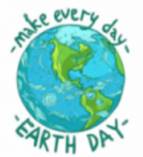
Earth Day is celebrated across the world on (四月) 22 to raise awareness (意识) for environmental protection and (减少) the harm that we do to the environment.
According to the Earth Day Network (EDN), we are in a (阶段) of species (物种) loss. About 40 animal species are gone in the past 500 years and many more are (快速地) disappearing on the planet now. In 2020, the (第五十) Earth Day called for us to protect the world's most endangered species.
Nowadays more than 190 countries celebrate Earth Day, (包括) China. Many activities were held to show people new ways to protect (自然的) resources in China on Earth Day 2020. Meanwhile, they helped people (意 识到) the importance of improving the state of the earth.
Furthermore, we need to take personal (行动). EDN suggests that we can start small -save energy and stop wasting resources. Only by taking care of the earth can we save (她),save other species and save ourselves.
Nature shows itself in many ways. One of the most impressive(令人印象深刻的) forms is a kind of storm known as a hurricane, typhoon or tropical cyclone. These powerful weather events form over water. They are known as hurricanes in the central and eastern North Pacific and the North Atlantic Oceans, typhoons in the Northwest Pacific Ocean and tropical cyclones in the South Pacific and the Indian Ocean. The spinning(旋转的) round storms can become powerful, spreading over 900 kilometers across.
The winds inside the storms can reach speeds of more than 320 kilometers per hour. The storms also may reach a height of up to 15 kilometers. They spin around a center called the "eye", which is a calm area with low wind speed. When these storms reach the shore, they are sometimes strong enough to tear trees out of the ground. Heavy rains and large waves often cause flooding and great damage to buildings.
A new study shows that, during the last 70 years, the speed at which these storms move across water and land has been gradually slowing down. As a result, they have been putting more and more rain on land. This has caused increased flooding and loss of life. In August 2017, Hurricane Harvey moved so slowly across the U.S. state of Texas that it was able to put more than 30 inches of rain, leading to great damage.
According to scientists, the reason for these slower-moving storms is atmospheric(大气的) warming. Over the years, the Earth's atmosphere has been slowly warming up. This has caused air circulation(循环) in the Earth's atmosphere to weaken. As a result, the winds that push tropical storms along have gotten weaker, so the storms slowed down.
-
(1) Which of the following statements is TRUE according the passage?A . Typhoons develop in the central and eastern Pacific. B . Slow moving storms put less rain on land. C . The speed of storms is affected by atmospheric warming. D . The eye of a storm is an area with high wind speed.
-
(2) What did the study mentioned in Paragraph 3 discover?A . A trend that has lasted for decades. B . A theory that shows the causes of storms. C . A material that hurts the environment. D . A method that protects people from storm.
-
(3) In which part of the magazine can this article be read?A . Education. B . Health. C . Travel D . Environment.
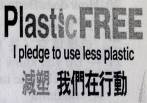
We are living in a world of plastic. Although people know that plastic is 1 to wildlife and human's health, they can hardly avoid using it. There is plastic in nearly everything we 2from shopping bags to drink bottles to food packaging (包装). Now Ekoplaza, a supermarket in Amsterdam, is making it a little easier for shoppers to reduce the use of plastic with a plastic-free aisle (无塑料通道). 700 different kinds of things, 3rice, beans, milk, snacks and even meat, can be found at the aisle. 4 is in packaging made of glass, metal and paper.
An environmental group called A Plastic Planet came up with the great idea. They 5that at least one plastic-free aisle is in supermarkets around the world. They have created poster to help shoppers find out environment-friendly packaging as well.
Ekoplaza, which plans to set the plastic-free aisles across its 74 stores by the end of the year, is not the only company trying to reduce plastic 6. In Berlin, a store has been trying to change people's shopping 7 since 2014. It encourages shoppers to bring their own bags by selling everything in bulk (散装).
It's nice to see companies trying to make a 8. For the real change to happen, 9, it depends on the public. They play the most important role. So, would you like to choose plastic-free things, even that means 10 your favourite food or drinks?
A group of rubbish collectors in Turkey are recycling the books that people have thrown away. They have (已经) created a mobile library. There are now over 9, 000 books, which are divided into 20 kinds, including (医学的) care, politics, literature, history, healthy living and so on. The library is inside a(卡车) that tours schools in the countryside. They hope to create a greater passion(热情) for reading books in children, (尤其) in the age of mobile phones and computers. Many schools do not have a reading room or their (自己的) library.
The library has got lots of attention in Turkey. People from all over Turkey are (送) their old books to the library. A (女士) working at the mobile library said, "The interest is growing. Each day we have guests coming here to(借) books or have a quiet time to read. " The director of the library said, "We have books here for kids aged from four to (十), and books for older children, like world classics and(诗). We hope that it will develop their love for books. "
As we all know, the environment around us is getting worse and worse. In some places we can't see fish1in the river or trees on the hills. Some people even have no clean water to drink.
Recently, a new lifestyle called low carbon life is 2every corner of our country. The meaning of low carbon is3 energy and no waste. It is such an important project that I can't wait4my ideas on how to promote it.
First, we should5a no-car day every week in our school. Because cars not only cause serious air pollution but also waste energy. 6 the no-car day, neither students 7teachers are allowed to drive to school. At the same time, just walk or run. Use our8and enjoy the fun.
Second, we had better not use plastic bags9. No one can stand the" white pollution", 10it is wise to use cloth bags which can 11_again and again.
12, one thing 13 we should keep in mind is that every big thing comes from the small details. So, as students, we ought to turn14the lights the moment we leave, use 15 sides of the paper, and reuse our textbooks and so on.
All in all, it weighs greatly for all of us to put the low carbon lifestyle into practice. Just set our mind to these: no-car days, no plastic bags, and no waste. Let's do it now.
From July lst, 2019, people in Shanghai must follow a new law. They can't throw away all the rubbish together. They need to sort rubbish.
According to the law, there are four kinds of rubbish: dry rubbish, wet rubbish, recyclable rubbish and harmful rubbish. If people don't sort the rubbish, they will get a fine. For a person, the fine can be 200 yuan. For a company, the fine can be 50,000 yuan.
Recycling waste is actually a complex system where separation (分开) and collection are just the first steps. No separation equals incineration (焚烧). For many people, it's difficult to sort their rubbish. So how do we sort the rubbish? Here are some ideas about it. For example, we can use paper again. So it is recyclable rubbish. Batteries are harmful rubbish, because they are bad for people and environment. The leftover (剩下的) food, flowers, and trees are wet rubbish. Finally, if the rubbish isn't recyclable rubbish, bad rubbish or wet rubbish, it is dry rubbish.
-
(1) According to the passage, the rubbish has _________ kinds.A . two B . three C . four D . five
-
(2) The underlined word "sort" in Paragraph 1 means _________.A . making the rubbish useful B . taking the rubbish to the factory C . putting the rubbish into different kinds of rubbish bin D . throwing the rubbish into the rubbish bin
-
(3) If a man in Shanghai doesn't sort rubbish, what will he get?A . Some money. B . Some fine. C . Some rubbish. D . Some food.
-
(4) Which of the following is TRUE according to the passage?A . People in Shanghai must sort rubbish from 2018. B . Many people think it is easy to sort rubbish. C . Paper and batteries are harmful rubbish. D . The leftover food is wet rubbish.
-
(5) What is the best title for the passage?A . The Rubbish in Shanghai. B . Sorting Rubbish. C . Four Kinds of Rubbish. D . Rubbish and Environment.
- 环境、资源问题是人类目前普遍关注的,下列说法正确的是 ( ) A.爱护水资源一方面
- 甲、乙两家体育用品商店出售同样的乒乓球拍和乒乓球,乒乓球拍每副定价30元,乒乓球每盒定价5元。现两家商店搞促销活动,甲店
- 在日常的学习生活中,我们应该注重培养自己的兴趣和发展自己的特长。下列对此认识不正确的是 A.学校应组织开展多种多样的课外
- --Do you know ________ A/H1N1 disease? --Yes,we should have
- 2012年11月7日,美国当选总统奥巴马宣誓就任第57届总统,他在美国最高法院首席大法官的见证下庄严宣誓。誓词大意为:“
- 阅读下面一段文言文,完成7~12题 李日知,郑州荥阳人。举进士。天授中,累迁司刑丞。时用法严急,日知独宽平无冤滥。尝免一
- 如果一个多面体的一个面是多边形,其余各面是有一个公共顶点的三角形,那么这个多面体叫做棱锥.如图是一个四棱柱和一个六棱锥,
- 阅读下面的文言文,完成文后各题。 道山亭记(节选) 曾巩 闽,故隶周者也。至秦,开其地,列于中国,始并为闽中郡。自粤之太
- “一骑红尘妃子笑,无人知是荔枝来”。荔枝曾经是一种很奢侈的水果,现在却进入寻常百姓家。这说明( ) A.荔枝的价格
- 化学就在我们身边。 I、用下列物质的序号填空:A.碳酸钙 B.硝酸钾 C.氢氧化钙 D.氯化钠
- 关于图中C、D两地的气候类型叙述正确的是A.都是季风气候 B.都是温带大陆性气候 C.都是温带海洋性
- 用化学用语填空(1)相对分子质量最小的氧化物 ;(2)“西气东输”的气是 ;(3)表示的粒子是 ;
- 如图甲所示的装置,A是重15N的空吊篮,绳子B和C能承受的最大拉力分别为100N和50N。质量为50kg的小张同学将A提
- 以初速度υ0从地面竖直向上抛出一质量为m的物体,若不计空气阻力,并以地面为零势面,则当物体上升到最大高度时,重力势能为(
- 下表为元素周期表前四周期的一部分,下列有关R、W、X、 Y、Z五种元素的叙述中,正确的是 ①X元素的非金属性比W元素的
- 函数的定义域为开区间,导函数在内的图象如下图所示,则函数在开区间内有极小值点() A.1个B.2个C.3个 D.4个
- 你吃过拉面吗?实际上在做拉面的过程中就渗透着数学知识:一定体积的面团做成拉面,面条的总长度y(m)是面条的粗细(横截面积
- 如图,PA与⊙O相切,切点为A,PO交⊙O于点C,点B是优弧CBA上一点,若∠ABC=32°,则∠P的度数为__.
- Areyou truly happy? Do you ever know what it means to be hap
- 如图,一次函数y1=kx+b的图象与反比例函数y2=(x>0)的图象交于A(1,6),B(a,2)两点. (1)求一次函


