自然地理类 知识点题库
|
for, be, also, waterfall, enjoy, one, area, and, famous, lot |
Yellowstone National Park is the world's national park. It is in the state of Wyoming, the USA. The of Yellowstone National Park is about 9,000 km2. There lakes, canyons, rivers and mountains in it.
Yellowstone National Park is famous its wild (野生的) animals and its many geological phenomena (地理现象) , like hot springs, canyons and . The Yellowstone Lake is in the center of the park it is the beginning of the Mississippi.
Every year, of people from all over the world go to Yellowstone National Park. They can the wonderful geological phenomena. They can go hiking, camping, boating, fishing and sightseeing there.
Here is some information about some of the wonders of the world. I am sure you will be interested in them.
The Pyramids of Egypt
There are about eighty pyramids known today. The most well-known was for Pharaoh (法老) Khufu. It is known as the" Great Pyramid". It's also the largest one. Workers used about 2.3 million blocks of stone to build it. They spent about 20 years finishing it.
The Hanging Gardens of Babylon
The garden sat on a hill. It was a large and wonderful structure (建筑物). Many parts of the garden were high up on large columns (支柱). There were many big and green trees with lovely flowers. Although there are many different ideas about the garden, we are not sure whether this wonder ever existed (存在)!
The Lighthouse of Alexandria
The Lighthouse of Alexandria was designed about 2,000 years ago. It was in Egypt, too. It was one of the ancient wonders of the world, about 135metres high. It was once the highest building in the world. Although it doesn't exist now, many people come to see its relic (遗址) every year.
-
(1) The passage has talked about ________ wonders of the world.A . one B . two C . three D . four
-
(2) __________ raised high up the parts of the garden.A . Big green trees B . Lovely flowers C . Stones D . Large columns
-
(3) Which is NOT true?A . The Great Pyramid used many stones to build. B . The Lighthouse of Alexandria was in Egypt. C . The Lighthouse of Alexandria was about 135 metres high. D . Scientists can prove that the Hanging Gardens of Babylon has ever existed.
It is possible that in 50 years the only tigers in the world will be in zoos. One hundred years ago, there were maybe 100,000 tigers in the world. Today scientists are not sure how many are left, as it is difficult to count them. There are maybe only between 5,000 and 7,000 tigers in the world.
People only find tigers in Asia and Africa. They have already disappeared from many countries. There are no longer any Caspian tigers. They died out many years ago. The living condition of tigers in other parts of Asia is also serious. There are perhaps only 100 Chinese tigers left. In southwestern Russia, the number of tigers is a little higher. There are about 450 tigers left. On some islands in Sumatra(苏门答腊)with many thick forests, there are about 500 tigers.
Why are there fewer and fewer tigers? The first reason is that tigers are meat-eaters. They need a lot of land to find enough food. Also they live in forests and people cut down many trees. Many years ago, tiger shooting was a sport, especially in India. Local people sometimes kill tigers because they kill their cows. Another reason is that Chinese people use all parts of the dead tigers for traditional Chinese medicine, including the bones(骨头)and so on. People think this medicine will make them live longer.
-
(1) People can find tigers in .A . Europe B . America C . Australia D . Asia
-
(2) The underlined word "disappeared" means in Chinese.A . 离开 B . 出现 C . 消失 D . 保护
-
(3) One of the reasons why there are fewer tigers today is that .A . people need forests for their cows B . tigers like living in the zoos C . there are fewer forests for tigers to live in D . people still kill tigers for sports today
-
(4) Which is TRUE according to the passage?A . There are some thick forests on some islands of Sumatra. B . People only use some parts of the dead tigers for Chinese medicine. C . There were only 5,000 tigers in the world one hundred years ago. D . Scientists think that Chinese medicine make people live a longer life.
-
(5) What's the main idea of the passage?A . People should kill tigers. B . How to save tigers? C . Why are there fewer and fewer tigers? D . The number of tigers is growing.
Why is it called Mars? You might have asked yourself this before. Well, Mars is the name of the Roman god of war. People have seen the planet as a symbol of war for thousands of years. The ancient Greeks called the planet Ares after their god of war. Chinese people called it the "fire star" for the same reason.
Scientists have been interested in the planet since long before any space tasks. Egyptian scientists first saw Mars in the sky more than 4,000 years ago. Since then, people from all over the world have studied the planet.
Over the years, scientists have continued to study the planet and learned some basic things about it.
Mars is 10 times lighter and about 6 times smaller than Earth. Earth is 93 million miles (about 150 million km) from the sun, while Mars is 142 million miles away. That means it is much colder on Mars. In fact, the average temperature on Mars is - 62℃. Scientists found water on Mars long ago, but because of the low temperatures there, it is frozen. One day on Mars is called a sol and is about 40 minutes longer than one Earth day. The Red Planet's surface gravity* is only 37% as strong as Earth's, meaning you would be able to jump nearly two times higher on Mars.
-
(1) What did the ancient Greeks call Mars?A . Mars B . Ares C . The "fire star" D . The Red Planet
-
(2) Which of the following is TRUE about Mars?A . Chinese scientists first saw Mars. B . Mars is lighter and bigger than Earth. C . Earth is farther from the sun than Mars. D . A sol is about 1480 minutes.
-
(3) An astronaut may jump like _______________ on Mars.A .
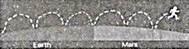 B .
B . 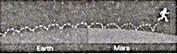 C .
C .  D .
D . 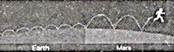
-
(4) The passage is probably taken from a(an) _______________.A . history book B . story book C . science book D . art book
What will the weather be like? Some people say they can know what the weather will be like from the animals. They believe that birds, chickens and frogs can tell the weather.
When they see birds fly high (高的) out to the sea, they know it is a nice day, because birds won't fly out when it's rainy. When the weather becomes bad, the birds will come back to the beach. A big wind may come with a rain. Birds do not like to fly in a big wind. They may sit in a tree when rain is coming. Chickens aren't quiet when it is going to rain, and they are running here and there. Frogs (青蛙) are making a big noise in the pool. If it is a nice day, the frogs will come out of the water.
-
(1) How many kinds of animals can we find in the passage?A . One. B . Two. C . Three. D . Four.
-
(2) We can play beach soccer when birds ________.A . fly in the sky B . come back to the beach C . play on the beach D . sit in a tree
-
(3) When there is rain, frogs are NOT ________.A . in the pool B . out of the water C . making big noises D . swimming in the water
My name is Chen Lan. My home is in Gulangyu. Where is Gulangyu, do you know? It is in Xiamen.Gulangyu is a small place(地方), but it is very nice and clean. There are no cars, buses or bikes. So it is very quiet. My house is in the center of Gulangyu. Behind my house there is a big old tree. My grandfather tells me the tree is very old. There are many birds in the tree.
My house is near the sea. The sea is big and blue.After school, I often go there and catch fish with my friends. It is very interesting. I like eating and catching fish. Can you tell me?
|
A: We call it a "bird tree". B: People only walk. C: There are many fish in the sea. D: What kind of house do you live? E: It is near the sea (海). |
Rivers are one of our most important natural resources. Many of the world's great cities are located on rivers, and almost every country has at least one river flowing through it that plays an important part in the lives of its people.
Since the beginning of history, people have used rivers for transportation. The longest one in the United States is the Mississippi. The lifeline of Egypt is the Nile. To the people of India, the Ganges is great, but it is also important for transportation; ships can travel along it for a thousand miles. Other great rivers are the Congo in Africa and the Mekong in Southeast Asia. The greatest of all for navigation, however, is the Amazon in Brazil. It is so wide and so deep that large ships can go about two thousand miles upon it.
Besides transportation, rivers give food, water to drink, water for crops, and chances for fun for the people who live along their banks. In order to increase the supply of water for crops, engineers sometimes build a dam across a river and let a lake form behind the dam. Then people can use the water not only to grow crops but also to make electricity for their homes and industries.
However, large cities and industries located upon rivers often make problems. As the cities grow in size and industries increase in number, the water in the rivers becomes polluted with chemicals and other materials. People are learning the importance. However, if they want to enjoy the benefits of this natural resource, they must do more.
-
(1) Which is NOT TURE?A . The Nile is in India. B . Almost every country has at least one important river. C . Many cities are located on rivers. D . Rivers play an important part in the lives of people.
-
(2) People can use the water from a dam for .A . keeping the rivers clean B . making electricity C . growing crops D . both B and C
-
(3) The water in the river is polluted because .A . people use too much water for growing crops B . people wash clothes in the river C . people pour chemicals and other materials D . people build a dam across a river
-
(4) The best title of the passage is .A . Rivers in Cities B . The Importance of Rivers C . Rivers and Transportation D . Natural Resources
Can you tell one animal from another? We think you need to learn the skill. As wildlife(野生动物) experts, we have special ways to know each of them. Usually we look for features(特征) of animals.
It's not so hard. If you know how, you will probably find your pet dog or cat when it is among several others.
We can look for different features of each kind of animal. Zebras have different black and white patterns(式样). For African wild dogs, we use the shape and color of the splotches(斑点). For giraffes, we use the pattern of splotches on the neck.
In fact, we learn the skill to study how animals grow in groups. Which animals are the parents? Which animal is the boss? Which animals are new to the area? We must know all of these while working in the wild.
-
(1) The writer wants us to learn the skill in order to help us________.A . find our pets easily B . be animal experts C . keep more pets D . learn more about wildlife
-
(2) How do the experts tell one animal from another?A . By taking photos. B . By looking for features. C . By living with animals. D . By talking with animals.
-
(3) The experts tell one giraffe from others by________.A . the tail B . the sound C . the head D . the pattern of the splotches on the neck
-
(4) Wildlife experts need to tell animals from each other to learn________.A . how baby animals leave their parents B . how animals grow in groups C . how baby animals live without their parents D . how animals give birth to baby animals
Dear humans,
It's the first time I write to you, my Children. I sent you many messages in the past, but you didn't take them seriously. So I decide to write you a letter.
First, let me tell you more about our family. Dear humans, besides you, I have many other children. Some of them fly in the sky; some of them swim in the water; some live in ice-covered places; some run in the grasslands.
They might be very close to you, or even live in your house. But there are others that you may never have the chance to meet.
You bring them home to be your pets, friends and helpers. You put them in the zoos. You kill them for their meat and fur. And you even hunt them for fun. They bring you money and happiness, but they also bring you illness and death.
I hope you remember that wild animals are not your food, clothes or furniture. They are not killers, either. They are, in fact, your brothers and sisters. You should grow up together. I'm worried that one day you will be lonely if you keep killing them.
So, grow up, humans. Grow up to be more loving and caring. I hope you and all the wildlife can live happily in my arms.
Yours,
Mother Earth
-
(1) Who are "they" in the third paragraph?
-
(2) Why do humans kill "them" according to the letter?
-
(3) Do you think humans will listen to Mother Earth's words? Why or why not.
Do you have a favorite place -- a place with family and relatives(亲戚), good weather and fun things to do? I'm glad I have. New Jersey is my favorite place. I like it for many reasons(原因).
The first reason is my family and relatives. Half of my relatives live in New Jersey. When I visit them, my cousins and I play games and have fun together all the day. My uncles and aunts like taking me to the park. There we can ride roller coasters and play in the water. We all feel happy to stay together.
The second reason is the weather. It is not hot, and it's always cool. When I think about my visits to New Jersey, I can just feel the little wind in my hair. It's so great to stay there.
The third reason is catching crabs(捕蟹). If it's the crab season, we often catch(抓)crabs. We keep the blue crabs and the snow crabs, and we let the others go. Once, my cousin catches a crab. It is so big that it can't get out of the crab bag! Finally, we help it get out, but it hurts one of its legs. Poor crab!
For all these reasons, New Jersey is my favorite place.
-
(1) If the writer has 16 relatives, how many of them may live in New Jersey?A . 5 B . 6 C . 4 D . 8
-
(2) What does the underlined word "hurts" mean in Chinese?A . 吃掉 B . 弄伤 C . 隐藏 D . 炫耀
-
(3) What's the right structure(结构) of the passage?A . ①②--③--④⑤ B . ①--②③--④⑤ C . ①②--③④--⑤ D . ①--②③④--⑤
-
(4) What can we know from this passage?A . The writer lives with his or her uncles and aunts. B . The weather in New Jersey is not hot or cold. C . The writer only keeps the blue crabs when crabbing. D . The writer likes to stay with his or her friends in New Jersey.
-
(5) Why does the writer write the passage?A . To tell us why he or she likes New Jersey. B . To tell us what he or she can do in New Jersey. C . To tell us how the weather is in New Jersey. D . To tell us what his favorite thing is in New Jersey.
Hi, I'm Giorgio. I'm from Sicily. It's a beautiful island in Italy. I live in a village on the coast(海岸). The sea is blue and I like to go fishing.
The capital of Italy is Rome. It is a very old city full of famous buildings. St Peter's is a very big and beautiful church(教堂) there.
Rome is very busy, but Milan is busier than Rome. It is in the north west of Italy. Do you know is famous football team? Milan has a population of 4 million people. People are busy working.
Venice is on the sea, and people use boats, not bicycles or buses for transport. Venice is beautiful, with lovely, old bridges and buildings by the water.
I'm happy on my island—and we have very good pizzas.
-
(1) Where is Giorgio from?A . Italy. B . India. C . England.
-
(2) Rome is_______.A . busier than Milan B . the capital of Italy C . famous for football
-
(3) Milan has a population of _________.
A . 4 million people B . 5 million people C . 6 million people -
(4) If you are in Venice, how will you go to school?A . By boat. B . By bus C . By bike.
In the universe, as we know, there is the sunvthe moon, the earth and many stars. Through our geography lessons, we know the earth goes round the sun, and the moon goes round the earth. We have day and night because the earth keeps turning all the time. When our part of the earth turns to the sun, it is day. When our part of the earth turns away from the sun, it is night.
Just because the moon is closer to the earth than the sun, it looks much bigger than the sun. Big things will look smaller when they are farther, and small things also look bigger when they are nearer.
The sun is bright enough to give out very strong light. The moon can't give any light at all, but it looks quite bright, too. Why? In fact, the light from the moon comes from the sun. The moon looks much bigger and brighter than the stars. But actually(事实上) the stars are much bigger and brighter than the moon. They look smaller than the moon also because they are farther away from the earth.
There are still many other planets in the universe. But of all these planets, only on the earth there are living things and people can only live on the earth, too. But at 9:00 a. m. on October 15th 2003, Chinese pilot Yang Liwei was sent up to space. He stayed there for 21 hours. It was the first time for Chinese to get into space.
-
(1) We find the sun than the moon because it is to us.A . bigger,farther B . smaller,closer C . bigger,closer D . smaller,farther
-
(2) When our part of the earth turns away from the sun,the other part of the earth is .A . night B . day C . evening D . sunday
-
(3) When did the pilot from our country return to the earth?A . On November 15th,2002. B . On October 16th,2003. C . On May 15th,2004. D . On October 15th,2003.
-
(4) Which of the following is TRUE according to the passage?A . The moon goes round the earth,and it can't give out any light at all. B . The moon goes round the sun,and its light is from the sun. C . The earth moves round the moon,and people can live only on the earth D . Of all the planets,only the earth moves round the sun.
|
Morning |
Afternoon |
Morning |
Afternoon |
||
|
Sunday |
|
|
Thursday |
|
|
|
Monday |
|
|
Friday |
|
|
|
Tuesday |
|
|
Saturday |
|
|
|
Wednesday |
|
|

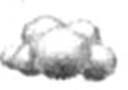
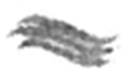
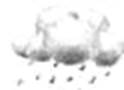
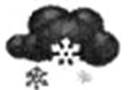

-
(1) On what day is it windy all day?A . Monday. B . Wednesday. C . Thursday. D . Saturday.
-
(2) What can you do on Friday?A . Run in the park. B . Swim in the pool. C . Make a snowman. D . Ride a bike.
-
(3) How's the weather on Sunday afternoon?A . Cloudy. B . Sunny. C . Rainy. D . Windy.
-
(4) What season is it?A . Summer. B . Spring. C . Winter. D . Autumn.
Have you ever seen (曾经见过)snow? Many people1the world have not. Some countries never have snow; some have only 2on the tops of very high mountains. 3 the north of England4quite a lot of snow every winter,5in the south of England, there is usually little.
When a student from a 6country comes to England in autumn for the first time, he feels cold at first. There are often dark clouds, grey sky and cold rain in England in autumn, and most students from warm countries do not like this.
But snow is 7 . Though(尽管)it is cold, it is also beautiful. Perhaps (也许), after a few dark mornings, the student 8one day and there is a lot of light in his room. He thinks" Is it so 9?" and jumps out of bed. But no, it is not very late. He looks out of the window and there is lots of snow on the ground and on the houses and everywhere. The light of his room comes 10clean, beautiful snow.

The Year of the Ox is coming. In China, you will find all kinds of ox figures made of gold, wood, (塑料), paper, and stone on sale in stores and on streets to celebrate the return.
The ox (选择) to be one of the 12 Chinese zodiac signs long time ago, do you how why?
Centuries ago, most people made their living by farming. The ox was used to help work in the fields and carry (重的) things for them.
The ox is considered one of the (象征) of being diligent and hard-working in Chinese culture. When someone gets over something difficult through hard work, people often use "niu", meaning "excellent", to (称赞)him or her.
Oxen (很少地)laugh at the weak or fear the strong. They work hard and always think of others (没有)thinking about themselves.
This is (尤其)reflected in a poem by Lu Xun. He once wrote "Fierce-browed, I coolly defy a (一千)pointing fingers; Head bowed, like a willing ox I serve the children. ", which fully shows the poet's loyalty to the people.
"They never want to be the center of attention," the (网址)China Highlights noted. So naturally, those who were born in the Year of the Ox are often expected to be hard-working, reliable and loyal.
My name is Nana. I'm a very big animal. I live in a zoo in the UK. I have a long neck (脖子) and long legs. I eat leaves on the trees. Do you know what animal I am?
I'm Bob. I live in a zoo in Thailand. Many people like my friends and me because we're clever and friendly, but some people like us because of our ivory.
I'm Ann. I live in Australia. I am not very big. Many people come to the zoo to see me. I sleep a lot every day, but that's not because I'm lazy. I need a lot of sleep to help me conserve energy (保存能量).
My name is Beibei. I am in a zoo in America now, but my home is in China. I'm black and white. Bamboos are my favorite food. Everyone says I'm cute. Do you like me?
-
(1) What animal is Bob?A . An elephant. B . A tiger. C . A giraffe. D . A panda.
-
(2) Why does Ann sleep a lot every day?A . She is too lazy. B . She is not healthy. C . She doesn't like her zoo. D . She needs to conserve energy.
-
(3) Who likes eating bamboo?A . Nana. B . Beibei. C . Ann. D . Bob.
Growing mushrooms(蘑菇)is probably the easiest thing you can do even if you are new to mushroom growing. It is becoming more common because restaurants are starting to create more dishes that include mushrooms.
Mushroom growing is easy. To start, you need to have a space where you are going to grow these mushrooms. It does not have to be a huge space but just enough for you to grow as many mushrooms as you need. When you have found the space perfect for you, you can start researching what kind of mushrooms you want to grow. There are a lot of mushrooms to choose from and not all of them are suitable to eat.
When you decide what kind of mushrooms you want to grow, you can start getting ready to plant the mushrooms. Sometimes you may want to hire some workers to help if you have a large mushroom farm, or if you are trying to start a professional mushroom growing business. Trying to have a business by yourself can be stressful. If you don't have enough time to spend taking care of everything yourself, some helpers may be the best choice.
After you have started the mushroom growing, you should regularly check that your mushrooms grow properly and that they are not being attacked by any pesticides(农药)or any other animals or something that could be dangerous to them. That is the worst part of mushroom developing. Protect your mushroom farm well with a fence(围栏)or a gate so that only you and your workers can get in and out.
Mushroom growing is not difficult and it is easy to get stared in the world of farming. You will soon possibly be able to provide some of the great cooks of the world with high quality mushrooms that will be enjoyed by thousands of people all over the world.
-
(1) According to the passage, many people begin to plant mushrooms probably _______.A . because they are in great need. B . because they look very beautiful C . because they are healthy food D . because they are very expensive
-
(2) Which of the following is the right order of planting mushrooms?
a. Choose suitable mushrooms. b. Protect your mushrooms well.
c. Find some workers to help you. d. Start to grow the mushrooms.
e. Find a place to plant your mushrooms.
A . c--a--d--b--e B . e--a--c--d--b C . c--a--e--b--d D . e--a--d--b--c -
(3) It can be inferred(推断)from the passage that __________.A . pesticides can be used in mushroom growing B . anyone can produce high quality mushrooms. C . having a mushroom business is not so difficult D . after starting, you should always take care of the mushrooms
-
(4) According to the passage, which sentence is NOT true?A . Although you don't know much about growing mushrooms, you can do it easily. B . You can choose a suitable space, just big enough for you to grow mushrooms. C . All mushrooms aren't suitable to eat. D . The worst part of mushroom developing is to protect your mushrooms farm well with fence.

Machu Picchu(马丘比丘) is an old city in Peru(秘鲁). People built it in the 15th century(世纪). There are only about 1, 000 people living in the special place. There are mountains around it. The nearest(最近的) city is about 50 kilometers away. Machu Picchu is a fun place to visit.
How can you get to Machu Picchu? There are different ways. You can go there by train or by bus. You can go into Machu Picchu from 6:00 a. m. to noon or from noon to 5: 30p. m. The ticket to the old city is not expensive, 23 dollars for a child and 77 dollars for an adult(成年人).
Before going there, you should know the following tips. Remembering to buy your ticket online(在线) is the first one. There are only restrooms(厕所) outside the old city and they are not free. Talk to your doctor before your trip to make sure your body is strong enough to go there.
-
(1) The first paragraph doesn't talk about __________.A . when people built Machu Picchu B . how many people live in Machu Picchu C . what is around Machu Picchu D . when the best time is to visit Machu Picchu
-
(2) When can a visitor go into Machu Picchu?A . 5:30 a. m. B . 11:45 a. m. C . 5:45 p. m. D . 6:00 p. m.
-
(3) How much money does 6-year-old Jim need to visit Machu Picchu with his parents?A . 23 dollars. B . 77 dollars. C . 100 dollars. D . 177 dollars.
-
(4) What does the underlined word "tips" mean?A . 建议 B . 优点 C . 不足 D . 状况
-
(5) Where does the passage probably (可能) come from?A . A history book. B . A book about people. C . A travel newspaper. D . A book on sports.
A city without cars would be very strange, right? But Venice is such a city.
Venice is in the northeast of Italy. It wasn't built on land, like Beijing or Shanghai, but on more than 110 islands. Seawater is everywhere around the city.
Even so, travel isn't difficult. The waterways have always been the best ways to get around. There are 117 waterways and more than 400 bridges that can guide you where you want to go. People in Venice move from place to place by boat. They like to enjoy the scenery and cool summer nights while taking boat trips. They can talk to other people as they go along.
Venice grew out of small islands in saltwater lakes when some Italians escaped from a war more than 1,500 years ago, and built homes there.
Water makes the city special, but it is also a big problem.
Once, people used too much underground water. This made the city get lower little by little. Now the city has gone down by 23 centimeters. Another problem is the rising seawater. The temperature has risen over the years. This has made the ice of the Arctic Ocean melt. Every year, high waters hit the city in autumn and winter. When a lot of water comes, more than half of the city is underwater.
Scientists are trying different ways to stop the city from getting even lower.
-
(1) Where is Venice?A . In Italy. B . In Canada. C . In England. D . In America.
-
(2) Which is the most impossible way for people in Venice to get around ?A . On foot. B . By boat. C . By car. D . By bike.
-
(3) Why is Venice still getting lower and lower?A . Because too many people live there. B . Because the rising temperature has made the ice melt. C . Because lots of bridges have been built. D . Because the underground water is rising.
-
(4) What seasons are dangerous for Venice because of high waters?A . Summer and autumn. B . Autumn and winter. C . Summer and winter. D . Spring and winter.
-
(5) The passage is mainly about .A . the waterways of Venice B . the history of Venice C . the scenery of Venice D . the problem of Venice
Many people know it doesn't rain every day in the UK. However, it is always right to bring an umbrella (雨伞). We never know what the weather will be like. It can be sunny one day but rainy the next day. The weather always changes (改变) from day to day, so it is difficult to predict it. But usually we have warm summers and cool winters.
July and August are usually the warmest months in Britain. January and February are usually the coldest ones.
Lots of people like to visit Britain. But when is the best time to come? Probably the best months to come to Britain for a trip are May, June, September and October. These months have nice weather and less rain. July and August are warm, but it usually rains in these months so it is always wet (湿的). The sunniest place of Britain is along the south coast (海岸) of England. So, next time you can come to visit it.
-
(1) Why do people need to take an umbrella when they go out in Britain?A . Because it is too hot. B . Because people need it for walking. C . Because it can be rainy at any time.
-
(2) What does the underlined word "predict" mean in Chinese?A . 依赖 B . 预测 C . 考虑
-
(3) Which of the following is NOT the best month to visit Britain?A . Мау. B . June. C . July.
-
(4) What's the weather like in August in Britain?A . Cloudy. B . Windy. C . Rainy.
-
(5) What can we know from the passage?A . People like the weather in Britain very much. B . We need to take an umbrella when visiting Britain. C . The summer in Britain is usually cool.
- 已知某种植物花粉的直径为0.00035cm,将数据0.00035用科学记数法表示为 .
- 实施西气东输,川气东输工程,有利于调配能源资源地域分布不均的状况,优化我国的能源消费结构,改善沿线主要城市的大气环境质量
- 历史上有这样一批文人,仕进无路,于是“以其有用之才,而一寓之乎声歌之末,以舒其拂郁感慨之怀”,从而推动了中国文化艺术事业
- (本题7分) 阅读下列内容:请完成下面的问题:如果有理数a,b满足∣ab-2∣+(1-b)2=0试求+…+的值
- 5月14日中央电视台《经济半小时》栏目报道,齐齐哈尔第二制药有限公司在生产“亮菌甲素注射液”时使用了存在严重质量问题的丙
- 已知函数f(x)=sin(ωx+φ)(ω>0,0≤φ≤π)为偶函数,且图象上的一个最高点P与相邻的最低点Q之间的距离|P
- 如图所示,一质量为M的小孩恰好静止在倾角为θ的滑梯上。若他再背上一个质量为m的书包,则A.受到的合外力增大
- There _______ a football match in thestadium this afternoon.
- 下列叙述正确的是() A. 1 mol H2O的质量为18g/mol B. 3.01×10²³个SO2分
- 如图是可逆反应A+2B⇌2C+3D的化学反应速率与化学平衡随外界条件改变(先降温后加压)而变化的情况,由此可推断A.正反
- 除病毒外的绝大多数生物都是由细胞构成的。细胞是生命活动的基本单位。 ( )
- 用纯种黄色圆粒豌豆(YYRR)和纯种绿色皱粒豌豆(yyrr)作亲本进行杂交,得到的F1再进行自交,F2中表现型不同于亲本
- 读东北地区年降水量分布图(单位:mm),完成问题。影响东北地区年降水量分布的主要因素有 ( ) ①太阳辐射
- 下列各组词语中,没有错别字的一组是 A.文身 抱歉 舶来品
- 从双曲线的左焦点引圆的切线,切点为,延长交双曲线右支于点,若为线段的中点,为坐标原点,则与的大小关系为 A. B
- 如图11是雷达测定某固定目标时指示器显示的信号.则() 图11A.根据两尖形波的距离,可直接从荧光屏上的刻度读出障碍物
- 1959年,美国国家展览会在莫斯科举办。对于榨汁机和洗碗机等展品,赫鲁晓夫表示工人阶级决不会购买这些无用的小器具,当场引
- 如图所示,一光滑宽阔的斜面,倾角为θ,高为h,现有一小球在A处以水平速度v0射出,最后从B处离开斜面,下面说法中正确的
- 若函数的部分图象如右图所示,则的值为 A. 1 B. 0
- 如图2-2-7所示,位于斜面上的物块M在沿斜面向上的力F作用下,处于静止状态,则斜面作用于物块的静摩擦力的情况是(


