科普环保类 知识点题库
If you arrange the 26 English letters alphabetically(按字母表的顺序) and use numbers to represent each of them, for example, 1 for a, 2 for b, 3 for c…, you can change an English word into a number. So hard-work becomes 8+1+18+4+23+15+18+11="98," meaning 98 is its mark; knowledge: 11+14+15+23+12+5+4+7+5="96," while love :12+15+22+5="54," and luck : 12+21+3+11="47," a small mark. None of these words can give one a full mark. What about money or prayer(祈祷)? They can't, either.
Then what else? Don't be worried. You can always find an answer to a problem in your life, when you change your way of looking at things or doing things, or your attitude(态度). Yes, attitude is the word. See for yourself: attitude: 1+20+20+9+20+21+4+5=100, a full mark.
Different attitudes lead to different courses of life. Most times people hope for a better life. It is possible that one will have a change for the betterr after one has changed one's attitude.
When you change your manner and became friendly towards others, you'll meet more smiling faces towards you.In the same way, if you take a positive(积极地) attitude towards failure(失败), you'll find it's also rewarding though it has caused you losses.
-
(1) In the writer's opinion, what is the most important things in a person's life?A . Hard-work. B . Knowledge. C . Money. D . Attitude.
-
(2) According to the passage, if you meet with problems, the best way out is to ___________.A . ask for helpf from others B . say your prayers to God C . change your attitude D . try maths-solving methods
-
(3) From the passage we can learn that ______________.A . diffrent attitudes come from different courses of life B . mathematics can solve every problem easily in our daily life C . failure sometimes can bring you good if you take a positive attitude D . none of the English words except “attitude” equals to 100 or more
Over each pond is a low cover. It is made of glass that you can see through.
At night, sea water is taken into the ponds. The next day, the hot sun shines through the covers. The sun light turns the water into vapor(水蒸气) and the vapor goes up from the ponds. The salt is left behind.
As it goes, the vapor became mist. On the inside of each cover, the little drops of mist run together to make big drops. These drops run down the sides of the cover, filling other ponds with fresh water.
The salt left in the ponds is washed out each night. Then more sea water is taken in. The factory is ready for the next day's work. The covers and other parts of the factory cost very little. Sea water and sun cost nothing. Most people of Symi are poor. So to them this new way of getting fresh water seems wonderful.
-
(1) Where are the little drops made into big drops?A . On the inside of the covers. B . In the ponds with fresh water. C . On the walls of the salt water ponds. D . Between the fresh water and the salt water.
-
(2) The men of Symi dug some long ponds .A . in order to keep sea water B . in order to get hot water inside C . in order to fill them with fresh D . in order to get fresh water
-
(3) Which picture shows the right way to get fresh water in Symi?A .
 B .
B .  C .
C .  D .
D . 
-
(4) Which of the following is NOT true?A . The sea water is taken into the ponds at night every day. B . There is a very big river running through the town to the sea. C . The people in Symi can get fresh water from the factory. D . People may see the water in the ponds through the cover.
Which is the biggest country in the world? Well, look at the map and you'll know it is Russia. It is followed by Canada, China, the U.S.A. and Brazil. Among them, China has the largest number of people, with a population(人口) of about 1.3 billion(十亿). Canada has the longest coastline(海岸线). The total length(长度) of the coastline is about 202,080 kilometers. It is long enough to go around the earth six times.
Do you know which is the largest island(岛) in the world? Is that Hawaii? No, it is much smaller than the largest island in the world—Greenland. Greenland is to the northeast(东北) of Canada. Ice covers 81% of its land. It is very cold there, so there are only about 56,000 people living on the island.
-
(1) Russia is the largest country in the world.
-
(2) The country with the largest population is China.
-
(3) The total length of Canada's coastline is about 202,080 kilometers.
-
(4) The largest island in the world is Hawaii.
-
(5) The population of Greenland is about 56,000.
Air, as a gas, has no definite shape, but because it is matter, it takes up space and it has weight. It is easy to prove that air is something that takes up space. Stuff a piece of dry cloth(布)into the bottom of a glass so that it will not fall out when the glass is turned upside down. Push the upside down glass, holding straight up and down, into a jar of water till the glass is completely covered. When the glass is taken out of the water, the cloth is still dry. The air inside the glass shows that it takes up space and keeps the water from coming in.
-
(1) Since air is matter, it has ________.A . room , and weight as well B . both room and shape C . either room or weight D . neither shape nor weight
-
(2) The word “Stuff” means ______ in Chinese.A . 撕 B . 盖 C . 取掉 D . 塞
-
(3) The writer tells that the experiment(实验)___________.A . is carried out in the space B . must be done in the lab C . is made in the room D . can only be done in the open air
The Milu deer is a kind of animal with large horns(角). They were very common in China long ago. They lived together and ate grass and the soft parts of trees. In the past, people did not protect the Milu deer and killed them for food or sport, so they disappeared(消失) from China .
Luckily before all of them disappeared, the Duke of Bedford(贝德福特公爵) took some to Britain. The Milu deer like the cool, wet weather in England and their numbers increased(增长) year by year. As a result, when in1985, the government of China wanted to bring back the Milu deer, the Duck of Bedford was able to help. The first deer came back to China to the Nanhaizi Milu park near Beijing and to Dafeng, Jiangsu Province.
Since they returned to China, their number has grown quickly .There are now so many of them that a new park has been opened for them in Hubei Province. Now the Milu deer live in the wildlife parks and have good protection. We hope that one day they can live in the wild again.
-
(1) The Milu deer eat grass, insects and the soft parts of trees.
-
(2) The Milu deer disappeared long ago in China because they had a serious disease(疾病).
-
(3) The first Milu deer returned to China before 1985.
-
(4) China has three centres for the Milu deer now.
阅读理解。
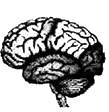
Your brain controls everything you do. It makes it possible for you to think,
Learn, create and feel; to blink(眨眼) and breathe and for your heart to heat –this fantastic control center is your brain. It is so amazing that a famous scientist once called it "the most complex(复杂) thing we have yet discovered in our universe".
Can this small grey organ(器官) , which weighs less than one and a half kilos, really do so much? Amazingly , your brain contains about 100 billion neurons(神经元) -it would take you over 3, 000 years to count them all. Believe it or not, the activity in your brain never stops. Your neurons create and send more messages than all the phones in the world. And although one neuron creates only a little electricity, all your neurons together can produce enough electricity to power a light bulb (灯泡).
So exactly how fast does your brain work? Well, imagine this: a bee lands on your foot. Neurons in your skin send this information to your brain at a speed of more than 240 kilometers per hour. Your brain then uses other neurons to send the message back to your foot to shake the bee off quickly. These neurons can send this information at more than 320 kilometers per hour. No computer has your brain's unbelievable ability to deal with the amount of information coming from your eyes, ears and other sensory organs.
But how does your brain allow you to learn things that you will use in the future? The structure (结构) of your brain changes every time you have a new thought, remember or learn something. For example, riding a bike seems impossible at first, but soon you are able to do it. How? As you practice, your brain sends "bike riding" messages again and again soon, the actions are learnt and you are able to ride a bike easily from then on.
-
(1) From the passage we know that neurons .A . receive messages very slowly B . are only found in your skin C . send messages to your brain D . need electricity to work
-
(2) In Paragraph 3, the writer mentions computers to .A . compare them which the human brain B . show how fast they have become C . say that computers have no abilities D . ask people to use computers more
-
(3) When you have a new thought, .A . your brain will power a light bulb B . your heart beats faster C . you remember something D . the structure of your brain changes
-
(4) The article is mainly about .A . all the steps when your brain learns things B . what an unbelievable organ the human brain is C . how the brain makes people smarter than computers D . the things you can do to make your brain work faster
A taxi hit a truck. A policeman spoke to the taxi driver and to the truck driver. He also spoke to Tom. He was a witness (目击者). This is what they said.
TRUCK DRIVER: I was driving from the airport to Newton. A car crossed the road, so I slowed down. I did not stop. A taxi hit the back of my truck. Nobody was seriously hurt but both cars were damaged(受损害).
TAXI DRIVER: I was driving behind a truck a few kilometers from Newton. The truck stopped suddenly. The driver did not give me a warning (警告). I was driving very slowly. I could not pass the truck because there were two cars coming near from Newton. My taxi hit the truck, and some glass cut my left hand.
TOM: I was watching the traffic about a kilometer from the airport. A truck was going to Newton. It was not going very quickly. There was a taxi about two hundred meters behind the truck. It was going fast. When the truck slowed down, the taxi hit it. The taxi driver was not looking at the truck. He was looking out of the window at something. My friend saw the accident, too.
Tom's friend spoke to the policeman and agreed with Tom.
-
(1) How many people are mentioned (提到) in the story?
A . Three. B . Four. C . Five. D . Six. -
(2) From the story, we know didn't tell the truth.
A . the truck driver B . Tom C . the taxi driver D . Tom's friend
How does a young dog or cat get to know a new home? The animal uses its nose. Right away it smells its new places. Then it makes wider and wider circles, smelling all the time. Before long it can find its way home very well, even in the dark. It simply follows something it knows well.
Stories happen about animals who found their way across land they had never smelled before. Take the case of Smoky, a small white cat. Smoky had some funny red hair around its right ear. One day Smoky and his owner began a long journey. They were moving from Oklahoma to Tennessee. When they were just eighteen miles from their Oklahoma home, Smoky jumped out of the car. Then he found his way back to the old house. There he wandered around outside for many days. Finally he disappeared.
A year later Smoky meowed at the door of a house in Tennessee. A man opened the door. "Is that you, Smoky?" he said in surprise. At first he couldn't believe it. Then he saw the red hair around its right ear. It was Smoky!
-
(1) What is the first thing a pet does in a new place?A . It travels a long way. B . It smells the new place. C . It finds its way in the dark D . It follows something it knows.
-
(2) Put these events in the right order that they happened.
①Smoky got to Tennessee.
②Smoky jumped out of the car.
③Smoky went to his old house.
A . ③①② B . ①③② C . ②③① D . ③②① -
(3) What does the underlined word "wandered" mean in the passage?A . 游荡 B . 思考 C . 搜寻 D . 围绕
-
(4) What is the best title of the passage?A . A Kind Owner B . A Humorours Cat C . A Surprising Journey D . An Excellent Memory
The next time you look up at the sky and see a cloud that looks like Mickey Mouse or your favorite fruit, look again. It may not be a cloud, but a Flogo -- a logo that flies. It's a new form of advertising in the sky that's never been used before. It's a different way to market your products, logos, and events.
These funny logos are made with soap bubbles (肥皂泡) mixed with a little helium gas (氦气) ,which makes them lighter than air and float in the sky. Special machines are used to make these new funny Flogos. The machine, which can be rented for $ ,500 a day, can make a Flogo every 15-5 seconds.
Flogos can fly much higher or lower if needed. They can last from a few minutes to an hour anywhere in the sky, depending on the weather conditions. Though they can fly up to 0, 000 feet, they usually float around at 300- 500 feet. Flogos are only white now, but people hope to have more colorful Flogos in the near future.
Flogos are Green, 100% environmentally safe, because the soap used to make the Flogo comes from plants and leaves. So this fun way of advertising is healthy and good for the environment.
-
(1) Flogos are mainly used to _____.A . advertise in the sky B . make funny bubbles C . improve weather conditions D . see colorful clouds
-
(2) Why are Flogos healthy and good for the environment?A . Because they can float high and last for a long time in the sky. B . Because there is a little helium gas mixed with soap bubbles. C . Because the machines used to make them are special and expensive. D . Because the soap used to make them comes from plants and leaves.
-
(3) From the passage, we can infer that Flogos _____.A . can fly for hours in the sky all day B . can have different colors at present C . may be influenced by the weather D . may be the cheapest way of advertising
-
(4) Which of the following can be the best title of the passage?A . Machines -- Used for Flogos! B . Flogos -- Logos that fly! C . Advertising -- Made of Fruits! D . Clouds -- Like Mickey Mouse!
You know how much your telephone has changed over the past 10 years? Your car will change even more than that in the next 10 years. One of the biggest changes is that cars will drive themselves.
“We certainly have the technology for it now.”says Andrew Poliak of automotive(机动车辆的)technology supplier QNX.“We expect self-driving cars to be a mainstream thing between 2020 and 2025.”
The American company Google has been working on self-driving cars for years. These cars are already on the roads in the United States and are truly self-driving. They have to steering wheels(方向盘)or pedals(踏板). Last week, the police ordered one of Google's cars to stop for driving too slowly on a public road. The car was not breaking any law, so no one was punished.
Another American company, Tesla, added an “Autopilot” feature to its cars last month. With the Autopilot turned on, the vehicle drives itself. The car will speed up, slow down, brake and drive by itself. You can take over driving any time by turning the steering wheel or touching a pedal. The car uses sensors(感应器)to know when driveway changing is safe and whether it should speed up or slow down.
Tesla Autopilot is made for cross-country driving. It keeps you in the driveway and helps you avoid hitting other cars. It does not work well on local roads, for it will not stop at a red light or stop sign.
Reporter Carolyn Nicander Mohr tried the Autopilot feature of a Tesla earlier this month. She had a hard time trusting the car to do what it should do. She thought about disabling the Autopilot feature many times during her trip. She wanted to take control at every bend in the road and hit the brake when the car in front of her slowed down. Yet the car drove perfectly.
Other companies are working on self-driving cars, too. Marcedes-Benz, Audi, BMW. Volvo and Toyota all have plans for such vehicles.
-
(1) What do Andrew Poliak's words probably mean?A . It is too difficult for people to make self-driving cars now. B . Self-driving cars will be first put on the market in 2020. C . There will be more self-driving cars in use in the future. D . Nobody loves to use self-driving cars at the moment.
-
(2) Why did the police stop the Google car?A . It had no driver. B . It went to slowly. C . It broke the traffic rules D . It had no steering wheel.
-
(3) The underlined word “brake”probably means ______.A . 加油门 B . 刹车 C . 前进 D . 后退
-
(4) According to the text, Tesla Autopilot ________.A . is truley self-driving B . can sense traffic lights C . won't work on freeways D . isn't safe in crowded areas
-
(5) From the passage, we can infer(推断)that _______.A . self-driving cars are popular nowadays. B . self-driving could be trusted by anyone. C . a special driveway should be built for self-driving cars. D . self-driving cars need improving
Smog(雾霾) is a big problem in many Chinese cities. But it seems that besides wearing a mask, few of us know what has caused the smog and what to do to beat it. Chai Jing, a former news hostess with China Central Television, discussed the questions in her documentary Under the Dome.
The 103 - minute film was published on major Chinese video - sharing websites on Feb 28. In the film, Chai visits polluted places and talks to officials and scientists. She comes to the conclusion that burning too much coal and oil are the main causes of PM2.5 and smog.
To make things worse, according to Chai, the coal and oil we are burning is of poor quality and don't meet the standards for environmental protection. Therefore they have produced more harmful gas to pollute the air.
To solve the problem, Chai suggests that we should clean our coal and oil or replace them with cleaner energy such as natural gas. In her film, Chai also pointed out that ordinary people can do something to help control smog too. For example, we live a greener life by using more public traffic. Or if we see things that could harm the environment, we can try to stop it. In one scene from the film, Chai sees a dirt mound in a building site exposed in the air, and asks the person in charge to cover it. When she sees a restaurant cooking without any suitable filter facilities, she calls the hotline 12369. The restaurant installed the filter a week later.
Chen Jining, the new minister of environmental protection, praised Chai. "This film encourages ordinary people to care about the environment. This is what we need in the future. "
-
(1) What do most of people do to deal with the smog?A . Wear a mask. B . Think of ways to beat it. C . Find out what has caused it. D . Take a documentary.
-
(2) What is the main cause of smog according to Chai?A . Setting off too many fireworks. B . Burning too much coal and oil. C . Too many cars in big cities. D . Too many factories and companies.
-
(3) Which of the following is NOT Chai's suggestions towards reducing smog?A . Using cleaner energy. B . Cleaning coal and oil. C . Using natural gas. D . Replacing coal with wind energy.
-
(4) What can we tell from the story?A . Only factories produce heavy smog B . It tells us two ways to protect environment. C . Taking public traffic is good for the environment. D . Ordinary people can do nothing to help control smog
-
(5) What's Chen Jining's attitude towards Chai's film?A . He showed no interested in it. B . He thought highly of it. C . He didn't agree with it. D . He complained about it.
E
Artificial intelligence(人工智能), or AI in short, is the science of giving computers and machines ability to think and work like humans. AI scientists and engineers have made a lot of cool technologies.
AI is rapidly catching up with the human ability to read faces. As a result, facial recognition(识别)is used a lot in the world. Chinese police use this technology to identify criminals(罪犯).Once they caught a criminal when he attended a concert. It also checks the ID of ride-hailing(网约车)drivers and lets people pay for things with a smile.
AI is also used in self-driving cars, which are believed to be the future of driving. Most drivers may wave or nod at passers-by to let them cross the street, but self-driving cars don't have this ability. Carmakers are testing a light signal system to help them "speak" to humans. The system can show what self-driving cars will do. For example, if a driverless car is yielding(让路), it will flash two white lights side to side. A rapidly flashing light tells passers-by that the car is about to speed up.
Service Robots also show you know powerful AI is. Imagine this—you come back home from school and your robot housekeeper is waiting for you at the door. After dinner, he teaches you to play the piano, just like a real music teacher. Such thoughts will soon happen in the real world. In the future, more and more service robots will become good home helpers.
AI is so powerful that it can help human beings and even replace us in many jobs.
-
(1) What does the underlined word "identify" mean in Paragraph 2 probably mean?A . To let somebody know his mistakes. B . To come to realize and tell who is who. C . To take somebody to the police station. D . To inform somebody of something important.
-
(2) According to the passage, what is facial recognition used for?A . Driving cars. B . Making people smile. C . Calling the police. D . Checking people's information.
-
(3) Which technology has been used in real life according to the passage?A . Service Robots at school. B . Robots as ride-hailing drivers. C . Facial recognition for payment. D . Light signals for self-driving cars.
-
(4) What can we learn from the passage?A . People use AI in many different ways. B . AI will take the pace of human beings in all jobs. C . Self-driving cars will be able to talk like humans. D . A criminal was caught for inventing facial recognition.
Which of your two hands do you use 1 ? Very few of us can use 2 of our hands equally(相等地) well. Most of us are 3. Only about five people out of 4 hundred are left-handed. New-born babies can take things 5 either of their hands, 6 in about two years most of them use their right hands. Scientists(科学家) don't know 7 this happens. Scientists 8 that monkeys like to use one of their hands more than the other, but it can be either hand. Most of people use their right hands better and this makes life 9 for those left-handed persons. We live in a 10 world.
Light and shadow(影子)are friends. They usually go together. We receive light every day. At the same time, we produce shadow.
Light cannot shine through you. Your body stops it from passing. There is a dark spot on the ground next to you. The light cannot reach the dark spot. This is your shadow.
At noon the Sun shines over your head. Your body stops very little light from reaching the ground.
We love light, especially sunlight. Without sunlight, life on the Earth is impossible. Most of us like to stand in the shadow of a tree in summer. But some people are afraid of their own shadow at night. They do not want to walk in a dark street. They do not want to see the shadow either. But still light and shadow usually go together.
-
(1) The sentence "Light and shadow are friends." means " ".A . The shadow produces light. B . The light usually follows the shadow. C . Light and shadow usually get on well with each other. D . When we get light, we can get shadow. They are always together.
-
(2) Light CANNOT shine through you Because .A . it is too weak B . your body stops it from travelling on C . your body is tall and strong D . there is a dark spot on the ground next to you
-
(3) It is in the shadow of a tree in summer, so many people like to stay there.A . hot B . warm C . cool D . cold
-
(4) Which of the following is NOT true?A . There will be no shadow without light. B . Shadow is produced when something stops light from passing. C . We produce light when we receive it. D . Man, animals and plants have to live on sunlight.
Scientists in Britain and the United States have made a new kind of enzyme(酵素) that eats plastics (塑料). With its help, plastics can be turned into smaller parts and go away quickly. Scientists believe that, in the future, it could solve the problem of plastic pollution.
The enzyme is able to break down PET, a form of plastic. PET was first made in the 1940s and is now widely used to make plastic bottles. It can remain in the environment for many years and pollute large areas of land and water. So it has always been a headache to deal with the waste from PET and other plastics.
The researchers made the discovery (发现) while examining the structure of a natural enzyme in Japan. They found that the natural enzyme was helping to break down PET plastics. So, they decided to make small changes to the enzyme by adding some amino acids (氨基酸). It made the natural enzyme's plastic-eating abilities work faster and better.
John McGeehan, one of the lead researchers, said, "We've made an improved enzyme. It's better than the natural one. And we are trying to make more improvements to it." He went on, "The enzyme is not harmful to humans or animals, and it is friendly to the environment. So we are considering putting it into wider use."
The team is now trying to make the enzyme break down PET in large quantities (大量地).
"We'll see that the plastic pollution may be stopped with this technology. However, there is still a long way to go," John McGeehan added.
-
(1) According to the scientists the enzyme may solve the problem of pollution.A . air B . water C . light D . plastic
-
(2) The underlined phrase "break down" in the passage probably means "______" in Chinese.A . 实验 B . 生产 C . 发明 D . 分解
-
(3) Researchers discovered that a natural enzyme helped eat plastics _______.A . in Britain B . in the US C . in Japan D . in China
-
(4) Which of the following is TRUE according to the passage?A . The scientists are still trying to improve the enzyme. B . The enzyme will pollute large areas of land and water. C . The natural enzyme works better than the improved one. D . The natural enzyme is harmful to humans and animals.
|
Giant Pandas(大熊猫) Where they live: Mainly in Sichuan, also in Shaanxi(陕西)and Gansu. Why they are in danger: They don't have enough food. They don't give birth to many babies. Fun facts: •A new baby panda is as small as a rat. •Pandas spend almost the whole day eating! But they only take in 20% of what they eat. Pandas poop(排便)over 12 times a day. •Pandas have been on the earth for about 3 million years. |
|
Siberian Tigers(东北虎) Where they live: Northeastern China and Russia. Why they are in danger: People hunt them and destroy their habitat. Baby tigers are weak and often die early. Fun facts: A father tiger always leaves his family without saying goodbye. Then the mother tiger takes care of the babies. She is very careful. She hides her babies when she goes out hunting(猎食), and takes a different way home. |
-
(1) Where do giant pandas live?A . In Sichuan and Russia. B . In Shaanxi and Guangxi. C . In Northeastern China and Russia. D . Mainly in Sichuan, also in Shaanxi and Gansu.
-
(2) For how many reasons are siberian tigers in danger?A . One. B . Three. C . Four. D . Five.
-
(3) Which of the following is TRUE according to the passage?A . Giant pandas have enough food. B . Baby tigers are very strong. C . Another tiger always leaves her family without saying goodbye. D . The mother tiger takes care of the baby tigers.
People worldwide are doing something to protect the earth. As kids,we can also try our best to help. We can do the following.
●Change a light. Change a regular light to a more energy-efficient(节能的)light.
●Drive less. Walk, ride or use public transportation. Ask your parents to drive less. By this way, we can make less pollution.
●Recycle more. Think before you throw away trash. Throw trash into different trash cans, and this helps recycle.
●Use less hot water. It takes a lot of energy to heat water like a bath instead of a shower, and wash clothes in cold or warm water.
●Adjust(调节)your air-conditioning. Move it down 2℃ in winter and up 2℃ in summer than you want it to be. This helps save electricity.
●Plant a tree. Any tree can take away one ton of CO2 through its lifetime.
●Turn off the electricity. Remember to turn off your TV, and cell phone charger(充电器)when not in use.
This will help save electricity and reduce CO2.
-
(1) We can help reduce pollution EXCEPT by .A . riding B . driving C . walking D . taking a bus
-
(2) People throw trash into different trash cans because .A . trash absorbs CO2 B . trash reduces CO2 C . they want to help recycle D . they want to save energy
-
(3) The underlined word "heat" means " " in Chinese.A . 蒸馏 B . 挥发 C . 加热 D . 冷却
-
(4) To save energy, we can adjust the air-conditioning .A . up 2℃ in both winter and summer B . down 2℃ in both winter and summer C . up 2℃ in winter and down 2℃ in summer D . down 2℃ in winter and up 2℃ in summer
-
(5) What is the passage mainly about?A . Ways to protect the earth. B . Methods to save energy. C . Tips on using air—conditioning. D . Ways of recycling.
It is reported that some developed countries have shipped broken parts of computers to China. Such a thing can be found almost every day although it is against international laws. Hong Kong officers once found 131, 000 kilograms of broken computers, TVs and phones sent from Japan.
Things like these are called electronic waste or e-waste. Dealing with e-waste is not an easy job because dangerous poisons like mercury(汞)and lead(铅)can be found in e-waste. Every time an old computer breaks down, it needs to be dealt with safely. But at present, broken computer parts are usually buried. It may be hundreds of years before they are really gone in the earth.
Many places in China are polluted by e-waste. Guiyu in Guangdong Province is one of them. This town is named as" the e-waste capital of the world”. It has to deal with 1. 5 million kilograms of e-waste each year, from which it makes 75 million yuan. But it comes at a cost. Many of the poisons in e-waste find their way into the environment. Plastic is burned outdoors and chemical water is poured into rivers. An environmental group has found the air, the earth and the rivers in Guiyu badly polluted.
The Chinese government wants to develop, but in a way that doesn't do harm to the environment and people's life. China passed a new environmental protection law in 2015, the strictest one we have ever ha D. Computer companies like Lenovo and Dell will be asked to take back their old computers. This is because the companies that make computers know how to deal with them safely. Hopefully, the problem with e-waste will be solved in the near future.
-
(1) The e-waste found in Hong Kong was from __________.A . France B . Japan C . Germany D . Australia
-
(2) The underlined word “buried” probably means __________ in Chinese.A . 焚烧 B . 降解 C . 回收 D . 掩埋
-
(3) The town of Guiyu in Guangdong Province__________.A . is the e-capital of the world B . has serious e-waste pollution C . deals with the e-waste safely D . spends much money on e-waste
-
(4) The passage is mainly about __________.A . the ways to deal with e-waste B . the cost of burning e-waste C . the e-waste problem in China D . the need to pass a law against e-waste
As space science develops, man has learned more and more about space. Space is not only amazing but also dangerous. While working in space, spacemen are facing danger as well as success.
Scientists have found out that radiation(辐射) is the greatest danger to spacemen in space. When spacemen are working in space, they are in danger of radiation from the sun and other stars, which is bad for their health. The damage(危害) done by radiation won't be discovered until their children or even grandchildren are born. Some special medicine may work a little, but no really helpful medicine has been.
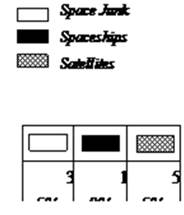
Space junk is also thought a great danger to spacemen. It's reported that there are 9, 000man﹣made things flying in space. About 30% of these are satellites, 10% are spaceships, and the rest are space junk. An explosion(爆炸) in 1996made a cloud of 300, 000 fragments, each at least 4mm in size, and even a small piece of these knocked against a spaceship window and did some damage. Scientists are watching and reporting any possible danger all the time. They are working on helpful ways to do with space junk.
Although space is really dangerous, it interests everyone on the earth. In the near future, it may become usual for people to spend a few days in a space hotel. We may even choose to leave the earth and live in space in a few years. So we should care for space and do something to help improve the space environment.
-
(1) shows the man-made things in space in the correct way.A .
 B .
B . 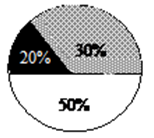 C .
C . 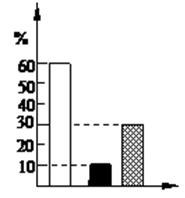 D .
D . 
-
(2) Space junk and radiation in space are dangerous to .A . spacemen working in space B . people only on the earth C . all the people except children D . the old people on the earth
-
(3) The underlined word "fragments" means " ".A . 烟雾 B . 泡沫 C . 云块 D . 碎片
-
(4) Which of the following about the passage (短文) is TRUEA . The passage tells us that radiation in space comes from the sun and other stars. B . Every one of us can make a trip to space now. C . Scientists have found out ways to solve any problem in space. D . People are afraid to travel to space because it's too dangerous.
-
(5) The best title(标题) of the passage is .A . Space Radiation B . Space Danger C . Space Junk D . Space Travel
Height is just one of the thousands of features your genes (基因) decide. In fact, because you have two parents, your genes provide you a height that usually lands somewhere between the height of each parent. If both your parents are tall, then maybe you will be tall, too, but if you have questions about how tall you're going to be, ask your doctor if he or she can help you find it.
But genes don't decide everything. For example, eating an unhealthy diet can keep you from growing to your full potential (潜力). Getting enough sleep and enough exercise will help you grow to the right height.
No doubt (怀疑) you're wondering how fast you should grow .It depends. There's no perfect or right answer. Kids grow about 2 inches (5 centimeters) a year between age 3 and the time when they start puberty (when your body starts changing and becoming more grown up). Your doctor will know how your growth has been going over the years. 2 centimeters here and 2 inches there are not nearly as important as the height you're at now, how you've been growing up to this point, and what other changes your body may be going through.
Don't be scared if you seem to have grown a lot in a very short time. Everyone has a growth spurt (高峰) during puberty. The age for starting puberty is about 10 for girls and about II for boys. But it can be earlier or later-between 7 and 13 for girls and 9 and 15 for boys.
You'll usually begin to notice that you're growing faster about a year or so after your body starts to show the first changes of puberty.
-
(1) If you want to know how fast and how tall you should grow, _________________.A . you should have enough exercise B . you can ask doctors for help C . you should get enough sleep D . you can record your growth during puberty
-
(2) After reading this passage, we can explain _________________.A . how good it is to be a doctor B . how much sleep we need C . why genes can't decide everything D . what healthy diet is
-
(3) The underlined word "puberty" in the passage meansA . 童年时期 B . 婴幼儿时期 C . 习惯养成期 D . 青春期
-
(4) The passage is mainly about _________________.A . how the genes work in your body B . when is the time you grow fast C . why you look like your parents D . how you grow to a certain height
-
(5) Which is NOT mentioned in this passage?A . Your height most probably depends on how high your parents are. B . Girls' age for starting puberty is usually earlier than that for boys. C . How your body changes during puberty. D . You may be scared sometimes when you grow too fast.
- 在新房装修时,往往要通过如图所示的装置向楼上运送装修材料,为了防止材料在运送的过程中刮碰到墙面,固定站在地面上A点的工人
- 历史学家陈旭麓在《近代中国社会的新陈代谢》中写道:“那个时候的中国,天下滔滔,多的是泥古而顽梗的士人……如果没有‘中体
- 南京临时政府 ①孙中山为临时大总统 ②是一个以革命派为主体的资产阶级政府 ③颁布了一系列保护民族资本主义的政策和措施 ④
- (本小题满分14分) 随着科学技术的不断发展,人类通过计算机已找到了630万位的最大质数.陈成在学习中发现
- 豆天蛾是一种危害大豆的一种害虫,它的发育与家蚕的发育相同。豆天蛾的发育要经过 、
- 基因芯片技术是近几年发展起来的新技术,将待测DNA分子用放射性同位素或荧光物质标记,如果能与芯片上的单链DNA探针配对,
- 在叶绿体色素提取和分离实验中,收集到的滤液绿色过浅,其原因可能是: ①未加石英砂,研磨不充分 ②一次加入大量
- — Has Yang Liping returned from Yunnan yet? I’d like to meet
- “低碳生活”是指减少能源消耗、节约资源,从而降低二氧化碳排放的一种时尚生活方式。下列不符合“低碳生活”这一主题的做法是
- 地壳中含量最多的元素是 A. 氧 B.硅 C. 铝
- 已知实数,则表示 A.以为半径的球的体积的一半B.以为半径的球面面积的一半 C.以为半径的圆的面积的一半D.由函数,坐标
- 下列反应中氯元素全部被还原的是 A.5Cl2+I2+6H2O=10HCl+2HIO3 B.2Cl2+2Ca(OH)2=C
- 如图所示,质量均为m的甲、乙两同学,分别静止于水平地面的台秤P、Q上,他们用手分别竖直牵拉一只弹簧秤的两端,稳定后弹簧秤
- 将4体积的H2和1体积的O2混合,4 g这种混合气体在标准状况下所占的体积是( ) A.5.6 L
- 下图是某区域示意图。读图回答下面试题。关于该区域的叙述正确的是 ( ) A.①处河段水能资源丰
- 甲,乙两人进行飞镖比赛,每人各投6次,甲的成绩(单位:环)为:9,8,9,6,10,6.甲,乙两人平均成绩相等,乙成绩的
- 食用下列方法处理过的食品,不会危及人体健康的是A.用干冰冷藏的食品B.用硫磺熏制的白木耳、粉丝等食品C.用甲醛浸泡的海鲜
- 民国时期的有人撰文说:“他是中国思想界的一个清道夫,他把启蒙的水洒向那孔孟弥漫的大道上。因此时时被那无数吃惯孔孟的老头子
- 有关平板划线操作正确的是() A.使用已灭菌的接种环、培养皿,操作过程中不再灭菌 B.打开含菌种的试管需通过火焰灭菌,取
- 法国史学家米西勒认为,14世纪到16世纪欧洲封建社会末期是“人”和“世界”被发现的时代。这两个“发现”对世界历史产生的共


