社会历史类 知识点题库
There are 39 independent(独立的)colleges at Oxford, attracting students and learned men from across the world. There are over 100 libraries for the students and learned men to use. At University of Oxford, they also provide a number of money for the best students. Of course, if you want to study here, first you have to reach a certain level of English language.
College life at Oxford is very exciting but busy. The groups of college provide a friendly and welcoming home for students while the colleges are strict with students about their studies. Many Chinese students are studying here. The number of Chinese students at the university has grown quickly over the past 10 years.
根据短文内容,选择最佳答案。
-
(1) How many libraries are there at Oxford?
A . Only 100 B . less than 100 C . More than 100 -
(2) University of Oxford will provide a number of money for _______students.A . most B . top C . foreign
-
(3) If you want to study at Oxford, you first have to__________.A . be independent B . pass an English test C . move to England
-
(4) The number of Chinese students studying at the university is __________.A . larger and larger B . smaller and smaller C . just the same as ten years ago
-
(5) What's the best title for the passage?
A . The College Life B . The University of Oxford C . TheChinese Students at Oxford
Sneakers of some kind are used by those who play tennis, basketball, and other sports. New design has been made 3 for people who run slowly. In fact American children of 4 ages would much rather play in sneakers than anything else.
New York City once held a poetry competition for children. The subject was only “sneaker”. One prize winner called 5 poem “The Sneaker and the World Peace”. “When everyone is wearing sneakers,” she said, “it will be impossible to 6.”
American school children can be seen every day7sneakers of all colors. They put them on in the morning and take them off at bedtime. Sneakers are8washed. Some children think the older and dirtier they are, the 9 loveable they are. When their sneakers wear out, children hate to throw them off. How do you explain the closeness between10and sneakers? Perhaps another young winner in the New York Poetry Contest said it best. “A shoe is just a shoe,” he said. “But a sneaker is a friend.”
Sometimes, the word green means young, fresh and growing. Sometimes, it describes something that is not yet finished or plants that are not ripe.
For example, a greenhorn is someone who has no experience, who is new to a situation. In the fifteenth century, a greenhorn was a young cow or ox whose horns had not yet developed. A century or so later, a greenhorn was a soldier who had not yet had any experience in war (战争). By the eighteenth century, a greenhorn had the meaning it has today--a person who is new in a job.
About one hundred years ago, greenhorn was a popular expression in the American west. Old-timers used it to describe a man who had just arrived from one of the big cities in the east. The greenhorn didn't have the skills that he would need to live in the hard, rough country.
Someone who has the ability to grow plants well is said to have a green thumb. The expression comes from the early nineteen hundreds.
A person with a green thumb seems to have a magic touch that makes plants grow quickly and well. You might say that the woman next door has a green thumb if her garden continues to grow long after your plants have died.
The Green Revolution (革命) is the name which was given some years ago to the development of new kinds of rice and other grains. The new plants produced much larger crops. The Green Revolution was the result of hard work by agricultural (农业的) scientists who had green thumbs.
-
(1) According to the passage, a greenhorn means________ now.A . a young cow or ox whose horns have not yet developed B . a soldier who has not had any experience in war C . a person who is new in a job D . a man who doesn't have the skills to live in the country
-
(2) The meaning of the underlined word “ripe” in the second paragraph is ________.A . 未完成的 B . 成熟的 C . 青涩的 D . 老练的
-
(3) Which of the following about the Green Revolution is NOT right?A . If there weren't the Green Revolution, we would have no rice to eat. B . The expression “the Green Revolution” appeared several years ago C . Because of the Green Revolution, we have more kinds of rice and other grains D . Agricultural scientists with green thumbs started the Green Revolution.
-
(4) We can know from the passage that _______.A . all growing plants is green B . green is the most important color in nature C . a person with a green thumb can make plants grow well D . the expression “a green thumb” has a history of two hundred years
-
(5) The main idea of the passage is ________.A . a greenhorn B . a green thumb C . the Green Revolution D . the word “green” and its story
The Silk Road is the name of different roads that long ago connected Europe, Africa and Asia. People reached these different places along these roads. Scientists believe people began to travel the Silk Road about 3000 years ago. By the time the Chinese silk trade became important in the world. The Silk Road covered almost 6500 kilometers. It went from Rome to China, which is from the West to the Far East.
Merchants travelled along the Silk Road to carry silk, of course. They also carried and traded other things like spices (香料), cloth, jewels and gold.
Along and around these ancient path(小路), have come many fascinating and mysterious stories.
It is said that Roman soldiers who lost a war travelled through central Asia. They decided to live somewhere near the ancient Chinese villages. Some of these Romans married local Chinese women and the legend of the blond-haired, blue-eyed tribes of China was started.
Some historians believe that the people of Kashmir were taken away from their country Israel. They were prisoners (俘虏) of war almost 2800 years ago. People say that these people travelled along the Silk Road. They kept their Jewish way of life for a long time.
During its busiest period, the Silk Road allowed people from many different cultures and countries to meet each other and mix. The Silk Road allowed the sharing of valuable things and new ideas. It included people and trading goods from different areas. All these peoples travelled the Silk Road. And they shared goods, stories, languages, and cultures.
In modern times, the old Silk Road routes (路线) are still used, but now they are crossed by trains instead of camels and horses. There is even silk route museum in Jiuquan in China. It has over 35, 000 objects from all along the Silk Road. In this way, China protects the history of many countries and peoples.
-
(1) It is clear that ___________.A . the Silk Road was divided into Europe, Africa and Asia B . Roman soldiers would like to travel along the Silk Road C . people could travel to different countries along the Silk Road D . people shared only silk on the Silk Road
-
(2) The underlined word "Merchants" in the passage probably means_______.A . foreigners B . businessmen C . soldiers D . prisoners
-
(3) According to the passage, _________.A . the Silk Road began with the wars B . the Silk Road covered almost 6500 kilometers in China C . people began to travel the Silk Road about 3000 years ago D . people from Israel were not included among people on the Silk Road
-
(4) The old Silk Road routes are still used because .A . there are many old stories about them B . the historians and scientists think highly of them C . China will make good use of the Silk Road again D . people can keep on traveling and trading along them
-
(5) The best title for the passage can be .A . Stories along the Silk Road B . Silk Route Museum C . Trade for Silk D . The West and the Far East
B
Do you find it hard to memorize words? You may not be the only one. Now a new study says that you can draw a picture of something to memorize it better.
Some Canadian (加拿大的) scientists do the study. They first give a group of students a few words such as "apple" or "balloon (气球)". Then they give the students 40 seconds(秒) to memorize them. The students can write the words again and again. They can also draw a picture of the words.
When the time is over, the scientists ask the students to sing a song. After that, they give the students 60 seconds. The students have to write down as many words as they can remember. Guess what? Those who draw the words do a much better job than those who write them.
And don't worry if you are not good at drawing. The scientists say the quality (质量) of the drawing doesn't matter (要紧) at all.
-
(1) The Canadian scientists' study is about _______.A . how hard it is to memorize things B . how to draw beautiful pictures C . how to memorize words by drawing pictures D . what drawings are good for memorizing
-
(2) How do the scientists ask the kids to memorize the word "apple"?A . They can take as much time as they want to read it. B . They can write the word or draw a picture. C . They can sing a song about apple. D . They can tell a story about apple.
-
(3) What does the study tell us?A . The harder you try, the less you'll memorize about things. B . The quality of the drawing is important for memorizing. C . Singing and drawing are helpful to people's memory. D . Drawing helps with memorizing words.
-
(4) What is the meaning of the underlined word "memorize"?A . write B . remember C . learn D . draw
-
(5) Which is the best title of this text?A . How to draw pictures B . How to study C . How to draw a memory D . How to write words
Do you know any traditional festivals in China? Maybe you'll say the Spring Festival, the Mid-Autumn Festival and so on. But have you heard of the Dragon Boat Festival?
In China, there is an interesting festival in the year of dragon. It is said that the Dragon King, the God of Rain, makes fine weather to help the farmers' crops grow well and everything go on smoothly too. Of course, we hope it is a lucky year for all the people.
To remember a great poet in ancient China, Qu Yuan, forever, we have the Dragon Boat Festival. Over 2,200 years ago, Qu Yuan was born in Zigui of Hubei, during the Warring States Period (战国时代). He was wise and he wrote many excellent poems. Among them, the most famous one is Li Sao. It was about the life of his own and full of his deep love for his motherland like other poems.
The Dragon Boat Festival is on the fifth day of the fifth month in the Chinese lunar calendar (阴历). The most important thing during the festival is the dragon-boat race. When the race begins, the players are boating hard in the river, and other people are cheering for them. People also eat zong zi made of glutinous rice (糯米) to remember Qu Yuan.
-
(1) When was Qu Yuan born?A . 2,200 years ago. B . 2,000 years ago. C . Over 2,000 years ago. D . More than 2,200 years ago.
-
(2) What happens with the help of the Dragon King?A . The crops never die. B . Everything goes on well. C . People receive more lucky money. D . People can get any food they want.
-
(3) What kind of person was Qu Yuan?A . He was a farmer in Zigui, Hubei. B . He was knowledgeable and good at writing poems. C . He was good at writing novels. D . He was a great king in his country.
-
(4) When is the Dragon Boat Festival?A . On 5 May every year. B . On 6 June every year. C . On the fifth day of the fifth month in the Chinese lunar calendar. D . On the sixth day of the sixth month in the Chinese lunar calendar.
-
(5) Which of the following is TRUE?A . Qu Yuan lived in a peaceful (和平的) time. B . Li Sao is about the life of people living in Zigui, Hubei. C . People eat zong zi and glutinous rice to memorize Qu Yuan. D . Li Sao shows Qu Yuan's deep love for his country.
Dear classmates,
I have done a research about the Eiffel Tower, Mount Rushmore, the Great Wall and the Statue of Liberty. Let me tell you about them.
The Eiffel Tower was completed in March, 1889. It was more than 300 metres high—making it the tallest structure in the world until 1930. The tower is completely repainted every seven years. It was once painted yellow!
Lying in the Black Hills of South Dakota, Mount Rushmore is a sculpture (雕塑) on the side of a mountain with four of the most famous presidents of the United States of America. The idea for the sculpture was suggested in 1923 as a way to bring visitors to South Dakota. The face of George Washington was finished first in 1930 and Theodore Roosevelt was the last one done in 1939. The heads of the presidents are 18 metres tall—that's the height of a six-story building! Today Mount Rushmore is carefully taken care of to prevent breaking.
The Great Wall has a long history. The walls were built with different materials, everything from packed dirt or wood to stone and brick. The earliest walls were built more than two thousand years ago. No one knows exactly how long that wall was, as most of it has worn down or been destroyed. In some places the walls were 9 metres thick, and 7.5 metres tall, and there were as many as 25,000 watchtowers for soldiers to watch the situation outside the Great Wall.
The Statue of Liberty is one of the most recognizable landmarks in the world. The Statue of Liberty was a gift to America from the French in 1876. The American people agreed to pay for the pedestal (底座) for the statue to stand on, while the French people would pay for the Statue of Liberty itself. The statue was completed in France in 1884, but the pedestal wasn't finished until April of 1886.
If you want to know more about them, visit my website. Thanks for listening.
-
(1) Which of the following is TRUE according to the passage?A . All the Chinese know how long the Great Wall is. B . The heads of the presidents on Mount Rushmore are as tall as the Statue of Liberty. C . The Eiffel Tower used to be yellow once. D . The Great Wall was made of wood, dirt, stone and iron.
-
(2) From the passage, we can infer that ________.A . the Americans paid for the Statue of Liberty B . the Frenchmen will paint the Eiffel Tower in 2018 C . every part of the Great Wall is in good condition now D . if people don't look after Mount Rushmore, it will break one day
-
(3) According to the passage, which of the following words can best describe the Great Wall properly?A . New and strong. B . Historic and partly destroyed. C . Wonderful and very tall. D . Modern and great.
-
(4) The underlined word "watchtowers" in Paragraph 4 means "________" in Chinese.A . 看台 B . 枪眼 C . 视角 D . 瞭望塔
On November 18th, 1908, three men went up in a balloon. They started early in London. The headman was Auguste Gaudron, and the other two men were Tannar and Maitland. They had a big balloon, and they were ready for a long way.
Soon they heard the sea below them. They were carrying the usual rope, and it was hanging down from the basket of the balloon. At the end of the rope they had tied a metal box. This could hold water. Or it could be empty. So they were able to change its weight. They were also carrying some bags of sand.
After the sun rose, the balloon went higher. It went up to 3,000 meters, and the air was very cold. The water in the balloon became ice. Snow fell past the men's basket, and they could see more snow on the ground. There was also some snow on the balloon, and that made it very heavy. It began to go down towards the ground. The men tried to throw out some more sand; but it was hard.
They tried to break the icy sand with their knives, but it was not easy. The work was slow and they were still falling; so they had to drop some whole bags of sand. One of them fell on an icy lake below and made a black hole in the ice.
At last they pulled the box into the basket. It was still snowing; so they climbed to get away from the snow. They rose to 5,100 meters! Everything became icy. They were so cold that they decided to land. They came down in Poland heavily but safely. They had traveled 1,797 kilometers from London!
-
(1) The metal box was used for ______ .A . changing weight B . carrying ropes of the basket C . keeping drinking water D . carrying the bags of sand
-
(2) When the balloon went up higher, ______ .A . they saw the sun go down B . the temperature of the balloon began to fall C . they could see a black hole on the ground D . they made a hole in the basket with their knives
-
(3) The balloon landed ______ .A . in a foreign country B . on a lake C . in London D . on the sea
-
(4) The three men had to land because ______ .A . they were very hungry B . they had not enough sand C . they pulled the box into the basket D . they felt too cold
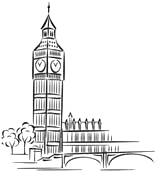
In 1834, the clock tower in London was burned down(烧毁).
People planned to build a new clock which would be the biggest and the best in the world. So the clock had to be big and keep very goodtime. Several years later the tower was finished. The people put the big clock in the tower, and made it ring out for the first time on July 11, 1859.
In order to give the big clock a good name, people held a meeting.
Someone wanted to call it the Queen of Bells, and someone thought Victoria was good. At last, a man named Benjamin Hall stood up. He was a big man. Before he started to speak, someone shouted, "Why not call it Big Ben?" Everyone laughed and agreed with him.
From then on, Big Ben became its name. They even send bottles of oil to help keep Big Ben running. Big Ben is not only a clock but also a dear friend of people.
-
(1) The underlined phrase "Keep very good time" might mean______.A . keep running B . have a good time C . build in time D . show people the right time
-
(2) Big Ben got its name______.A . because a man made a joke B . because Benjamin was a big man C . because Benjamin Hall gave it the name D . because the Queen of the UK gave it the name
-
(3) The following statements are true EXCEPT(除了)______.A . people consider(认为)Big Ben as their friend B . Big Ben became a famous building of London C . people began to build Big Ben on July 11, 1859 D . people all over the world even send oil to Big Ben
Long, long ago people made fires from lightning (闪电). But they had to keep the fire burning, for they couldn't start it again if there was no lightning. Later, they found out hitting two pieces of stone together could make a spark(火花). The spark could fire dry leaves. In this way they could make a fire again if it went out. Then people also learned to make a fire by rubbing(摩擦). They made a hole in a piece of wood and put a smaller stick into the hole. They turned the stick again and again. After a few minutes they got fire.
Years went by, people learned other ways to make a fire. Sometimes they used the heat from the Sun. They held a piece of glass in the right way and made a piece of paper on fire.
About two centuries ago, people began to make matches. Matches brought people a quick and easy way to make fires. Today matches are still being used, but people have more new ways to make fires. One of them is to use an electric fire starter. Of course an electric fire starter is much more expensive than a box of matches. But it is very useful.
-
(1) From the text we know that a spark can .A . fire any leaves B . burn anything C . burn dry leaves D . keep fire burning
-
(2) We can also get a fire by .A . making a hole in a big piece of wood B . putting a smaller stick into the hole C . turning the stick again and again D . doing all the above in order
-
(3) Matches have been used .A . for about two thousand years B . for about two hundred years C . since people began to use fire for cooking D . since people used the heat from the Sun
-
(4) Which of the following is the RIGHT order of the ways to make fires that people got to know?
a. with a match
b. from the Sun
c. from lightning
d. by rubbing
e. with an electric fire starter
f. by hitting two pieces of stone
A . b—a—d—e—f—c B . b—c—a—e—d—f C . c—f—d—b—a—e D . c—d—a—f—b—e
There is a famous English saying "You are what you eat", and it means what you put in your mouth will become part of you. Many experts use it to tell people it's important to have a good eating habit. For example, too much sweet food makes a person overweight. To avoid being fat, kids are told to keep off sweet food. But, a team of American scientists have found something new about eating sweet food.
"When we say some people are 'sweet', we mean they are kind and friendly to us. Perhaps this word can help us learn more about people's feelings and acts," said Brian Meier, a scientist from the study team. "Taste is something we experience every day. What we have done is find whether we can know someone's character and behaviour according to his or her taste."
In one of their experiments, students were asked questions about their character - whether, for example, they were soft- hearted or not. Then they were asked to make a list of their favourite food. According to their answers, the scientists found that the students who liked sweet food were nicer.
In their another experiment, the scientists found that people who preferred sweet food, such as cookies and chocolate, were more willing to help other people in need, and those who ate non-sweet food such as chips weren't. For example, people with a sweet tooth were more likely to volunteer to clean up their city, visit sick children in hospital and so on.
The result of the experiments is that people's helpfulness or being nice has something to do with their taste for sweet food. So eating sweet food is a useful way to make people nice and helpful. Next time, try some ice-cream.
-
(1) The underlined word "it" refers to "________________".A . the sweet food B . the eating habit C . the American team D . the English saying
-
(2) According to the result of the experiments, sweet food makes people ________________.A . overweight B . excited C . relaxed D . friendly
-
(3) The scientists found that people who preferred _________________ were less helpful.A . ice-cream B . chocolate C . chips D . cookies
-
(4) According to the passage, which of the following is NOT true?A . There is some relationship between someone's character and his or her taste. B . Kids are told to eat more sweet food. C . What you put in your mouth will show your character. D . If people want to be kind or friendly, they can try some sweet food.
-
(5) It can be learnt from the passage that ________________.A . scientists asked college students questions about their future B . scientists told college students not to eat sweet food C . people with a sweet tooth are more willing to help others D . people's character has nothing to do with their taste
Hamburgers are popular fast food, as they are cheap and tasty, but do you know about Mamido's Burger? Mamido's Burger opened for business in Tokyo, Japan in 2005. From the outside, it looks like a fast food restaurant. The menu, is also like that at hamburger shops. Mamido's burgers look like hamburgers but they taste sweet. The restaurant sells“the world's first sweet fast food”, as every item(物品) on the menu is sweet. Mamido's Burger is popular among teenage girls and young adults.
But why is Mamido's Burger so popular? Most of the people in Japan like sweets, but many don't like to eat cakes and they don't like eating them in public(在公共场合). Mamido's burgers are sweet but they look like fast food. So people can now walk around the town and eat. When you see someone eat a Mamido burger, you will think he is eating a hamburger, not a cake. Perhaps this is why Mamido's Burger is so popular.
-
(1) Among whom is Mamido's Burger popular?A . Teenage girls and boys. B . Young adults. C . Teenage girls and young adults. D . Teenage boys and young adults.
-
(2) How are Mamido's burgers different from other hamburgers?A . They taste sweet. B . They look like cakes. C . They are a kind of fast food. D . They are very popular.
-
(3) What does the second paragraph mainly talk about?A . Why Mamido's Burger is a fast food restaurant. B . Why people don't like to eat cakes in public. C . Why Mamido's Burger is so popular. D . Why people can walk around and eat Mamido's burgers.
-
(4) Which of the following is Not True according to the passage?A . Mamido's Burger is like a fast food restaurant in many ways. B . Mamido's Burger is the world's first sweet fast food restaurant. C . Mamido's Burger is the first fast food restaurant in Tokyo. D . Mamido's Burger is popular among the young people.
|
Inventions |
|
|
Phone |
The first telephone was invented by Alexander Graham Bell in 1876. It made communications easier. But the telephone were only fixed in post offices. People had to go there to make calls to faraway people and the fees were very high. Later, a cell phone was developed in 1973 in America. It was one of the most useful inventions. People can use cell phones to communicate with others much more easily. They can take them anywhere to make private calls, even vision calls(可视电话), cell phones have many other functions, such as sending messages, taking photos and reading online. |
|
TV |
The first TV set was invented by an English scientist, John Baird, in 1926. The invention helped people watch films at home instead of going to the cinema as before. At first, TV sets only broadcast black-white pictures. Several years later, colored TV sets made the pictures lively. However, they were heavy and thick, so it was difficult to move them. Then, digital TV sets came into being. They are light and thin. Many TV programs are available(可获得的) at any time. At present, people can use the IPTV(网络电视) to record and replay programs. |
|
Computer |
The first modern computer was invented in America in 1946. It was as big as a room. It improved the speed and exactitude of calculation(计算). In the 1950s, desktop computers were invented in the same country. They became smaller and could be put on the desk. Since then, they have become very important in many fields of work and leisure. Before the 1970s, the computers were single. It was the Internet that joined the computers into a big family, so they could share information with one another. Around 1985, laptops were developed in Japan. They were much smaller and could be put on people's laps. They were light and easy to take. |
-
(1) The first cell phone was invented .A . in 1876 B . in 1926 C . in 1946 D . in 1973
-
(2) People could watch films before 1926.A . in the cinema B . on the computer C . on the cell phone D . on TV
-
(3) A scientist from invented desktop computers.A . China B . the US C . the UK D . Japan
-
(4) The first modern computer was used for .A . calculating B . joining the computers into a big family C . playing games D . sharing information with one another
-
(5) Which of the following is TRUE?A . cell phones can't be used for making vision calls. B . Digital TV sets are light and thick. C . The first modern computer was as big as a desktop computer. D . The Internet connects computers together.
You may know the song Happy Birthday very well. But do you know about its writer? It was written by an American girl. And she became very rich after that.
When she was a child, she was poor. Once, she was invited to her friend's birthday party. She was pleased but sad because she didn't have enough money to buy a gift for her.
"The party is coming soon, but now w I have little money." Tears ran down her face.
Later that night she was in bed, thinking about the gift when the door opened and her grandma came in. "What happened?" her grandma asked. Hearing the girl's story, she said, "Don't worry. I think I can help you. How about singing a song together? Happy birthday to....." What a beautiful song! They sang and sang. Suddenly she woke up. It was a dream! She decided to write it down at once and sing it to her friends at the party.
When she sang the song at the party the next day, her friends were very happy. "How wonderfully you sing! We haven't heard such a beautiful song before. Thank you for giving me the special gift," said her friend. And they learnt to sing it together. Later the girl became well-known in America.
-
(1) The song Happy Birthday was written by _______________.A . an American girl B . an American girl's grandma C . an American boy D . an American girl's teacher
-
(2) The girl was sad because _______________A . she didn't want to go to the party B . she would be busy that day C . she didn't have enough money to buy a gift D . she wasn't invited to the party
-
(3) What gift did she give her friend?A . A flower. B . A toy. C . An interesting book. D . A song.
-
(4) What did her friends think of the song? It was _______________.A . boring B . beautiful C . exciting D . interesting
-
(5) Which of the following is TRUE?A . The girl was still poor after writing the song. B . The girl sang the song with her grandpa in her dream. C . The girl's friends had heard the song before. D . The girl became famous because of the song.
Do you know that the "Happy Birthday to You" song is the first song sung in outer space? Apollo IX astronauts 1 it on March 8. 1969. It is one of the most popular English songs of all time. Here's the story behind it.
The song was written by two sisters from Kentucky, Mildred and Patty Smith Hill. It was first published under the 2 of "Good Morning to All"in 1893. It was used as a classroom 3. Teachers sang it each day to welcome their students to the classroom.
The composer, Mildred Hill, was a concert pianist. Her sister Patty Smith Hill wrote the original(最初的) lyrics((歌词) for the song while she was a teacher in a kindergarten in Louisville, Kentucky, where Mildred also 4.
The Hill sisters copyrighted (取得版权) their song on October 16, 1893. However, it appeared 5 their agreement in Robert H. Colemans songbook on March 4, 1924. Coleman changed prat of the lyrics to say, "Happy Birthday to You", 6 the song still had its original title. The song was then published several times over the next ten years, often with small 7 in the lyrics. In 1934, when the song was sung every night in a Broadway Musical, another Hill sister, Jessica, went to cour(法院) over the copyright problem of the song. She was 8 about the theft of the song and the failure to pay to her sisters. She 9 her case. The Hill family owned the rights to the melody and had to be 10 every time the song was part of a commercial(商业的) production.
The Hill sisters, who devoted their lives to educating children, could never imagine that the simple little song would continue to earn about $2 million every year.
In Germany, there is a special museum. It is the only one of this kind in the world and only very y few people know it. Every year, the number of people who come to visit the museum is only about one thousand. What kind of museum is it?
It is a museum about taxes (税收). In this museum, you can see the history of taxes and all kinds of taxes in different countries in the world.
After visiting the museum, people can draw a conclusion (得出结论). That is from 3000 B. C. (公元前), the kings, dictators (独裁者) and finance ministers (财政部长) could tax people freely. They taxed people heavily because of such things as wars, weddings (婚礼) or road building. They needed money and they got money by taxing their citizens (公民).
In the early times of Egypt, farmers had to pay heavy taxes if the water level (水面) of the Nile River rose. The kings said that if the water level rose, there would be much more earth in farmers' fields. So the farmers could get a good harvest and they should pay more taxes.
A strange kind of tax 一 Window Tax appeared (出现) in England. It lasted more than one hundred years. How? If there were more windows in the wall, the people must pay more taxes. So in those years, people built windows in the wall as few as possible.
Russian people once paid a tax for their beards (胡子). The people who had paid this tax would get a special piece of paper. But what about the people who didn't pay for their beards? Of course, their beards would be cut. But without a beard for a man is a way to scorn (蔑视) God. He would also be punished.
-
(1) Which is RIGHT about the museum?A . It is in Germany. B . It is a museum about taxes in German history. C . It is the only museum in the world. D . It is very famous in the world.
-
(2) Which is the best title for this museum?A . A German museum. B . A tax museum. C . The only museum. D . A very small museum.
-
(3) The history of taxes may have lasted ________________ years at least.A . 3,000 B . 5,000 C . 6,000 D . 2,000
-
(4) Which of the following is RIGHT?A . Only Egypt, England, and Russia have taxes. B . The taxes are free now. C . The taxes were heavy. D . The taxes were completely used for people.
-
(5) Which of the following is RIGHT?A . Egypt 一 Window Tax, England 一 Water Level Tax, Russia 一 Beard Tax B . Egypt一 Water Level Tax, Russia 一 Window Tax, England 一 Beard Tax C . Egypt 一 Water Level Tax, Russia 一 Beard Tax, England 一 Window Tax D . Egypt 一 Beard Tax, Russia 一 Water Level' Tax, England 一 Window Tax
Want to say "hello" from Disneyland? Send a post card!
Beautiful scenes(戏剧)ofparadise (乐园), wild animals, silly pictures — you can find them all in one place. Where? On a post card! Have people always sent post cards? No. Before post cards, people liked sealed letters.
The idea for the firstdecorated (装饰) post card came to John P. Charlton in 1861. He thought a simple card with decorations would be a great way to send a note. Then in the late 1800s, post cards with pictures appeared. By law, people had to write their note on the front —on the picture! The back was only for the address. Several years later, England allowed a divided-back post card. Then people could write their note on the back left side and put the address on the right. During the early 1900s, the golden age of post cards, picture post cards became a craze of the world. In 1908, Americans alone mailed over 677 million post cards. Today, post cards are the third most popular collection in the world after stamps and coins.
-
(1) We can see some silly pictures on the post cards.
-
(2) Post cards were produced before sealed letters.
-
(3) In 1861, the first decorated post card appeared.
-
(4) Post cards were most popular during the early 1900s.
-
(5) Stamps, coins and post cards are the most popular collections in the world.
What does the word "patent (专利权)" mean to you? Does it interest you? If it does, stop and think a moment about some of the common things that you use every day: the telephone, radio, television, and the thousands of other things that enrich our lives today, were once only ideas in the minds of men. If it had not been possible to patent their ideas, so as to protect them from being copied, these inventions might never have been fully developed to serve human beings.
If there were no patent protection, there would be little encouragement to invent, for once the secrets of an invention became known, those who did not experience the inventor's risks and expenses (花费) might well fill the market with their copies of his product and steal much of the benefit (益处) of his efforts.
The most basic values in the U. S. patent system came from England. During the rule of Queen Elizabeth I in England, the growing technology was furthered by the giving of exclusive privileges (独家特权) to people who had invented new processes (程序) or tools—a step that did much to encourage creativity. Later, an important value was added: society had everything to gain and nothing to lose by giving exclusive privileges to an inventor, because a patent for an invention was given for something new that society never had before.
George Washington signed the first patent law on April 10, 1790, and less than four months later, the first patent was given to a man named Samuel Hopkins for a chemical process, an improved method in soap making.
In 1936, the Patent Office became a separate department and it has grown into an organization of over 2,500 people who every week deal with more than 1,600 patent applications, and of those, give more than 1,000. A patent may be given for any new and useful process, machine, or planning method.
The patent system has also helped to improve the pay of the American worker to an unexpected level; he can produce and earn more by using computers or adding machines, two important patented inventions. Patented inventions also help keep prices down by encouraging competition.
Our patent laws, like the Constitution from which they grew, have stood the test of time. They have encouraged creative processes, brought great benefits to society as a whole, and enabled American technology to outstrip that of the rest of the modern world.
-
(1) From the passage, what can we learn about inventors?A . They make a lot of money. B . They fight against copiers. C . They have a lot of experience. D . They put effort into inventions.
-
(2) Why were inventors given exclusive privileges?A . Because their inventions made leaders happy. B . Because their creativity is very important. C . Because their inventions could enlarge society. D . Because they were the smartest people in society.
-
(3) According to the passage, the patent system is good for America because ___________.A . it helps more workers get jobs B . it provides a first-class service C . it produces less expensive things D . it helps inventors find markets
-
(4) What is the meaning of "outstrip" in the last paragraph?A . be better than B . catch up with C . make better use of D . cost more than
How did people tell the time before clocks were invented?
At first, the ancient people looked up at the sun and could tell it was the middle of the day when the sun was directly overhead in the sky. They also knew when it was morning or evening.
Later, the Egyptians used sticks. These sticks measured (测量) time during the day. The sun shone on the tall stick and the stick made a shadow (阴影). As the sun moved across the sky, the position (位置) of the shadow changed. This would let people tell what time it was.
Over time, the Chinese first used sundials instead of shadow sticks. The sundial has a type of shadow stick on it. As the sun shines on it, a shadow appears on the numbers. Each number stands for an hour of the day. But sundials don't work at night or on a cloudy day! There are no shadows unless the sun is out.
Water clocks used water to measure time at night. Water dripped (滴落) slowly from one bowl into another. The level of the water in the bowls showed the time.
People also used sandglasses. You may have seen one. Some games still use sandglasses. The sand falls from the top of the sandglasses to the bottom. It measures short amounts of the time. The more sand falls, the more time has passed. When the sand has finished falling, you have to turn the sandglasses over.
-
(1) At first, how did the ancient people tell the time?A . By looking at the stick. B . By looking at the shadow. C . By looking at the sun. D . By looking at the moon.
-
(2) Which picture can be a "sundial"?A .
 B .
B .  C .
C .  D .
D . 
-
(3) When is it Sundials can be used to tell the time?A . It is sunny. B . It is rainy. C . It is cloudy. D . It is snowy.
-
(4) Which of the following is TRUE according to the passage?A . Sticks measured time in Egypt day and night. B . Sundials were first used in ancient Egypt. C . Sandglasses usually measure a long time. D . The water clock told the time by the water level in the bowls.
-
(5) What's the main idea of the passage?A . Something about sundials. B . How to tell the time by looking at the sun. C . How to tell the time in the past. D . Some inventions in China.
Do you live in a city? Do you know how cities began?
Long long ago, the world had only a few thousand people. These people moved from one place to another. They moved over the land, hunting animals for food. No one knows how or when these people learned about growing food. But when they did, their life changed. They did not have to look for food any longer. They could stay in one place and grow it.
People began to live near one another, so the first village grew. Many people came to live and work in the villages, and these villages became bigger and bigger.
When machines appeared, life in the villages changed again. People built factories. More and more people lived near the factories. The cities began.
Today, it's strange that some people are moving back to small villages. Can you tell me why?
-
(1) Long, long ago, a few people could stay in one place, hunting animals for food.
-
(2) Nobody knows how or when people learned to grow food.
-
(3) When these people learned to grow food, their life changed.
-
(4) When machines came along, life in the villages changed again.
-
(5) Some people don't like to live in big cities
- 翻译下面句子 子曰:“夏礼吾能言之,杞不足征也。殷礼吾能言之,宋不足征也。文献不足故也。足,则我能征之矣。”
- 下列关于水的说法中,不正确的是() A.水是常见的氧化物 B.长期饮用蒸馏水对人体健康有益 C.用蒸馏的方法可以将海水淡
- 常温下,下列各组离子在指定溶液中一定能大量共存的是 A.含0.1 mol·L−1 Ca2+的溶液:、Na+、、Cl−B.
- 我国省级行政区中全部位于热带地区的是( ) A.江西省 B.台湾省
- 中国始终代表先进生产力的发展要求,这是①由中国的性质决定的②由我国社会主义初级阶段的基本国情决定的③因为社会主义的根本任
- 我校某研究性学习小组进行了一次“什么是幸福”的社会调查活动,请你根据随机调查的10个行人的回答,写出一条对幸福的调查结论
- 东部经济地带的优势在于 ①集中了我国最主要的工业基地,工业化和城市化水平较高②经济国际化程度 高,出口份额
- The manager and his workers are standing outside to welcome
- It____ yesterday. A. took me two hours to finish the job. B
- 下面各项中加点字注音无误的一项是( ) A.粼粼(lín) 清冽(niè)
- 2003年全国部分省爆发流行的非典型肺炎是由冠状病毒感染引起的,它与大肠杆菌最明显的区别是( ) A.有无成形的细
- Look! Some apples ________ on the table.Some milk ________ i
- 读下面这则材料,可以产生不同的联想或感悟。请根据你的联想或感悟写一篇文章。 有个人买了一件珍贵的瓷器,店员用破布、破棉絮
- 函数图像的对称中心是(写出通式)
- 如图所示,平行金属轨道间的距离为d,一端跨接一个阻值为R的电阻,匀强磁场的磁感应强度为B,方向垂直于平行导轨所在平面.一
- 下列物质的水溶液能在蒸发皿中加热浓缩到原物质的是……( ) ①NaAlO2 ②FeCl3 ③明矾 ④绿矾 ⑤KNO3 ⑥
- If her husband had not liked the dress ___. A. she would be
- 下列方法中,可用来除去可溶物质中不溶性物质的是 A. 蒸发 B.过滤 C.蒸馏
- 在“探究平面镜成像的特点”实验中,如图甲所示,某同学用玻璃板、相同的两个跳棋的棋子A和B、刻度尺刻、白纸、橡皮泥等器材进
- 下列各项词语中书写完全正确的一项是( )(3分)A.震悚 风雪载途 衰草连天 别出心栽B.赃物


