高二英语上学期上册试题
Here are some of the best places you can visit in 2015. Find your favorite and put on
your travel list.
Washington, DC
Attraction: History in the making
From the Washington Monument and John F. Kennedy Center all the way to Capitol Hill,
the vigor (活力) of the US’ capital city is just as strong as in real life as it is in House of Cards.
The year 2015 marks the 150th anniversary of Abraham Lincoln’s famous assassination (暗杀),
and a series of special events will be held to remember the occasion. Lincoln’s famous top hat,
the gun that fired the deadly shot, and other things from that fateful day will be on display.
Milan, Italy
Attraction: A cradle of fine dining and culture
If you are a gastronome (美食家), don’t miss Milan in 2015. Expo 2015 will be held
between May and October, and the focus is on food.
The 1.1-square-kilometer grounds will be laid out like a classical Roman city, with
beautiful streets, a canal and a huge lake. You can explore the food district, wander a square
full of street musicians and dance performers, or enjoy nighttime wine-tasting.
Salisbury, UK
Attraction: The Magna Carta’s 800th anniversary
For too long Salisbury has been considered a short stop on the way to Stonehenge. But
2015 is set to be the year visitors stay in this city as it marks the 800th anniversary of the Magna
Carta, which limited royal power and established the rights of common people. The highlight
for the celebrations will be Salisbury Cathedral, whose Chapter House holds the Magna Carta.
A brand new exhibition will open in the Chapter House, alongside many talks and a flower
festival.
25. Why did the author mention House of Cards in the second paragraph?
A. To arouse readers’ interest in reading the text.
B. To indicate that the anniversary Lincoln’s assassination is important.
C. To stress that the vigor of Washington, DC is strong.
D. To show that Washington, DC has a long history.
26. In which year was Lincoln assassinated?
A. 1864 B. 1865 C. 1866 D. 1867
27. What can a visitor mostly probably do in Salisbury?
A. Buy Lincoln’s famous hat.
B. Explore the food district.
C. Watch wonderful dance performance.
D. See the original copy of the Magna Carta.
How to Be Interesting
Everybody tries to be interesting and well-liked in the life. If you feel like you are boring
or dull, don't worry. 36 Read the following to learn how.
1. Be educated. The more you know about what is going on in the world, the more you
can contribute to conversations. Interesting people can bring something new to a conversation
and share fun facts rather than just sitting there nodding. 37 Keep yourself educated by
reading books and staying up-to-date with news and pop culture.
2. Get to know new people. Expand your social circle by making up conversations with
anyone and everyone. You never know when a stranger can turn into one of your new best
friends 1 38 If you see somebody interesting, then go over and talk to them. You have
nothing to lose!
3. 39 Hobbies not only help you meet people, they also allow you to identify your
skills and talents. Some of the most interesting people in the world have a unique talent.
Examples of interesting hobbies include photography, golfing, cooking, singing, dancing,
volunteering, reading, crafting, and painting. Join and learn a new craft.
4. Be yourself. Remember even though you may feel uninteresting, you are unique.
40 Don't pretend to be somebody you are not, because eventually the truth will come out.
Instead of hiding who you are, learn to play up your positive qualities and play down your
negative ones.
A. Take up hobbies.
B. Talk to people at parties, bars, and clubs.
C. Don't try to get attention by imitating others.
D. Everybody has the potential to be interesting.
E. The more you do, the more stories you will have to share with others.
F. The more you learn, the better conversationalist you will become.
G. Make eye contact, and avoid texting or talking on the phone when you are with others
Hundreds of years ago, a Roman army came north from England to declare war on Scotland. The Scots, a brave people, love their country. They fought hard to drive the enemy out of Scotland. But there were too many Romans. It looked as if the Romans would win.
One night, the leader of the Scots marched his soldiers to the top of a hill. "We will rest here tonight, my men," he said. "Tomorrow we will fight one more battle. We must win, or we will die."
They were all very tired so they ate their supper quickly and fell asleep. There were four guards on duty, but they were very tired, too, and one by one, they fell asleep.
The Romans were not asleep. Quickly they gathered at the foot of the hill. Slowly they went up the hill. Closer they came to the sleeping Scots. They were almost at the top. A few minutes more the war would be over. Suddenly, one of them put his foot on a thistle (蓟). He cried out and his sudden cry woke the Scots up. In a minute they were on their feet and ready for a battle. The fighting was hard, but it did not last long. The Scots wiped out the Romans and saved Scotland.
The thistle is not a beautiful plant. It has sharp needles all over it. Few people like it. But the people of Scotland like it so much that they made it their national flower.
1. At the shout of a Roman soldier, all the Scots who were asleep at the hill ________.
A. began to fight the Romans hard
B. stood up without putting on their shoes and began to fight
C. woke and rose immediately, ready to fight
D. put their feet into their shoes at once and were ready to fight
2. The result of the war is that __________.
A. the Romans killed all the Scots
B. the Scots were defeated
C. the Scots were driven out of Scotland
D. the Scots defeated the Romans
3. The Scots made thistle their national flower because thistle __________.
A. is lovely, though not beautiful
B. gives them happiness
C. is a kind of useful plant
D. helped the Scots in wiping out the Roma
Ask a young man in the street who the best pianist is in China, and you may get the answer----Lang Lang who grew up in Shenyang. He went to a piano school in Beijing when he was just eight. “You need 36 ,” his father said. “but if you don’t work hard, no fortune will come.”
What made him sad was 37 his piano teacher in Beijing didn’t like him. “You have no talent.You will never be a pianist.” 38 a nine-year-old boy, Lang Lang was badly 39 .He decided that he didn’t want to be a 40 any more. For the next two weeks he didn’t touch the piano. 41 ,his father didn’t push, but waited.
Luckily, the day came when his teacher asked him to 42 some holiday songs. He didn’t want to, but as he placed his fingers on the piano keys, he 43 that he could show others that he had talent 44 .That day he told his father 45 he had been waiting to hear—that he wanted to study with a new teacher. 46 that point on, everything turned around.
He started 47 competitions. In the 1994 International Young Pianists Competition, when it was 48 that Lang Lang had won, he was too 49 to hold back his tears. Soon 50 was clear that he couldn’t stay in China forever—he had to play on the world’s big 51 . In 1997, Lang Lang 52 again, this time to Philadelphia, U.S. There he spent two years practicing, and by 1999 he had worked hard enough for fortune to take 53 . After his successful performance at Chicago’s Ravinia Festival, gigs(特邀演出) in Lincoln Center and Carnegie Hall started 54 in. Lang Lang finally worked to reach the place where fortune spots him, and lets him 55 .
36. A. exercise B. fortune C. knowledge D. wealth
37. A. whether B. why C. when D. that
38. A. Like B. With C. To D. As
39. A. hurt B. weakened C. ruined D. frightened
40. A. singer B. pianist C. conductor D. player
41. A. Hopefully B. Patiently C. Wisely D. Painfully
42. A. play B. sing C. write D. study
43. A. seemed B. admitted C. noticed D. realized
44. A. in all B. above all C. after all D. at all
45. A. that B. what C. which D. when
46. A. From B. At C. Since D. After
47. A. receiving B. accepting C. winning D. beating
48. A. told B. mentioned C. announced D. recognized
49. A. excited B. encouraged C. shocked D. satisfied
50. A. this B. it C. that D. what
51. A. concerts B. tours C. competitions D. stages
52. A. started B. left C. moved D. performed
53. A. over B. in C. up D. on
54. A. pulling B. breaking C. falling D. pouring
55. A. brighten B. shine C. admire D. develop
We all know that we have to eat to live, so it is important for us to develop
healthy eating habits. The following tips may help you.
16 Take a hard look at your eating habits. Do you eat more when you feel stressed? Do you withhold food from yourself in order to feel lik e you’re in control? Carefully think about whether you have an unhealthy emotional attachment to food.
Drink plenty of water. 17 Drink water during and after meals to aid digestion (消化), and try to drink between 2 and 3 liters (升) per day.
18 Ideally, you should eat three meals per day, with two snacks in-between. Doing this allows you to eat slightly less at your meals, giving your body a more manageable amount of food to digest.
Don’t skip breakfast. 19 Research shows that people who skip breakfast are usually fatter than those who eat a well-balanced breakfast.
Eat slowly. Have you ever gorged (狼吞虎咽) on a huge meal and felt fine immediately after, but suddenly felt like exploding 15 minutes later? This happens because it takes some time for your stomach to tell your brain that it’s full. 20 That way, by the time you get the message and start feeling satisfied, you haven’t eaten too much extra food.
A. Have a healthy attitude towards food.
B. Choose the right food to eat.
C. Eat 5 times per day.
D. Eating less meat can have several benefits.
E. You should eat your food more slowly.
F. It can improve your sense of healthiness and help you feel full.
G. Many people do because they don’t feel hungry in the morning.
I hated dinner parties. But I decided to give them another shot because I'm in London. And my friend Mallery invited me. And because dinner parties in London are very different from those back in New York. There, “I’m having a dinner party” means: "I'm booking a table for 12 at a restaurant you can't afford and we'll be sharing the checque evenly, no matter what you eat." Worse, in Manhattan there is always someone who leaves before the bill arrives. They'll throw down cash, half of what they owe, and then people like me, who don’t drink, end up paying even more. But if I try to use the same trick, the hostess will shout: "Where are you going?" And it's not like I can say I have somewhere to go: everyone know I have nowhere to go.
But in London, dinner parties are in people's homes. Not only that, the guests are an interesting mix. The last time I went to one, the guests were from France, India. Denmark and Nigeria; it was like a gathering at the United Nations in New York. The mix is less striking. It's like a gathering at Bloomingdale's, a well-known department store.
For New Yorkers, talking about other parts of the world means Brooklyn and Queens in New York. But at Mallery's, when I said that I had been to Myanmar recently, people knew where it was. In New York people would think it was a usual new club.
5.What does the word "shot" in Paragraph 1 probably mean?
A. Choice. B. Try C. Style. D. Goal
6.What does the writer dislike most about dinner parties in New York?
A There is a strange mix of people. B. The restaurants are expensive.
C. The bill is not fairly shared. D. People have to pay cash
7.What does the author think of the parties in London?
A. A bit unusual B. Full of tricks. C. Less costly. D. More interesting.
8.What is the author's opinion of some New Yorkers from her experience?
A. Easy-going. B. Self-centred. C. Generous. D. Conservative.
假如你是校学生会主席李华,学校安排你下周末作为导游带领外籍教师Mr. Smith进行一次近效游。请你用英语给Mr. Smith写封电子邮件,包括以下内容:
1. 自我介绍;
2. 出游的时间、目的地等信息;
3. 需要提前做的准备工作。
要求:1. 词数100左右;
2. 为使行文连贯,可跟据内容要点适当增加细节。
Dear Mr. Smith:
Yours sincerely,
Li Hua
Notices, from United Airlines, to anyone who may be concerned. Current as of Friday, October, 11, 2016 ,5:03 AM. Central. Information is updated as it is received.
1. Travel and the Zika virus
If you have a ticket for travel to a country affected by the Zika virus (as listed on the CDC website) and have concerns, please contact the United Customer Contact Center with any questions or changes to your reservation. Customers advised to avoid the affected regions based on CDC guidance may change their destination or travel date without a fee or may choose to receive a refund(退款)if their tickets were booked before February 29, 2016. The new travel date must be within the validity of the ticket. Additional charges may apply if there is a difference in fare for the new travel route.
2. Longer lines at security checkpoints
Procedural changes at TSA checkpoints throughout the United States may result in longer lines at security checkpoints. Please plan accordingly and allow for extra time at the airport. The TSA advises arriving at the airport two hours before your flight for US travel and three hours before for international travel. To save time at security, we encourage you to visit www.tsa.gov.com and apply for TSA pre-check.
3. Notice for flights departing the European Union, Norway and Switzerland
EU Regulation 261/2004 requires airlines to provide the following notice: If you are not allowed to board or if your flight is cancelled or delayed for at least two hours, ask at the check-in counter or boarding gate for the form, stating your rights, particularly about compensation(补偿) and assistance.
29. Travelers have to pay additional fees when they want to ______ .
A. change to a dearer route B. change travel date
C. receive their refund D. change their reservation
30. What do we know from Notice 2?
A. Pre-check can easily be done online.
B. Security checkpoints are not available.
C. Security check wastes a long time.
D. Security check possibly takes time in the USA.
31. Compensation can be asked for when ______ .
A. passengers refuse to board the plane
B. passengers’ flight is delayed at least two hours
C. passengers’ trip is cancelled in advance
D. passengers miss their flight due to traffic jam
I used to doubt_______ he could help me with my work. Now I think there is no doubt_____ can.
A. that, whether B. when, if C. whether, that D. why, what
People believe that climbing can do good to health. Where can you learn the skills of climbing then? If you think that you have to go to the mountains to learn how to climb, you’re wrong. Many Americans are learning to climb in city gyms (体育馆). Here, people are learning on special climbing walls. The climbing wall goes straight up and has small holding places for hands and feet.
How do people climb the wall? To climb, you need special shoes and a harness (保护带) around your chest to hold you. There are ropes (绳索) tied to your harness. The ropes hold you in place so that you don’t fall. A beginner’s wall is usually about 15 feet high, and you climb straight up. There are small pieces of metal that stick out for you to stand on and hold on to. Sometimes it’s easy to see the next piece of metal. Sometimes, it’s not. The most difficult part is to control your fear. It’s normal for humans to be afraid of falling, so it’s difficult not to feel fear. But when you move away from the wall, the harness and the ropes hold you, and you begin to feel safe. You move slowly until you reach the top.
Climbing attracts people because it’s good exercise for almost everyone. You use your whole body, especially your arms and legs. This sport gives your body a complete workout. When you climb, both your mind and your body can become stronger.
21. What can we infer from the passage________?
A. People are fairly interested in climbing nowadays.
B. It is impossible to build up one’s body by climbing.
C. People can only learn the skill of climbing outdoors.
D. It is always easy to see holding places in climbing.
22. The most difficult thing to do in wall climbing is _______.
A. to tie ropes to your harness B. to control your fear
C. to move away from the wall D. to climb straight up
23. The word “workout” underlined in the last paragraph most probably means _________.
A. settlement B. exercise C. excitement D. tiredness
24. Why does the author write this passage_______?
A. To tell people where to find gyms. B. To prove the basic need for climbing
C. To encourage people to climb mountains. D. introduce the sport of wall climbing
______ you said at the meeting is good for the company.
A. When B. How C. That D. What
假定英语课上老师要求同桌之间交换修改作文,请你修改你同桌的以下作文。文中共有10处语言错误,每句中最多有两处,每处错误仅涉及一个单词的增加,删除或修改。
增加: 在缺词处加一个漏字符号(^),并在其下面写出该加的词;
删除:把多余的词用斜线(\)划掉;
修改: 在错词下划一横线,并在该词下面写出修改后的词。
注意:1.每处错误及其修改均仅限一词;
2. 只允许修改10处,多者(从第11处起)不计分。
It is good to see that today more people have realized the importance exercising and are playing sports regular. But the problem is that there are not enough sports facilities to meet the public growing demand. I love playing basketball and often play with my friends on weekends. Therefore, it is difficult to rent a basketball field and possible to find a free one. It seems that all courts in the city were always full. Weather permitted, we can play in outdoors. But on rainy days or in winter we have to turn to indoor courts. There are not much in my city, and the charge is high. The government should build more public sports facilities, so easier access will encourage more people participate in sports.
______ the same mistake made me very sorry.
A. I always making B . I often made C. My often making D. Often make
________ their nationalities , we will make friends with anyone who is friendly.
A. Regardless of B. Despite of C. Except for D. Thanks to
Feeling both positive and negative emotions is a natural part of being human. We might use the word "negative" to describe more difficult  emotions, but it doesn't mean those emotions are bad or we shouldn't have them. Still, most people would probably rather feel a positive emotion than a negative one. 36 .
What matters is how our emotions are balanced — how much of each type of emotion, positive or negative, we experience.
How Negative Emotions Help Us
Negative emotions warn us of threats or challenges that we may need to deal with. For example, fear can alert us to possible danger. 37 . Angry feelings warn us that someone is stepping on our toes, crossing a boundary, or violating our trust. Anger can be a signal that we might need to act on our own behalf.
Negative emotions focus our awareness. 38 . But too many negative emotions can make us feel anxious, exhausted, or stressed out. When negative emotions are out of balance, problems might seem too big to handle.
How Positive Emotions Help Us
Positive emotions balance out negative ones, but they have other powerful benefits, too. Instead of narrowing our focus like negative emotions do, positive emotions affect our brains in ways that increase our awareness, attentio n, and memory. They help us take in more information and hold several ideas in mind at once. 39 .
When positive emotions open us up to new possibilities, we are more able to learn and build on our skills. 40 .
A. What helps you feel confident?
B. That leads to doing better on tasks and tests.
C. It’s a signal that we might need to protect ourselves.
D. They help us focus on a problem so we can deal with it.
E. For example, it’s likely you’d prefer to feel happy instead of sad.
F. And they then make us understand how different ideas relate to each other.
G. Pay attention to these powerful tools and find ways to make time for them.
Are you simply moving through your day without fully living? I think many of us have done this. Everyone wants to fully live every day. 16 So I’ve decided to share with you some ways to help you enjoy every moment.
Sit in the morning. When you wake up, in the quiet of the morning, sit on the floor. I often use this opportunity to stretch (伸展). 17 I also just sit, and focus on my breathing going in and out.
18 I like to take breaks from work, and go outside for a slow walk. Pay attention to your breathing, to everything around you, to the sounds and light of objects.
Read in silence. Find a quiet time, and a quiet place, and read a good novel. Have no television or computers on nearby. And just put yourself in the world of the novel. It might seem difficult to let your mind move from the present into the time of the novel, but it’s a great practice in focus. 19
20 Each day, find someone you care about and be grateful for his existence. If you want, you can tell that person how thankful you are to him.
A. Walk slowly.
B. Work with focus.
C. Look at someone in a grateful way.
D. But this is easier said than done.
E. I feel every muscle in my body.
F. It’s a way of building something good into your life.
G. Also, I love a good novel more than almost anything else.
Obesity is major concern for public health officials and also may affect test scores of students.
A. a; / B. a; a C. the; / D. the; the
_____is a main subject is known to everybody.
A. English B. That English C. The English D. What English
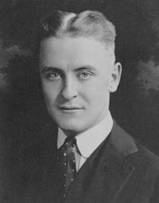 F. Scott Fitzgerald, born on September 24, 1896, an American novelist, was once a student of St. Paul Academy, the Newman School and attended Princeton University for a short while. In 1917 he joined the army and was posted in Alabama, where he met his future wife Zelda Sayre. Then he had to make some money to impress her.
His life with her was full of great happiness, as he wrote in his diary: “My own happiness in the past often approached such joy that I could share it even with the person dearest to me but had to walk it away in quiet streets and take down parts of it in my diary.”
This side of paradise, his first novel, was published in 1920. Encouraged by its success, Fitzgerald began to devote more time to his writing. Then he continued with the novel the Beautiful and Damned (1922), a collection of short stories Thales of the Jazz Age (1922), and a play The Vegetable (1923). But his greatest success was The Great Gatsby, published in 1925, which quick brought him praise from the literary world. Yet it failed to give him the needed financial security. Then, in 1926, he published another collection of short stories All the Sad Young Men.
However, Fitzgerald’s problems with his wife Zelda affected his writing. During the 1920s he tried to reorder his life, but failed. By 1930, his wife had her first breakdown and went to a Swiss clinic. During this period he completed novels Tender Is the Night in 1934 and The Love of the Last Tycoon in 1940. While his wife was in hospital in the United States, he got totally addicted to alcohol. Sheila Graham, his dear friend, helped him fight his alcoholism.
63. Which of the following is the correct order to describe Fitzgerald’s life according to the passage?
a. He became addicted to drinking.
b. He studied at St. Paul Academy.
c. He published his first novel This Side of Paradise.
d. The Great Gatsby won high praise.
e. He failed to reorder his life.
f. He joined the army and met Zelda.
A. f-c-e-a-b-d B. b-e-a-f-c-d C. f-d-e-c-b-a D. b-f-c-d-e-a
64. We can infer from the passage that Fitzgerald .
A. had made some money when he met Zelda in Alabama.
B. was well educated and well off before he served in the army
C. would have completed more works if his wife hadn’t broken down
D. helped his friend get rid of drinking while his wife was in hospital
65. The passage is probably followed by a concluding paragraph about .
A. Zelda’s personal life
B. Zelda’s illness and treatment
C. Fitzgerald’s friendship with Graham
D. Fitzgerald’s contributions to the literary world
When I was very young, my family left from Cuba and lived in Chicago. We lived together with other Cubans speaking Spanish.
I’d been looking forward to school. However, the first day was a 41 shock. I came home and told my mum I’d learned my first English word: 42 . It was the nickname a boy had given me. In every way possible, I was 43 from my classmates. I was the only student who couldn’t communicate in English.
44 , one person made that year bearable for me—my teacher, Mrs. Collins. She was a young African American. 45 , she understood how I felt as the only nonwhite kid and helped me a lot.
Still, the 46 continued. The boy who called me stupid always laughed at my accent. He was the proud 47 of our class’s reading award. It was a(n) 48 given to a student, based on excellence in schoolwork. I wanted that award.
Because Mrs. Collins cheered me on, I gained 49 and language skills. By midyear, I was well on my way to speaking English 50 and had a good grasp on reading. 51 the approach of the award ceremony, I worked as hard as I could. The day 52 came, and I was so nervous.
When Mrs. Collins 53 me as the winner, it was my proudest moment. My winning caused a mini uproar(骚动). The mother of the boy who teased me 54 that the only non-native English speaker had taken the prize from her son. But in her 55 , gentle way, Mrs. Collins stood her ground. It was an excellent lesson about fairness and never 56 .
From then on, I worked even harder in school, earning “A”s. As I began enjoying 57 as a singer years later, I always 58 Mrs. Collins in interviews when asked about people who had 59 me. I can’t tell you how many times the spirit has guided me through 60 in my life.
41. A. small B. little C. complete D. few
42. A. dirty B. stupid C. honest D. proud
43. A. set apart B. set up C. set down D. set about
44. A. Surprisingly B. Happily C. Fortunately D. Wonderfully
45. A. Therefore B. However C. Otherwise D. Anyhow
46. A. smiling B. teasing C. crying D. singing
47. A. holder B. follower C. supporter D. carrier
48. A. gift B. treasure C. honor D. responsibility
49. A. patience B. respect C. pride D. confidence
50. A. fluently B. hardly C. difficultly D. badly
51. A. For B. With C. By D. In
52. A. suddenly B. hurriedly C. certainly D. finally
53. A. announced B. introduced C. permitted D. admitted
54. A. explained B. realized C. complained D. told
55. A. weak B. light C. warm D. strong
56. A. giving up B. cheering up C. turning up D. holding up
57. A. courage B. independence C. success D. support
58. A. requested B. mentioned C. noticed D. asked
59. A. confused B. impressed C. taught D. inspired
60. A. chances B. choices C. challenges D. competitions
- 下列生活用品用金属材料制作而成的是 【】
- 已知Ca2+可以促进突触小泡和突触前膜融合,释放神经递质。下图为神经—肌肉接点模式图。下列叙述正确的是A.组织液Ca2+
- (10分)若将弹簧也换成细线,在剪断水平细线的瞬间,小球的加速度大小和方向又会怎样?
- 正常人体内的下列细胞一直处于细胞周期中的是( ) A.神经元 B.造血干细胞 C.癌细胞
- 阅读下面的文字,完成后面题目。 瓦尔特·施那夫斯奇遇记 (法)莫泊桑 自从随军入侵法国以来,瓦尔特•施那夫斯觉得自己处处
- 计算:(-1)2-+×(2016-π)0+.
- 据有关媒体报道,今后几年艾滋病在中国将会有进一步蔓延的趋势,几乎达到“谈艾色变”的地步,究其原因,是因为HIV直接破坏人
- 自然带沿纬度变化的方向作有规律的更替,其主要原因是 ( ) A.太阳辐射在地表分布不均
- 已知氢原子基态的轨道半径为,基态能量为,将该原子置于静电场中使其电离,已知静电力常量为K,电子电量大小为q.则(
- “微课”依托新兴媒体,以“短小精悍”的风格,正迅速走入发达城市的学校教学活动。“微电影”同样依托微博等新兴媒体,迅速走
- ()关于计数点的下列说法中,是正确的是( ) A.用计数点进行测量计算,既方便,又可减小误差 B.相邻计数点间
- According to the agreement,_____ you shall get preferred sh
- 植物体细胞融合完成的标志是 A.产生新的细胞壁 B.细胞质发生融合 C.细胞膜发生融合
- 将下面5个单句组合为一个要点完备、语序恰当的复杂单句。 ①图书目录是记录出版情况的一种工具书。 ②它是一种记录著
- 如图所示,小明和小红在做金属活动性顺序的探究实验,他们将铁钉加入到硫酸铜溶液中,观察到铁钉表面有气泡产生,一段时间后,在
- 如图,直线l1∥l2,以直线l1上的点A为圆心、适当长为半径画弧,分别交直线l1、l2于点B、C,连接AC、BC.若∠A
- In 1896, the first modern Olympic Games were held in Athens,
- 区分日常生活中的下列各组物质,所加试剂或操作方法完全正确的是( ) 选项 需区分的物质 操作方法或所加试剂 A 铁丝和
- 选择氧气、一氧化碳、二氧化碳、氢气、甲烷填空,并写出有关反应的化学方程式: (1)能使带火星的木炭复燃的是
- . Please let me know how ________ you can be ready. A) fas


