细节理解题 知识点题库
I stood outside my front door catching my breath. After a lazy Christmas holiday, I had to recover from climbing stairs with carry-on bags and a suitcase. I looked up and blinked. Red tape crossed the door. I didn't understand Hungarian, but the one English word said enough: "POLICE".
Google Translate told me I would be arrested if I entered, so I didn't. Finally, I called my rental agent. He went to the police station for more details.
My agent returned with authorization to enter. Not only were my files undisturbed, but so were the TV and printer. The burglars had taken a few items from the top drawer as well as a small amount of foreign currency in the bottom drawer. Somehow they hadn't found the jewelry box in the third drawer.
I was in shock. My agent's words were fuzzy, something about fixing the locks tomorrow and making a list for the police.
Then one day, I remembered that I'd left another jewelry box in the flat. My heart sank as I thought of another locket that had been in that box, a gold engraved one with a picture of my late honey Grandma inside. When I realized the box was missing, the whole experience seemed to crash down on me. I cried.
At the end of January, I received a registered letter from the police. The burglar hadn't been found, and the case was closed. I slept with my purse by my bed. I hid my laptop when I showered. And then another challenge rose. I was unexpectedly laid off.
Then one July night, I reached into my third drawer, pulled out my jean shorts, and heard a small thud. I looked down and blinked: It was the tiny jewelry box I thought had been stolen six months earlier.
Inside was the locket with honey Grandma smiling at me, being there for me, telling me not to give up. I started to cry.
-
(1) What did the red tape across the writer's door mean?A . There was a burglary here. B . The house couldn't be entered freely. C . The rent had to be paid quickly. D . The rental agent advertised for the house.
-
(2) What did the agent promise to do?A . To fix the locks the next day. B . To report the burglary to the police. C . To have an iron security gate fixed. D . To pay for missing things for the writer.
-
(3) Which can best show the change of the author's feeling after she learned of the burglary?A . puzzled→ anxious→ relaxed. B . shocked→ sorrowful→ nervous. C . shocked→ desperate→ hopeful. D . puzzled→ relieved→ confident.
-
(4) What is the best title for the passage?A . Red Tape B . A Jewelry Box C . "Lost" Smile D . Grandma's Advice
A Singaporean woman will return to normal life today after spending three days in a glass box. 26-year-old Cheyenne Lu has been living in full view of the public on a busy shopping street in an effort to quit smoking (戒烟).
Lu, who has been smoking for the last 12 years, knows how difficult it is to quit. Her previous (以前的) efforts all failed because she didn't tell her family and friends that she was trying to give up. So this time she has made her decision very public. The experiment was organized by the Health Promotion Board (HPB) as part of an effort to encourage young Singaporean women not to smoke. There has been a large increase in the number of women smokers in recent years.
Lu has been eating and sleeping in a glass room for the last three days, with an Internet connection and a collection of DVDs to help her pass the time. Besides, she has been having yoga (瑜伽) classes with a fitness trainer. Lu, who is a writer, has been keeping an online blog of her experiences in the glass house.
Lu says she has received a lot of encouragement from people passing by. However, some people have tried to make it more difficult by stopping in front of her window and smoking. One stranger even offered to give her $500 to smoke with him. "Surprisingly, it made me want to stop smoking even more," said Lu.
Although Lu has tried not to smoke for three days, she knows this is only the beginning of her smokefree journey. But she has something to look forward to. She is a supporter of Arsenal Football Club, and she plans to use all the money she saves by not smoking to travel to London. She wants to see her hero Cesc Fabregas in real life.
-
(1) Why is Lu living in a glass box?A . She needed more public support. B . She failed to quit smoking in private. C . She wants to make money from HPB. D . She hopes to ask other women to join her.
-
(2) How did Lu kill time when she stayed in the glass room?A . She recorded her experiences online. B . She slept for most of the time. C . She talked with passersby. D . She taught yoga classes.
-
(3) What was Lu's attitude towards people's smoking in front of her?A . It made her angry. B . It worried her a lot. C . It attracted her attention. D . It strengthened her will.
I was born and raised in England in a culture where privacy and "keeping yourself to yourself" were valued traditions. Speaking to strangers was not encouraged. People were most hospitable and friendly.
However, I have been lucky enough to spend some time in both Italy and the US, where I found traditions of hospitality and politeness to be very different.
I experienced Italian hospitality firsthand. On a crowded railway carriage travelling, one afternoon, from Genoa to Florence, sinking gratefully into an empty seat, I was scolded in rapid Italian by a gentleman who was returning to this seat —- it had not been "spare" after all. I apologized in English, and got up to allow him back into the seat. The gentleman obviously had no understanding of the English language, but he, too, realized my genuine (真诚的) mistake. He smiled and gestured for me to remain in the seat, and he himself remained standing in the corridor for the remainder of the journey. The other occupants of the carriage smiled and nodded at me and made me feel quite welcome amongst them. I feel that if this had been in England, a foreigner who made a mistake would not always be so kindly treated.
Transport also featured in the differences I noticed between English and American culture. I flew to New York on a plane with mainly English passengers. We sat together in near silence. Nobody spoke to me nor, as I expected, to anyone else they did not know. They felt it was not polite to interrupt someone else's privacy. However, when I travelled across the United States, whether by plane or bus, I was never short of conversation. Conversation was going on all around me and whoever sat next to me was happy to introduce themselves and ask me about myself. They obviously felt it would have been rude not to speak to another person, whether they were strangers or not.
-
(1) What do we know about the occupants when the author was travelling in Italy?A . They were all on the side of the gentleman. B . They all laughed at the author for his mistake. C . They would not bear a mistake like the author's in public D . They all showed their understanding of the author's mistake.
-
(2) How does the author finally believe the Italian people are?A . Cold. B . Rude C . Helpful. D . Hospitable.
-
(3) Why did English passengers sit in near silence according to the last paragraph?A . They were too tired to speak to anyone. B . They were all strangers to each other. C . Privacy was a valued tradition in England. D . Everybody was deeply lost in though.
-
(4) What can be the best title for the text?A . Different Ways of Hospitality and Politeness B . Co-understanding Each Other C . My Unforgettable Travelling Experience Abroad D . The Importance of Privacy
Websites
ESPN Sports Programming
ESPN takes its sports content and programming to the next level with its dynamic and eye-catching site filled with large, high-quality pictures and videos. The "featured sports" slider is thoroughly entrancing and does an excellent job of showcasing each of the sports alongside interesting statistics and informative details about available programs.
Revols
Revols takes a bold (突出的)approach on its website by enlarging its small, advanced headphones in photographs and videos. The photography and video make the site amazingly product-focused, so its users slowly become more and more absorbed in the experience these headphones can give you. The large font (字型)treatment on this site is also a nice touch and adds to the larger-than-life earbud photography.
Zillow
Finding the perfect home is all about being able to conveniently research exactly what you're looking for, save and store what you like, and make it easy to find it all later on. Zillow hits the nail on the head for all three of these points. The search area within the hero area makes it easy for new users to quickly select and search listings without having to look for some hidden search page.
Montage
Montage takes showing-off its product to the next level with this homepage that clearly outlines what its product is, how it looks, product quality, and testimonials. The site is an excellent example of one approach you can use to highlight your product and the most important points your users would be concerned with finding answers to.
-
(1) Which website stresses the product by making it seem big?A . ESPN Sports Programming, B . Revols. C . Zillow. D . Montage.
-
(2) What can users do on Zillow?A . Order a product. B . Buy a headphone. C . Learn about sports. D . Find a suitable house.
-
(3) What do the four websites have in common?A . They are well designed. B . They make shopping easier. C . They are intended for new users. D . They help users learn new knowledge.
"In only six days I lost seven pounds of weight."
"Two full inches in the first three days!"
These are the kinds of statements used in magazine,newspaper, radio and television ads, promising new shapes and new looks to those who buy the medicine or the device. The promoters of products say they can shape the legs, slim the face, smooth wrinkles, or in some other way to add to beauty or desirability.
Often such products are nothing more than money-making things for their promoters. The results they produce are questionable, and some are dangerous to health.
To understand how these products can be legally promoted to the public, it is necessary to understand something of the laws covering their regulation. If the product is a drug, FDA (Food and Drug Administration) can require proof under the Food, Drug, and Cosmetic Act that is safe and effective before it is put on the market. But if the product is a device, FDA has no authority to require premarketing proof of safety or effectiveness. If a product already on the market is a danger to health, FDA can request the producer or distributor to remove it from the market voluntarily, or it can take legal action, including seizure (查封) of the product.
One notable case a few years ago involved an electrical device called the Relaxacisor, which had been sold for reducing the waistline. The Relaxacisor produced electrical shocks to the body through contact pads. FDA took legal action against the distributor to stop the sale of the device on the grounds that it was dangerous to health and life.
Obviously, most of the devices on the market have never been the subject of court proceedings (法律诉讼), and new devices appear continually. Before buying, it is up to the consumer to judge the safety or effectiveness of such items.
-
(1) It can be inferred that the ads mentioned in the text are . .A . objective B . costly C . unreliable D . illegal
-
(2) Which of the following is TRUE according to the text?A . The court is in charge of removing dangerous products. B . New products are more likely to be questionable. C . The production of a device must be approved by FDA D . The promoters usually just care about profits.
-
(3) FDA can ask for the proof of safety and effectiveness of a productA . if it is a drug B . if it is a device C . if its consumers make complaints D . if its distributors challenge FDA's authority
-
(4) The Relaxacisor is mentioned as .A . a product which was designed to produce electricity B . a product whose distributor was involved in a legal case C . a successful advertisement of a beauty product D . an example of a quality beauty product
-
(5) The author intends toA . make consumers aware of the promoters' false promises B . show the weakness of the law on product safety C . give advice on how to keep young and beautiful D . introduce the organization of FDA
I personally think trains are exciting and romantic. I must admit that trains are not important means of transportation in the US, but I do have some experiences with them.
When I was a child, growing up in a small town with very little entertainment, we used to go to the station to watch the passenger trains coming in. There was something exciting about the steaming, roaring string of trains coming into view around the mountains, slowly growing larger and louder and finally after their stop crowds of strangers spilling (漏出) onto the platform.
I took my first train trip when I was ten years old. I went with my elder sister to visit our cousins six hundred miles away. The train — so loud and violent on the outside — was gentle and rocking inside. We were very excited, and as that was also our first time away from our parents, we felt somewhat frightened too. However, because I had expected so much, I was a little disappointed when I was finally one of the passengers I had watched for so long.
As a college student, I used to ride an overnight train to my roommate's hometown. We could never afford a sleeper, so we played cards, sang, ate, read and talked until we finally fell uncomfortably asleep in the straight-backed seats.
My idea that trains are romantic may come from the fact that my husband and I took the train on our honeymoon, spending extra money to eat in the dining car, and looking out of the window as the desert scenery slid past.
Now, when I make a trip, I always fly or drive, and trains are not a very important part of my life. Still, every time I hear the train whistle far away on a quiet night, I can always feel the impulse in my heart to pack my bags and jump on board, entering a unique world of motions, sounds, sights and experiences which just aren't matched in the dull environment of an airplane.
-
(1) Why did the author feel a little disappointed during the first train trip?A . Because the train was loud and violent. B . Because she finally became a passenger. C . Because she had a high expectation. D . Because she missed his parents.
-
(2) It can be inferred from the passage that.A . the author's childhood memory of trains was frightening and disappointing B . the author no longer makes a trip by train now as a result of its dull environment C . the author didn't fall asleep until she found straight-backed seats with her roommate D . the author thought trains romantic mainly because of the pleasant moment with her husband
-
(3) Which word best describes the author's feelings when she hears the train whistle now?A . Eager. B . Embarrassed. C . Romantic. D . Disappointed.
-
(4) Which can be a suitable title for the text?A . My Love of Trains B . Watching Trains Coming C . My Memory of Trips D . Trains: My Best Choice
They started the school year as strangers and they are ending the year as family. I started this school year like a regular school year and Damien like a regular student, Finn Lanning said. "One day, he showed up and just said he wasn't going to be back anymore. And when I questioned him about that, he told me that he was going back to live in the hospital for his illness."
Damien has a kidney disorder called FSGS, which requires treatment for 12 hours each day. He is in great need of a new kidney. According to Lanning, the 13-year-old wasn't suitable for a transplant because he is homeless. "When you're living in the hospital, you're not able to be on the transplant list because folks who don't have stable housing are considered high risk for them," Lanning said.
Damien ended up in the foster care system due to his medical needs. When a suitable home couldn't be found, he was forced to live in the hospital. During that time, he couldn't leave to attend school.
"As I learned more about his story and what he was facing and what his needs were, it just became really hard for me to look the other way;" Lanning said. Lanning decided to step in, and despite not having any children of his own, he offered to take Damien in.
"It's going good," said Damien. He has also been moved to the top of the waiting list for a new kidney. He is hoping he can have the transplant within the next two weeks. In addition to a second chance at life, he is also getting a second chance at having a family.
-
(1) Why did Damien ask to leave the school?A . He had to receive treatment. B . He wasn't fond of so many strangers. C . He needed a warm and rich family. D . He was bored of teachers' questions.
-
(2) According to paragraph 2, what is necessary for the patients' transplant?A . Keeping a healthy diet B . Having a suitable home C . Taking special medicines D . Living in the hospital for days
-
(3) What does the underlined phrase "look the other way" in paragraph 4 probably mean?A . pay attention B . look around C . stand by D . take part
-
(4) What could be the best title for the text?A . Finding a House for a Sick Student. B . Getting a Treatment from a Good Teacher. C . Student leaving the School for a Transplant. D . Teacher Helping Student by Offering Him a Home.
Unusual shapes, ambitious designs, new materials and new different styles have come with the modern architecture into construction today. And the world owes some of its strangest buildings to the masterminds of unconventional architects. Here are some of them.
Cubic Houses, Rotterdam, Netherlands
The Cubic Houses are an architectural wonder located in Rotterdam, the Netherlands. They were designed and constructed by architect Piet Blom in the 1970s. Blom was asked by Rotterdam town planners to solve the dilemma of building houses on top of a pedestrian bridge. They're cubes (立方形) situated in different angles over hexagonal poles (柱), so they look like trees and altogether make a forest. There are 38 small cubes and they are all attached to each other.
National Centre for the Performing Arts, China
The National Center for the Performing Arts (NCPA), described as The Giant Egg, is an arts center in Beijing, China. The construction started in December 2001 and it took almost 6 years to complete. The building is surrounded by an artificial lake, seats 5,452 people in three halls and is almost 12,000㎡ in size. As one of the strangest buildings, it was designed by French architect Paul Andreu.
Forest Spiral, Germany
The Forest Spiral is a residential (住宅的) building complex in Darmstadt, Germany. It was designed by Austrian artist Friedensreich Hundertwasser, and constructed by the Bauverein Darmstadt company. The building was completed in 2000. It's a really amazing building with a green roof, resembling a spiral(螺旋).
Habitat 67, Montreal, Canada
Habitat 67, a housing complex in Montreal, Canada, was designed by Israeli — Canadian architect Moshe Safdie. Habitat 67 resembles a very interesting arrangement of cubes that kids play with. It looks so original and is a building completely stable and comfortable for living.
-
(1) What makes the four buildings special?A . Their sizes. B . Their functions. C . Their appearances. D . Their building materials.
-
(2) Which of the following buildings resemble trees?A . The Cubic Houses. B . The NCPA C . The Forest Spiral. D . Habitat 67.
-
(3) What do the Forest Spiral and Habitat 67 share?A . They look like cubes. B . They were built for living. C . They have a green roof. D . They were completed in 2000.
If a steaming bowl of soup strikes you as the ultimate in comfort, you've got plenty of company. Soup is one of the world's oldest and most universal foods.
These are CNN's nominations for 4 of the best soups around the world:
Beef pho / Vietnam
Broth (汤底) is simmered for hours with cinnamon, star anise and other warm spices to create a wonderfully fragrant base for this noodle soup.
Beef pho remains the most beloved version in Vietnam, with options that include the original raw beef, a mix of raw and cooked beef.
Bouillabaisse / France
Bouillabaisse distills (提炼) classic Mediterranean flavors into a dish which has the same meaning as the coastal city of Marseille. Saffron, olive oil, fennel, garlic and tomatoes blend with fish fresh from the sea.
Lanzhou beef noodle soup / China
Shaping - or pulling - la mi an noodles by hand for this traditional soup is an art in itself. Artisans use a finely milled, high — gluten flour and alkaline powder to mix a stretchy dough, then pull and fold a single piece of dough to make enough noodles for a bowl of soup.
Slip them into a bowl of beef soup for a world-class soup that includes tender beef, pale slices of carrots, chili oil and fresh herbs.
Tom yum goong / Thailand
Sweet, sour, spicy and salty, this soup's magnificent broth is the ideal foil for sweet, tender shrimp. Fragrant ingredients include galangal, lemongrass and lime leaves, while slivers of bright red bird's eye chilis add additional heat.
Tom yum goong is just one of many varieties of tom yum soup in Thailand - this version comes enriched with fat prawns, and is a favorite with many diners.
-
(1) If you feel like having a taste of western flavour, you may choose .A . Beef pho B . Bouillabaisse C . Lanzhou beef noodle soup D . Tom yum goong
-
(2) What do Beef pho and Lanzhou beef noodle soup have in common?A . They're served with noodles. B . They're famous for being spicy. C . Seafood is one of their ingredients. D . The processes of them look artistical.
-
(3) Red bird's eye chilis can make the soup _______.A . sweet B . sour C . spicy D . salty
Spanish artist Pablo Picasso (1881—1973 ) was one of the greatest artists of the 20th century. It was said that everything his brush touched turned to gold. But in truth, his works could be worth more than any precious metal. Picasso created more than 20,000 works in his life, including two of the world's 10 most expensive paintings.
Between 1907 and 1913, Picasso and his colleague Georges Braque started a revolution(革命) in painting. Before that, paintings were like windows—they were painted to look as if they had depth. You could tell which objects were "close" to you and which objects were "far away". But Picasso and Braque didn't want to paint like that any more. To them, a painting wasn't a window to the world; it was marks and lines on a flat surface. Why, they thought, should an object like a guitar be shown only from one angle (角度)? A guitar can look very different depending on which angle one looks at it from. Their answer was to show all the angles. They broke the guitar up into pieces. Their style of painting is called cubism (立体主义).
But why did they feel such a need to change things? Well, the world around them was changing, too. Science was turning people's ideas upside down. Albert Einstein's theory proved that what we knew about time and space was wrong. The world was becoming different; artists needed to start seeing and painting it differently.
The famous and terrifying painting Guernica (1937) shows a terrible scene during the Spanish Civil War. In the painting, you can actually see the sky falling. Picasso couldn't have painted it without the skills he learned during his cubist period. Breaking a guitar up into pieces was his preparation for showing the world being blown to pieces.
-
(1) What is mainly discussed about Picasso in this article?A . The high price of his paintings. B . His difficulties in career. C . The popularity of his paintings. D . His achievements in art.
-
(2) In what way did Picasso and Braque paint?A . They painted objects with different depth. B . They made their paintings look like windows. C . They painted an object from different angles. D . They broke objects up into pieces and painted them.
-
(3) What caused Picasso and Braque to start cubism?A . Einstein's theory. B . The changing world. C . A broken guitar. D . Spanish Civil War.
-
(4) Why did the author mention the painting Guernica?A . To show the theme of Picasso's paintings. B . To express Picasso's anger at the war. C . To describe the preparations Picasso made before. D . To present the artistic effect of cubism.
Friendship is above reason, for, though you find virtues (美德) in a friend, he has been your friend before you find them. It is a gift that we offer because we must; to give it as the reward of virtue would be to set a price upon it, and those who do that have no friendship to give. If you choose your friends on the grounds that you are virtuous and want virtuous company, you are no nearer to true friendship than if you choose them for commercial reasons. Besides, who are you that you should be setting a price upon your friendship? It is enough for any man that he has the power of making friends, and he must leave it to that power to determine who his friends shall be. For, though you may choose the virtuous to be your friends, they may not choose you. It comes, like sleep, when you are not thinking about it; and you should be grateful, without any misgiving, when it comes.
So no man who knows what friendship is will give up a friend because he turns out to be disreputable (声名狼藉的). His only reason for giving up a friend is that he has stopped caring for him; and, when that happens, he should blame himself for this poverty (缺乏) of affection, not the friend for having proved unworthy.
We have our judgments and our punishments as part of the political mechanism that is forced upon us so that we may continue to live; but friendship is not friendship at all unless it teaches us that these are not part of our real life. It is only in the warmth of friendship that we see how cold a thing it is to judge and how stupid to take a pleasure in judging; for we recognize this warmth as a positive good, a richness in our natures, while the coldness that sets us judging is a poverty.
There are men who cannot be friends except when they are under an illusion (幻觉) that their friends are perfect, and when the illusion passes there is an end of their friendship. But true friendship has no illusions, for it reaches to that part of a man's nature that is beyond his imperfections, and in doing so it takes all of them for granted. A man is your friend, not because of his superiorities (优越), but because there is something open from your nature to his, a way that is closed between you and most men.
—A. Clutton-Brock
-
(1) What is the author's attitude towards choosing friends on the grounds of their virtues?A . Concerned. B . Uncertain. C . Disapproving. D . Supportive.
-
(2) According to the author, you may give up your friend only when he _____.A . becomes disreputable B . shows no care for you C . blames you for not caring about him D . does something bad and hurts your feelings
-
(3) What can we infer from Paragraph 3?A . The political mechanism plays an important role in our life. B . Friendship teaches us to have a positive attitude towards life. C . Friendship can turn us to be kind-hearted people. D . We should not make a judgment about others.
-
(4) According to the last paragraph, a man becomes your friend mainly because _____.A . he gives you the illusion of perfection B . he accepts your imperfections C . he holds an open attitude towards you D . he and you understand each other
This is Scientific America's 60-Second Science. I am Christopher Intagliata.
The Apollo missions brought back 842 pounds of rock and soil from the moon, that's nearly 2200 different samples. But the most interesting one, according to a scientist Meenakshi Wadhwa, is a sample named "Apollo 1-0-0-8-5 collected by Neil Armstrong on Apollo 11.
"He was about to step back into the lunar module(登月舱) when he turned around and saw there were little spaces in the rock box. He knew that geologists on earth would be just so excited to study these materials, so he just scooped up nine scoops(勺) of soil and put it into the box." Wadhwa explained.
It was one of the most well studied samples of the Apollo missions. And a geologist named John Wood noticed white flecks(微粒) of rock in the soil, which inspired him to dig deeper into the moon's ancient past.
"This was quite a leap of imagination — he proposed that the whole of the moon had been almost covered with a magma(岩浆) ocean nearly 4.5 billion years ago. This was a revolutionary idea at the time, because people had thought the moon had formed cold, so it completely changed our idea how the moon formed."
But Wadhwa has a more personal reason to appreciate this sample. She met her husband Scott Parazynski also because of this rock sample. Scott, a mountaineer at that time, wanted to climb Mount Everest with a moon rock while Wadhwa was the chairman of the NASA committee that gives access to the samples for scientific purposes.
Neil Armstrong's last-minute scoop of moon dust brought two people together here on Earth and upturned our understanding of how the moon — and the Earth itself-got here.
Thank you for listening for Scientific American's 60-Second Science.
-
(1) It can be learned from Paragraph 3 that ________.A . Neil Armstrong was excited to find the soil B . the spaceship was about to land on the moon C . Sample "Apollo 1-0-0-8-5" was collected at the last minute D . scientists were not satisfied with the samples brought back by Neil
-
(2) Which of the following statements is TRUE according to the text?A . Scott made a new proposal about the moon's origin. B . The Apollo missions brought back 842 rock samples. C . "Apollo 1-0-0-8-5" brought new evidence to the moon's formation. D . Wadhwa and her husband climbed Mount Everest with a moon rock.
-
(3) What is this text?A . A short interview. B . An introduction to a scientist. C . An inspiring speech. D . A broadcast story of a program.
-
(4) What is the text mainly about?A . A romantic story of a moon rock. B . A big leap made by Neil Armstrong. C . An unusual task for Apollo missions. D . An unexpected discovery in moon exploration.
The US is blessed with many of national parks that are home to some of the most breathtaking landscapes on Earth.
Sequoia National Park
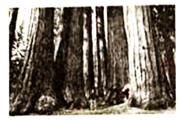
◇ Date of Establishment: September 25 , 1890
◇ Total Area: 1, 635. 19 km2
The place is home to the largest trees in the world. Hiking routes crossing the sequoia groves(红杉林)will take you near these huge trees. These awe-inspiring forests filled with towering trees are a sight to see.
Yosemite National Park
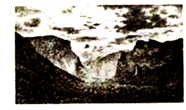
◇ Date of Establishment: October 1, 1890
◇ Total Area: 3, 028. 81 km2
Its main draw is the Yosemite Valley that looks beautiful with its jaw-dropping scenery. Between glacially(由于冰川作用)sculpted cliffs(悬崖)and the towering waterfalls stretching out of the side of the mountains, your eyes will be treated to many natural wonders. The place was named as a UNESCO World Heritage site in 1984.
Mount Rainier National Park
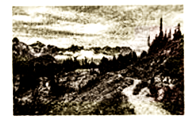
◇ Date of Establishment: March 2, 1899
◇ Total Area: 956. 60 km2
Establishing this national park was the end of a long battle by environmentalists to preserve the unique forest and glacial landscape found here. Mount Rainier is an icy active volcano.
Crater Lake National Park
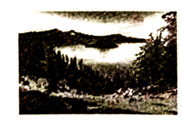
◇ Date of Establishment: May 22, 1902
◇ Total Area: 741. 48 km2
Many visitors come to this park to see Crater Lake, the deepest lake in the US. The water appears in various shades of blue. It is surrounded by towering cliffs and sources its water from rain and snow. It sits in the middle of a dead volcano, so many spectacular volcanic formations can also be found here.
-
(1) Which of the following is the oldest national park?A . Sequoia National Park. B . Yosemite National Park. C . Crater Lake National Park. D . Mount Rainier National Park.
-
(2) What do Yosemite National Park and Mount Rainier National Park have in common?A . Active volcanoes. B . Glacial landscapes. C . Towering waterfalls. D . World Heritage sites.
-
(3) What can we know about Crater Lake?A . It is the deepest lake in the world. B . Its water comes from the underground. C . It lies in the center of a dead volcano. D . Its water presents various shades of colors.
These days, short videos have got millions of views online. Many people create short videos on popular video apps like Douyin and Kuaishou. You can even add music and special effects to your videos. The videos are 15 seconds to a few minutes long. They show people doing activities like cooking, exercising and singing.
Teenagers especially enjoy these videos. More than 50 percent of students in Grade 10 and Grade 11 said they enjoyed watching these short videos. About 47 percent have posted their own videos, according to a recent report.
The videos let teenagers see funny and exciting things they wouldn't usually see. Many teenagers like to share the funny things they do with others as well. For example, a 12-year-old user named Xiao Qianyu has posted videos showing her learning jazz dance. This has won her many fans.
However, the videos can also cause trouble. Some students spend too much time watching them and not enough time studying. Some videos have vulgar content that is not good for teenagers.
To deal with this problem, Douyin added a new function (功能) in April, 2018. It locks the app if someone uses the app for over two hours a day. In the same month, the government asked companies to control these apps well and get rid of bad videos.
-
(1) What can people add to their short videos with these apps?A . Music and special effects. B . Douyin and Kuaishou. C . Jazz dance. D . Locking the app.
-
(2) What will happen if kids spend too much time watching short videos?A . The app will be locked for over two hours. B . They will not spend enough time studying. C . Some vulgar videos will be shown to them. D . They will win a lot of fans for themselves.
-
(3) What does the underlined word "vulgar" mean?A . kind B . funny C . wonderful D . harmful
-
(4) It can be inferred from the passage that .A . the apps have been monitored(监管)much more strictly. B . more and more teenagers enjoy sharing their short videos. C . teenagers can add all kinds of special effects to their videos. D . There will be no vulgar content in these short videos at all.
Many years ago, my mother read from the book Blueberries for Sal by Robert McCloskey to me. I remember as if it were yesterday, hearing her voice at my side on a cold wintry night. My mother's voice changed my world.
Long before I could read on my own, she shared with me the strength and beauty of McCloskey's language — a story of a little girl and her mother out in nature, co-existing with a mother bear and her own baby. The power of the story, of language and of my mother, all came together. And it happened many times after that, over and over. The read aloud made me a reader.
Years later, I was reading aloud a picture book to a small child in a classroom. His life, so far, had not been easy. His childhood was troubled by poverty and loneliness. In that moment, in the joy of the read aloud, he had an idea that started something big.
What he said was this: "Mrs. Allyn, let's make sure everyone knows how good this feels. Let's have a holiday for the read aloud. " Therefore, my organization, LitWorld, created a grassroots movement World Read Aloud Day in 2010 to honor this young boy's wish for everyone to be able to have a read aloud every day.
Since the day he shared that good idea with us, World Read Aloud Day has become a worldwide event reaching over one million people in more than 65 countries around the world. This year we are over 600 cities strong, a number that is growing every day.
Children who grow up as readers become engaged citizens of the global world, and every child deserves the right to read. When I say that reading aloud will change the world, I know it sounds simple. But one of the many great things about giving kids access to the power of stories and sharing them together is that it is simple. It is also cheap and easily done. And the impact is huge.
-
(1) How did the author's parent change her life?A . By reading aloud to her. B . By listening to her reading. C . By buying many books for her. D . By encouraging her to read aloud.
-
(2) What does the underlined part "an idea" in Paragraph 3 refer to?A . To found LitWorld. B . To reduce poverty. C . To start a holiday. D . To overcome loneliness.
-
(3) What can we know about World Read Aloud Day from Paragraph 5?A . Its origin. B . Its future. C . Its purpose D . Its development.
-
(4) What can we infer from the last paragraph?A . Sticking to reading isn't easy. B . Reading gives a high rate of return. C . Reading aloud isn't actually simple. D . Kids should try to change the world.
Perhaps you have heard a lot about the Internet, but what is it, do you know? The Internet is a network. It uses the telephone to join millions of computers together around the world.
Maybe that doesn't sound very interesting. But when you're connected to the Internet, there are a lot of things you can do. You can send emails to your friends, and they can get them in a few seconds. You can communicate with your friends through social software such as QQ, WeChat, Facebook and so on. You can also deal with all kinds of information on the World Wide Web (WWW).
There are many different types of computers now. They all can be linked to the Internet. Most of them are small machines sitting on people's desks at home, but there are still many others in schools, offices or large companies. These computers are owned by people and companies, but no one really owns the Internet itself.
There are lots of places for you to surf the Internet. For example, your school may have the Internet. You can explore the Internet to search for useful information or knowledge in your classroom. However, in order to prevent yourself from playing with computer games, you should use it in limited time. Libraries often have computers joined to the Internet. You are welcome to use it at any time.
Thanks to the Internet, the world is becoming smaller and smaller. It is possible for you to work at home with a computer in front, receiving and sending the information you need. You can buy or sell whatever you want through the Internet. But do you know 98% of the information on the Internet is in English? So what will English be like tomorrow?
-
(1) What is the passage mainly about?A . The Internet. B . Information. C . Computers. D . English.
-
(2) According to the passage, you can do all the following things through the Internet except for.A . Sending and receiving emails B . Chatting with your friends C . making and producing things D . Dealing with information
-
(3) Who is the owner of the Internet?A . The headmaster. B . The government officer. C . The user. D . No one.
-
(4) What does the writer try to tell us in the last two sentences?A . The Internet is more and more popular. B . English is important in using the Internet. C . All of the information on the Internet is in English. D . Every computer must be joined to the Internet in English.
In the oceans, concrete is the main construction material, accounting for more than 70% of coastal and marine construction such as ports, coastal defense structures and waterfronts. "Concrete is damaging the ocean because, to put it in place, natural ecosystems are destroyed," says Alex Rogers, director of a nonprofit company studying ocean health and raising awareness of global impacts on the marine environment. "Concrete is a conventioal material, and it is low cost. But we should be looking at alternative materials."
Those alternatives might already be here. Among them is a substance called ECOncrete. It produces bio-enhancing concrete products intended to protect coastlines and marine resources. This is achieved by using a mixture made almost entirely of by-products and recycled materials, and is thus nearly carbon neutral. The overall result is a low-carbon concrete.
Furthermore, unlike traditional concrete, which is highly alkaline (碱性的), the specially designed concrete has a PH value near to that of sea water, which helps to promote the growth of marine species such as crabs,clams, mussels, and oysters. ECOncrete is already in use across eight countries and six different areas.
However, Beth Strain, a project leader for Australia's National Center for Coasts and Climate, says the evidence for the concrete as a better surface for marine organisms is very mixed. "It can be location specific. We did an experiment in 13 harbors around the world with the same type of concrete surface complexity. Largely, the results were positive, but in Penang, Malaysia, for example, using the concrete that would theorectically preserve moisture (水分) and be better for organisms to survive made no difference." Strain thinks this is because of the area's typhoons, which make the area very wet already, so the features of the concrete aren't a big help. "There is a degree of difference and each location has its own environmental chanllenges," says Strain.
Nevertheless, from multiple perspectives, it appears that nature-based solutions are definitely the way forward.
-
(1) What do we know about ECOncrete from the text?A . It is a substance that is highly alkaline. B . It is a company aiming to keep marine life safe. C . It is a substance that has a lower impact on oceans. D . It is a mixture which is combined with low-carbon concrete.
-
(2) What is Beth Strain's attitude towards ECOncrete?A . Negative B . Indifferent C . Objective D . Supportive
-
(3) What contribute to the result in Penang according to Beth Strain?A . The climate of the area. B . The PH value of the sea water. C . The researchers of the project D . The diversity of the marine organisms.
-
(4) Which one may be a possible solution in the future?A . Invent a new artificial material. B . Install monitors under the oceans. C . Use stone in coastal constructions. D . Pull down current coastal constuctions.
Must-Visit Attractions in Turin, Italy
Mole Antonelliana
The tall pointed structure of Mole Antonelliana is the highest point of the Turin skyline and a symbol of the city. It was built in 1848 and is now the National Museum of Cinema. But the real draw is the viewing platform at the top of the building, which offers amazing views of the city and mountains beyond.
Piazza Castello
In the heart of the historic centre of Turin is Piazza Castello, which hosts two major
Baroque structures- Palazzo Reale and Palazzo Madama (夫人宫). Palazzo Reale was originally built in the 16th century and underwent repairs in the late 17th century. Palazzo Madama dates from 1003 and is now home to the Museo Civico d' Arte Antica, which has a remarkable collection of paintings from the medieval, Renaissance and baroque periods.
Basilica di Superga
The Basilica di Superga was built in the 18th century on the Superga hill with amazing views over the city and wider landscape. From here you can see peaks(顶峰) of the Alps such as Monviso and Doufour peak.
Parco del Valentino
Located on the west bank of the River Po that runs through the city, Parco del Valentino makes for lovely walks. The park is also home to the Castello del Valentino一one of the Residences of the Royal House of Savoy.
-
(1) When was Mole Antonelliana built?A . In the 16th century. B . In 1848. C . In 1003. D . In the late 17th century.
-
(2) From where can you see the highest point of the Alps?A . Palazzo Madama. B . The viewing platform of Mole Antonelliana. C . The Castello del Valentino. D . Basilica di Superga.
-
(3) Which of the following is a good place for a walk?A . The Museo Civico d'Arte Antica. B . The National Museum of Cinema. C . Parco del Valentino. D . The Superga hill.
"Come on! All of us are cutting (逃课) maths. Who wants to go to take that quiz? We're going to take a walk and get lunch instead. Let's go!" says the coolest kid in your class. Do you do what you know is right and go to maths class, take the quiz and all? Or do you give in and go with him?
People who are at your age, like your classmates, are called peers. When they try to influence how you act and get you to do something, it's called peer pressure. It's something everyone has to deal with even adults.
Peers influence your life, even if you don't realize it, just by spending time with you. You learn from them, and they learn from you. It's only human nature to listen to and learn from other people in your age group.
Peers can have a positive influence on each other. Maybe another student in your science class taught you an easy way to remember the planets in the solar system, or you got others excited about your new favorite book, and now everyone is reading it. Sometimes peers influence each other in negative ways. For example, a few kids in school might try to get you to cut class with them.
It's difficult to say "no" to peer pressure, but you can do it. Paying attention to your own feelings and beliefs about what is right and what is wrong can help you know what is the right thing you should do.
It can really help to have at least one other peer, or friend, who is willing to say "no" too. If you continue to face peer pressure and you're finding it difficult to handle it, talk to someone you trust— parent, or a teacher. They can help you feel much better and prepare you for the next time you face peer pressure.
-
(1) With the author's words in the first paragraph, what is the kid doing?A . Planning some interesting activities after school. B . Making an announcement about a dinner party. C . Persuading other kids to take a quiz with him. D . Encouraging other kids to cut class.
-
(2) What can be known according to the author?A . For kids, peer pressure may do more harm than good. B . Maths is the most difficult subject for most kids. C . Kids today are under greater pressure than before. D . Peer pressure exists among people of all age groups.
-
(3) What is suggested to the readers in the last paragraph?A . Making more close friends while at school. B . Learning to refuse their friends in a polite way. C . Getting help from someone else if necessary. D . Building closer relations with their parents and teachers.
-
(4) Whom is the text probably written for?A . The students. B . The parents. C . The teachers. D . The friends.
We all have problems and barriers (障碍) that prevent us from moving into new areas. When someone meets the problem which he can't get over, he usually turns away and starts walking along a different path. Unluckily, soon he may get into another similar one. In this way, his life stays inside the same old cycles, in which he is unlikely to make progress or keep learning.
While others deal with problems by loving them instead of hating them. The word" love" means accepting your problems. The more we deny (否定) a problem, the stronger it seems to become. Only when we accept the fact can we find the useful ways to deal with it.
Suppose one of your barriers is taking a final exam. You fear that you will forget everything that you have remembered. One way of dealing with it is to pretend (假装) that you are not afraid—tell yourself " I'm not going to be scared "and then try to force a smile on your face.
But compared with that, loving your fear actually works better. You just need to say to yourself," I'm scared. But I'm going to take it easy. It is not only a problem, but also a chance for me to make progress. "By doing that, you allow yourself to be afraid and you can have a right understanding to your problem. You welcome your problem and face it in an active way. So there's no doubt that you are more likely to overcome it completely.
It is impossible to live a life without problems. Loving them doesn't mean hiding them. Instead, it means admitting the truth about them. This helps us take effective (有效的) actions, which can free us from the problems once and for all.
-
(1) If our lives stay the same, we are unlikely to .A . make progress or keep learning B . deal with the problem C . meet difficulties D . force a smile on the face
-
(2) When we meet a difficult problem, we should .A . try to find a different path B . avoid another similar problem C . accept the problem first D . try to deny the problem
-
(3) What does the underlined word "admitting" mean?A . Accepting. B . Refusing. C . Praising. D . Remembering.
-
(4) What is the best title for the passage?A . How to Deal with a Problem B . How to Make Progress C . How to Avoid Difficulties D . How to Become Confident
- Last Friday, at least 5people were killed by lightning in
- 化简:
- 地表环境中各事象之间都是相互联系的,当某事象发生变化时就会给其他事象带来影响,甚至发生一系列的变化。读图回答问题。图中所
- 清末诗人丘逢甲《春愁》的诗句“春愁难遣强看山,往事惊心泪欲潸。四万万人同一哭,去年今日割台湾”。与该诗句相关的历史事件是
- 一定温度下,将一定质量的冰醋酸加水稀释过程中,溶液的导电能力变化如右图所示,有关说法正确的是 (
- 设f(x)=(a>0)为奇函数,且|f(x)|min=2,数列{an}与{bn}满足如下关系:a1=2,an+1=,bn
- -- Jim,did your father stop ___ ? -- Yes, he ___ two weeks a
- 将质量m=0.5kg的小球以初速度=10m/s竖直上抛,经时间t=1.8s后小球落回原处,速度变为v=5m/s,在此过程
- 2.(2012·浙江自选)幽门螺杆菌(Hp)感染是急慢性胃炎和消化道溃疡的主要致病因素。在患者体内采集样本并制成菌液后,
- (2013安徽卷)2.细胞代谢受酶的调节和控制。下列叙述正确的是 A. 激素都是通过影响细胞内酶
- 社会主义的根本任务是实现全体人民的共同富裕。
- 下列有关能源的叙述正确的是A .石油是一种可再生资源 B .人类需要的能量都是由化学反应产生的 C .目前没有大量氢能源
- 美国历史学家弗格森在《美国革命是(1763—1790)》中写道:“1776年革命派认为自由是保护个人权利,反对政府暴政的
- 把一个凸透镜对准太阳光,可在距凸透镜20cm处得到一个最小、最亮的光斑.若将一物体放在此透镜前30cm处,则可在另一侧得
- 如图,直升飞机在资江大桥AB的上方P点处,此时飞机离地面的高度PO=450米,且A、B、O三点在一条直线上,测得大桥两端
- 发展高新技术产业的重要条件是 A.有丰富的自然资源 B.科技力量雄厚
- 某人在t=0时刻,开始观察一个正在做匀加速直线运动的物体,现在只测出了该物体在第3s内及第7s内的位移,则下列说法正确的
- 近年来,我国城市建设和发展越来越注重以人为本,如城区汽车禁鸣、主干道路铺设沥青、住宅区道路两旁安装隔音板等,这些措施的共
- 下列方法能够用来区别硬水和软水的是 A.加肥皂水 B.观察颜色 C.静置 D
- 有的同学不吃新鲜蔬菜和水果,时间长了易患A.夜盲症B.坏血病C.骨质疏松症D.脚气病


