细节理解题 知识点题库
In 1987, a mountain on Mercury (水星) got a name--Li Qingzhao, the name of a Chinese female poet. According to the International Astronomical Union, all new mountains on Mercury must be named after a litterateur (文人) or an artist who was famous for more than fifty years, and dead for more than three years, before the date they are named. Of the total of 310 names, fifteen are named after famous Chinese writers and artists, and Li Qingzhao is one of them, together with Li Bai, Bai Juyi ,Cao Xueqin and Lu Xun.
What did Li Qingzhao do to deserve such an honour? Li is a poet of the Song Dynasty. Compared with other male poets in China, who have left hundreds or even thousands of poems, Li has only eighty-seven, like a drop in a bucket of water However, her talents and artistic creativity as shown in her eighty-seven works have earned her a lasting place in the Chinese literary circle.
Li was born into a scholar-official family in 1084. Like other young women in a rich family, she was well-read and trained in Chinese calligraphy (书法) and musical instrument. Most young women of rich families were taught to follow the "Three Obediences and Four Virtues" at that time, while Li was free in both character building and artistic development.
When it was time for her to start another stage in life--marriage, Li married Zhao Mingcheng. a student at the supreme academy of the imperial court. The couple devoted their spare time to their common interests --literature and the collection of calligraphy and painting.
Unluckily, their happiness didn't last long. The power struggle at the very top of the government destroyed everything. Li first followed her husband to Qing Zhou, and spent the next ten years there. It turned out that the ten years in Qing Zhou was the most productive period for her artistic creativity. Then in 1127, when the North Song Dynasty ended, Li followed her husband to Lin'an. Soon her husband died. And the worst part was that not only did she lose her loved husband but she also lost most of her accumulated (积累的) works.
Later, Li remarried a government official, who turned out to be a total liar and treated her badly. She died in 1155 in loneliness and pain.
-
(1) With the strict rules set by The International Astronomical Union in naming mountains on Mercury,_____________.A . Li Qingzhao is the only female poet B . 310 of them are named after famous Chinese figures C . 15 of them are named after well-known Chinese writers and artists D . none but Li Qingzhao, Li Bai, Bai Juyi, Cao Xueqin and Lu Xun are chosen
-
(2) Why did Li Qingzhao deserve such an honour?A . Because she wrote eighty-seven poems. B . Because she was like a drop in a bucket of water. C . Because she was a famous female poet in the Song Dynasty. D . Because she had great talents and artistic creativity shown in her poems.
-
(3) What can we learn about Li Qingzhao's young adulthood from the passage?A . She grew up in a quite relaxed family. B . She was free to do whatever she wanted to. C . She was forced to follow the "Three Obediences and Four Virtues". D . She showed little interest in Chinese calligraphy and musical instrument.
-
(4) Which of the following factors may help Li Qingzhao become an outstanding litterateur?A . Praise from an international union. B . The family background as a child. C . Change of the dynasties. D . Her second marriage.
-
(5) How does the author tell the story of Li Qingzhao ?A . In time order. B . By listing facts. C . In space order. D . By giving examples.
Twenty-year old Brian, our eldest son, was riding his motorcycle home from work when a drunken driver ran him down. The driver, Ruben Gonzalez, was accused of man-slaughter (过失杀人). For three years we had waited. Now we were to be in court (法庭) in three weeks' time, when the judge would sentence (判决) Gonzalez at last.
"Jeri," our lawyer said,"there is a chance that the judge might delay (延期) Gonzalez's sentence because his boy has a bad heart and may only live six months. Please be prepared." "Prepared for what?" I shouted. "The possibility of Brian's killer going unpunished?"
In the car, I sat in silent agony as my husband Charles drove us home. I believed that the man who had killed my beautiful son should be punished. It might teach others a lesson about drinking and driving. All I wanted was a twenty-month prison term.
On the day of the sentencing, the courtroom was filled with our relatives and friends. When it was time for me to read my statement, I glanced at Mr. Gonzalez and said, "I pray that God will let your boy live. But if you lose him, you will know the feeling we have known losing our son." Then judge Gilroy called Gonzalez forward and pronounced the sentence. Twenty months in prison, to be served immediately.
I just sat there, feeling no relief. The lawyer said we could go if we wished, but I couldn't move. My mind spun all the next day. I said to Charles, "I know this sounds strange after all we've been through, but I feel very strongly that we should ask the court to let Mr. Conzalez be with his son." Relief flooded my husband's face and I knew he felt the same. He picked up the phone and dialed the judge's office. "I hope it's not too late," Charles said.
The next day we were back in the courtroom. Ruben Gonzalez was called forward by judge Gilroy and told that he would be allowed to spend his son's final days with him, after which he would complete a six-month prison term.
-
(1) What had the author and her husband probably waited for?A . Apology from Gonzalez. B . The police arresting Gonzalez. C . The court putting Gonzalez into prison. D . The judge delaying Gonzalez's sentence.
-
(2) What does the underlined word "agony" in paragraph 3 probably mean?A . Doubt. B . Pain. C . Shame. D . Peace.
-
(3) What can we know from the original sentence for Gonzalez?A . It brought much relief to the author. B . It completely met what the author had wanted. C . Gonzalez was slightly punished because of his son. D . The author's statement had a large influence on it.
-
(4) Which of the following can best describe the author and her husband?A . Heartless. B . Undetermined. C . Merciful. D . Honest.
|
THE MUSTHAVE-SPRING FLUSH(红晕) If you buy one new makeup item this spring, make it a color-packed (but still mixable!) cream red, like one of the new versions from CoverGirl and Maybelline. Whenever you wear it, coworkers will come over to your desk and say things like" Your skin looks great!"and" You look so happy!" That might make you wonder, "What do I usually look like?" But it'll also inspire you to wear a cheery pop of color on your cheeks for the next three months straight. |
|
| THE TREND-FERMENTED EXTRACTS(发酵精华) Fermentation isn't new-the process of preserving natural components has been around for a thousand years-but its popularity in the beauty world is just starting to bloom. And for good reason: Many fermented components have promising skin benefits. Estee Lauder's brightening treatment features ferment, which fades dark spots and make skin look more toned. The updated version of La Mer's famous eye cream has a fermented complex that improves dark circles and fine lines. | |
| THE GADGET-HAIR BRUSH Straightening your own hair is about to get a lot easier. Powered by electricity, this brush's heated edges help you get close to the scalp(头皮)(great for short hair), and you don't need a separate brush or comb, and it stays at the exact temperature you choose so you don't overheat(read: damage)your hair. The result: Smooth hair is officially just a brush away. | |
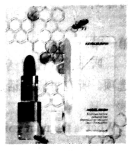
| LIPSTICKS BUILT TO LAST-HERMES LIPSTICKS Who says an object can't be environmentally sound? The first try by Hermes into the world of makeup is a responsible one: Rouge Hermes, its new line of lipsticks. | |



-
(1) If you have dark spots on your cheeks, which of the following can you choose according to the passage?A . The products from Maybelline. B . The products from Rouge Hermes. C . The products from La Mer. D . The products from Estee Lauder.
-
(2) During a power failure, which of the following may be of less use according to the passage?A . SPRING FLUSH. B . FERMENTED EXTRACTS. C . HAIR BRUSH. D . HERMES LIPSTICKS.
People say that because of globalization (全球化), American culture has taken over everywhere, but let's not forget that globalization works both ways.Some aspects of Asian culture have also made their way around the world, especially in the areas of spoils, film and food.
In the 1970s, the films of Bruce Lee helped Lo create a worldwide interest in the martial arts (武术).Before Bruce Lee became popular in the West, not many people were familiar with the various types of martial arts.Now it's quite normal for children in many Western countries to take courses in martial arts after school.Many adults also learn these Asian fighting styles for fun or to improve their fitness.
Bruce Lee's films also motivated a lot of interest in Asian films, especially action films, Jackie Chan and Jet Li followed in Bruce Lee's footsteps and are known all over the world.John Woo, famous for his Hong Kong action films, went on to work in Hollywood and many Western directors have copied his style.Western audiences also became interested in films by directors like Zhang Yimou, Ang Lee and like Chen Kaige.
Food from Asia is also popular worldwide.You can get Chinese food in any major city in the world - although it might not taste like the Chinese food in China.People enjoy sushi and other Japanese foods.Sichuan, Thai, and Korean foods are popular with people who like it spicy and Vietnamese food is also well known.So, I guess we can't say that only "McDonald's" has made a trip around.
-
(1) Who was the first to make people interested in martial arts in the world?A . Jackie Chan. B . Jet Li. C . Ang Lee. D . Bruce Lee.
-
(2) What can we know about John Woo?A . He is a Western director. B . He is a Western actor. C . He made films in America. D . He admired Zhang Yimou's films.
-
(3) Which does the author agree with?A . Asian films and food are popular around the world. B . Asian food is sold in any city around the world. C . Only "McDonald's" has made a trip around the world. D . American culture will take over the world.
-
(4) What's the best title for the passage?A . Asian and American Culture. B . Influence of Asia on America. C . Effect of American Culture. D . Asian films and food.
Alice Robb is an American science journalist who has written for the Washington Post and the New Republic. Her new book, Why We Dream, encourages us to rethink the importance of dreams and to become dream interpreters ourselves.
Reporter: Recently there's been a massive interest in the science of sleep. Sleep plays a role in maintaining our mental health. Are dreams part of that process?
Alice Robb: Dreams play a big role in helping us cope with stress, grief and psychological problems. Dreams are an opportunity to work through things that frighten us in real life, to play out worst-case situations in an environment where they have no consequences.
Reporter: Has anyone explained why dreams contain such surreal (超现实的) elements, strange pictures of time, people, geography and so on?
Alice Robb:When we dream, the logic centres of our brain—the frontal lobes (大脑额叶) —go dark, and chemicals associated with self-control, like serotonin (血清素) and norepinephrine (去甲肾 上腺素) , drop. At the same time, the emotion centres light up:we have a perfect chemical canvas for dramatic, psychologically intense visions.
Reporter:You say neglecting to consider our dreams is like "throwing away a gift from our brains without bothering to open it. " What is the gift?
Alice Robb: When we're dreaming, we're thinking in a state we never have access to by day. Dreams offer the opportunity to think in a different way and show new answers to problems. They show us blind spots on things we might be neglecting in our personal lives.
-
(1) In which aspect do dreams help maintain our mental health?A . Dreams help us deal with pessimistic feelings. B . Dreams make us free of stress, grief and psychological problems completely. C . Dreams make us not able to face frightening things. D . In dreams we can solve those worst-case problems.
-
(2) According to Alice Robb, what is NOT the gift?A . When dreaming, we're thinking in a state we never touch by day. B . Dreams provide the chance to think in a different way and show new answers to problems. C . Dreams show us blind spots that might be neglected in real lives. D . Dreams enable us to accomplish impossible tasks.
-
(3) In which column will you probably read the passage?A . Education. B . Technology. C . Opinions. D . Culture.
There are an extremely large number of ants worldwide. Each individual (个体的) ant hardly weigh anything, but put together they weigh roughly the same as all of mankind. They also live nearly everywhere, except on frozen mountain tops and around the poles.For animals their size, ants have been astonishingly successful, largely due to their wonderful social behavior.
In colonies (群体) that range in size from a few hundred to tens of millions, they organize their lives with a clear division of labor. Even more amazing is how they achieve this level of organization. Where we use sound and sight to communicate, ants depend primarily on pheromone (外激素), chemicals sent out by individuals and smelled or tasted by fellow members of their colony. When an ant finds food, it produces a pheromone that will lead others straight to where the food is. When an individual ant comes under attack or is dying, it sends out an alarm pheromone to warn the colony to prepare for a conflict as a defense unit.
In fact, when it comes to the art of war, ants have no equal. They are completely fearless and will readily take on a creature much larger than themselves, attacking in large groups and overcoming their target. Such is their devotion to the common good of the colony that not only soldier ants but also worker ants will sacrifice their lives to help defeat an enemy.
Behaving in this selfless and devoted manner, these little creatures have survived on Earth, for more than 140 million years, far longer than dinosaurs. Because they think as one, they have a collective (集体的) intelligence greater than you would expect from its individual parts.
-
(1) We can learn from the passage that ants are ____________.A . not willing to share food B . not found around the poles C . more successful than all other animals D . too many to achieve any level of organization
-
(2) Ants can use pheromones for______.A . escape B . communication C . warning enemies D . arranging labor
-
(3) What does the underlined expression "take on" in Paragraph 3 mean?A . Accept. B . Employ. C . Play with. D . Fight against.
-
(4) Which of the following contributes most to the survival of ants?A . Their behavior. B . Their size. C . Their number. D . Their weight
Getting rid of dirt, in the opinion of most people, is a good thing However, there is nothing fixed about attitudes to dirt.
In the early 16th century, people thought that dirt on the skin was a means to block out disease, as medical opinion had it that washing off dirt with hot water could open up the skin and let ills in. A particular danger was thought to lie in public baths. By 1538, the French king had closed the bath houses in his kingdom. So did the king of England in 1546. Thus began a long time when the rich and the poor in Europe lived with dirt in a friendly way. Henry IV, king of France, was famously dirty. Upon learning that a nobleman had taken a bath, the king ordered that, to avoid the attack of disease, the nobleman should not go out.
Though the belief in the merit(优点) of dirt was long-lived, dirt has no longer been regarded as a nice neighbor ever since the 18th century. Scientifically speaking, cleaning away dirt is good to health. Clean water supply and hand washing are practical means of preventing disease. Yet, it seems that standards of cleanliness have moved beyond science since World War II. Advertisements repeatedly sell the idea: clothes need to be whiter than white, cloths ever softer, surfaces to shine. Has the hate for dirt, however, gone too far?
Attitudes to dirt still differ hugely nowadays. Many first-time parents nervously try to warn their children off touching dirt, which might be responsible for the spread of disease. On the contrary, Mary Ruebush, an American immunologist(免疫学家), encourages children to play in the dirt to build up a strong immune system. And the latter position is gaining some ground.
-
(1) The kings of France and England in the 16th century closed bath houses because .A . they lived healthily in a dirty environment B . they thought bath houses were too dirty to stay in C . they considered bathing as cause of skin disease D . They believed disease could be spread in public baths
-
(2) Which of the following best describes Henry IV's attitude to bathing?A . Curious B . Afraid C . Approving D . Uninterested
-
(3) How does the passage mainly develop?A . By following the order of time. B . By making comparison. C . By providing examples D . By following the order of importance.
-
(4) What is the author's purpose in writing the passages?A . To call attention to the danger of dirt. B . To introduce the history of dirt. C . To present the change of views on dirt. D . To stress the role of dirt.
We all have our bad days. No one is going to wake up each and every morning in a cheery mood. Sometimes we all feel just a little bit grumpier (脾气暴躁的) than usual, and that's just a part of being human. Yet once we get to the office, many in the workforce feel it necessary to hide their emotions, whether they are in frustration, anger, or sadness. Interestingly, a new study finds keeping one's behavior at the office authentic will result in greater productivity and a better relationship with co-workers. In other words: act how you feel, and don't fake it.
It's extremely common for the average workspace to preach an attitude of continuous positivity. While this may be beneficial from the CEO's viewpoint, it just isn't realistic when applied to real people with real problems and daily hardships. That's why, the research team have concluded, employees will actually feel better, work harder, and connect more with their colleagues if they don't hide their feelings with a fake smile.
Over 2,500 working adults, from a variety of industries such as finance or engineering, took part in this research via surveys. The questionnaires measured two distinct types of on-the-job emotional regulation: surface acting and deep acting. Surface acting means faking happiness while interacting with other employees; and deep acting refers to actively trying to change one's emotions and feelings in order to be more pleasant at work. The study's authors were interested to see how common it is for working adults to regulate their emotions while on the clock, and if so. Why? What benefits are employees gaining from such behavior?
After analyzing all of the survey responses, researchers identified four distinct types of individuals who hide or regulate their emotions around co-workers. "Non-actors" rarely hide their true feelings, and if they do, only to a very small extent. "Low actors" usually take part in only slight deep and surface acting. "Deep actors" perform lots of deep acting and low levels of surface acting, and "Regulators" exhibit high levels of both surface and deep acting.
By far non-actors were the smallest identified group in the study. Regulators, or employees who tend to hide their true feelings most often, are usually motivated by feelings of self-interest. These people believe that by hiding their feelings they will gain access to additional work resources and look good in front of their managers and co-workers. Deep actors, on the other hand, are usually more motivated by "pro-social" factors. This means they choose to hide their emotions because they believe it develops a healthier working environment. Regulators are the most likely of the four to experience great emotional tiredness and exhaustion. Meanwhile, deep actors tend to achieve improved well-being most frequently.
-
(1) Many office workers tend to ________.A . show their anger B . behave naturally C . focus on their jobs only D . pretend to be happy
-
(2) What does the underlined word "preach" mean in the second paragraph?A . Promote. B . Forbid. C . Change. D . Ignore
-
(3) How was the study carried out?A . By performing experiments. B . By analyzing questionnaire data. C . By taking field trips to offices. D . By interviewing CEOs.
-
(4) What do we know about "regulators"?A . They are straightforward and like to help others. B . They are more surface acting than deep acting. C . They like to build an image that will benefit them. D . They are self-interested and will do whatever it takes to succeed.
-
(5) What conclusion can we draw from the passage?A . "Non-actors" always hold back their true feelings on purpose. B . "Low-actors" are, most likely to display their true feelings. C . Hiding true feelings is sure to leave a good impression. D . It is worthwhile to become deep actors in a way.
-
(6) Through the passage the author mainly intends toA . stress the significance of displaying true feelings B . highlight the importance of hiding true feelings C . urge people to keep a cheerful emotion at work D . persuade people to better their working efficiency
Would you like to see the festival from a different perspective?

A volunteer position at Canada Blooms might be a good fit for you.
Bringing with you energy and expertise to help make Canada Blooms a world-class event. Come and join us in celebrating our 24th festival, and put your love and knowledge of gardening to use.
Volunteer schedules are flexible and you will receive a free entrance for any day of the festival. 3-4 hour shifts in either the morning  afternoon or evening, are available. Feel free to stay and enjoy the show after your shift.
We are looking for:
Garden/Landscape/Nursery Aides(before/after festival, change over night)
Ice cream Ambassador
Bus/Tour Greeting Ambassador
General Greeting Ambassador
General Help/Runner
Please complete the Volunteer Sign-up Form and send an email to bloomsvolunteers @gmail.com with your preferred day(s),time(s)and position(s).
If you are interested in helping with the pre-festival horticultural set-up, contact Tanya Smith at bloomshortvolunteers@gmail.com.
Additional Information:
Free parking is available on outside lots Mon-Fri after 4 pm.
If you are offered a position, we need to be able to count on you to be responsible. If you are unsure of what day or time you will be available, we can still use your help, just sign up as General Help and we will offer you a position when you arrive.
-
(1) What's the purpose of the passage?A . To raise Canada Blooms to a world-class level. B . To advertise volunteer positions for the festival. C . To encourage people to practice their gardening skills. D . To offer volunteers chances to better enjoy the
-
(2) The volunteers are supposed to__________.A . have bus driving skills B . stay after the their shifts C . take their responsibilities D . park outside on weekends
-
(3) If you are uncertain when you are free, you can__________.A . complete the Volunteer Sighup Form B . email to bloomsvolunteers@gmail. com C . contact Tanya Smith by sending emails D . sign up and volunteer as General Help
If you walk through a park, you may enjoy the scents(气味)of flowers, water and soil. If you are especially lucky, you will get to smell fresh-cut grass. It's a beloved scent that transports many people back to their childhood. But there's a dark side to that smell. Indeed, we are in love with the scent of fear.
Plants have many different chemical defenses. That smell is one of them, as the grass responds to an attack, signaling(向......示意)to the surrounding grass that danger is coming. The fresh, "green” scent of a just-mowed lawn is the lawn trying to save itself, says a story at science website Real-Clear Science.
The smell is produced by a mix of chemicals called green leaf volatiles(GLVs, 绿叶挥发物). When the leafy plants are injured by animals eating them, people cutting them, or any other rough treatment-they give off GLVs into the air. These GLVs are a warning to neighbouring plants that their flowers might be removed, so they can move resources like sugar toward their roots and away from their flowers. This reduces a plant's potential losses and can help it grow back later.
The rush of GLVs does a few other things, too. One chemical helps to close the wound on the damaged plant. Others act as antibiotics(抗生素)and prevent bacterial infections.
Some GLVs may also react with animals that eat plants. Silke All-mann and Ian T.Baldwin, researchers from the University of Amsterdam, Netherlands, found that some caterpillars(毛虫)are changed by the GLV compounds(化合物)when they eat a tobacco plant. Tobacco makes the caterpillars more attractive to predators(捕食者). For the tobacco plants, this is like having an older brother come to beat up your bully(欺凌者).
Thankfully, nothing is coming to eat you when you mow the lawn. Instead, we human get treated to some great-smelling GLVs. One is a compound known as"cis-3-hexenal". This is the same chemical that gives strawberries their sweet scent. Similar compounds are also found in apples and olives.
"Just about all fresh vegetables have some GLV scents to them," Baldwin told Live Science, and fruits may release the compounds as they soften." Throughout evolutionary history, we've used that information to know when something is ripe," Baldwin said. Now we can use it to know when grass is frightened.
-
(1) What do we know about GLVs?A . They are harmful to humans. B . They are unique to flowering plants. C . They tend to stay in the air for a long time. D . They are released when plants get hurt.
-
(2) How may plants react to the GLVs produced by neighbouring plants?A . They grow more quickly. B . They produce more flowers. C . They absorb more water. D . They transport resources to their roots.
-
(3) In paragraph5,the underlined part "an older brother" refers toA . a kind of antibiotic B . a predator. C . a caterpillar. D . a tobacco plant.
-
(4) According to Baldwin, GLVs canA . tell us whether fruits are ready to eat. B . protect plants from pests. C . help fruits grow more quickly. D . help people choose delicious fruits.
Earth's tallest animal is in deep trouble. Wild giraffe populations are falling rapidly, with recent survey data showing its numbers have fallen more than 40 percent. And unlike the well-known plight (困境) of gorillas, elephants, rhinos, and other disappearing African animals, the decline of these giants has gone largely unnoticed.
Giraffes that are extreme high — adult males can stand nearly 6 meters tall — still live in 21 countries in Africa, but their habitat is being repurposed for human use, especially agriculture. Even in places where their native grasslands remain excellent, small and separate habitat caused by development elsewhere can restrict their range and prevent genetic diversity. And climate change can encourage lengthy droughts, which lead desperate giraffes to feed on farmers' crops, making them seem like pests to local communities.
Illegal hunting also contributes to the decline of the animals. Humans have a long history of hunting giraffes, seeking food as well as thick skin to make clothing and other items. But a belief that giraffes' brains and bones can cure HIV has gained wide attention in Tanzania, reportedly pushing prices for giraffes' heads and bones are as high as $140 per piece. Usually, with a single gunshot, a giraffe can be hunted. So they've become an extra income among Africa's growing groups of elephant hunters.
When humans try something risky to hunt for giraffes, however, there's evidence that they can improve the animals' fortunes. The West African giraffe, for example, was pushed to the edge of extinction in the 1990s. Down to just 50 in 1996, the subspecies won legal protection from the government of Niger, helping it grow to 250 in 2010. Conservationists have also worked with villages in Niger and planted 5,300 acacia(相思) trees since 2012, reducing the need for the giraffes to destroy crops.
That their number grows in recent years suggests that there is still time to save other giraffes, too." This stresses the value of making positive giraffe conservation and management efforts to protect critical populations across the continent,” says Arthur Muneza, East Africa speaker for the GEF. "It is high time that we increased our efforts."
-
(1) What is ignored by people according to the author?A . Wild animals' habitat being destroyed B . The number of elephants being smaller C . Gorillas and rhinos becoming endangered D . The rapid decrease of the number of wild giraffes
-
(2) Which of the following factors influence the survival of giraffes according to the text?
① habitat loss ② serious diseases ③ people's hunting ④ climate change
A . ①②③ B . ①②④ C . ①③④ D . ②③④ -
(3) It can be inferred from paragraph 3 that ____.A . it is quite hard for people to catch giraffes B . hunting giraffes is a way to attract foreign tourists C . it is very profitable to trade giraffes' heads and bones illegally D . local people use giraffes' bones to prevent HIV from spreading
-
(4) Which of the following would be the best title for this text?A . Giraffes' fortune might be improved B . How can people protect wild giraffes? C . Wild giraffes need legal protection now D . Why are wild giraffes suffering a silent extinction?
Discovering the beauty of the science and maths that shape our everyday lives, an experience in Wonderlab will fuel your imagination and inspire you to see the world around you in new and exciting ways. Come and enjoy yourself!
What to see
Spread across seven different zones, there're loads of opportunities to get hands on with real scientific phenomena. Observe live experiments at our Chemistry Bar, see lightning strike before your eyes, play with forces on giant slides or travel through space under a canopy (苍穹)of stars. You can also take part in explosive science demonstrations led by our talented team of explainers. With 50 mind-blowing wonders of science to enjoy, Wonderlab is an experience unlike any other. Besides, a selection of shows will be performed daily in Wonderlab's beautiful new show space. They are free of charge and last 20 minutes.
Tickets
♦ Day pass: £ 6 per person.
This ticket gives you day-long access to Wonderlab, perfect whether you're planning a special trip to the Museum or simply passing through London and want to feed your curiosity.
♦ Annual pass: £ 10 per person.
For less than the price of two visits, give yourself a year packed full of wonder, curiosity and breathtaking experiences.
Opening times
Open seven days a week, 10:00 — 18:00 (last entry 17:15). Wonderlab will be closed on December 24,25 and 26 and will be open as usual from December 27.
During school holidays our opening hours are 10:00 — 19:00 (last entry 18:15). Please note that in peak periods (from midday onwards) we are experiencing long queues due to the gallery's popularity.
-
(1) What can you do in Wonderlab?A . Explore stars. B . Produce lighting. C . Join in explosion shows. D . Do chemistry experiments.
-
(2) How much should two visitors pay if they visit Wonderlab and enjoy the shows for one day?A . £ 12. B . £ 20. C . £32. D . £40.
-
(3) What is the purpose of the text?A . To introduce Wonderlab. B . To attract people to Wonderlab. C . To explain how Wonderlab works. D . To analyze why Wonderlab is attractive.
Scientists are working to stop a deadly virus that infects(感染)pigs. The virus is causing huge losses for farmers in China and other Asian countries. Many farmers have tried to contain African swine flu by quarantining(隔离)pigs and destroying infected animals. But the spread of the disease into East Asia has stepped up the search for other ways to deal with the problem.
The virus had not been considered a major concern for researchers until it appeared in China last year. Chinese farmers raise about half of the world's pigs. Some researchers think the virus might have come from infected animals in Eastern Europe or Russia. Since then, it has spread to China, Vietnam and other Asian countries. Millions of pigs have been destroyed.
Although swine flu does not sicken people, it is very infectious and deadly to pigs. "Today's situation, where you have this global danger, puts a lot more emphasis on this research,” said Doctor Luis Rodriguez. He spoke to The Associated Press. Rodriguez leads the United States government laboratory for foreign animal diseases at Plum Island, New York. As a deadly virus kills pigs across Asia, scientists are accelerating efforts to develop a vaccine (疫苗).
Vaccines often are developed by killing a virus before it is put into an animal. The disabled virus does not make the animal sick, but it activates the body's natural defenses against disease. The immune(免疫的)system is then able to identify the virus and produce antibodies against it.
However, this method is not effective with all viruses including the one that causes African swine flu. For swine flu, scientists have been working on a different kind of vaccine. It is made from a weakened virus, not a dead one. The problem for researchers has been how to change the virus so it can be safely used.
Vietnam's government reported a few weeks ago that it was testing vaccines, but provided few details of its programs. In China, the government said scientists are working on a vaccine that genetically changes the virus. That is similar to a method being used by scientists in the United States.
-
(1) Why did the virus cause the researchers' concern when appearing in China?A . The virus may infect people. B . The number of pigs raised in China is huge. C . The virus may be completely out of control. D . Chinese science and technology is not advanced.
-
(2) Where might the virus come from?A . Eastern Europe or Russia. B . Vietnam. C . African countries. D . America.
-
(3) What is the function of the disabled virus according to Rodriguez?A . It makes people fall ill. B . It destroys the immune system of animals. C . It helps the body produce antibodies against disease. D . It makes the body's natural defense against disease work.
-
(4) What is the best title for the text?A . The Emphasis of the Virus Research B . Swine Flu Leads to the Deaths of Lots of Pigs C . Scientists Hurry to Develop Vaccine for Swine Flu D . New Results About Government Laboratory for Animal Diseases
There is something to be said for being a generalist, even if you are a specialist. Knowing a little about a lot of things that interest you can add to the richness of a whole, well-lived life.
Society pushes us to specialize, to become experts. This requires commitment to a particular occupation, branch of study or research. The drawback to being specialists is we often come to know more and more about less and less. There is a great deal of pressure to master one's field. You may pursue training, degrees, or increasing levels of responsibility at work. Then you discover the pressure of having to keep up.
Some people seem willing to work around the clock in their narrow specialty. But such commitment can also weaken a sense of freedom. These specialists could work at the office until ten each night, then look back and realize they would have loved to have gone home and enjoyed the sweetness of their family and friends, or traveled to exciting places, meeting interesting people. Mastering one thing to the exclusion (排除) of others can hold back your true spirit.
Generalists, on the other hand, know a lot about a wide range of subjects and view the whole with all its connections. They are people of ability, talent, and enthusiasm who can bring their broad perspective (视角) into specific fields of expertise (专长). The doctor who is also a poet and philosopher is a superior doctor, one who can give so much more to his patients than just good medical skills.
Things are connected. Let your expertise in one field fuel your passions in all related areas. Some of your interests may not appear to be connected but, once you explore their depths, you discover that they are. My editor Toni, who is also a writer, has edited several history books. She has decided to study Chinese history. Fascinated by the structural beauty of the Forbidden City as a painter, she is equally interested to learn more about Chinese philosophy. "I don't know where it will lead, but I'm excited I'm on this pursuit."
These expansions into new worlds help us by giving us new perspectives. We begin to see the interconnectedness of one thing to another in all aspects of our life, of ourselves and the universe. Develop broad, general knowledge and experience. The universe is all yours to explore and enjoy.
-
(1) To become a specialist, one may have to_____.A . narrow his range of knowledge B . avoid responsibilities at work C . know more about the society D . broaden his perspective on life
-
(2) The specialists mentioned in Paragraph 3 tend to______.A . treasure their freedom B . travel around the world C . spend most time working D . enjoy meeting funny people
-
(3) According to the author, a superior doctor is one who_____.A . is fully aware of his talent and ability B . is a pure specialist in medicine C . should love poetry and philosophy D . brings knowledge of other fields to work
-
(4) What does the author intend to show with the example of Toni?A . Passion alone does not ensure a person's success. B . In-depth exploration makes discoveries possible. C . Everyone has a chance to succeed in their pursuit. D . Seemingly unrelated interests are in a way connected.
-
(5) What could be the best title for the passage?A . Be More a Generalist Than a Specialist B . Specialist or Generalist: Hard to Decide C . Turn a Generalist into a Specialist D . Ways to Become a Generalist
When Millet was a boy he worked on his needy father's farm. At the rest hour in the fields the other workers would all take naps (打盹儿), but young Millet would spend time drawing. Finally the village where he lived gave him a little money to Paris to study art.
When Millet reached Paris, he had a tough time. Fortunately, when he was almost starving, someone bought one of his peasant paintings, which enabled his family to leave for Barbizon.
Millet's pictures of peasants at work were painted in a unique way. The painter would go out on the farms and watch them carefully, then he would come home and paint what he had seen. So astonishingly accurate was his memory that he could paint at home without models and get all the movements of his figures right. When he did need a figure to go by he would ask his wife to pose for him.
One of his noted artworks is called "The Sower", which shows a man seeding. He reaches into his bag for seed and then swings backward to scatter (撒播) the seed, and with each swing of his hand the sower strides (大步走) forward. In Millet's picture the sower has been working hard, but his swinging step and arm still move smoothly, like a machine. Only the man's head reveals his great tiredness.
Another masterpiece is called "The Gleaners". A gleaner is someone picking up the leftover in the field after the wheat harvest. When farmers near Barbizon are extremely badly-off, even the little the gleaners can find is a help. You can see from Millet's picture what back-breaking work gleaning must be.
-
(1) What do we know about Millet?A . His wife supported him to be a painter. B . He was keen on painting as a kid. C . He spent his whole life in Barbizon. D . He was brought up in Paris.
-
(2) How did he paint the laboring farmers?A . Asking models for help. B . Imagining figures in the field. C . Remembering what he had observed. D . Recalling the days on his father's farm.
-
(3) What do Millet's works convey?A . The farmers' hardships B . The scene of gardening C . His love for the village D . His anxiety about the farmers
-
(4) The text is most likely to be found inA . A short-story collection B . A personal diary C . A magazine of art D . A science magazine
Here are four fantastic experiences for you to enjoy wonderful countryside spots, breathtaking scenery and clean, fresh air. Pack your bags and get outside!
Horseriding
Here's a novel way of chasing the Northern Lights—on horseback, which is a backtonature experience hunting for the aurora borealis. You'll saddle up (给马备鞍) at dusk and head deeper into the wilds near the Pallas Yllas National Park.
GO: Threenight fullboard guided trip, including two nights in a cottage and one night glamping, from £965 per person. See aurora zone. com.
Mountainbiking
You can choose from guided downhill or crosscountry mountain biking to road cycling and families can enjoy peaceful, slower paths and farm trails.
Extra activities include hiking, water park.
GO: Fivenight B & B packages including transfers and guided biking, from £374 per person. Bike hire from around £15 a day. See wizzair. com.
Camping
Get back to basics on a campsite with none of that fancy glamping. The pitches are large so you can light your own campfire at night. Walkers are in heaven here, hiking among the limestone hills filled with traditional stone walls.
Also a great destination for fishing, sailing and windsurfing on nearby Lake Semerwater.
GO: Nonelectric grass tent pitches from £20 a night. Tipi already pitched from £70 a night. See pitchup. com.
Whalewatching
Scotland's west coast, one of Europe's best places to catch sight of whales, has launched a new whale trail. It features 30 top places offering opportunities to see the wildlife and showcases whale heritage sites.
GO: Accommodation along the trail is reasonable including B & B in a double room at Torran in Ullapool from £70 a night. See bandbullapool. co. uk.
-
(1) How much might you pay for two days' bikehiring in Mountainbiking?A . £15. B . £20. C . £30. D . £374.
-
(2) What will you do in Camping?A . Hunt for animals. B . Enjoy challenging camping. C . Visit traditional stone walls. D . Climb an acrosscountry mountain.
-
(3) Where can you find coastal B & Bs?A . At bandbullapool. co. uk. B . At aurora zone. com. C . At pitchup. com. D . At wizzair. com.
 How often do you exercise? A new study found that most kids aged 12 to 15 weren't getting enough physical activity. The results were based on about 800 kids. As part of the study, the kids tracked and reported on their own activity levels, and took physical exams.
U. S. fitness guidelines suggest an hour or more of physical activity every day. According to the study, only 1in 4 U. S. kids get enough physical activity.
“It's certainly worrying to see that our kids have such a limited amount of physical activity each day, ” said Dr. Stephen Pont. He is an expert on children's health.
Few kids in the study met the guidelines on physical activity that raises the heart rate and makes people breathe harder. Overall, about 25% said they got an hour of that kind of exercise every day. Kids also reported on which activities they did most often outside of school gym class—basketball for boys and running for girls.
The study found that fat teenagers were less active than normal-weight girls and boys. Fat girls were slightly less active than normal-weight girls, but levels were similar among overweight and normal-weight boys. The study also said that the percent of fat children aged 2 to 19 was 17%, or about 12.5 million kids.
“There's always room for improvement, ” said Tala Fakhouri, who was the leader of the study. She also said the results provide useful information to help with fitness campaigns such as Let's Move, which was initiated by Michelle Obama in 2010. To inspire kids to eat right and get in shape, Michelle visits schools and holds exercise events. She also calls on schools to offer regular gym classes.
The study also found kids who get physical education at school may get better grades.
-
(1) What is the result of the new study?A . 800 kids don't get enough physical activity. B . Most U. S. kids don't get enough exercise. C . Kids should get physical activity every day. D . It's important to take physical exams.
-
(2) Which of the following sports do girls like best?A . Swimming. B . Basketball. C . Running. D . Gym.
-
(3) What's the purpose of the campaign Let's Move?A . To help kids to keep fit. B . To provide useful information. C . To offer regular gym classes. D . To hold exercise events.
-
(4) According to the study children with enough exercise may ______.A . be less active than fat children B . be more willing to help others C . do better in their studies D . try their best to get in shape
According to a new report, the future may be here sooner than we think. A team of academics and researchers predict(预测) underwater cities, personal drones(无人机) and giant skyscrapers(摩天大楼) by the year 2116. The team even predict that we will be vacationing on the moon or even on Mars just in 100 years.
The team of academics include architects, futurists and speakers from the University of Westminster. A lot of the technology needed to do the things predicted is already here; it just needs to be scaled up(扩大) and become more costeffective(划算的). Experts say that due to the increase in population, humans will live in large urban centers consisting of super tall skyscrapers, taller than anything we have ever seen. Other than going up, the report suggests that there will be "earthscrapers" going as far as 25 stories underground. Meanwhile, they believe that there will be "bubble cities" that produce oxygen using the surrounding water. What's more, drone technologies are predicted to grow at a rapid rate enabling the everyday man to travel anywhere he wants to go in his personal drone.
The report also predicts that the food industry will be reshaped by 3D printing technology. Families will be able to download whatever meal they want from databases of popular chefs and restaurants. Then once you're done with your 4course 3D printed meal, you can have a large drone take your whole house to a vacation spot you like and have your dinner while enjoying the beautiful scenery. This may sound unbelievable, but given advances in modular(模块化) design and largescale affordable drones, these all may be in store.
Keep in mind that all of these things are just predictions about the future from an independently contracted team, but we are facing an age of rapid development never seen before in human history and these predictions may end up being realized.
Technologies like smart homes and 3D printing will all seem commonplace in the future. To our kids, it will be hard to imagine life without the ability to design and print their toys, or vacation on Mars.
All this technological advancement may sound terrifying to some degree, but you'd better get used to it. Given all the recent advances in medicine, there's a high likelihood that you may live to see 2116. Then why not see what you can do to help make the future come a little faster?
-
(1) According to the report, future drones will .A . get energy from the surrounding water B . send humans to the moon or even Mars C . be owned by ordinary people D . be mainly used for travel
-
(2) In the future, the food industry will be affected by .A . 3D printing technology B . drone technologies C . popular databases D . communication tools
-
(3) What is the author's attitude towards the predictions in the passage?A . Uncertain. B . Hopeful. C . Dissatisfied. D . Uninterested.
-
(4) Which would be the best title for the passage?A . Predictions About Future Life B . The Developments of New Technologies C . The Popularity of Drone Technologies D . Technologies' Influence on Food and Buildings
Beijing: Beijing is to spend up to US $20 billion to change the Chinese capital into a 21st century one for the 2008 Olympics.
The government managed to host the 2008 games. The general aim is for Beijing to have the same environmental standards as Paris, London or Washington by 2008.
Hundreds of millions of dollars will be spent to pipe natural gas to the city's homes, taking away dirty coal burning gradually while 60,000 buses will be changed to liquefied gas.
The money also will be used for relocating the polluting factories and building green areas. By 2008 around 90 percent of Beijing's waste will be treated, compared to only 40 percent at present.
Olympic officials realize the city has a long way to go to match the environmental standards of such cities as Paris, Toronto, Istanbul and Osaka.
City officials have already announced that around 50 large projects are being dealt with to improve traffic jam and cut down pollution. They include construction of Beijing's first light railway, a 40.5 kilometer line which is expected to be completed in 2005.
Beijing, besides, plans to build an 82.25-kilometer-long subway to add to the existing 53 kilometers. Nine major roads will be rebuilt or widened.
Beijing also plans to build a 70-meter-wide green area along the waterways to protect water quality as well as increase the green areas.
-
(1) The government will pipe natural gas to the city's homes in order to ________.A . solve the problem of being short of fuel B . bring down the cost of daily life C . reduce the pollution of our capital D . keep up with the development of modern society
-
(2) The underlined word "relocating" in this report means _________.A . removing B . pulling down C . rebuilding D . dealing with
-
(3) Which of the following is true according to the passage?A . The environment of London is better than Toronto. B . In the first paragraph “a 21st century one” refers to a modern and advanced capital. C . Beijing is badly polluted mainly by coal burning. D . Liquefied gas is more expensive than petrol.
I don't realize that I've been at college for nearly one and a half years until now. Looking back into the last year, what shall I say? It consisted of both happiness and sadness. Life always goes like this, up and down, as is so exciting. Now when I recall the past, no matter how I felt at that time, they are all treasures for me.
That was the moon festival last year, which was also the first time we went out after we entered the college. It was said that the sea in Dalian was wellknown and was also a wonderful place to watch the moon. After getting all the food and drink ready, we four girls set off for the seaside. There were many people and we picked up a less crowded beach. At first, we enjoyed ourselves by drinking and eating. When the moon turned brighter, we played with the seawater. As a result, we were all drenched with water. Bathing in the moonlight, we ran and laughed. We seemed to land on another world, where it was full of fresh air, laughter and love. The laughter is still echoing in my mind so far.
Life doesn't stay the same, occasionally having a particular taste. That is sadness. What impressed me deeply is a failure in a singing competition. It was the first time I had given a performance on such a large stage in front of so many people. I was so nervous that the whole song was performed out of tune. As you could imagine, I was greeted with boos from the audience. I still remembered how dismal I felt that moment and I sat alone crying at the seaside. After that, I talked to mother about it. She told me that it was not a failure; at least, I was brave enough to show myself publicly.
Everything has passed. I've stored them at the bottom of my heart. I am in the second grade already. Yet much needs me to challenge. On the way, there's both happiness and distress. However, I will go ahead just all the same.
-
(1) The underlined word "drenched" in the second paragraph has a similar meaning with " ".A . dried B . wet C . frozen D . washed away
-
(2) Life, according to the author, is .A . full of happiness B . filled with sadness C . made up of laughter and tears D . not worth living
-
(3) How did the audience feel the author's singing?A . It was wonderful. B . It was disappointing. C . The passage doesn't say. D . It was perfect.
-
(4) Which of the following shows the author's attitude towards future?A . A friend in need is a friend indeed. B . Do wrong once and you'll never hear the end of it. C . Where there is a will, there is a way. D . Time and tide wait for no man.
- 阅读下面的词,然后回答问题。 滴滴金梅 孙道绚 月光飞入林前屋,风策策,度庭竹。夜半江城击柝声,动寒梢栖宿。 等
- 图中的建筑是古代埃及的重要标志之一。其用途是 A. 教堂 B. 寺院
- 4.战国时期赵国人慎到说:“治水者茨(茨,指积土填满)防决塞,虽在夷貊(mò,古代称东北方的少数民族),相似如一。学之于
- 某地一个跟甲型H1N1疑似患者同乘一辆汽车的民工回到家里,探望妻子和小孩,当地疾病防御部门登门进行住点(住在需医学观察者
- “江水滔滔,奔流不息,百折不回,终归大海。”从国际关系的角度理解这句话,正确的是()A.反对任意
- 下列溶液中含Cl-物质的量浓度最大的是( ) A. 10mL0.1mol/L的AlCl3溶液 B. 20mL0
- I don't believe we've metbefore, I must say you do lo
- 下列物质中属于混合物是() A.氮气 B.二氧化碳 C.河水 D.氯酸钾
- ①图一中螺旋测微器读数为 mm. ②图二中游标卡尺(游标尺上有50个等分刻度)读数为
- 实验室制取氯气时,可采用的气体收集方法是( ) A.排水法
- 据中央电视台报道,2007年2月28 日2时05分,乌鲁木齐开往阿克苏的5807旅客列车行至珍珠泉至红山渠间(见下图),
- 2.下列各句子中,没有语病的一句是 ( ) 检察院通过立案调查,发现小明在担任区税务局长的短短半年时间
- 下列各基态原子或离子的核外电子排布或电子排布图表示正确的是( ) A.铜原子 1s22s22p63s23p63d
- 杜牧的《泊秦淮》中讽刺当时达官贵人不顾国家安危,依然醉生梦死的诗句是: , 。
- 西方管理学中有一条著名的苛希纳定律:如果实际管理人员比最佳人员多2倍,工作时间就要多2倍,工作成本就要多4倍;如果实际管
- (16分)物质在水中可能存在电离平衡、盐的水解平衡等,它们都可看作化学平衡。请根据所学的知识回答:(1)0.01mol/
- 如果函数y=ax(a>0,a≠1)的图象与函数y=bx(b>0,b≠1)的图象关于y轴对称,则有 A.a&g
- Not only_______know the theory, but also_______learn how to
- (2-5)2-(5+2)2.
- Fitness Zone Live fit, love life Look your best this summer


