政治经济文化类 知识点题库
Mr Li: Sam, did you enjoy your first Spring Festival in China?
Sam: Yes, I did. During this festival, many family members get together.
Mr Li: Yes. I hear that at Thanksgiving Americans also get together for a special meal. It sounds similar.
Sam: Yes. It's similar. During these holidays, both the Chinese and Americans come home and have a big dinner. It's great fun.
Mr Li: What do you think are the main differences between the Spring Festival and Thanksgiving?
Sam: Well, we take part in different activities and eat different kinds of food. In China, people usually set off fireworks and eat dumplings. In the US, we usually watch a Thanksgiving parade and an American football game on TV. We also eat turkey.
Mr Li: That's interesting.
-
(1)
Who spent the first Spring Festival in China, Sam or Mr Li?
A . Sam. B . Mr Li. C . Both. D . Neither -
(2) Which of the following do you think the Chinese do during the Spring Festival?
a. set off fireworks
b. watch a Thanksgiving parade
c. enjoy a football game on TV
d. get together for a special meal
A . a;b B . c;d C . a;d D . b;c -
(3) The difference about food between the Spring Festival and Thanksgiving is that ______.A . the Chinese eat turkey while Americans eat dumplings B . Americans eat turkey while the Chinese eat dumplings C . the Chinese have a special meal while Americans don't D . Americans have a special meal while the Chinese don't
-
(4) What does Mr Li think of Thanksgiving?A . Exciting. B . Interesting. C . Similar. D . Different.
阅读理解 The Information about Some Great Inventions
|
Invention |
|
|
|
|
|
Appearing Time |
A few thousand years ago |
In 1876 |
In 1879 |
Around 2,000 years ago |
|
Inventor |
Unknown |
Alexander BeIl |
Thomas Edison |
Cai Lun |
|
Inventor's Nationality |
Unknown |
American |
American |
Chinese |
|
Early Main Material |
Wood |
Plastic and metal |
Glass and metal |
Cotton or flax |
|
Main Use |
Making travelling faster |
Used for communicating over distances |
Giving light |
Used for recording information |
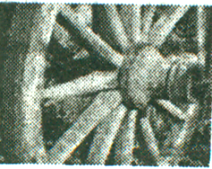 Wheel
Wheel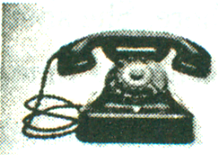 Telephone
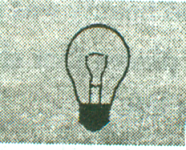 Light bulb
 Paper
PaperWordBox: lightbulb 灯泡 unknown 未知的 flax 亚麻
根据表格所提供的信息选择最佳答案。
-
(1) Since invented paper, people have been able to record information on paper.
A . Alexander Bell B . Thomas Edison C . Cai Lun -
(2) According to the form above, the invention that appeared in 1876 was made of
A . plastic and metal B . glass and metal C . cotton or flax -
(3) According to the form above, the latest invention was .
A . the telephone B . the light bulb C . the wheel -
(4) Thanks to the invention of the wheel, people can .
A . have enough light to read B . travel faster C . communicate over distances -
(5) Which of the following is TRUE according to the form above?
A . Three of the inventions were made of metal. B . Neither Alexander Bell nor Thomas Edison is American. C . Two of the inventions appeared in the 19th century.
I have a good friend.Her name is Linda She has a red backpack.It is on the sofa.She has two blue dictionaries.They are on the desk in her room She has a yellow quilt.It is on her bed. She likes tennis.She has four tennis rackets and eight tennis. They are under her bed.She likes vollayball,too. But she doesn't like soccer.She thinks(认为)it is for boys.She plays tennis with her sister in the morning and plays volleyball with me in the afternoon.
-
(1) what color is Linda's backpack?
A . Red B . Black C . Blue -
(2) Where are Linda's dictionaries7
A . On the sofa B . On the desk C . On the bed -
(3) Linda has______tennis.A . two B . four C . eight
-
(4) Linda plays tennis________.
A . in the morning B . in the afternoon C . with her friend -
(5) 下面哪项陈述是错误的?A . Linda'dictionaries are blue B . Lind's quilt is on her bed. C . Linda doesn't like voneyball.
Sports change with the seasons. People play different games in different seasons. Sometimes they play inside the room. Sometimes they play outside. We can find sports here and there. Some sports are rather interesting and people everywhere like them. Football, for example, is very popular in the world. People from different countries cannot understand each other, but after a game they often become very friendly to each other.
-
(1) Sports are good for _______.A . the players B . people's health C . the coaches D . people who like sports
-
(2) If you like sports, you can _______.A . buy tickets to watch the games B . watch the games on TV C . watch the games on the Internet D . A、B and C
-
(3) People play _______ in different seasons.A . the same game B . different games C . any games D . all kinds of games
-
(4) _______ is very popular in the world.A . Table tennis B . Baseball C . Football D . Skating
-
(5) From this passage we can see that _______ can become very friendly.A . people from different countries all B . people from the same country C . people who do the same sports D . after a game, people from different countries
For many in the United States, Arab-Americans are an invisible part of the population. Though Arab-Americans as a community have made great contributions to American society in fields from literature to politics to medicine, many Americans know very little about Americans of Arab backgrounds.
Arab history in the United States goes back to the late 1800's when large numbers of Arab immigrants first began making their journey to a land known simply as “Amreeka”.
Historians generally describe Arab immigration to America in two waves. The first wave took place between 1860 and 1924.The first wave consisted of Lebanese and Syrian, and some Egyptian immigrants. These new immigrants, who were mostly Christian, came to America in search of better opportunities. Even the doomed Titanic, which set sail for America in 1912,had close to a hundred Arab passengers aboard. The majority of Arab-Americans today are descendents of the first wave of immigrants; they are the third or more generation Americans.
The second wave of immigrants followed after World War Ⅱ,caused by political unrest in the Middle East. This second wave of immigrants consists of mainly Arab Muslims(穆斯林)and continues to this day.
Arab-Americans make up 3 million of the population in the United States, according to demographers. And quite different from popular belief, 64 percent of them are American-born. Eighty-two percent of Arab-Americans are US citizens.
Arab-Americans are beyond the national average in both education and income. Education is important among Arab-Americans; 82 percent have high school diplomas, 36 percent have bachelor's degrees or higher, and 15 percent have graduate degrees. The-median(中位数的)average income among Arab-Americans is $39,580, which is higher than the US average.
-
(1) The first wave of immigrants took place because__________.A . all Arabs were Christian at that time B . Arabs wanted to gain higher income C . the Second World War broke out D . Arabs wanted to hunt for a better development
-
(2) The writer of this passage mentioned Titanic__________.A . to tell us that taking ship at that time was dangerous B . because Titanic became a well-known disaster C . to show us there were many Arabs flocking into America at that time D . to inform us that Arabs are brave enough
-
(3) From the last paragraph we can infer that__________.A . Arab-Americans are much more clever than native Americans B . the higher education you receive, the higher income you will get in America C . Arab-Americans are hard-working people D . The-median average income among Americans is $39,580
-
(4) Which of the following sentences is TRUE?A . Arab-Americans have made great contributions to American society only in literature. B . Arab history in the United States is to the early 1800's. C . The first Arab immigration to America took place between 1860 and 1924. D . Few of Arab-Americans are US citizens.
-
(5) What would be the best title for the text?A . Arabs in America B . The Two Arab Immigration Waves to America. C . Arab-Americans, Contributions to America. D . Arab-Americans, Education and Income.
New York,London,Paris and other big cities are exciting places to live in. There are many interesting things to see and to go to. You can go to different kinds of museums,plays and films. You can also buy things from all over the world.
But there are some problems in big cities too. It is expensive to live there and there are too many people in some places of big cities. Every year many people move to the cities to find jobs,to study at good schools.
But sometimes these people can't find work or a good place to live in. Also it is hard to keep the cities safe(安全的)and clean.
Some people enjoy living in big cities,others do not. Before moving to a big city,they should think about the problem of living there.
-
(1) Who likes living in big cities?A . Everyone. B . All people. C . Nobody. D . Not everyone.
-
(2) What should people think about before moving to a city?A . Money for study. B . The problem of living there. C . Life at night. D . Time for sleep.
-
(3) Why do many people move to the cities?A . To see their friends. B . To buy things from other countries. C . To find jobs. D . To see films.
-
(4) To live in a city is very_____.A . expensive B . cheap C . hard D . interesting
-
(5) From the article we can see it is hard to keep the cities_______.A . busy and noisy B . safe and clean C . cool and sunny D . fine and large
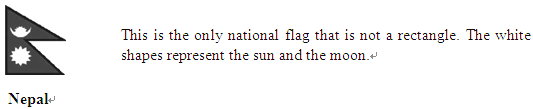
Flags have existed for over 3,000 years. The earliest flags were wooden or metal poles with a carving. About 2,000 years ago pieces of fabric were added to some poles for decoration. Over the next 500 years the free-flying part of the flag became more important.



-
(1) The earliest flags have a long history for more than _______ years.A . 2000 B . 500 C . 3000 D . 2500
-
(2) The flying pieces of flags were added to some poles for _______ about 2000 years before.A . passion B . decoration C . progress D . sincerity
-
(3) The flag which features a temple belongs to ___________.A . Japan B . Nepal C . Singapore D . Cambobia
-
(4) An olive wreath is used to represent ________________.A . peace B . purity C . justice D . Equality
-
(5) Two flags that include the sun in their design belong to __________________.A . Nepal and Japan B . Singapore and Japan C . the United Nations and Nepal D . the United Nations and Singapore
Sports are popular all over the world. People also like watching sports matches. Sports stars are very popular with people, especially students.
There are sports matches all over the world nearly every day, but the most important and famous are the Olympic Games (奥林匹克运动会). Every athlete (运动员) want to win the games. At that time all sports fans sit in front of TV to watch games. Some even go to the stadium (体育馆) to watch.
Why are sports so popular? Because sports can keep our body strong. Do you like playing sports? How often do you exercise?
-
(1) ______become an important part of people's life.A . TVs B . Computers C . Sports D . Telephone
-
(2) People can ______.A . change sports rules B . take part in sports C . watch sports matches D . Both B and C
-
(3) The Olympics Games are ______.A . Car races (赛) B . sports match C . World Cups D . Asian Games
-
(4) In the Olympics athletes try their best to ______.A . win the games B . show their strong body C . keep healthy D . make money
-
(5) Which of the following is not trueaccording to the passage?A . Sports can keep our body strong. B . There aren’t sports matches nearly every year. C . Sports are popular all over the world D . Sports stars are very popular with students.
A few years later a hollow (空心) ball like the one we use today was invented. The game then quickly spread all over the world. An Englishman once made a bat covered with rubber. He first played the game in England and called it "ping - pong". "Ping" was the sound of the bat when it hit the ball, and "pong" was the sound of the ball when it hit the table.
-
(1) Who invented the game of ping-pong?A . A Chinese. B . An Englishman. C . An American. D . We don't know.
-
(2) The game was first called ________ by its producer(创造者).A . ping- pong tennis B . table tennis C . outdoor tennis D . indoor tennis
-
(3) What did the British think of the game?A . Moving (感人的). B . Interesting. C . Terrible. D . Boring.
-
(4) In the early days,the ball was________.A . hollow B . covered with rubber C . made of cork or rubber D . made of wood
-
(5) The name of ping-pong has something to do with __________.A . sound B . size C . history D . place
Did you ever wonder how some of your favorite foods, products or toys came about? Believe it or not, they may have been an accident, or a failure of some other intention. Below, we found three mistakes we're thankful for turned out to be what they are.
1. Most historians hold that the Chinese invented fireworks in the 9th century when they discovered how to make gunpowder. Story has it that a Chinese cook accidentally mixed together what were then considered common kitchen items and noticed they burnt. When put tightly in a bamboo tube and lit, it blew up.
2. In May of 1886, a law led John Pemberton, a pharmacist(药剂师), to rewrite the formula(配方) for "Pemberton's French Wine Coca", his popular headache treatment. Containing sugar instead of wine as a sweetener, the outcome became something for Coke, which was later mixed with carbonated(碳酸) water. His bookkeeper suggested the name Coca-Cola because he thought the two C's would look good together, which is how what we call Coca-Cola, a world-wide drink came into being.
3. During World WarⅡ, scientists at the University of Birmingham invented the magnetron(磁控管)—an important heat-producing part of the microwave oven. While working for Raytheon Corporation after the war, the American engineer Percy Spencer was testing the magnetron when a chocolate bar in his pocket melted. He went on to test other foods including popcorn kernels(仁), and found it to be a much more efficient way to cook. In 1947 Raytheon came out with the first restaurant microwave oven, which was six feet tall and weighed 750 lbs.
-
(1) The right time order of the three inventions should be ________.A . fireworks, the microwave and Coca-Cola B . fireworks, Coca-Cola and the microwave C . Coca-Cola, fireworks and the microwave D . the microwave, Coca-Cola and fireworks
-
(2) Percy Spencer found the microwave efficient in cooking when he was ________.A . looking for a way to melt his chocolate B . trying to know how a magnetron could cook C . working to know how the magnetron works D . asked to invent a restaurant microwave oven
-
(3) The underlined phrase "blew up"might mean _______ in Chinese.
A . 爆炸 B . 膨胀 C . 升华 D . 蒸发 -
(4) What can we learn from the above invention stories?A . Experiments make great inventors of our time. B . Nothing is impossible if one tries each day. C . Inventors come out of hard work at any time. D . A small incident may lead to a great invention.
Football is, I suppose, the most popular game in England. In some important matches, you can see the rich and the poor, the young and the old all there, shouting and cheering for one side or the other.
One of the most surprising things about football in England is the great knowledge of the game which even the smallest boy seems to have. He can tell you the names of the players in most of the important teams. He has photographs of them and knows the results of a large number of matches. He will tell you who he expects(预料) to win such and such a match(诸如此类的比赛).
The schools arrange(安排) games and matches for their pupils. Football is a good game. It is good exercise for our body. It needs skills(技能) and wisdom(智慧) and it is popular and cheap. As a result, it is the school's favorite game in winter.
-
(1) Many people in England like football.
-
(2) It is the strangest thing in England about football that people shout and cheer for oneside or the other.
-
(3) The reason why the schools arrange football games for pupils in England is that it's very interesting.
-
(4) Even the smallest boy seems to have a great knowledge of football.
-
(5) Football is a good game, but it is not cheap.
The British are known for their sense of humour. However, it is often difficult for foreigners to understand their jokes. The main point to remember is that the British often use understatement.
Understatement means saying less than you think or feel. For example, if someone gets very wet in a shower of rain, he might say, ‘It's a little damp (潮湿的) outside.’ Or, if someone is very impolite and shouts at another person, someone else might say, ‘She isn't exactly friendly.’ Understatement is often used in unpleasant situation or to make another person look silly. Understatement plays an important part in British humour.
Another key to understanding British humour is that the British like to make fun of themselves as well as others. They often laugh about the silly and unpleasant things that happen to our everyday life when someone accidently falls over in the street. They also like to make jokes about people from different classes of society. They like to make jokes about their accents, the way they dress and the way they behave. What's more, the British love to watch comedies (喜剧) about people who do not know how to behave in society. The comedies series Mr Bean is a good example of this kind of humor.
Mr Bean is the character created by British actor Rowan Atkinson in 1990. Mr Bean doesn't talk often, and instead he uses his body movement and facial expressions to make people laugh. Perhaps what makes Mr Bean so funny is that he does things that adults in the real world cannot do. Mr Bean is popular in many countries round the world because you do not have to speak English to understand the humour. Because of this, many people have become familiar with the British sense of humour.
-
(1) Is it difficult for foreigners to understand British jokes?
-
(2) What does "understatement" mean?
-
(3) What do the British love to watch comedies about?
-
(4) How does Mr Bean make people laugh?
-
(5) What are the key points for people to understand British humour?
B
People drink tea. There are many kinds of tea. There is black tea. There is green tea. There is white tea. There is yellow tea. People drink a lot of tea in China. Some people drink it because it is good for them. It makes them healthy. Many people drink it because it tastes very good. It is delicious.
People drink a lot of green tea in Japan. People drink a lot of green tea in South Korea, too. In Vietnam, people like to drink coffee first. Then they drink tea.
People drink a lot of tea in England. Every afternoon, people drink tea. It's “tea time”. English people like to drink their tea with milk in it.
Many people drink black tea in the US. In the South, people like to drink sweet tea. Sweet tea is cold black tea with sugar (糖) in it.
Most tea comes from China. Some tea comes from India or Sri Lanka. Kenya, Japan and Indonesia also grow (种植) tea.
-
(1) How many kinds of tea are mentioned (被提及) in the passage?A . Two. B . Three. C . Four. D . Five.
-
(2) In China some people drink tea because it makes them ________.A . healthy B . young C . smart D . warm
-
(3) People like to drink coffee before tea in ________.A . Japan B . South Korea C . Sri Lanka D . Vietnam
-
(4) In England, people like to drink tea with ________in it.A . sugar B . milk C . juice D . ice
-
(5) Most tea comes from _________.A . India B . Japan C . China D . Indonesia
The Double Ninth Festival
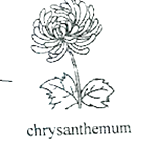
The Double Ninth Festival, also named the “Chong Yang Festival”, is celebrated on the ninth day of the ninth month of the Chinese lunar calendar.
The festival began as early as the Warring States Period (475-221 BC). In ancient time, numbers were mysterious and were divided into yin and yang. Yin means something of darkness and yang means life and brightness. The number nine is regarded as yang. The ninth day of the ninth month is a double yang day, so it is called “Chong Yang Festival”. (Chong means “repeat” in Chinese)
People always climb mountains and drink chrysanthemum wine on the Double Ninth Festival. It is hard to say when the customs were created. But there are many stories which are closely related. As recorded in a historical book of the sixth century, in ancient times, there lived a man named Huang Jing. He was learning the magic arts from Fei Changfang. One day, they were climbing a mountain. Fei Changfang suddenly stopped and looked very upset. He said to Huang Jing, “On the ninth day of the ninth lunar month, a big trouble will come to your hometown”. You must go home immediately. Remember to make a red bag for each one of your family members and leave home quickly and climb to the top of a mountain. Most importantly, you must all drink some chrysanthemum wine. Only by doing so can your family members avoid the big trouble.
On hearing this, Huang Jing rushed home and asked his family to do exactly as his teacher said. The whole family climbed a nearby mountain and did not return until the evening. When they got back home, they found all their animals dead, including chickens, sheep, dogs and so on.
Since then, climbing a mountain and drinking chrysanthemum wine became the traditional activities of the Double Ninth Festival, to avoid evil spirits and bad luck. Nowadays, the Double Ninth Festival is also a time for family get-togethers to do some exercise as well as enjoy the autumn scenery.
-
(1) The Double Ninth Festival began around ______.A . 475-221 BC B . 435-231 BC C . 337-221 BC D . 245-213 BC
-
(2) People usually climb mountains and ______ on the festival.A . cook meals B . feed the animals C . drink chrysanthemum wine D . learn magic art
-
(3) Fei Changfang is ______.A . Huang Jing's cousin B . Huang Jing's teacher C . Huang Jing's friend D . Huang Jing's neighbor
-
(4) Nowadays the Double Ninth Festival is also a time to ______.A . make dumplings B . buy some wine C . wear new clothes D . do some exercise
In Europe, small cars have always been more popular than large cars. In the United States, large cars and midsize cars are more popular than smaller cars. As a result, European automakers used to make different kinds of small cars while American automakers used to build bigger, heavier cars. However, these days, automakers in both America and Europe produce cars of different sizes. This is because most automakers export their cars all over the world.
The price of gasoline (汽油)is one reason for differences in car choices. Since gasoline is more expensive in Europe, many Europeans want smaller, lighter cars that will travel a long way on a gallon(加仑)of gasoline.
Other reasons also enter into the big or little car decision. Many European cities have narrow, winding(弯曲的) streets. In these cities a small car is easier to control than a large one.
For a long time, few Americans bought small cars. Instead they chose large cars, because these roomy cars were more comfortable for large families and long trips. Some people also liked the powerful engines(发动机) that large cars had. Since gasoline was cheap, drivers did not mind that the large cars used a lot of gasoline.
But in the 1970s, there were gasoline shortages in the United States. The price of gasoline went up. Though large cars were still more popular than smaller cars, sales of small cars increased. Some people also bought small cars because these cars caused less air pollution than larger cars.
Today, Americans' car preferences are still changing. Though Americans are still buying many small cars, the fastest growing sales are for certain kinds of large cars. These types of cars are called minivans and sport utility vehicles(SUV). They are very popular today. But of course, that could change tomorrow.
-
(1) In the 1970s, .A . large cars were less popular than smaller cars. B . European cars finally came to the United States. C . the price of gasoline went up in the United States. D . people in the United States stopped buying small cars.
-
(2) Which of the following does the article lead you to believe?A . Sport utility vehicles small cars. B . Minivans are becoming less popular. C . European car companies sell many cars in America. D . Cars with powerful engines caused less air pollution.
-
(3) What does “roomy” in Paragraph 4 mean?A . having much space B . having little space C . having a large room D . having a small room
-
(4) What can we infer(推断)from the article?A . Small cars are better than large cars. B . The price of gasoline is always rising. C . Large cars will always be popular in the United States. D . People like to have different kinds of cars to choose from.
American people like to say “Thank you” when others help them or say something kind of them. People of many countries do so, too. It is a very good habit.
You should say “Thank you” when someone passes you the salt on the table, when someone walking ahead of you keeps the door open for you, when someone says you have done your work well, or you have bought a nice thing, or your city is very beautiful. “Thank you” is used not only between friends, but also between parents and children, brothers and sisters.
“Excuse me” is anther short sentence they use. When you hear someone stay behind you, you know that someone wants to walk to past you without touching you. It's not polite to break others when they are talking. If you want to speak to one of them, say “Excuse me” first, and then begin to talking. You should also do so when you begin to cough or make any noise before others.
-
(1) You should say “Thank you” when .A . you say something kind to others B . you help others C . someone helps you D . you need others to help you
-
(2) From the passage we know “Excuse me” if you want toA . cough B . make some noise C . go first D . all above
-
(3) This passage mainly tells us the way .A . to be happy B . to be polite C . to help others D . to learn from Americans

When you speak to foreigners, what will you do if you can't understand their languages? Will you use your body language to help you, or just say sorry to them and then go away? Learning spoken language is very important, but learning local gestures(手势) is also very necessary.
I often use gestures to communicate with someone whose language I don't know. We use our hands to talk with each other. Although we don't understand the others' words, our hand movements make our conversation more necessary.
However, gestures aren't always clear. Different gestures may have different meanings in different countries and cultures.
In many countries, people move their hands at someone to call him to come near. In the United States, people usually move hands at somebody with their palms(手掌) up and sometimes move just one finger. But in many countries in Asia, hand movements like that would be impolite. In Asia, many people move hands at someone with their palms down using all fingers.
Do you use your thumb, your thick short finger to make gestures? In western countries, "thumbs-up" means agreement. But it is very rude in parts of Africa.
If you want to say "OK" in America, you can make a circle with the thumb and the second finger. But in France, it means "zero", and it is very rude in many other countries.
You can use your second finger to point at something but not at somebody in the United States. However, in some parts of Europe, Asia and Africa, pointing at anything with one's second finger is not polite.
"V" form is often used when people take photos. But using two fingers to make up the "V" shape means "peace" in the West.
The last example is that people in parts of Asia point to their noses to mean themselves, but people in western countries usually point to their chests.
Gestures are important, but also have different meanings.
-
(1) It's OK in to call someone to come near by moving just one finger.A . America B . Asia C . Africa D . Europe
-
(2) According to the passage, we can learn that .A . pointing one finger at someone in the United States is sometimes allowed B . using "thumbs-up" as your body language is very rude in parts of Africa C . making a circle with the thumb and the next finger means"0"in America D . using two fingers to make up the "V" shape means "success" in the West
-
(3) There are examples of different gestures in the passage.A . five B . six C . seven D . eight
-
(4) The best title of this passage can be .A . Work Hard to Learn Different Cultures around the World B . Talk to Other People with Spoken Language Successfully C . DifferentGestures Are Difficult to Understand and Learn D . Make Sure Your Gestures Are Saying What You Want to Say
Today there are policemen everywhere, but in 1700, London had no policemen at all. A few old men used to protect the city streets at night and they were not paid.
About 300 years ago, London was starting to get bigger and more and more people began to live there. The city was very dirty and many people were poor. There were so many thieves who stole money in the streets that people stayed in their houses as much as possible.
In 1749, Henry Fielding started to pay a group of people for stopping thieves. They were like policemen and were called "Bow Street Runners" because they worked near Bow Street.
Fifty years later, there were about 120"Bow Street Runners", but London had become very big and needed more policemen. So in 1829, the first Metropolitan (or London) Police Service was started with about 3, 000 officers. Most of the men worked on foot, but a few rode horses.
Today, London police are quite well—paid and for the few police officers who still ride horses, the pay is even higher than for the others.
-
(1) In 1700, the men who protected the streets in London were paid _______.A . a few B . nothing C . a little D . a lot
-
(2) About 300 years ago, many people _______.A . wanted to leave London B . had big houses in London C . became policemen D . came to live in London
-
(3) People didn't leave their houses because _______.A . they had no money B . they were afraid of losing money C . the city was not clean D . they liked homes
-
(4) The "Bow Street Runners" _______.A . stopped people from stealing B . stole money C . paid people for stealing D . stopped people riding horses
When 4-year-old Prince George started his first day of school in September. Chinese language was on his curriculum(课程).
And he wasn't alone. It is reported that about 51 percent of the parents in the UK want their children to learn Chinese, as it's believed to be one of the most useful languages to know.
In the popularity of Chinese drove the UK government to start the Mandarin Excellence Programme in September last year. It aims to make at least 5.000 British state secondary school students be good at speaking Chinese by 2020.
Yet, the UK isn't the only country showing a growing interest in Chinese.
The language has become the second most spoken foreign language in the United States this year, after only Spanish, with over 2.1 million speakers.
Many US famous people such as Facebook founder Mark Zuckerberg and Malia Obama, former US president Barack Obama's daughter, study Chinese as a second language.
So far, 67 countries and regions have included Chinese in their national curriculum. So why are so many countries enthusiastic about learning Chinese?
One reason could be that as China continues to develop rapidly. Chinese is increasingly becoming a useful tool for people's personal and professional growth.
"I think everyone believes that Chinese will be the next great superpower…even if it's not a superpower like America. It's still very important." Aisling from Germany, who studied at the Renmin University of China, told Xinhua News Agency.
-
(1) Why did the UK start the Mandarin Excellence Programme?A . Because Chinese is popular in Britain. B . Because Prince George learns Chinese. C . Because students need to learn Chinese. D . Because kids are asked to learn Chinese.
-
(2) Which is the most popular foreign language in America?A . English. B . Chinese. C . German. D . Spanish.
-
(3) What does the underlined word "enthusiastic" mean?A . It means "be good at". B . It means "be afraid of". C . It means "be interested in". D . It means "be worried about".
-
(4) What's the reason that many countries included Chinese in their national curriculum?A . The UK government launched a programme. B . Mark and Malia have begun to learn Chinese. C . Over 2.1 million Americans can speak Chinese. D . China grows fast and Chinese becomes helpful.
People in different countries have different ways of doing things. Something that is polite in one country may be quite impolite in another. In Britain, you mustn't lift your bowl to your mouth when you are having some liquid (液体) food. But it's different in China. And in Japan you even needn't worry about making noises when you have it. It shows that you are enjoying it. But it is regarded as bad manners in Britain. If you are a visitor in Mongolia, what manners do they wish you to have? They wish you to give a loud "burp" (打嗝) after you finish eating. Burping shows that you like the food.
In Britain, you should try not to put your hands on the table when you're having a meal. In Mexico, however, guests are expected to keep their hands on the table during a meal. But in Arab countries you must be very careful with your hands. You mustn't eat with your left hand. Arabs consider it very bad manners to eat with left hands. So, what should you do if you are on a visit in another country? Well, just do in Rome as the Romans do. You can ask the native (本土的) people to help you or just watch carefully and follow them.
-
(1) According to the passage, making noises when you have liquid food isn't bad manners in ____.A . China B . Japan C . Britain D . Mongolia
-
(2) ____ is bad manners in Britain.A . Eating food without making noises B . Putting liquid food in the bowl C . Having soup directly with a bowl D . Keeping hands off the table
-
(3) From the passage, we can infer (推断) that _____.A . Mongolian people burp when they are eating B . Japanese people shouldn't make noises when eating noodles C . Chinese people never make noises at table D . few Arabs eat with left hands
-
(4) "Do in Rome as the Romans do" means "___".A . Do as the native people do B . Do as you do at home C . Ask the native people to do it D . Watch the native people doing it
-
(5) The passage mainly (主要) tells us ___.A . some table manners in Britain B . some different table manners C . different ways of having liquid food D . to have good manners
- 在下面一段文字横线处填入语句,衔接最恰当的一项是( )遥远的箕山,渐渐化成了一幢巨影,遮断了我的视线。______
- 日常生活中所用的自来水管,你认为选用哪种管子既经济又耐用 ( ) A、普通钢管B、塑料管C、不锈钢管D、镀锌管
- 下列函数在上是增函数的是( ) A.y=sinx B. y=cosx C.y=s
- 完形填空One Friday night, a poor young man stood at the train st
- (10分)如图,在底面边长为1,侧棱长为2的正四棱柱中,P是侧棱上的一点,. (1)试确定m,使直线AP与平面BDD1B
- 甲乙丙丁四幅图分别是我国东部季风区南北方四个平原地区的气温年变化曲线和各月降水柱状图,据图回答。 (1)四图中,农作物能
- 2012年12月4日,中共中央政治局审议通过关于改进工作作风、密切联系群众的八项规定。规定要求中央政治局全体同志要向群众
- 阅读下面的文言文,完成后面题。(共12分,每小题3分) 赵韩王普①为相。太祖即位之初,数出微行,或过功臣之家,不可测。一
- He knows a lot about films. No one in our class can ___
- 已建立化学平衡的某可逆反应,当改变条件使化学平衡向正反应方向移动时,下列有关叙述中正确的是①生成物的质量分数一定增加
- The factory produces half a million pairs of shoes every yea
- 电影《英雄》中刺客无名对秦王说“剑字有18种写法,互不相同”,秦王说“统一以后这些杂七杂八的文字一律废掉,只留下一种写法
- 在四棱锥P-ABCD中,PA⊥平面ABCD,AD∥BC,BC=2AD=4,AB=CD=. (Ⅰ) 证明:BD⊥平面PAC
- 火车轨道在转弯处外轨高于内轨,此高度差由转弯半径与火车速度确定。若在某转弯处规定行驶速度为v,则下列说法中正确的是
- 已知向量且,则 ( ) A. B.﹣ C.
- 某校高三1班学生就实现人生价值问题开展研究活性学习活动,在活动中他们收集到如下材料并进行讨论: 材料一:中央电视台“感动
- 中国古代早期政治制度的特点是 A.实行内外服联盟B.实行内服和外服制度 C.以宗法制为核心,带有浓厚的部族色彩D.实行分
- 1854年 ,英国外交大臣致函英国驻华公使说:“为了适应外商对农业产品已增加了的需要,……新的贸易市场尚待进行。”185
- 目前核电站利用的核反应是()A.裂变,核燃料为铀 B.聚变,核燃烧为铀C.裂变,核燃烧为氘
- 下列关于中国近代民族工业发展的叙述,错误的是 A.民族工业的发展受到封建主义的阻碍 B.从行业上看,主要集中在轻工业


