政治经济文化类 知识点题库
What is the hottest English word these years? “Selfie" may be one of them. It was even named Word of the Year by Oxford Dictionaries in 2013. The word was first used in an Australian online forum in 2002. Now, almost everybody knows it.
Selfie is a photo that one takes of oneself. People usually take selfies with a smart phone and send them to a social media website. Nowadays, more and more people are taking selfies. From your best friend to your favorite pop star, selfies are taking over Renren and Sina Weibo.
What makes people love selfies? Selfies can help to remember what's going on in their personal life. "Almost every day, I take a photo of myself at school, and save it in my Qzone. These photos record my happy and sad moments." said Huang Xu, 16, from Hunan. Another usual reason for taking a selfie is to share online. They hope to make friends and share their feelings with others. "During summer vacation, my classmates and I shared many selfies online. Through these photos, we got to know each other's holidays and feelings," said Wang Lin, 15, from Henan. "I'm too shy to ask someone to take pictures of me, but it's easier to do it by myself."
Although taking selfies is popular among young people around the world, they should be careful at the places where they take selfies. People are warned(警告)not to take light-hearted selfies in serious places, such as in some traffic accidents. In order to protect art works, selfie is banned in some museums and galleries, too.
-
(1) The word "selfie" has a history of about .A . 2 years B . 13 years C . 15 years D . 20 years
-
(2) Which could be the best picture to match(搭配)"selfie" ?A .
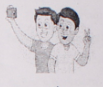 B .
B .  C .
C .  D .
D . 
-
(3) In Paragraph 3, the writer mentioned (提到) 2 young people to .A . talk about their school lives B . introduce the development of selfie C . help people take a clear and beautiful selfie D . explain the different reasons why people love selfies
-
(4) The underlined word "banned" means .A . not visited B . not stopped C . not allowed D . not watched
-
(5) We probably see the passage in a (an) .A . science book B . magazine for teenager C . instruction book D . English dictionary
The Dragon Boat Festival also called the Duan Wu Festival, is celebrated on the fifth day of the fifth month according to the Chinese calendar. For thousands of years, the festival has been marked by eating Zong Zi and racing dragon boats. To hold the dragon boat races is in memory of Qu Yuan, one of the greatest poets (诗人) in China.
Qu Yuan was born in Zigui of Hubei Province over 2,200 years ago. Qu Yuan was an honest minister(大臣) of the State of Chu, during the Warring States Period (475-221 BC) (战国时期). He was upright(正直的)and wise. He wanted to bring his country peace and make the State stronger, but the country was in the hands of bad officials, he failed. At last, he was very discouraged. He ended his life by throwing himself into the Miluo River. It was said that people were trying to save him. But it was too late. Also, they were very sad and they threw rice into the water to feed Qu Yuan's spirit.
Now we read his poem Li Sao which was filled with deep love for his country. We can see the dragon boat races and have a kind of Chinese food named Zong Zi to eat during the Dragon Boat Festival.
-
(1) When is the Dragon Boat Festival?
-
(2) Where was Qu Yuan born?
-
(3) What was Qu Yuan like?
-
(4) Did the people try to save him?
-
(5) What do we eat during the Dragon Boat Festival?
The word“day” has two meanings. When we talk about the number of days in a year, we are using “day” to mean 24 hours. But when we talk about day and night, we are using“day” to mean the time between sunrise and sunset. Since the earth looks like a ball, the sun can shine on only half of it at a time. Always one half of the earth is having day and the other half night. A place is moved from day into night and from night into day over and over by the spinning(旋转)of the earth. At the equator(赤道)day and night are sometimes the same length(长度). They are each twelve hours long. The sun rises at 6 o'clock in the morning and sets at 6 o'clock in the evening. For six months the North Pole is tilted(倾斜)toward the sun. In those months the Northern Hemisphere(半球)gets more hours of sunlight than the Southern Hemisphere. Days are longer than nights. South of the equator nights are longer than days. For the other six months the North Pole is tilted away from the sun. Then the Southern Hemisphere gets more sunlight. Days are longer than nights. North of the equator nights are longer than days. Winter is the season of long nights. Summer is the season of long days.
-
(1) When the Western Hemisphere is having day, the Eastern Hemisphere is having ________.A . both day and night B . day C . neither day nor night D . night
-
(2) A place is moved from day into night and from night into day over and over by ________ of the earth.A . the pushing B . the pulling C . the spinning D . the passing
-
(3) At the equator day is as long as night ________.A . sometimes B . never C . usually D . always
-
(4) When the North Pole is tilted toward the sun, the Northern Hemisphere gets ________ sunlight.A . less B . more C . all D . no
-
(5) When it is winter in China, ________.A . the USA is tilted toward the sun B . the South Pole is tilted away from the sun C . the North Pole is tilted toward the sun D . the North Pole is tilted away from the sun
A yellow room makes us feel more cheerful and comfortable than a dark green one, and a red dress brings warmth and cheer to the saddest winter day. On the other hand, black is depressing(压抑的). Light and bright colours make people not only happier but also more active. It is a fact that factory workers work better, harder, and have fewer accidents when their machines are painted orange rather than black or dark grey .
Remember, then, that if you feel low, you can always brighten your day or your life with a new shirt or a few colourful things. Remember also that you will know your friends and your enemies better when you find out what colours they like and dislike. And don’t forget that anyone can guess a lot about your character when you choose a piece of handkerchief or a lampshade(灯罩).
-
(1) According to this passage, ________.A . one can choose his colour preference B . one is born with his colour preference C . one's colour preference is changeable D . one has to choose his favourite colour as he can see clearly
-
(2) If one enjoys life, one is sure to prefer________.A . red to yellow B . blue to orange C . red to grey D . blue to yellow
-
(3) The main idea of this passage is ________.A . one's color preference show one's character B . you can brighten your life with wonderful colours C . psychologists have been studying the meaning of colour preference D . one's color preference has something to do with his character and colours have effects on human beings
-
(4) The writer believes that in realizing the four modernizations(四个现代化) of our country, we need more people who love ________.A . yellow B . red C . green D . black
-
(5) “I’m feeling black.” means “________ ”.A . I am feeling well. B . I am very happy. C . I am excited. D . I am depressed
Escaping a fire is a serious matter. Knowing what to do during a fire can save yourself. It is important to know the ways you can use and to show them to everyone in the family, such as stairways (楼梯) and fire escapes, but not lifts.
From the lower floors of the buildings, escaping through windows is possible, learn the best way of leaving through windows with the least chance of serious injury (伤害).
The second floor window is usually not very high from the ground. An average person, hanging by the finger-tips (手指尖) will have a drop of about six feet to the ground. It is about the height of an average man. Of course, it is safer to jump a short way than to stay in a burning building.
Windows are also useful when you are waiting for help. Be sure to keep the door closed. Or smoke and fire may be drawn into the room. Keep your head low at the window to be sure you get fresh air rather than smoke that may have leaked (泄露) into the room.
On a second or third floor, the best windows for escape are those which open onto a roof (屋顶). From the roof a person can drop to the ground more safely. Dropping onto cement (水泥) might end in injury. Bushes and grass can help to break a fall
-
(1) It is important to _____________________.A . know the ways to escape a fire B . put out a fire in a burning house C . jump out of a burning house D . keep the door closed
-
(2) It is possible to escape through the windows _______________________.A . if you are strong enough B . if there are some bushes on the ground C . if you live on a lower floor D . if you have a long rope
-
(3) Which of the following ways of escaping is NOT right?A . You can escape through stairways. B . Use a lift to come down at once. C . Escape through the windows which open onto a roof. D . You can choose fire escapes.
-
(4) Keep your head low at the window so that _________ if the building is on fire.A . you can get fresh air B . you can call for help C . you can easily jump off D . you can be seen first
-
(5) The best title for the passage is _____________.A . Escaping through the Windows B . Save Yourself from A Burning House C . Knowledge on Fire D . Waiting for Help
The Maya believed in many gods, including rain gods, sun gods, and corn gods. The people built large temples to honor the Mayan gods. Skillful workers built cities around these temples. It was difficult for them to build these cities, because they had no horses to carry the heavy stone they used to build with. Workers had to carry all of the building materials themselves. Today, many of these ancient Mayan cities and temples are still standing.
Although the cities that the Maya built were beautiful, and the people worked hard to build them, very few of the people lived in them. Usually, only the priests(牧师)lived in the cities.
The other people lived in small villages in the forests. Their houses were much simpler than the elaborate buildings in the cities. They lived in small huts(小屋)with no windows. The walls were made of poles covered with dried mud, and the roof was made of grass or leaves. Most Maya lived a simple life close to nature.
The Mayan priests studied the Sun, the Moon, stars, and planets. They made a calendar from what they learned. The year was divided into 18 months of 20 days each with five days left over. The Mayan calendar was far more exact than the European calendars of the time.
Around the year 800, the Maya left their villages and beautiful cities, never to return. No one knows why this happened. They may have died from some disease. They may have left because the soil could no longer grow crops. Archaeologists(考古学家)are still trying to find the lost secrets of the Maya.
-
(1) What does the underlined word “elaborate’’ mean?A . easily built B . carefully made C . slowly fixed D . quickly designed
-
(2) From the passage we can infer(推理)that .A . most Maya lived in beautiful cities B . many Mayan cities and temples are still standing C . the Maya were intelligent and culturally rich people D . the Mayan calendar was the same as European calendars
-
(3) Why it is said that the Mayan people lived a better life than most people of that time?A . They had better building skills and housing conditions. B . They believed in many gods, and honored the Mayan gods. C . They had knowledge about tools and faming. D . They studied about nature and the world around them.
-
(4) What can be the best title for this article?A . Mayan Gods B . Mayan Buildings C . Productive Maya D . Mysterious(神秘的)Maya
-
(1) Why do so many people think it is admirable to be an actor?A . They think actors are fashionable. B . They think actors are rich. C . They think their clothes are beautiful. D . All of the above.(以上都是)
-
(2) The author(作者) thinks actors' life is ________.
A . fashionable B . exciting C . tiring and hard D . good -
(3) The actors find it difficult to sleep well or relax because________.A . they don't like sleeping. B . they are too hungry to sleep well C . they sleep in clod rooms D . their job is too busy
-
(4) Which is NOT true?A . Sometimes, the life of actors is not so exciting. B . Actors often have nothing to eat. C . Actors often work late at night. D . Many people think it is good to be an actor.
-
(5) What's the topic(主题) of this passage?
A . An actor's life is exciting. B . How can actors make much money? C . The life of actors. D . What does an actor eat and wear every day?
Many people say when they eat out, they usually order a lot of dishes and they can't eat them up. One person in Chengdu, Sichuan Province says he takes away the leftovers. "Usually we'll have some leftovers after meals, because when I invite friends to eat out, I don't know how much they can eat, so I order lots of dishes to make sure everybody has enough food."
While another person in Fuzhou, Fujian Province says she never packs what is left on the dining table. "What I usually experience during eating out is a big meal. I seldom take away the leftovers because we often have other activities after the meals, and it's not convenient to take the leftovers. And when no one suggests taking away leftovers, I won't do so."
Some people say they only take away leftovers when they eat out with family, but not if they eat with friends or colleagues (同事).
Food waste means washing money as well as wasting precious resources (宝贵资源). When food is thrown away, it becomes rubbish and can be harmful to the environment.
We should realize how important it is to save food. It's wise to order proper food for our meals. If there're leftovers, it's better to take home. To save food, we should start with ourselves and start from now.
-
(1) _________food is wasted in the restaurants of our country every day.A . Little B . Many C . Few D . Much
-
(2) The underlined word "leftovers" means________ in Chinese.A . 残留物 B . 离开 C . 剩菜 D . 垃圾
-
(3) Which of the following is not mentioned?A . They wan to give the leftovers to the servers B . The person never packs what is left on the dining table C . The leftovers can be harm to the environment D . Some people only take away leftovers when they eat out with family
-
(4) From the passage, it's necessary for us to________ when we eat out.A . pack our favorite food B . invite our friend for dinner C . throw the leftovers away D . order proper food for our meal and finish all on our plates
-
(5) The best tile of this passage is__________A . Washing Money B . Saving Food C . Throwing Away Leftovers D . Saving Money
Some people love going to museums,while others absolutely hate it and would rather stay at home,enjoying their favorite TV shows.Increasingly,museums are being seen as outdated and boring by today's youngsters.I have just returned to the UK after travelling around the USA. While there,I visited lots of museums I must say,museums are typically educational, either to develop knowledge gained at school in particular subjects,or to enhance knowledge of other cultures
In Chicago,we visited the world-famous Art Institute of Chicago.It was filled with paintings,drawings and sculptures by a huge variety of artists,such as Picasso,Monet,Matisse and Dali.
There was a mixture of traditional and modern art,including colorful stained glass windows and abstract art.
When we were in Washington D. C. ,we visited a few of the Smithsonian museums.These are all free to visit-which is great if you just want to see a few things,and not spend all day inside.
The Air and Space Museum was particularly good:it had lots of aircrafts and rockets on display,interesting information and also some interactive parts.We also went to the National U.S.Holocaust(纳粹大屠杀)Memorial Museum.Naturally,it was sad to read about the horrors of this tragedy which affected so many people in World War II.However,it was also incredibly interesting to read the stories of those who survived the Holocaust,as well as those who helped others.
Last but not least,I also found the 9/11 Memorial and Museum to be of great interest.This museum is dedicated to those who lost their lives,as well as their families,when the Twin Towers in New York City were attacked by terrorists in 2001It tells you how the terrorists planned the attack,how they hijacked the planes,and ultimately what happened as a result of their actions.Surviving pieces of the towers are shown in the museum,alongside damaged fire engines.It was a truly thought-provoking visit,which made me value my own life that little bit more.
I think museums play an important role in preserving artifacts of historical importance for future generations.Whatever your interests,there is likely to be a museum for you.You can visit waxwork museums to see models of your favorite celebrities(and get photos with the Queen!),science museums for a more hands-on,interactive visit and so much more!Best of all,if you're ever in the UK,many of them are free!
-
(1) The first paragraph tells us that______________.A . people of all ages love going to museums B . trips to museums are always very tiring C . most museums in the USA are outdated D . some youngsters find museums boring
-
(2) Which of the following is TRUE according to the passage?A . There are a lot of interactive parts in waxwork museums. B . Art Institute of Chicago has a mixture of traditional and modern art. C . You'd better read the stories before visiting the holocaust Memorial Museum. D . The Air and Space Museum shows the attack 01 the twin towers by terrorists.
-
(3) What can we infer from the passage?A . Future generations have the duty to protect museums. B . Visiting 9/11 Memorial and Museum is educational. C . Most museums around the world are free for students. D . Taking photos is allowed in the Smithsonian museums.
-
(4) What is the writer's attitude towards museums?A . She suggests going to museums. B . She warns the problems of museums. C . Museums have advantages and downsides. D . Museums should be open to all kinds of people.
Basketball stars become hip-hop singers. It's true. In NBA, hip-hop music is very popular. Many of the players, like Shaquille O'Neal of the Los Angeles Lakers, write rap(说唱) words when they travel on planes from one city to another. Some of them even have rap radio shows and others perform(表演) in music video.
When some of the younger stars play basketball, they even try to look like hip-hop singers. “Hip-hop is just part of their culture,” says one player. “All of us grew up listening to rap and playing basketball, and rappers grew up doing the same thing.”
Master P. is a famous rap star who wants to become a basketball player. Two NBA teams have invited him to join them. They enjoy listening to his music. An NBA player has become a rapper. He has made four successful rap albums(专辑).
NBA has a closer connection to hip-hop than any other sports league.
-
(1) Many basketball players in NBA like .A . hip-hop music B . country music C . American singers
-
(2) Many NBA players rap words when they travel on planes from one city to another.A . learn B . write C . sing
-
(3) is just part of the NBA players' culture.A . Music B . Rapper C . Hip-hop
-
(4) The NBA teams invited Master P. to join them just because .A . they like listening to his music B . his dancing was popular C . they like his face and hair
-
(5) Which of the following is NOT right?A . Many NBA players have become hip-hop rappers. B . A rapper wants to become an NBA basketball player. C . Players in NBA don't like hip-hop music at all.
There are about 7,000,000 people in London. London is one of the big cities in the world. London is famous for many things. People from all over the world come to see the famous buildings. There is a famous clock called Big Ben, too.
Like many big cities, the traffic is very busy in London. When the work hours begin, over 1,000,000 people use the London underground(地铁), but there are still too many buses and cars on the streets. The air isn't clean.
For me, the best things about London are the parks. There are five in the middle of the city. But my children's favorite is playing in Hamleys, the biggest toy(玩具) shop in the world.
-
(1) What do people from the world come to London to see?A . The parks. B . The people. C . The famous buildings. D . The animals.
-
(2) What is Big Ben in London?A . The biggest toy shop. B . A famous clock. C . The park of the city. D . A school.
-
(3) What is the Chinese for "traffic" in the passage?A . 工作 B . 交通 C . 商业 D . 医院
-
(4) When the work hours begins, many people ________.A . walk to the offices under the ground B . take the underground trains to work C . use the buses called London underground D . take the plane to work
-
(5) What is the writer's children's favorite in London?A . The toy shop. B . The famous buildings. C . The parks. D . The Big Ben.
C
The most famous food in Korca is kimchi(泡 菜). It is the food they eat every day. Also, there are about 190 kinds of kimchi. There are different kinds is of kimchi for different seasons of the year. For example, in spring, watery kimchi, which is called mool kimchi, and Chinese cabbage are popular. In summer, young radish(萝卜) kimchi which is called chong kaik kimchi and cucumber(黄瓜)kimchi are common.
Korea is a small country. There are not enough fields to grow vegetables. In winter, it often snows and it is very cold. In the old days, people there found pepper was very good for them. They also found salty water could help them keep cabbage longer, so they mixed pepper, salt and cabbage together. They named it kimchi.
Today, lots of things are added to kimchi, such as fish, letuce, pears, apples and other ingredients. Some scientists say kimchi is very good for health, but others don't agree. What do you think of it?
-
(1) What do Korean people make in spring?A . Mool kimchi. B . Chong kak kimchi. C . Cucumber kimchi D . Fruit kimchi.
-
(2) Why did people inKorea make kimchi in the old days?A . Because people there didn't grow vegetables. B . Because there was too much pepper C . Because there were not enough vegetables D . Because eating kimchi made them warm.
-
(3) What 's the second paragraph(段)mainly about?A . Kimchi's ingredients. B . Different kinds of kimchi. C . Korean people and kimchi. D . The history of kimchi.
-
(4) ________ is not mentioned (被提到)about the ingredients of making kimchi.A . Cabbage B . Yogurt C . Fish D . Lettuce
-
(5) Which of the following is NOT true?A . People in Korea eat kimchi every day B . Chong kak kimchi is made of radishes. C . Scientists have the same ideas about kimchi D . There are different kinds of kimchi in different seasons of the year.
Vienna (维也纳) is a beautiful old city on the river Danube. It's the centre of European (欧洲的) classical music. From 1750 a lot of composers and musicians came to study and work in Vienna. The most famous family of musicians was the Strauss family.
There were two composers called Johann Strauss: a father and a son. The father, Johann Strauss the elder, wrote and played music for a classical dance—a waltz(华尔兹). His waltzes made him famous all over Europe.
The son, Johann Strauss the younger, was even more successful and popular than his father. His most famous waltz was The Blue Danube. He wrote it in 1867. Strauss and Mozart were two of the most important composers.
Mozart was born in Austria in 1756. Before he was six he played not only the piano, but also the violin. He wrote his first opera (歌剧) at the age of 12 and hundreds of beautiful pieces of classical music. But he died in 1791 when he was only 35. Some people say he was the greatest European composer.
-
(1) Vienna is the centre of European ________.A . classical music B . folk music C . country music D . rock music
-
(2) His _______ made Johann Strauss the elder famous all over Europe.A . opera B . writing C . waltzes D . dance
-
(3) ________ wrote the Blue Danube.A . Johann Strauss the younger B . Johann Strauss the elder C . Mozart D . Beethoven
-
(4) Mozart wrote his first opera ________.A . in 1750 B . in 1756 C . in 1768 D . in 1791
-
(5) The best title for the passage is ________.A . Strauss Family B . Father and Son C . Famous Singers D . Great Composers
Gift-giving is different from culture to culture and person to person.
When people give gifts, sometimes color is important. For example, for many Chinese people around the world, red is a lucky color, and people often like to wrap gifts in red. However, do you know that in South Korea, red is a color of death? That is why you should not wrap your gifts in this color if you are giving a gift to a person there.
What about Western countries? In Western countries, the color of wrapping paper is not really important. But color does matter when giving flowers, especially roses. You should not give red roses to a Western person you don't know very well because they are a symbol of love. You could give yellow roses instead, as these are a symbol of friendship. You could also send pink roses as gifts to say thank you.
What other things should you remember when giving gifts to someone from a different culture? Well, one thing you should keep in mind is the person's religion (宗教). When choosing a gift for a Muslim (穆斯林的) or Jewish (犹太教的) friend, you should never get food including pork, or things made from pigskin. Another thing that you should not get for a Muslim person is alcohol (酒).
-
(1) In which country do people think red is the color of death?A . Japan. B . The US. C . South Korea. D . The UK.
-
(2) How can we show our friendship to Western friends?A . By giving them yellow roses. B . By giving them red roses. C . By giving them some food. D . By giving them products made from pork.
-
(3) How many colors are mentioned in this passage?A . Two. B . Three. C . Four. D . Five.
-
(4) Which of the following is TRUE?A . In China, people often like to wrap gifts in pink color. B . In Western countries, people care about the color of wrapping paper. C . We cannot give a Muslim friend a bottle of alcohol as a gift. D . We can give a Jewish friend some pork as a gift.
-
(5) What's the main idea of this passage?A . Gift-giving is connected with cultural differences. B . When people give gifts, color is important. C . How to choose gifts for different people. D . How to send gifts to others.
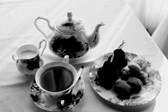
In many English homes, people eat breakfast, lunch, afternoon tea and dinner a day. People have breakfast at any time between seven and nine in the morning. They eat porridge, eggs, or bread. Also they drink tea or coffee at breakfast.
Lunch comes at one o'clock. The English people like take-away food. The most popular(最受欢迎的) food is fish and chips. They usually go to a fish and chip shop. They put the food in paper bags, and take it home, or to their work places. Some people eat take-away food in the park.
Afternoon tea is about 4:30 in the afternoon. People usually drink tea with milk. And dinner is at about half past seven and it is usually a big meal. First they have soup, and then they have meat or fish with vegetables. After that they eat some other things, like bananas, apples or oranges. But not all English people eat like that. Some of them have their dinner in the middle of the day. People often eat dinner at a restaurant or at homes, and they think all these meals are very necessary (必要的).
-
(1) Many English people have _____ meals a day.A . two B . three C . four D . Five
-
(2) English people's favorite take-away food is _____.A . bread and coffee B . fish and chips C . meat and fish D . tea and eggs
-
(3) The underlined (下划线) word "it" refers to (指代) _____.A . dinner B . lunch C . breakfast D . afternoon tea
-
(4) According to (根据) the passage, we know English people _____.A . drink milk for breakfast. B . eat afternoon tea at six. C . often eat fruits after dinner. D . eat lunch only at home.
-
(5) What's the main idea (主旨) of the passage?A . What is English people's favorite food? B . When do English people eat meals? C . Where do English people have meals? D . What do English people eat every day?
Most people in America like having the surprise party. It is very popular. They think it is very exciting to have surprise parties for their friends or family members. They often plan a surprise party for a special event like someone's birthday. If you want to know what a surprise party is like, please look at the following example.
One Saturday night, Sam's wife asked him to go to the kitchen and bring her a glass of water. Sam walked to the kitchen. When he opened the door, he saw a "bear(熊)"standing in front of him! Sam was very scared and wanted to run away at once. Just then the "bear" took off his costume (服装). It was Sam's friend John! When he turned back, he saw some other people standing behind him. All of them said "Surprise! Happy birthday!" to him.
In fact, we can have many kinds of surprise parties. A successful surprise party always makes people feel surprised and excited. Would you like to plan a party like this for your friends or family members?
-
(1) How is the surprise party in America?A . Relaxing. B . Popular. C . Boring. D . Meaningless.
-
(2) When was Sam's birthday?A . On Saturday. B . On Sunday. C . On Friday. D . On Thursday.
-
(3) What does the underlined word "scared" mean in English?A . Sad. B . Surprised. C . Afraid. D . Available.
-
(4) Who stood in front of Sam that night in fact?A . A real bear. B . His mother. C . His wife. D . His friend.
-
(5) What's the passage mainly about?A . What a surprise party is like in America. B . Why Sam felt scared when he saw the bear. C . How to have a surprise party for others. D . How people feel about a surprise party.
Many scientists think that the earth is getting warmer and warmer. If the change continues, the natural world and human society will face danger. Scientists believe human activity is responsible for the climate change. We produce too many greenhouse gases. They keep heat in the air and make the earth warm.
Many of the world's governments agree. And they want to solve the problem. So from December 7 to 18, 2009, they held a conference in Copenhagen, Denmark to talk about global warming and climate change.
Representatives(代表) from 192 countries and regions went to the meeting. Although they have not reached an agreement, the Copenhagen Accord(《哥本哈根协议》) was an important beginning to save the earth. It was made by a small group of countries including China, the US, India, Brazil and South Africa. Some other countries at the conference also showed support.
What are the key points of the Copenhagen Accord? The accord limits global temperature increases to 20C by 2050 compared to pre-1850. Scientists think it could help the world to avoid serious climate change.
The accord also says that developed countries must promise to cut greenhouse gas emissions(排放) to the UN by January 31, 2010. The accord asks developed countries to give money to help developing countries.
Many countries and organizations are disappointed that the conference didn't reach a legal document(法律约定). And they think the accord is not clear enough about its goals.
African leaders are worried that the goal of a 20C global temperature increase isn't good enough, because it will mean a much higher increase in temperature across Africa. This could cause big problems like food and water shortages across the continent.
Still, UN Secretary General Ban Ki-Moon believes the conference was an "improvement".
-
(1) What do scientists believe is responsible for the climate change?A . Human activity B . Animals growing C . Plants growing D . Too many people
-
(2) What did members of the Copenhagen Meeting NOT talk about?A . Economic recovery(经济复苏) B . Global warming C . Climate change D . Cutting greenhouse gas emissions
-
(3) What's the attitude(态度)of African leaders towards the goal of a 20C global temperature increase?A . They are happy about it B . They don't care much about it C . They are worried about it D . They support it
-
(4) What does the underlined word "disappointed" mean?A . 忧虑 B . 失望 C . 害怕 D . 难过
-
(5) Which is true about the Copenhagen Accord?A . Developing countries must promise to cut greenhouse gas emissions. B . Both developing countries and developed countries should not produce any greenhouse gases. C . The EU agreed to give $3.6 billion to help developing countries. D . The Copenhagen Accord isn't a legal document, but it's an important beginning to save the earth.
Winter holiday is coming. It is relaxing and fun for you to enjoy a movie with family or friends. There are many movies you can choose from, such as Lion King (狮子王),Lady & Tramp (小姐与流氓) or Spies in Disguise (变身特工) . But I recommend (推荐) Frozen2 (冰雪奇缘2).
In the movie, Elsa and Anna come back. It is for 85 minutes. In Frozen 2, the two sisters want to know why Elsa can control (控制) ice and snow. They also want to know how their parents died. But they must go to a very dangerous place far away to get the answers. At last, the sisters start this trip with their friends Kristoff and Olaf.
Do you want to know if they can find the answers they are looking for? The movie was released (上映) on Nov. 22nd in China. Please go and watch it now.
-
(1) What is the name of the movie recommend in the passage?A . Frozen 2. B . Lion King. C . Lady & Tramp. D . Spies Disguise.
-
(2) Who does the underlined word "They" refer to in the 2th paragraph?A . Elsa and Anna B . Ice and snow C . Elsa and Olaf. D . Kristoff and Olaf.
-
(3) How long is the movie Frozen 2?A . About one hour. B . About two hours. C . About one and a half hours. D . About two and a half hours.
-
(4) Where can you probably find this passage?A . In a science book. B . In a dictionary. C . In a film magazine. D . In a health report.
Now it's time for us to learn words and their stories- our weekly program about common, everyday expressions in American English. Today we are talking about the word "leap" and its expressions.
February 29th is called "a leap day". And the entire 12-month period with a February 29th in it is called "a leap year". This year, 2020 is such a year. The somewhat unusual day of February 29th h comes up on the calendar only every four years. A year with a February 29th might be good news if you are paid by the day or the week. But it might be bad news if you were born on a February 29th. You have to wait three years in between birthdays!
As a verb, the word "leap" means to jump, or to move quickly. Leap can also be a noun, meaning a jump, or a sudden move. In a leap year, the dates jump over one day of the week. The reason for a leap day or a leap year is because our calendar does not follow the Earth's orbit around the sun exactly. Each year, we have a little time left over. So every four years, we put all that time together into an extra day. It is officially called an intercalary day. But I have never heard an English speaker use that term. "Leap day" is fine.
"Leap" is also an important word for two other common American expressions. One is a kind of warning. If you want someone to investigate a situation completely and consider the possible results carefully before taking actions, you might say, "Look before you leap"" The other expression is a phrase of hope. If you want someone to take actions, you may say "take a leap of faith", even if not everything about a situation is known. In other words, it asks the person to take courage and step into the unknown. Interestingly, the two phrases are completely reasonable to say to someone who is about to get married.
Thank you for your listening!
-
(1) The next leap year is ___________________.A . 2022 B . 2024 C . 2026 D . 2028
-
(2) Why is there a leap year?A . Because February 29th is officially called an intercalary day. B . Because the calendar doesn't follow that official term exactly. C . Because the extra time is put together into an extra day every year. D . Because the Earth doesn't orbit the sun in the exact amount of time.
-
(3) Which example is suitable for "look before you leap"?A . You are supposed to express congratulations to your friend on his prize. B . It is good to warn your friend about online shopping on November 114. C . You can encourage your friend before he enters his singing competition. D . It's considered to be OK to advise your friend to get on well with others.
-
(4) What is the passage written for?A . a vocabulary lesson B . a space program C . a science report D . an English calendar
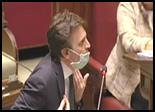
On Feb 26, when an Italian lawmaker went into the country's Lower Chamber with a mask to prevent the novel coronavirus (新冠病毒), he was questioned and criticized by others as they thought that wearing masks would cause unnecessary fear and panic. The articles from Western media carry headlines such as "No, you do not need face masks to prevent novel coronavirus." You might be surprised, as in China and other Asian countries, people have willingly put masks on during the outbreak.
In the West, people are taught to wear masks only when they get sick. They thought masks are seen as a tool to protect sick people and prevent the disease from spreading, so healthy people don't need to wear them. Therefore, during the novel coronavirus outbreak, overseas Chinese students said that they would be "looked at like a virus spreader" if they go out with a mask. According to a survey done by Global Times among some European and American people, wearing a mask in public can make them feel "worried" and "afraid of being looked at differently."
But as the number of COVID-19 cases continues to grow in the world, things start to change. In the US, for example, the need for masks is very high now. The US surgeon general has been asking people not to buy too many masks, as they are more needed in hospitals than the public.
In Japan, wearing masks has long been seen as a manner to comfort others when one catches a cold or flu. Some Japanese also turn masks into fashion, with different colors and patterns to match their clothes. Wearing masks is also a way to "hide" for young women when they don't have their makeup on.
In more cultures in Asia, wearing masks might also be a symbol of solidarity (团结) during the outbreak, according to Lynteris. People wear masks "to show that they want to stick together" in the face of danger.
-
(1) The underlined word "panic" in Paragraph 1 means .A . death B . danger C . illness D . worries
-
(2) Westerners refuse to wear masks because they .A . are afraid to look ugly with face masks B . don't think healthy people need masks C . hope to comfort other people in this way D . don't want others to know they are ill
-
(3) The example of the US in Paragraph 3 is to show .A . the cost of masks is high in the US B . different people have different choices C . Western people are changing their attitude D . wearing masks has become fashionable
-
(4) The passage mainly tells us .A . the ways COVID-19 is spreading B . the reasons why Westerners hate masks C . the symbol of solidarity in Asian countries D . the cultural differences in mask wearing
- 函数的单调递增区间是_____________________________
- 导数或瞬时变化率反映函数变化的什么特征?
- 某市某经济开发区去年总产值100亿元,计划两年后总产值达到144亿元,求平均年增长率.
- 一氯甲烷,也叫甲基氯,常温下是无色气体,密度为0.9159g/cm3,熔点为-97.73℃,沸点为-24.2℃,18℃时
- 一艘原来在地球圆周轨道上运行的飞船,若加速后能够与绕地球运动的另一个圆周轨道上的空间站对接,则飞船一定是( ) A
- 2015年底将在上海首飞的C919大型飞机采用了大量新型材料铝锂合金。下列关于铝锂合金的说法不正确的是( ) A
- 下列各句中,没有语病的一句是() A.中国画的发展,无论是技法变化上还是美学思想上,中国传统哲学都对它产生了重要的影响,
- 设函数f(x)=|3x-1|+x+2. (1)解不等式f(x)≤3; (2)若不等式f(x)>a的解集为R,求a的
- 中国的瓷器以其巧夺天工的工艺深受国内外人士的喜爱,中世纪以来,欧洲兴起了一股收藏中国瓷器的热潮。欧洲某收藏家有三个典型收
- 明月别枝惊鹊, 。
- 化学电池是一种将能转化为电能的装置。碱性锌锰干电池是生活中最常见的电池,供电时发生反应的化学方程式为 Zn+2MnO2+
- 阅读下面语段,回答22—28题。(请用0.5mm的黑色签字笔将答案写在答题卡指定位置上。共19分) 传递 ⑴夜色凄冷,阵
- (12分) 近五十年来,受气候环境等客观因素,人类不合理开发等主观因素的影响,我国每年由地震、旱涝、沙尘暴等自然灾害造成
- (2008年攀枝花市).欲将粗盐提纯并用所得精盐配制一定质量分数的氯化钠溶液。下列说法正确的是 ( )
- 向四个体积相同的密闭容器中分别充入一定量的SO2和O2,开始反应时,按正反应速率由大到小排 列顺序正确的是 甲:在
- 函数的单调减区间为( )
- 美国著名作家海明威曾提出文学创作的“冰山原则”,并努力实践这一原则,他的作品很少使用形容词、副词以及修饰性语言,避免代替
- ......
- 南水北调的东线、中线都可以到达的城市是( )A、北京 B、天津 C、烟台 D
- 对于英国国王、议会和内阁之间的关系,下列说法正确的是( ) A.内阁由议会产生,国王与内阁没有制约关系 B.内阁由


