社会现象类 知识点题库
In order to help young people use the Internet in a good way, a textbook on good Internet behavior has started to be used in some Shanghai middle schools this term. It uses real examples to teach students all about good ways of using the Internet. Some students also make online friends. But if you are meeting a friend offline, let your parents know.
Teachers and parents all think the book is a very good idea. It will teach students how to be a good person in the online world. It will be a guide for teens using the Internet and keep students away from bad sites.
-
(1) The underlined word “it” means_____?A . the book B . the report C . the Internet
-
(2) From the report, about____ students between 10—18 years old in the seven cities use the Internet often.A . 3,375 B . 1,280 C . 2,100
-
(3) What do most of the students do on the Internet?A . They get useful information to help in their studies. B . They play online games. C . They make online friends.
-
(4) Why do teachers and parents think the book is a good idea?A . Because it helps with the students'studies. B . Because it is used in Shanghai middle schools. C . Because it teaches students how to use the Internet in a good way.
-
(5) Which is the best title for the passage?A . The Internet is very useful. B . Students can’t use the Internet. C . Be careful when using the Internet.
Some people feel lonely because they may not have enough time to make friends. Not only the quiet, shy people may feel lonely. Some people are active and outgoing, but they are sometimes afraid to talk and make friends with others. They always try to hold other people away from them. They may seem to have lots of friends, but inside they are hurting.
Are you lonely? If your answer is "yes", you may need to work hard enough! Here are some tips to think about:
To be wanted and needed is a big answer to loneliness. Is there any way you can help other people? Try to do something helpful for others even if you are very busy. By helping other people, we find friends and lose loneliness.
Do you have an interest or hobby? Find a group of people with this interest and join them.
Live in the real world! The world on the Internet is not a real world and it is very different from the real life. The students asleep in class are mostly those who often surf the net through the night. As a result, they’ll get lost in the real world.
Don't wait for someone to phone, or write, or email you, you call them. And if they seem too busy, it doesn't mean you are not welcome. Try another time!
When you've done anything wrong to other people, don't be too proud to say sorry. You must do that even if you find it hard to open your mouth.
-
(1) The main topic of this passage is about ____________.A . happiness B . friends C . loneliness D . sickness
-
(2) According to the passage, some people feel lonely because ___________.A . they stay at home all day B . they have too many friends C . they have too much time to meet friends D . they don’t have enough time to make friends
-
(3) If you have done something wrong, you should ___________.A . say sorry to others B . do it again C . open your mouth D . leave at once
-
(4) If you don't want to be lonely, you should __________.
A . never help others B . find some people with the same interest and join them C . surf the net all the time D . wait for someone to call you
Other young volunteers go and work in the homes of people who are sick or old.They paint,clean up or repair their houses,do their shopping or mow(割;修剪)their lawns.For boys who no longer have fathers,there is an organization called Big Brothers.College students and other men take these boys to baseball games or fishing trip and help them get to know things that boys usually learn from their fathers.
Each city has a number of clubs where boys and girls can go to play games.Some of these clubs show films or organize short trips to the mountains or some places of interest.Most of these clubs use a lot of high school and college students as volunteers because they are young enough to know the problems and needs of young boys and girls.
Volunteers believe that some of the happiest people in the world are those who help to bring happiness to others.
根据短文内容,判断正(T)误(F)。
-
(1) In America,it takes most of high school and college students little time to be volunteers in hospitals,orphanages or rest homes.
-
(2) Some young volunteers can go and play in the homes of people who are sick or old.
-
(3) If a boy has no father,he can get to know things that boys usually learn from their fathers in an organization called Big Brothers.
-
(4) Most of the clubs don’t like to use the high school or college students as volunteers because they’re too young to remember anything.
-
(5) If you bring happiness to others,you will feel happy too.
I used to live in a small town with trees all around. It is about thirty years since I left my hometown. But I still remember what it was exactly like. And I often “see” it in many of my dreams. My hometown is a beautiful place. It stands beside a wide river and is rich in fish and rice.
But in the old days it was a poor and backward little town. Many people had no work. They lived a hard life. There was no tall building and the only street was narrow. But trees and flowers made the town beautiful. Just outside the town, there was a river. You could see different kinds of fish swimming in the clear water. People here lived a simple life.
Since a new policy(政策) was taken by the government, great changes have taken place there. The streets have been widened. Factories, schools, hospitals, cinemas and theatres have been built one after another. People's life is greatly improved. You can see tall buildings, big department stores and factories everywhere. Different kinds of cars and buses are running in the wide streets.
But with the development of the industry(工业), we have fewer trees. Air and water pollution is becoming more and more serious. And there are also other problems. We should try our best to make it richer. At the same time, we must do something to stop pollution and make our town even more beautiful.
-
(1) When did the writer leave his hometown?A . About ten years ago. B . About twenty years ago. C . About thirty years ago. D . About forty years ago.
-
(2) How was the writer's hometown in the old days?
A . poor but beautiful B . rich and beautiful C . poor but big D . rich and developed -
(3) What is outside the town?A . a lake B . a river C . a forest D . a grassland
-
(4) As for the changes of the town, which of the following is NOT TRUE according to the passage?A . The streets have been widened. B . More factories, schools, hospitals, cinemas and airports have been built. C . There are more and more cars and buses in the streets. D . Tall buildings, big department stores and factories have been built.
There are several ways you can find out about the countries and places you wish to visit. You can talk to friends who have traveled to the places, you can go and see a colour film about them, or you can read travel books.
It seems that there are three kinds of travel books. The first are those that give a personal, subjective(主观的) idea of travels which the writer has got himself. These books can be useful if the writers share their traveling experiences with others. The second kind are those books which give objective( 客观的) information of things to be done and seen. If a cultured person has written such a book about the facts of a place, then it is more useful. The third kind are those books which are called "a guide" to some place or other. If they are good, they will describe and explain the place in detail. Like the first kind, they can be interesting and exciting, but their main purpose is to help the reader plan his travel in the most practical way.
Whatever kind of travel book you choose, you must make sure that the book does not describe everything as interesting, exciting or fantastic. You must also keep an open eye on its date of publication(出版)because travel is a very practical matter and many things change quickly in the 21st century. Finally, you should make sure that it's easy to find the useful information for your travel.
-
(1) This passage was written to introduce________.A . travel maps B . travel books C . travel films D . travel places
-
(2) The writer of the first kind of travel books gave his ideas after he______.A . traveled B . read books C . watched films D . surfed the Internet
-
(3) The underlined phrase "a cultured person" means a person with ________.A . a good appearance B . a good education C . a lot of experience D . a lot of money
-
(4) The date of publication must be noticed becauseA . the prices of travel books may be different B . the writers of travel books may be different C . the information in travel books is always the same D . the information in travel books is always changing
-
(5) According to the passage, it is best to read ______before traveling to a place of interest.A . the first kind of travel books B . the second kind of travel books C . the third kind of travel books D . some travel articles in newspapers
It's not WASTE until it is WASTED! With the World Environment Day coming, our school is now requiring every student to form a habit of sorting the waste. Here in our schoolyard we lay four different colors of rubbish bins for different kinds of rubbish. The red is for harmful waste; the blue is for waste that can be recycled(循环再用); the green is for kitchen waste; the yellow is for other waste. 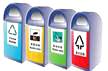 The followings are some instructions for you. Glass: Empty bottles without caps can be recycled to make new glass bottles. Warning: Mirrors and light bulbs must not be included in the glass waste. Paper: Newspapers, magazines, boxes must be clean enough to be recycled. Warning: Paper tissues and wallpaper are not recyclable as paper and should be kept separately.(分别地) PMD waste: Packaging made of Plastic or Metal and Drink boxes are used to make new packaging. Warning: Plastic pots (e.g. yoghurt pots), plastic bags must not be included with the PMD waste. Harmful waste: out-of-date drugs, used batteries(电池), paint and oil … Besides, if you don't need your old bikes at all, our school volunteers will collect them. We're going to fix them up and then give them away to kids who don't have enough money for a bike. To find out more about recycling, you can visit our school website. |
-
(1) According to the passage, the fish bones(骨) should be thrown in the _______ bin.A . red B . blue C . green D . yellow
-
(2) From the passage, we can see that _______ do harm to the environment.A . paper tissues B . empty bottles C . drink boxes D . out-of-date drugs
-
(3) Which of the following is true?A . All kinds of paper can be recycled. B . Used batteries should be thrown into the blue bins. C . There is information about recycling on the school website. D . Mirrors and light bulbs can be made into new glass bottles.
-
(4) If you give your old bike to the volunteers, it will be ________.A . sold to collect money for the poor kids B . given away immediately to the poor kids C . fixed up and given back to you for free D . fixed up and given away to the poor kids
-
(5) The main purpose of this passage is ________.A . to introduce waste sorting to the students B . to look for volunteers for waste sorting C . to introduce the World Environment Day D . to advertise glass, paper and plastic products
One morning, I was waiting at the bus stop, worried about 1 late for school. There were many people waiting in line at the bus stop, but most of them just stared (盯着) at their mobile phones, listening to music or going through the WeChat2 . No one talked or laughed.
3 the bus finally came, we all hurried on board. I got a place next to the window, so I had a good view of the sidewalk. A boy 4 a bike caught my attention. He 5 beside the bus while waving his arm. I heard a passenger behind me shouting to the 6 , but he 7 to stop until we reached the next stop. The bus drove fast, and the boy tried his best 8 up with it. It 9 that he was a little tired, but he still kept riding. And he was carrying 10 over his shoulder and shouting.
Finally, when we came to the next stop, to our surprise, the boy ran up to the 11 of the bus. I heard an exciting conversation. Then the driver stood up and asked, " 12 anyone lose a suitcase at the bus stop?" A woman on the bus shouted, "Oh, dear! It's mine." She pushed her way to the driver and took the suitcase 13 . Everyone on the bus began talking about 14 the boy did, and the crowds of strangers suddenly became 15 to one another.
Sometimes even something small can change the relationship among people a lot! What an unforgettable experience.
You may have heard of the famous saying, “East or west, home is the best.”
What does the word “home” mean to you? How do you say the word in French? In Chinese? In your language? Although people usually know what the word means, it sometimes has no exact translation. It's not surprising, because the idea of home is “ different from country to country and from person to person”. A home is more than a roof and four walls. It's the cooking ,eating, talking, playing and sleeping that go on inside. And at home you usually feel safe and relaxed.
Homes look different in different countries. They also have different things inside. For example, in cold northern Europe, there's a fire in the living room or kitchen and all the chairs face it, In the south, where the sun shines a lot and it's more important to keep the heat out, there are small windows and cool stone floors.
We asked some people about their homes.
How often do people move house in your country?
“ In my country many people don't stay in one place for a very long time. They often move every ten years or so.”
—Cheryl, Boston, USA
What are the features of homes in your country?
“ In Britain, even in town, there's always a garden. We have separate bedrooms and living rooms. But we don't often have balconies. The weather isn't warm enough!”
—Pat, Exeter, England
-
(1) The word “home” sometimes has no exact translation because .A . people can't find this word in the dictionary B . no one knows what it is C . it may have different meaning in different people's eyes D . people can't understand each other very well
-
(2) According to the passage, at home, you can do everything except .A . making friends B . cooking and eating C . playing and talking D . sleeping and relaxing
-
(3) Why is it important to keep the heat out of houses in the southern Europe?A . Because they want to breathe fresh air outside. B . Because there is a fire in the living room. C . Because they wear heavy clothes all day long. D . Because the sun there shines a lot.
-
(4) From the third paragraph, what kind of homes have depends on .A . whether they are rich or not B . the climate they have C . how old they are D . whether they live in the city or countryside
-
(5) Which one of the following sentences is TRUE?A . People in Britain seldom have balconies because it's so hot outside. B . Some Americans move house several times during their lifetime. C . Homes look the same in different countries. D . Houses in northern Europe have big windows and cool stone floors.
Thang-ga (唐卡) is a special kind of painting. It was found only in Tibet, China. It started from the Tang dynasty. Its content touches every aspect (方面) of Tibetan history, politics, culture, social life and so on. Thang-ga paintings show Tibetan culture and people's lives. In recent years, Thang-ga paintings have caught the public's attention. At the same time, the Chinese government has also tried hard to protect the art.
Most of the Thang-ga paintings handed down from ancient times were created by Tibetan Buddhism (佛教). They are bung in the hall for worship (崇拜). The colour of Thang-ga paintings looks wonderful and special. Because of the special environment of Tibet and the excellent skills of artists, the paints used in Thang-ga are different from other paints. Thang-ga painters traditionally divide paints into nine categories: soil, stone, water, fire, wood, grass, flower, bone and gemstone (宝石). These natural paints can also be categorized into seven colours as white, yellow, red, blue, green, black and purple.
In the past, Thang-ga was made from minerals like gold and silver, as well as some plants. The paints were made by hand. It usually took a long period to finish a Thang-ga painting, from half a year to more than a decade, that is, 10 years. Though the work was hard and needed patience, the beautiful colours could last for hundreds of years.
However, with the development of technology, people now use cheaper and more easily-made chemicals to make Thang-ga paints. The traditional paints used in Thang-ga paintings took a lot of work and they were made in many secret ways. Later people stopped making the paints and forgot about them. So the skills needed to make them were almost lost. The traditional Thang-ga paintings are difficult to find now.
-
(1) From Thang-ga, we can see Tibetan ________.
①history ②culture ③social life ④politics ⑤building styles
A . ①②③④ B . ①②③⑤ C . ②③④⑤ D . ①③④⑤ -
(2) The underlined word "categories" in Paragraph 2 has a similar meaning with "________".A . ways B . skills C . colours D . kinds
-
(3) Which of the following about Thang-ga is NOT true?A . Thang-ga is a special and unusual kind of art. B . Thang-ga was found only in the Tang dynasty. C . The Thang-ga paintings are hung in the hall for worship. D . The Thang-ga paints were made by hand in the past.
-
(4) Why are the traditional Thang-ga paintings difficult to find now?A . Because their paints couldn't last for long. B . Because the government doesn't allow to make them. C . Because the skills needed to make them were almost lost. D . Because the technology is not good enough to make them.
Need to buy something? Why go to a store? Buy it on the Internet! Need it now? Why wait? Ask to receive it the next day! Each day, more and more people try on-line shopping. In fact, online sales have doubled in the last ten years. But not everyone is excited. Some scientists now say that online shopping is bad for the environment.
People are surprised to hear this." They think, I don't need to drive, and the business doesn't need to build a store, so there will be less pollution," says Nuria Prost, an environmental scientist. "But it is not so simple. In fact, online shopping is wasteful. It also adds to air pollution."
In truth, the Internet is not always as good a friend to the environment as it seems. For example, most people thought that the Internet would help offices use less paper and other materials. But paper use increased by33percent between 1986 and 1997."Online shopping could have similarly harmful results," says Nevil Cohen, a researcher of environmental science. Part of the problem is what people are buying these days. In the past, people bought things on the Internet that did not require much packing material, such as books and clothing. But now people also shop online for large, heavy pro ducts such as televisions, computers, chairs and tables. These products need to be packed in lots of plastic and paper. This creates a lot of waste.
Another problem caused by online shopping is air pollution. When customers buy products and ask to receive them the next day, online businesses often have to send them by air. Airplanes use much more oil than cars and produce more carbon dioxide(二氧化碳). When people buy a lot of different things from different online businesses, this creates even more travel by airplane.
Online product returns are also a problem. For example, an online shoe store may allow customers to return shoes for free if they are wrong size. This doubles the packing materials and number of airline trips required to sell one pair of shoes.
"If people want to protect the environment, they need to think before they shop," says Prost. "People need to ask themselves: Is this exactly what I want? Do I really need it tomorrow, or can I wait?" Online stores can also ask customers to pay money for returns. This may make people shop more carefully." Online shopping is fast and easy, "says Prost," but we can't forget the harmful result it has caused to the environment."
-
(1) The passage begins with several questions to .A . introduce the main topic B . describe online shopping C . show the writer's opinion D . list advantages of shopping
-
(2) What is the passage mainly about?A . The Internet is not good to the environment. B . Online shopping causes more air pollution. C . Online shopping is bad for the environment. D . Stop online shopping to protect the environment.
-
(3) Which of the following is to show that online shopping is wasteful?A . Large products need more packing materials. B . Paper use increased by 33 percent about ten years. C . Businesses need to build a store to sell the products. D . Online shopping costs less than shopping in a store.
-
(4) What is probably the best title of the passage?A . A Good Deal to Make B . A Different Lifestyle to Keep C . A Cleaner Way to Shop D . A New Business to Start
-
(5) Which of the following shows the structure(结构)of the passage?(P=Paragraph)A .
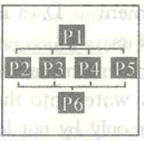 B .
B . 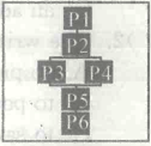 C .
C . 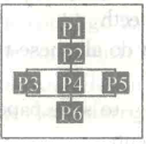 D .
D . 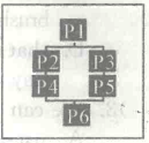
In Singapore, many middle school students spend a lot of their time on their studies. Good education is often regarded as a ticket to success in their future. So, many of these students try their best to get a good mark in their examinations. They have a lot of homework every day and exams are a big headache. Sometimes, some of them are even made to go to remedial (补习的) classes after school.
Schools run programmes outside school hours. The students can take part in sports and games, music and dance, hiking and rock-climbing, etc. They are also very active in community service(社区服务).
In their spare time, most students like to listen to pop music. Hollywood blockbusters(大片), Hong Kong and Singapore movies are very popular among them. They understand IT very well. Some of them also spend their free time surfing the Internet, e-mailing their friends, playing computer and video games.
They sometimes go to cafes, fast-food restaurants, shopping centers and big bookstores.
So, it looks like life as a middle school student in Singapore is not easy but it is rich and colorful.
-
(1) What is NOT mentioned in the passage?A . Schoolwork. B . After-class activities. C . Subjects. D . Things to do in the spare time.
-
(2) Why do students work hard at school in Singapore?A . Because they have a lot of homework. B . Because they have to go to remedial classes. C . Because they want to get a good future. D . Because they have many outside school activities.
-
(3) Programmes outside school hours are .A . the same as spare time activities B . remedial classes after school C . sports activities D . popular among students
-
(4) What do you know from the last sentence?A . The middle school students live an easy life in Singapore. B . The middle school students' life in Singapore is amazing. C . The middle school students' life in Singapore is boring. D . The middle school students' life in Singapore is hard, but interesting.
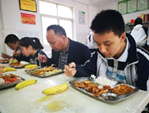
In October 2018, parents were shocked to find that an international school in Shanghai had food safety problems. They found food problems in the school's kitchen. They were so angry that they reported it to law enforcement(执法机关) immediately. After fully examined, moldy tomatoes and onions were found and headmaster was fired.
Parents across China have become increasingly worried about food safety in schools, according to The Beijing News.
Teenagers need to eat nutritious (营养的) food when they're growing up to be healthy adults. Therefore, it is necessary for school dining halls to provide healthy food. With this in mind, the government has introduced a new food safety regulation(规定) that will improve nutrition and health standard in schools.
The regulation was carried out on April 1. It requires the headmasters to eat with students in dining halls. Schools will also be required to make information about food sources and suppliers public.
The regulation also suggests that parents should eat with students at school in order to provide advice on food safety and nutrition. Schools must find out food safety problems and solve them right away.
If a school is caught buying low-quality food or failing to report food safety incidents(事件), the headmasters will be warned, fired or handed over to law enforcement, the regulation says.
-
(1) Who introduced the new food safety regulation?A . The government. B . Parents. C . Headmasters. D . China Daily.
-
(2) What does the underlined word "moldy" mean in Chinese?A . 破旧的 B . 发霉的 C . 乏味的 D . 无聊的
-
(3) How do schools carry out the new regulation?A . By building more than one dining hall. B . By improving the conditions of their dining halls. C . By allowing teachers and students to eat together. D . By showing the public where their food comes from.
-
(4) What do we know from Paragraph 5?A . Food safety problems can be easily solved. B . Teenagers should go home to eat meals every day. C . Parents are worried about food safety in schools. . D . Parents should play a part in improving food safety in schools.
-
(5) What is the passage mainly about?A . Students' eating habits. B . School headmaster. C . Food safety in schools. D . Parent-teacher relationship.
What do you usually do in your free time? Do you like using your mobile phones? Recently, a study found that most college students were very interested in playing with their mobile phones. The study was carried out from March 12th to March 26th and 590 boys and 630girls took part in it. Here are the results.
According to the results, 82 percent said they used their mobile phones too much. The usual time college students spend on mobile phones is 5.2 hours a day. 13 percent of them use mobile phones for over 9 hours every day and 14 percent use mobile phones for 7 to 9 hours. 53 percent of the college students use mobile phones between 6 pm and 9 pm. 71 percent of the college students use mobile phones from 9 pm to midnight, and the percentage of the students who use mobile phones just before they sleep is even higher.
There is a difference in using mobile phones between boys and girls. 66 percent of boy students use mobile phones for entertainment like playing online games, and it is 14 percentage points higher than girl students. But 40 percent of girl students do online shopping, and it is 16 percentage points higher than boys.
At the same time, 24 percent of the students said mobile phones were good for their study, such as helping them find information and helping them learn more new things. For instance, some teachers like using mobile phones in class to share learning materials. How do you like this study? Is it a good way for students to use their mobile phones too much? Absolutely not.
-
(1) How long did it take people to do the study?A . A week. B . Half a month. C . A month. D . Half a year.
-
(2) When do college students use mobile phones the most often?A . In the morning. B . In the afternoon. C . Before lunch. D . Before sleeping.
-
(3) According to the results, how many girl students use mobile phones to buy things online?A . 100 B . 151 C . 252 D . 416
-
(4) What does the underlined part "For instance" mean?A . For example. B . In fact C . At first D . All in all
-
(5) What does the passage mainly want to tell us?A . How many college students do online shopping B . Who college students use mobile phones with C . When and why college students use mobile phones D . How mobile phones help students with their study
What problems do the teenagers probably have? Here is a survey showing their main problems.
Problems | Causes | Advice |
Feeling stressed | Too much homework. Don't have enough time for their hobbies. | Make a plan for study and hobbies. Find time to relax as possible as you can. |
Getting short-sighted | Too much homework. Bad reading and writing habits. | Do homework or reading in a correct way. |
Fights | Don't know how to get on well with classmates. | Make more friends and understand each other. Share your problems with them. |
Feeling tired of study | Computer games' bad influence. | Don't be crazy about computer games. Play them just for a short time when you are tired. |
Getting fat | Having more pocket money to buy snacks. Dislike doing exercise. | Use your pocket money to do something meaningful. Spend some time doing exercise every day. |
-
(1) How many main problems are there in the survey?A . Four. B . Five. C . Six. D . Seven.
-
(2) What problems are caused by too much homework?A . Feeling stressed and fight. B . Feeling tired of study and getting fat. C . Feeling stressed and getting short-sighted. D . Getting short-sighted.
-
(3) If Simon is feeling stressed, he should ___________.A . do much more homework B . make a plan to spend time on study and hobbies C . donate his pocket money to Project Hope D . buy some snacks
-
(4) Peter is tired of study, maybe because he ___________.A . has no close friends B . has no pocket money C . plays too many computer games D . gets fatter and fatter
-
(5) __________ is a good way for the teenagers to stop fights.A . Doing less homework B . Playing computer games C . Learning how to make friends D . Paying no attention to each other
Most of us feel happy when we're traveling. But if the place we were visiting isn't nice enough, we might feel sad.
The Ministry of Culture and Tourism(MCT: 文化和旅游部) just inspected(检查) some places of interest around China. Qiao Family GrandCourtyard (乔家大院), a tourist site(旅游景点) in Shanxi province, lost its 5A rating(等级) after the inspection, Xinhua reported.
China has a way to rate tourist sites. They get ratings from A (the lowest rating) to AAAAA(5A, the highest rating). The rating is decided according to their transportation quality(交通质量) safety(安全), scenery(景色), and tourists' reviews(评价).
The MCT said Qiao Family Grand Courtyard has many problems. One is that it is too commercialized(商业化的). It has a large number of shops and commercial activities, which can be annoying(恼人的) to tourists.
Many tourists also had opinions about the tickets. While the tickets are expensive(138 yuan), the place itself isn't worth visiting. Its parking area(停车场) and visitor center are dirty, Guangming Daily reported.
-
(1) Qiao Family Grand Courtyard was a _____ tourist site before the inspection.A . 3A-rated B . 4A-rated C . 5A-rated D . 6A-rated
-
(2) According to the story, tourist sites may lose their rating if _______.
a. there are safety problems b. the tourist sites are not big enough
c. it is not convenient to travel to the sites d. tourists give poor reviews after visiting
A . acd B . abd C . abc D . bcd -
(3) What do we know from the story?A . More tourist sites will lose their 5A ratings in the future. B . The standards(标准) for a 5A rating are higher(更高) than before. C . Service center(服务中心) quality is included(包括) in the rating. D . The MCT didn't rate tourist sites very strictly before.
|
on everything unless if more than safety |
"Who needs a shopping mall if you have Taobao?" says Wang Lin, 28, a writer in Beijing. Taobao, China's largest online shopping site (网上购物网站), has become an important part of Wang Lin's life She spends lots of money Taobao. A growing number of Chinese Internet users like Wang have found the joys of online shopping. Most online shoppers are students or young workers. More women shop online than men. Clothing and home use products (产品) are the most popular online. It was reported that 250 billion (十亿) yuan was spent on online shopping last year, 80% through Taobao. Taobao means "looking for treasure" in Chinese. People can find almost they need on Taobao, from clothes to books, from candies to DVD players. You may question the security of online shopping. Wang Lin said, "It's very and convenient(便利的)。 you receive the products from the sellers and are satisfied with them, the shop owners will not get the money. You can also get your money back if you want to return the products."
Nowadays, everybody is taking selfies (自拍照). From your best friend to your favorite pop star, selfies are taking over Renren and Sina Weibo. The word "selfie" was even named Word of the Year by Oxford Dictionaries in 2013. But why do people feel the need to take them? And are they doing us more harm than good?
According to Dr Pamela Rutledge, psychologist (心理学家) and director or the Media Psychology Research Center in the US, posting a selfie online shows a biological need for self-validation (自我验证).
Humans have an area in their brain that controls social activity. Receiving positive feedback on a selfie you have posted online can be the same as someone stopping you in the street and complimenting(称赞) you on your appearance.
The act of taking a selfie also puts you in a position of power. You are the director and the subject of your own work of art. It helps people feel in control of their self-image and can be a powerful tool.
But can it go too far?
Psychologists warn that too much time spent on selfies can affect people's confidence, particularly in teenagers. If you are spending a lot of time choosing the perfect selfie outfit (着装) or finding the right angle, then there could be a problem.
Likewise (同样地), posting selfies online can harm your personal relationships. UK studies found that many people find it hard to relate to (与…联系) people who are often posting selfies online.
So next time you grab your smartphone to take a quick selfie, it may be better to drop it straight back into your pocket.
-
(1) What does Rutledge think of posting selfies online?A . It helps people get to know each other. B . It helps people take better pictures. C . It satisfies people's need for self-validation. D . It just lets people show off their new clothes.
-
(2) From paragraphs 3-4, we learn the following EXCEPT .A . the brain controls people's social activity B . people want good comments (评论) on their selfies C . taking selfies helps people feel in control of their self-image D . it needs some art to take good selfies
-
(3) Psychologists think spending too much time taking selfies can .A . affect people's confidence B . give away people's personal information C . cause people to spend less time with their friends D . cause people to spend more on smartphones
-
(4) The underlined word "feedback" means " " in Chinese.A . 反馈 B . 返回 C . 供养 D . 违约
-
(5) Who may be interested in taking selfies?A . Teenagers. B . Pop stars. C . Ladies. D . All the above.
Smartphones are popular among middle school students, who use them mainly to surf social media platforms, according to a research made by China Youth Daily.
More than 93% of parents had given smartphones to their children in middle schools for daily use and 57% of respondents said they used them to visit social media.
Keeping in touch with teachers came in at 48% and the same number of students used them to play online games, while 47% watched videos and listened to music, the research said.
More than 30% of parents said they failed to guide their children on the rational use of the devices and 39% said children's smartphone use was opposite to their original intentions.
Last year, a report found that 175 million minors regularly used the Internet. It noted that 94%went online with mobile phones, while 57% also used TV sets. Desktops came in at 45%, with laptops at 32% and tablets at 29%.
The report, based on a research of 34, 661 middle school students, found that 33%of the students had surfed the Internet before school age and 65% of young Internet users had taught themselves the necessary skills.
Online games and novels have become important social topics with young students and they do not want to be left out among their peers, Sun said.
The reason some parents fail to control their children's smartphone use is that they also use them too much, she added.
… (To be continued)
-
(1) What do over half of the middle school students use smartphones to do?A . Play online games. B . Surf social media platforms. C . Watch videos. D . Keep in touch with teachers.
-
(2) What can we learn about middle school students from the passage?A . They spend more time listening to music than watching videos. B . They spend more time watching videos platforms than playing online games. C . They spend more time keeping in touch with teachers than surfing social media platforms. D . They spend the same amount of time playing games as communicating with teachers.
-
(3) How did most middle school students go online according to the report?A . By using TV sets. B . By using laptops. C . By using smartphones. D . By using desktops.
-
(4) What may be talked about in the next paragraph of the passage?A . Advice for parents. B . The developments of smartphones. C . The advantages of using smartphones. D . The disadvantages of using smartphones.
What is bullying (霸凌), exactly? A bully calls your names, takes your things and makes you feel afraid over and over again for a long time.
, in your neighborhood or even online. He disturbs (干扰) you every day, takes your lunch money, and then steps on your shoelaces (鞋带) as you walk away. and makes up bad stories about you on WeChat.
Bullying can make you feel terrible.What can you do? First of all, remember to be proud of who you are. Don't take the bully's bad words to heart. Also, keep in mind that it's not your fault—ifs the bully who has the problem. If you can, ignore (无视) the bully.If these things don't work, tell your favorite teacher and your parents about the bullying.
. If you don't like someone, don't bully him or her and the world will be a much happier place.
|
A. Or maybe ifs a girl who calls you "ugly" B. Maybe you are afraid to go to school, or can't eat or sleep C. And, of course, never be a bully D. Please refuse to give in to bullying E. Bullying can happen on the schoolyard F. Maybe he or she will get bored and stop G. There is not much bullying in our school |
In London, some schools stop kids from having a best friend. They teach kids to play together in groups. The Sun says that some schools in England have best-friend bans. Teachers say that it's not good for kids to have only one best friend. If the best friend isn't with him or her, he or she may feel sad. Best-friend bans aren't just in England. They are also in other countries.
But many people don't think it's a good idea to have the ban. They say it's better to learn that good things don't always last at a young age. Atherton is a teacher from Canada. She says friends are very important to children. Having a best friend helps a child to be happy. "Children should have more friends. Then they can enjoy playing with many other friends, not only one," Atherton says. She also says that a best friend can know all your secrets. That is to say, you can tell your best friend everything.
-
(1) What do some schools in London stop kids from doing?A . Playing basketball. B . Playing outside. C . Having a best friend. D . Having many friends.
-
(2) What does the underlined word "bans" mean in Chinese?A . 禁令 B . 倡议 C . 条例 D . 建议
-
(3) How may a kid feel if the best friend isn't with him or her according to the passage?A . Free. B . Scared. C . Unhappy. D . Excited.
-
(4) Where does Atherton come from?A . England. B . Canada. C . China. D . America.
-
(5) From the passage we know that Atherton thinks _____.A . it isn't good for kids to have a best friend B . it isn't good for kids to have many friends C . kids don't need friends D . friends are important
- Though ________ to see us, the professor gave us a warmwelco
- 阅读下面的文字,完成5~7题。 两汉经学 经学的真正确立是在汉武帝时代。汉武帝接受董仲舒“独尊儒术”的建议,设置五经博士
- Timetables are important. They helpyou know what your classe
- 从氢、碳、氧、钙四种元素中选择适当的元素组成下列物质,写出它们的化学式: (1)酸 ;(2)碱
- 下列关于cDNA文库和基因组文库的说法中,不正确的是( )A.cDNA文库中只含有某种生物的部分基因,基因组文库中含
- 西班牙的瑞奥汀河是一条酸河,河水中含有硫酸和硫酸亚铁.经调查发现,酸河形成的原因是由于上游河床含有的某种物质R在水中氧的
- Ineed to ______ the cake for my daughter. She is too
- 向一定质量的铜锌合金中加入足量的稀盐酸,与反应有关的变化关系用下列示意图表示,其中正确的是() A. B. C. D.
- 植物的生活需要多种无机盐,其中需要量最多的是 A.含氮、磷、钾的无机盐 B.含碳、氢、氧的无机盐 C.含
- 阿司匹林能迅速解热、镇痛。长效缓释阿司匹林可在体内逐步水解而疗效更佳。用丙酮为主要原料合成长效缓释阿司匹林的流程如下图。
- 在探究“凸透镜成像规律”的实验中,已知凸透镜的焦距为15cm,若将蜡烛放在离凸透镜10cm处时,移动光屏,在光屏上将看到
- 切除老鼠体内的甲状腺,10d后将其同没有切除甲状腺的老鼠相比,切除甲状腺的老鼠的代谢能力明显下降,并且无法检验出其血液中
- 右图表示某动物(2N)处于细胞分裂某一时期的染色体数(a)、染色 单体数(b)、DNA数(c)。该图所示的细胞分裂方式及
- Theman in blue is______ father. A.Jim andKate
- 合成某蛋白质时,有1000个转运RNA参加,那么指导该蛋白质合成的基因至少有脱氧核苷酸 (
- 距国家地震台测定,2008年5月12日,四川 发生 地震。国务院把5月19日至21日定为全国哀悼日,以纪
- 【化学——选修化学与技术】 铝生产产业链由铝土矿开采、氧化铝制取、铝的冶炼和铝材加工等环节构成。请回答下列问题: (1)
- 法国正式确立共和政体的标志是国民议会通过了 A.1787年宪法 B.《人权宣言》 C.《拿破仑法典》 D.1875年
- 阅读下列材料回答问题: 庙会,又称“庙市”或“节场”。是指在寺庙附近聚会,进行祭神、娱乐和购物等活动,是中华文化传统的节
- 图7中“4”、“5”所示区域分别表示某日我国地质灾害高风险区和用电严重紧缺区,读图回答9~10题。9.图中所示现象最有可


