高二英语下学期下册试题
While I was on vacation last week, I decided to visit some restaurants 61 (try) some local food. However, I didn’t know about the types of restaurants available, so I checked an online restaurant guide to give me some ideas and tips. I was 62 (main) interested in seafood restaurants, so I searched 63 restaurants within a reasonable walking distance from my hotel, and I 64 (find) seven of them. Next, I reviewed the online menus of the places to check the 65 (dish) they prepared and the average cost of a meal. However, price is not my first 66 (consider); I enjoy a restaurant 67 has a wide selection. Next, a restaurant’s background music, decorations and wall hangings, seats and tables can always add to the dining experience. If I go to a Mexican restaurant, I will expect to see 68 restaurant decorated in the Mexican style. Finally, I always consult restaurant reviews to find out what other people thought about the restaurant and 69.___________ (they) experiences. What was the quality of the food? Did the server provide fast and friendly service? 70 (do) some research before you go can make dining a more pleasurable and predictable experience.
—It was a wonderful trip. So, which city did you like better, Paris or Rome?
— .There were good things and bad things about them.
A. It’s hard to say B. I didn’t get it
C. You must be kidding D. Couldn’t be better
In much of Asia, especially the so-called “rice bowl” cultures of China, Japan, Korea, 41 Vietnam, food is usually eaten with chopsticks.
Chopsticks are usually two long, thin pieces of wood or bamboo. They can also be made of plastic, animal bone or metal. Sometimes chopsticks are quite artistic. Truly elegant chopsticks might 42 (make)of gold and silver with Chinese characters. Skilled workers also combine various hardwoods and metal 43 (create) special designs.
The Chinese have used chopsticks for five thousand years. People probably cooked their food in large pots, 44 (use) twigs(树枝) to remove it. Over time, 45 the population grew, people began cutting food into small pieces so it would cook more quickly. Food in small pieces could be eaten easily with twigs which 46 (gradual)turned into chopsticks.
Some people think that the great Chinese scholar Confucius, 47 lived from roughly 551 to 479 B.C., influenced the 48 (develop) of chopsticks. Confucius believed knives would remind people of killings and 49 (be) too violent for use at the table.
Chopsticks are not used everywhere in Asia. In India, for example, most people traditionally eat 50 their hands.
Basketball Statistician Help Wanted
The Athletic Department is looking for students to help assist staff during the Fall 2016, Winter 2016-17 and Spring 2017 semesters. Students in this position will be keeping live statistics during basketball games. Students must meet all of the following requirements:
l Good computer skills
l Available evenings and weekends
l Knowing basketball rules and statistics
Students interested in working for the Athletic Department should contact the Athletic Coordinator at their respective(各自的) campuses.
l TP/SS Athletic Coordinator, Michael Simone,240-567-1308
l Rockville Athletic Coordinator, Jorge Zuniga,240-567-7589
l Springfield Athletic coordinator, Gary Miller,240-567-2273
l Germantown Athletic Coordinator, GavriChavan, 240-567-6915
21.When will the job start?
A .In May 2016 B. In May 2017 C. In September 2016 D. In September2017
22.Who is more likely to get the job?
A. Sam, English major ,member of the college basketball team
B. Judy, IT staff with night classes, children’s basketball team coach
C. Ted, computer major, basketball fan, free on evenings and weekends
D. Molly, part-time programmer, high school basketball player ,new mother
23.Whom should you contact if you want to apply for the job in Rockville?
A. Michael B. Jorge C. Gauri D .Gary
As usual, it was always cold during the days. Hibury was cut off from the rest of the world because of heavy snow.
It was a cold January in 1925 in North Alaska. The town was cut off on the 20th of that month, Dr. Welch 41 a sick boy, Billy, and knew he had diphtheria, a deadly infectious(传染的) disease mainly affecting children. The children of Hibury would be 42 if it struck the town. Dr. Welch needed medicine as soon as possible to stop other kids from getting sick. 43 , the closest supply was over 1,000 miles away, in Anchorage.
How could the medicine get to Hibury? The town’s 44 was already full of ice, so it couldn’t come by ship. Cars and horses couldn’t travel on the 45 roads. Jet airplanes and big trucks didn’t exist yet.
__46 January 26, Billy and three other children had died. Twenty more were 47 Hibury’s town officials came up with a(n) 48 . They would have the medicine sent by 49 from Anchorage to Nenana. From there, dogeled(狗拉雪橇)drivers—known as “mushers”---would 50 it to Hibury in a relay(接力).
The race began on January 27. The first musher, Shannon, picked up the medicine from the train at Nenana and rode all night. 51 he handed the medicine to the next musher, Shannon’s face was black from the extreme cold.
On January 31, a musher named Seppala had to 52 a frozen body of water called Norton Sound. It was the most __53 part of the journey. Norton Sound was covered with ice, which could sometimes break up without warning. If that happened, Seppala might fall into the icy water below. He would 54 , and so would the sick children of HIbury. But Seppala made it across.
A huge snowstorm hit on February 1. A musher named Kaasen had to brave this storm. At one point huge piles of snow blocked his 55 . He had to leave the trail(雪橇痕迹) to get around them. Conditions were so bad that it was impossible for him to 56 the trail again. The only hope was Balto, Kaasen’s lead dog, Balto put his nose to the ground, 57 to find the smell of other dogs that had traveled on the trail. If Balto failed, it would mean disaster for Hibury. The minutes passed by. Suddenly, Balto began to 58 . He had found the trail.
At 5:30 a m. on February 2, Kaasen and his dog 59 in HIbury. Within minutes, Dr. Welch had the medicine. He quickly gave it to the sick children. All of them recovered.
Hibury had been 60 .
41. A. examined B. warned C. interviewed D. cured
42. A. harmless B. helpless C. fearless D. careless
43. A. Moreover B. Therefore C. Otherwise D. However
44. A. airport B. station C. harbor D. border
45. A. narrow B. snowy C. busy D. dirty
46. A. From B. On C. By D. After
47. A. tired B. upset C. pale D. sick
48. A. plan B. excuse C. message D. topic
49. A. air B. rail C. sea D. road
50. A. carry B. return C. mail D. give
51. A. Though B. Since C. When D. If
52. A. enter B. move C. visit D. cross
53. A. shameful B. boring C. dangerous D. foolish
54. A. escape B. bleed C. swim D. die
55. A. memory B. exit C. way D. destination
56. A. find B. fix C. pass D. change
57. A. pretending B. trying C. asking D. learning
58. A. run B. leave C. bite D. play
59. A. gathered B. stayed C. camped D. arrived
60. A. controlled B. saved C. founded D. developed
The Spotlight(公众注意的中心) in Rio
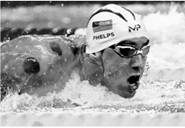
Phelps puts spotlight on cupping(拔火罐)
Olympic gold medalist Michael Phelps fed American swimmers to 8 gold medals in the 4 × 100-meter relay, but what grabbed media attention and led to stories and photos around the globe were the purple and red circles on his back.
Michael Phelps of the USA is seen with red cupping marks on his shoulder as he competes during the 2016 Rio Olympics men’s 200m butterfly in Rio de Janeiro, Brazil, Aug 8, 2016.
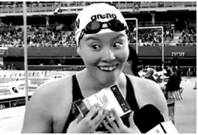
Chinese swimmer Fu Yuanhui goes viral
China’s women’s swimmer Fu Yuanhui has created a hit online not just by winning the bronze medal in the 100m backstroke competition, but also by her facial expressions during the post semi-final interview with China Central Television (CCTV) on Monday.
When asked whether she held back for the final, Fu replied “No, I used my ‘prehistorical power (洪荒之力)’” What she meant was that she had spared no efforts in the semi-final. Since then, the so-called “prehistorical power” has gone viral and become a new Internet meme.
Britain wins first Olympic diving gold in men’s synchronized 3m springboard(男子双人3米跳板)
Britain’s Jack Laugher and Chris Mears ended China’s gold medal monopoly (垄断) over diving events at the Rio Olympics by winning the men’s synchronized 3m springboard final on Wednesday, the country’s first-ever Olympic gold medal in diving.
Laugher and Mears finished with a six-round total of 454.32 points, just 4.11 points ahead of silver medalists Mike Hixon and Sam Dorman of the USA at the Maria Lenk Aquatics Center. China’s Cao Yuan and Qin Kai took the bronze with 443.70 points.

21. What attracted media attention with Phelps’ winning the gold medal?
A. His scars on his back.
B. His great leadership.
C. The cupping marks on his back.
D. His achievements made in the men’s 200m butterfly.
22. Which of the following is NOT the reason why Fu Yuanhui became the spotlight?
A. Her devotion and determination to swimming.
B. Her achievement in the 100m backstroke competition.
C. Her facial expression during the post semi-final interview.
D. Her humourous reply to the reporter—the so-called “prehistorical power”.
23. What can we learn from the third news?
A. China didn’t win any medals in diving events at the Rio Olympics.
B. Mike Hixon and Sam Dorman of the USA took silver with 447.81 points.
C. Britain had never won the Olympic diving gold medal before the Rio Olympics.
D. Britain became the gold medal monopolist (垄断者) of diving events at the Rio Olympics.
My daughter and son have settled in happily in our new home—kids are better at to new environments than us adults.
A. adjusting B. intending C. applying D. appealing
The sun is shining when I get on No. 151 bus. We passengers sit jammed together in heavy clothes. No one speaks. That’s one of the unwritten rules of Chicago commuting. Although we see the same faces every day, we prefer to hide behind our newspapers. The phenomenon is striking: people who sit so close together are using those thin sheets of newsprint to keep their distance.
As the bus approaches the Magnificent Mile, a voice suddenly rings out: “Attention! Attention!” Papers rattle (发出细小声). Necks crane (伸长). “This is your driver speaking.”
We look at the back of the driver’s head. His voice has authority.
“All of you put your papers down.”
The papers come down, an inch at a time. The driver waits. The papers are folded and placed on our laps.
“Now, turn and face the person next to you. Go ahead.”
Amazingly, we all do it. Still, no one smiles.
I face an older woman, her head wrapped tightly in a red scarf. I see her nearly every day. Our eyes meet. We wait, unblinking, for the next order from the driver.
“Now, repeat after me…” It is a command, delivered in the tones of a drill sergeant (教官). “Good morning, neighbor!”
Our voices are weak and timid. For many of us, these are the first words we have spoken today. But we say them at the same time, like schoolchildren, to the strangers beside us.
We smile and can’t help it. We have said it; the barrier has been broken. Good morning, neighbor. It is not so hard after all. Some of us repeat it. Others shake hands. Many laugh.
The bus driver says nothing more. He doesn’t need to. Not a single newspaper goes back up. I hear laughter, a warm sound I have never heard before on bus No. 151. This day is starting off better than most.
24. On hearing the sudden utterance of “Attention!”, the passengers ___________.
A. stopped reading and put down their newspapers immediately
B. looked up from the newspapers to see who was speaking
C. sat still without response
D. were frightened
25. The underlined word “commuting” in Paragraph 1 most probably means ___________.
A. daily traveling between home and work B. long-distance ride
C. communication technology D. behavior patterns
26. Which of the following is true according to the passage?
A. The passengers on the crowded bus were so absorbed in reading their newspapers that no one spoke.
B. The passengers were physically close together but mentally they kept each other at a terrible distance.
C. The passengers didn’t follow the driver’s instruction at first.
D. When the bus driver said nothing more, the passengers picked up and read their newspapers again.
27. What would be the best title for the text?111.Com]
A. The Warmth of Communication B. The Exchange of Information
C. The Power of Observation D. The Attitude to Loneliness
Shakespeare's Birthplace and Exhibition of Shakespeare's World
Welcome to the world﹣famous house where William Shakespeare was born in l564and where he grew up.The property (房产) remained in the ownership of Shakespeare's family until 1806.The House has welcomed visitors traveling from all over the world for over 250years.
OPENING TIMES:
20Mar.to 19Oct.
Mon.to Sat.:9:00a.m.to 5:00p.m.
Sun:9:30a.m.to 5:00p.m.
20Oct.to 19Mar
Mon.to Sat:9:00a.m.to 4:00p.m.
Sun.:10:00a.m.to 4:00p.m.
◆Enter through the Visitors'Centre and see the highly﹣praised exhibition Shakespeare's World,a lively and full introduction to the life and work of Shakespeare.
◆Stand in the rooms where Shakespeare grew up.
◆Discover examples of furniture and needlework from Shakespeare's period.
◆Enjoy the traditional (传统的) English garden,planted with trees and flower mentioned in the poet's works.
◆The Birthplace is within easy walking distance of all the car parks shown on the map; nearest is Windsor Street(3minutes'Walk)
◆The House may present difficulties but the Visitors'Centre,its exhibition,and the garden are accessible to wheelchair users.
◆The Shakespeare Coffee House(opposite the Birthplace)
ADMISSION:
Adult:£4.90
Child:£2.20
Family:£12.00
(2adults+up to 3children)
1.How much is the admission for a family of two grown﹣ups and two children?
A.£9.80.
B.£12.00.
C.£14.20.
D.£16.40.
2.Where is the nearest parking place to Shakespeare's Birthplace?
A.Behind the exhibition hall.
B.Opposite the Visitors'Centre.
C.At Windsor Street.
D.Near the Coffee House.
3.A wheelchair user may need help to enter .
A.the House
B.the garden
C.the Visitors'Centre
D.the exhibition hall.
Few people can why a pretty-looking woman like her would fall in love with an old and ugly man like him.
A. held up B. subscribe to
C. went for D. who
“Hey, aren’t you from Mississippi?” the elegant, white-haired writer remembered being asked by the stranger.“I’m from Mississippi too.”
Without a second thought, the woman joined the Welty party. When her dinner partner showed up, she also pulled up a chair.
“They began telling me all the news of Mississippi,” Welty said.“I didn’t know what my New York friends were thinking.”
Taxis on a rainy New York night are rarer than sunshine. By the time the group got up to leave, it was pouring outside. Welty’s new friends immediately sent a waiter to find a cab. Heading back downtown toward her hotel, her big-city friends were amazed at the turn of events that had changed their Big Apple dinner into a Mississippi state reunion(团聚).
“My friend said:‘Now we believe your stories,’” Welty added.“And I said: ‘Now you know. These are the people that make me write them.’”
Sitting on a sofa in her room, Welty, a slim figure in a simple gray dress, looked pleased with this explanation.
“I don’t make them up,” she said of the characters in her fiction these last 50 or so years.“I don’t have to.”
Beauticians, bartenders, piano players and people with purple hats, Welty’s people come from afternoons spent visiting with old friends, from walks through the streets of her native Jackson, Miss, from conversations overheard on a bus. It annoys Welty that, at 78,her left ear has now given out. Sometimes, sitting on a bus or a train, she hears only a fragment(片段)of a particularly interesting story.
60.What happened when Welty was with her friends at the cafe?
A. Two strangers joined her. B. Her childhood friends came in.
C.A heavy rain ruined the dinner. D. Some people held a party there.
61.The underlined word “them” in Paragraph 6 refers to Welty’s .
A. readers B. parties C. friends D. stories
62.What can we learn about the characters in Welty’s fiction?
A. They live in big cities. B. They are mostly women.
C.They come from real life. D. They are pleasure seekers.
Dear Betty,
My roommate’s family wants me to celebrate Thanksgiving Day with them in their home. I accepted the invitation, and I’m excited about going, but I’m a little nervous about it, too. The social customs in my country are different from those here, so I’m a little worried about making mistakes.
Should I bring a gift, such as candy or flowers? Should I arrive on time or a little late? At the dinner table, how can I know which fork or knife to use? How can I let the family know that I’m thankful for their kindness?
Yours,
Knowing Nothing
Dear Knowing Nothing,
It’s a good idea to bring a gift when you go to a dinner party. Flowers are always welcome, or you can bring a bottle of wine if you know the family drink it.
You should arrive on time or five to ten minutes late. Don’t get there early. If you are going to be more than fifteen minutes late, you should call and tell them.
Try to relax at the dinner table. If you don’t know how to use the right fork, knife or spoon, just watch the other guests, and follow them. If you still have no idea of what to do, don’t be shy about asking the person next to you; it’s better to ask them than to be silently uncomfortable and nervous.
If you like the food, say so. Of course, you’ll thank the host and hostess for the meal and for their kindness. It’s also a good idea to send a card to thank them the day after.
Yours,
Betty
21.Knowing Nothing wrote a letter to Betty to _____.
A. tell Betty some good news
B. invite her to dinner
C. answer some questions
D. ask for some advice
22.According to Betty, Knowing Nothing ______ when going to a dinner party.
A. can only bring some flowers
B. should arrive on time or five to ten minutes late
C. can’t bring wine
D. should arrive twenty minutes late
23.Betty does NOT advise Knowing Nothing to _____.
A. keep silent at table
B. watch the other guests
C. ask the person beside him
D. relax at the dinner table
Back in business school, macho(自以为是的) kids like me studied finance. In the competition of life, money 21 winning, so those who managed the money would become the 22 . Didn't matter that I was a woman - I was as 23 as any guy you'd ever met.
It's taken me a lot of years, a lot of living, to 24 that my view of the world was upside down. The reality is: finance is for wimps(呆子). Finance is the easy part. However, It's much 25 to deal with people. The winners in society are the people who understand how to 26 other people.
In my 20s, I worked really hard. I 27 name-brand schools and piled on the degrees. I was 28 on my climb to the top as a successful real-estate developer. I worked full-time as I was studying, because I was 29 .
Then when I was 31, I got to the top in a way that I 30 imagined possible. I was 31 Deputy Mayor of Los Angeles. In that 32 , I collaborated with leaders from all sectors of society.
When our four-year term came to a 33 , I moved to another world of power and money, as a headhunter for CEOs and other 34 talent for the world's biggest companies.
As a result of all these 35 , I've had the chance to meet, befriend, and work with leaders from all sectors in countries throughout the world.
And here's what I've learned: the leaders are not the 36 IQ people in any organization. They didn't get the highest grades, they didn't 37 the highest exam scores. They got to the top 38 they have the ability to attract the best people to work for them. And at the root of that power of attraction is empathy(同感能力). Empathy is the ability to truly connect with other human beings. It's life's hardest but most 39 skill. And it's the skill 40 for leadership in a changing world.
21. A. ignored B. equaled C. combined D. caused
22. A. directors B. heroes C. winners D. losers
23. A. optimistic B. naughty C. competitive D. practical
24. A. realize B. deny C. complain D. debate
25. A. happier B. simpler C. easier D. harder
26. A. care about B. relate to C. depend on D. talk with
27. A. attended B. avoided C. left D. escaped
28. A. praised B. assisted C. criticized D. focused
29. A. in a hurry B. in vain C. in surprise D. in the end
30. A. ever B. often C. never D. once
31. A. appointed B. treated C. awarded D. charged
32. A. culture B. game C. space D. role
33. A. start B. fame C. close D. trend
34. A. different B. top C. common D. busy
35. A. experiences B. performances C. accidents D. experiment
36. A. busiest B. lowest C. dullest D. highest
37. A. accept B. expect C. score D. share
38. A. until B. because C. so D. before
39. A. complete B. funny C. boring D. important
40. A. required B. remembered C. regarded D. reached
There are two primarily choices in life: to accept conditions 36 they exist, or accept responsibility for changing them. Many people are 37 (constant) waiting for their life to start. They always say, “When I am older I will do this.” 38 “In a few years, I will do that.” They think the life they 39 (experience) is boring and 40 (mean). Who has never viewed himself or herself as worthless and unattractive?
All of us may suffer 41 (depress) and frustration, lose guidance and support, and need aids physically, emotionally, or spiritually. Just think like this way: This too shall pass. Horrible feelings I am feeling will eventually go away. I need to stop feeling so sorry for myself and actually want to change. I am 42 incredibly lucky person 43 has come from a family who love and support my whole life. I had to be the one 44 (make) the decision to change my way of thinking. All the good things and all the wonderful people in my life would pass eventually too. While I am feeling miserable, my life is still going on and I am missing out on appreciating those precious 45 (moment).
The remote village seemed to be ______________ to visitors as very little was known about it and its villagers appeared somewhat hostile (有敌意的) to strangers.
A. inaccessible B. unavailable C. inadaptable D. profitable
CWU
The communication union
Head of Research
Salary:£55.271
We are looking for a Head of Research to manage the CWU Research Department and Information Centre. You would be required to exercise control of all research work of the department and manage a team of three researchers and four assistants.
The person appointed would be expected to carry out research work across the range of businesses in which the CWU has or seeks membership and to contribute to the strategic thinking and direction of the union as a whole.
You will need: proven line management skills, especially in managing and motivating a team; good research skills, holding a good degree in a related subject or other similar experience; a high level of mathematical and calculating skills; the ability to produce high quality work under pressure; a commitment to and knowledge of the trade union movement and social democratic politics; and knowledge and/ or experience of the postal and/ or telecommunications industry.
To apply, please request an application pack by emailing hr@cwu.org or by telephoning HR( Human Resources ) on 020 8971 7482. When applying please state your source.
Closing Date for Applications: 4th August 2010
Anticipated interview date: 17th August 2010
No agencies please
24. Inwhich column of a newspaper could we find this advertisement?
A. Sales. B. Arts. C. News. D. Jobs.
25. One of the duties of the person to be appointed is_______.
A. seeking membership for the team
B. taking charge of research work
C. running a telecommunications company
D. managing a team of three or four members
26. If you want to apply for this position, you can do all EXCEPT ____ .
A. dial 020 8971 7482 for more information
B. ask an agency for an application form
C. send in your application before 4th August 2010
D. email hr@cwu.org for an application pack
27. Which of the following applicants is most likely to be employed?
A. A university graduate majoring in computer science.
B. A school teacher with a master’s degree.
C. A clerk from the sales department of a company.
D. A director from a research centre with a master’s degree.
________I know, he has been to the USA for further study.
A. So far as B. So far C. As long as D. As soon as
________ has been growing concern over the health effects ________the September 11 attacks in the Financial District of Lower Manhattan.
A. It; arising from B. There; causing C. There; arising from D. It; caused
Odyssey Arena
The Odyssey Arena,owned by Odyssey Trust,is a large sports and entertainment centre situated in Titanic Quarter and the Waterfront,Belfast,Northern Ireland.It was jointly funded by the Millennium Commission,the Laganside Corporation,the DCAL,the Sheridan Group and the Sports Council for Northern Ireland.The Arena opened in 2000with the Pavilion later opening in 2001.The Odyssey is said to have cost£120 million on completion.In 2011The Odyssey Pavilion which was owned by The Sheridan Group went into administration,the building is now under control of KPMG until a new owner is found.
Event
Since opening,the Odyssey Arena has hosted some of the world's best known bands and artists from around the world.
It has also hosted a number of World Wrestling Entertainment live events including RAW and SmackDown!.WWE visits the Odyssey at least once a year.
Since 2008,it has played host to the Premier League Darts(标枪).
As well as these high﹣profile sporting events,the Odyssey Arena has also hosted concerts by some of the best﹣selling music artists in the world and it's also home of the Belfast Giants.
Janet Jackson was scheduled to perform during her All for You Tour on 14December 2001,but the show was cancelled,due to the 11September 2001attacks.
On 2October 2010,the Boston Bruins faced the Belfast Giants Selects in an NHL Challenge match.
The Odyssey was short﹣listed for‘International Large Venue of the Year'(Outside of North America) in the 2005Pollstar Concert Industry Awards,making it one of the top six major concert venues in the world.
The complex features:
The Odyssey Arena﹣Northern Ireland's biggest indoor arena hosts concerts and sporting events such as Belfast Giants games.
W5﹣stands for"Who,What,Where,When,Why".W5is an award﹣winning science exhibition centre demonstrating the powers of science.
The Odyssey Pavilion﹣contains bars:Rockies Sports Bar,Chic Shed Bar.Restaurants:Soda Joes,Pizza Hut,Indian Ocean,The Streat,Red Panda.Nightclubs:Box Nightclub,Beach Club.The Odyssey Bowl and Odyssey Cinemas (formerly Storm cinema,Vue) 12﹣screen multiplex.
A Sheridan IMAX operated in the complex from 2000until 2007,with its former location remaining vacant as of 2013.
36.Which of the following is NOT true about the Odyssey Arena in the first paragraph?
A.The Odyssey Arena was jointly funded and the owner is Odyssey Trust.
B.The building of the Odyssey Pavilion is under the control of KPMG.
C.Both the Arena and the Pavilion opened in Northern Ireland in 2000.
D.£120 million is said to have been spent on the completion of the Odyssey.
37.What has been hosted in the Odyssey Arena so far?
a.World Wrestling Entertainment live events.
b.The 2005Pollstar Concert Industry Awards.
c.The Premier League Darts.
d.Janet Jackson's All for You Tour.
e.An NHL Challenge match.
A.a; b; c
B.c; d; e
C.a; b; d
D.a; c; e
38.What can we infer from the passage?
A.The Odyssey Arena is Northern Ireland's biggest arena.
B.W5is a science exhibition centre with educational purpose.
C.In the Odyssey Pavilion,you can visit many scenic attractions.
D.A Sheridan IMAX has operated in its former location since 2000.
In the early 1800's, a boy named John lived in an orphanage (孤儿院) with several other children. Every day was 26 working and Christmas was the one day of the year 27 the children did not work and received a gift-an orange. The children 28 it so much that they kept it for weeks, and even 29 ---smelling it, 30_ it and loving it. Usually they tried to preserve (保护) it for so 31 that it often went bad before they ate it.
This year John knew he would soon be 32 enough to leave. He would save the orange until his birthday in July. If he preserved it 33 , he might be able to eat it on his birthday.
Christmas day finally came. The children were so 34 as they entered the dining hall. In his excitement, John knocked over something, causing a big 35 . Immediately the master shouted, "John, leave the hall and there will be no orange for you." John's heart 36 . He turned and ran back to the 37 room so that the children wouldn't see his tears.
Then he heard the door open and the children entered. Little Elizabeth with a 38 on her face held out her small hands. "Here John," she said, "this is for you." As John 39 his head, he saw a big juicy _40 all peeled and quartered … Each child had sacrificed (舍弃) their own orange by 41 a quarter and had created a big, beautiful orange for him.
John never forgot the sharing, love and personal 42 his friends had shown him that Christmas day. 43 that day, after he became rich, every year he 44 send oranges all over the world to children everywhere. His 45 was that no child would ever spend Christmas without a special Christmas fruit!
( )26. A. forced B. passed C. spent D.taken
( )27. A. as B. while C. when D. which
( )28. A. needed B. valued C. wanted D. liked
( )29. A. months B. days C. years D. seasons
( )30. A. tasting B. watching C. pressing D. touching
( )31. A. long B. soon C. much D. far
( )32. A. strong B. old C. tall D. experienced
( )33. A. seriously B. softly C. secretly D. carefully
( )34. A. nervous B. excited C. pleasant D. eager
( )35. A. cry B. disappointment C. noise D. surprise
( )36. A. jumped B. broke C. stopped D. settled
( )37. A. lonely B. small C. old D. cold
( )38. A. smile B. tears C. comfort D. look
( )39. A. lifted B. shook C. put D. turned
( )40. A. gift B. surprise C. wonder D. orange
( )41. A. breaking B. sharing C. eating D. taking
( )42. A. scientific B. basic C. right D. sacrifice
( )43. A. In return for B. In memory of C. In case of D. In search of
( )44. A. would B. must C. might D. should
( )45. A. meaning B. idea C. desire D. thinking
- 人们把我国实施“菜篮子”工程的成功经验概括为:要想填满“菜篮子”,必须搞好“菜园子”和“菜摊子”。这说明( ) A.
- 唯物主义和唯心主义是哲学史上的两个基本派别。凡唯心主义者都认为 A世界是不可认识的 B未有此气,
- 在如图所示的电路中,电源电压保持不变,开关S闭合后,变阻器的滑片P向左移动时,三个电表的示数变化情况是 A. A 的
- 5.阅读下面一首宋诗,完成后面的题目。 喜 雨 杨万里 欲知一雨惬群情,听取溪流动地声。 风乱万畴青锦褥,云摩千嶂翠瑶
- 下图漫画《震不碎的心》所体现的民族精神的核心是A.团结一致 B.勤劳勇敢
- 在上海世博会最佳实践区,江苏城市案例馆中穹形门窗充满了浓郁的地域风情和人文特色.如图所示,在竖直放置的穹形光滑支架上,一
- 、2015年04月24日国家新闻出版广电总局发布《关于做好2014—2015年度广播电视公益广告扶持项目评审工作的通知》
- 在如图所示的电路中,电源的内电阻r不能忽略,其电动势E小于电容器C的耐压值.先闭合开关S,待电路稳定后,再断开开关S,则
- 下列语句没有语病且语意明确的一项是 ( ) A.市政府面对日益严峻的城市缺水形势,通过新
- “绿色化学”对化学反应提出了“原子经济性”(原子节约) 的概念及要求。理想的“原子经济性”反应中,原料分子中的所有原子全
- “蹦极”就是跳跃者把一端固定的长弹性绳绑在踝关节等处,从几十米高处跳下的一种极限运动。某人做蹦极运动,所受绳子拉力F的大
- 汽车以20m/s的速度做匀速运动,某时刻关闭发动机而做匀减速运动,加速度大小为5m/s2,则它关闭发动机后通过s=37.
- 下面列出了几组物质,请将物质的合适组号填写在空格上。 ① 金刚石与“足球烯”C60 ;
- .Either Joe or Rose was the last to leave the lab yesterday.
- Before going outside in themorning, many of us check a windo
- Now Tom with his classmates ________ football on the playgro
- 图一为某草原生态系统的结构简图,“ ”表示碳的流动方向。图二为该草原生态系统中种群数量的相互调节关系。请据图分析回答:
- 如图所示,质量为m的木箱在推力F作用下沿水平面运动,F与水平方向的夹角为θ,木箱与水平面间的动摩擦因数为μ,则水平面给木
- 下图为“世界某区域年等降水量(单位:毫米)分布图”,若PQ为昏线,此时可能出现的地理现象有( )A.H地即将迎来黎
- People complain that decisionsto approve or deny a permit ar


