Unit 3 Under the sea 知识点题库
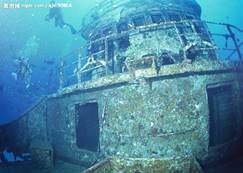
The pillage (掠夺) and destruction of ancient shipwrecks and sunken archaeological sites by treasure hunters seeking gold and other valuables may be illegal under the terms of an international treaty under discussion by UNESCO's 188 Member States.
"Protecting our underwater heritage is extremely important and increasingly urgent as no site or shipwreck is now out of bounds for treasure hunters. New technologies have made deep-water wrecks easily accessible and these technologies are getting cheaper," warns Lyndel Prott.
According to estimates by commercial salvors (寻宝者), there are some three million undiscovered shipwrecks scattered across the world's oceans. Even the figures for the known wrecks are impressive. The Northern Shipwrecks Database for example contains 65,000 ship loss records for North America alone from 1500 AD to the present. The Dictionary of Disasters at Sea by Charles Hocking (1969) lists 12,542 sailing ships and war vessels lost between 1824 and 1962.
Then there are sunken cities such as the trading town and pirate stronghold(海盗堡垒) of Port Royal in Jamaica, which disappeared beneath the waves after an earthquake in 1692. Or the remnants of ancient civilisations, such as the Lighthouse of Alexandria in Egypt, and the Neolithic villages being discovered under the Black Sea, which some believe could help explain Noah's great flood.
These treasures of cultural heritage are under serious threat. Technology now allows extraordinary access to the ocean depths for determined and well-financed treasure hunters. And the potential rewards are huge. In 1985, American salvor Mel Fisher discovered the wreck of the Señora de Atocha, a Spanish ship that sank off the Florida Keys in 1622 with her cargo of gold, silver and jewellery worth an estimated US $400 million.
An archaeologist can spend ten years or more studying a ship, conserving its objects and publishing its findings. We gain an enormous amount of information and knowledge from this work. With treasure hunters, all of this is lost. This is tragic, for humanity as a whole.
-
(1) Why is it important and urgent to protect our underwater heritage?A . Underwater heritage is easily accessible to treasure hunters. B . Underwater heritage is out of reach of archaeologists. C . New technology makes protection of underwater heritage easier. D . There is no law to protect underwater heritage.
-
(2) What is the third paragraph mainly about?A . Shipwrecks discovered by commercial salvors. B . The main cause of shipwrecks. C . The history of sunken ships. D . The figures of shipwrecks around the world.
-
(3) What happened to Port Royal in 1692?A . It was washed away by flood. B . It was beneath the waves after an earthquake. C . It was discovered under the Black Sea. D . It was rebuilt by Noah.
-
(4) Why is Mel Fisher mentioned in the fifth paragraph?A . He risked his life in treasure hunting. B . He was one of the most successful commercial salvors. C . He made a great discovery of shipwrecks. D . He had no trouble in finding a shipwreck.
-
(1) After a brief (停顿) the speaker continued.
-
(2) The sailor was held up while he was on (海岸).
-
(3) The society publishes its list of member (每年).
-
(4) In (合作) EQ is more important than IQ.
-
(5) Jason told me that he (目睹) his wife kissing another guy.
-
(6) The children learned about the(关系) between the moon and the tides.
-
(7) They (拖动,打捞) the canal for the missing child.
-
(8) This creature lives in the (深处) of the ocean.
-
(9) Father was admiring the lovely scene (对面) the hotel.
-
(10) The manager (敦促) older staff to take up early retirement.
-
(1) You buy the fruits, the meantime I'll cook breakfast.
-
(2) He raised his hat and was to speak, but she gave him the goby as though she had never seen him before.
-
(3) A still better tomorrow lies ahead you.
-
(4) My father helped me when I lost my job.
-
(5) The criminal disposed of the witness the crime.
-
(6) She spent a whole afternoon sorting her stamps.
-
(7) The government urged industry the importance of low pay settlements.
-
(8) He came in and took a seat opposite me.
-
(9) The children will be a drag me, so I want to go without them.
-
(10) I think I will fall, thus I lean against on the desk in order to hold myself.
Working at the station, I had whales killed many times with my own eyes. On the afternoon I arrived at the station, as I wasout my accommodation, I heard a loud noise coming from the bay. Running down to the shore in time, we saw an animal. “It is called Old Tom, the killer.” George said as he ran ahead me.
the distance we could see that something was happening. As we near, I could see a whale by a of about six sharks. Being badly wounded, the whale soon died. Very soon, its body was dragged by the sharks down into the of the sea.
and "atmosphere".
The woman two world wars.
-
(1) The school has been built for two years. The school is designed for the disabled children.
The school,,is intended for the disabled children.
-
(2) I am laughed at in the public. I don't like it.
I don't like
-
(3) He had not been promoted to a higher position. Tony was angry.
Tony was angry atto a higher position.
-
(4) We all like the superstar. He is being interviewed.
We all like the superstar.
-
(5) The squirrel was lucky. It was not caught.
The squirrel was so lucky that it just missed.
-
(6) The question has now been solved. It has been discussed for thousands of years.
The question,,has now been solved.
-
(7) The question has now been solved. It has been discussed for thousands of years.
The question,,has now been solved.
-
(8) The question has now been solved. It has been discussed for thousands of years.
The question,,has now been solved.
-
(9) Many children in the countryside can't go to school because they are very poor.
,many children in the country can't go to school.
-
(10) Do you know what the building which is being built is used for?
Do you know what the buildingis used for?
- 近年来,广饶县大码头乡大力发展食用菌温室种植,“小蘑菇”带来了大效益。蘑菇是食用菌的一种,下列说法错误的是 A.蘑菇用孢
- 下列词语中加点的字,读音全都正确的一组是( ) A.讣(pú)告 椽(chuán)笔 济(jǐ)济一堂 B.悲
- 在二项式的展开式的所有项中,其中有 项是有理项.
- The teacher told the students ________ so much noise. A.
- 阅读材料,回答问题。 材料一 1895年康有为率领千余举人开展公车上书。在上书中,一方面提出“迁都西安,整军再战”的“
- 下列实验方案能达到目的的是 () A.除去NaCl固体中混有的MgCl2:加入KOH试剂后过滤 B.实验室获取少
- (08年南开区质量调查三)依次填入下列各句横线处的词语,最恰当的一组是( )① 某作文杂志社设立了“______”
- 长江与黄河共同流经的地形区有( ) A.四川盆地 B.华北平原 C.
- 阅读下面的文字,完成题目。(6分) 失 眠[前苏联]A·卡聂夫斯基 今天我很早就上床了,可是睡不着。妻子对我说:“你数数
- 用系统抽样法(按等距离的规则),要从160名学生中抽取容量为20的样本,将160名学生从1~160编号.按编号顺序平均分
- 下图甲为叶绿体结构模式图,图乙是从图甲中取出部分结构放大图。下列有关叙述正确的是()A.图乙所示结构取自图甲中的①或③B
- 如图2-3-2所示,为某小灯泡的电流与其两端的电压关系图线,试分别计算出其电压为5 V、10 V时小灯泡的电阻,并说明电
- 对基因组文库的描述,不正确的是( ) A.含有某种生物的全部基因 B.基因中含有启动子
- 下列关于分子、原子的说法正确的是:A、分子间没有间隔 B、原子在化学变化中可以再分C、原子不能直接构成物
- 阅读下面两首宋词,完成后面题目。(8分)少 年 游欧阳修 栏干十二独凭春,睛碧远连云。千里万里,二月三月,行色苦愁
- 东北平原在冷湿的环境下,孕育出肥沃的 ( ) A.黄土地
- 已知A=B=R,x∈A,y∈B;f:x→y=ax+b,若5在f下的原象为5,7在f下的象为11,则20的原象为_____
- 右图是某微型实验的装置图。试管中反应发生后,(1)你可能观察到的现象有:
- 读“三种工业化城市化模式图”,完成(1)—(2)题。 (1)下列地区中,其发展模式与②相符的是 A.美国“硅谷”
- 已知集合, ,为集合到集合的一个函数,那么该函数的值域的不同情况有( )种。


