选修6 知识点题库
-
(1) These measures are air pollution.
这些措施旨在减少空气污染。
-
(2) Practical experience,,can give us more useful knowledge.
另一方面,实践经验可以给我们更多有用的知识。
-
(3) I would walk there .
我宁愿步行去那里也不愿乘公共汽车。
-
(4) I wish I .
我要是昨天把这项工作做完就好了。
-
(5) He suggested that .
他建议推迟召开这次会议。
The employer was5to see his good worker go and asked if he could build just one more house as a personal favor. The carpenter said yes,6over time it was easy to see that his heart was not in his work. He used bad workmanship and7materials. It was an unfortunate way to8 a dedicated(献身的)career.
When the carpenter finished his work, his employer came to9the house. Then he handed the front-door10to the carpenter and said, “This is your house... my11to you.”
The carpenter was shocked!
What a12! If he had only known he was building his own house, he would have done it all so differently.
.13it is with us. We build our lives, a day at a time, often putting14 than our best into the building. Then, with a shock, we 15 we have to live in the house we have built. If we could do it over, we would do it much differently.
But, you cannot 16 . You are the carpenter, and every day you hammer a nail, place a board, or build a wall. Someone 17said, “Life is a do-it-yourself project.” Your 18 , and the choices you 19 today, help build the “house” you will live in tomorrow. Therefore, build 20!
假设你是李华,你的英国朋友Peter来信向你咨询如何才能学好中文。请你根据下列要点写回信。
要点:(1)参加中文学习班(2)看中文书刊、电视(3)学唱中文歌曲(4)交中国朋友
注意:(1)词数100左右(2)可适当增加细节,以使行文连贯(3)开头语已为你写好
Dear Peter,
I'm glad to receive your letter asking for my advice on how to learn Chinese well……
__________________________________________________________________________________________________________________________________________________
__________________________________________________________________________________________________________________________________________________
__________________________________________________________________________________________________________________________________________________
__________________________________________________________________________________________________________________________________________________
__________________________________________________________________________________________________________________________________________________
__________________________________________________________________________________________________________________________________________________
__________________________________________________________________________________________________________________________________________________
__________________________________________________________________________________________________________________________________________________
Best wishes,
Li Hua
The ground we walk on seems firm, but deep under the earth and under the sea the rocks change and move. In some parts of the world there are “fire mountains”, which we call volcanoes. From time to time they burst open and throw out fire and burning ashes. These volcanoes are very dangerous.
Hong Kong does not have any volcanoes but there are many volcanoes in Indonesia and Philippines. There is also a famous mountain near Tokyo, Japan, which is a volcano too. Its name is Mount Fuji. For much of the year,it is covered with snow.
One of the most famous volcanoes which erupted in recent times was Krakatoa, on an island in Indonesia. The first explosions took place on 20th May, 1883, but the biggest eruption did not come until the 26th and 27th August of that year. The people on the island were used to the explosions by that time, and so they were completely unprepared for this terrible happening. Almost all the people on the island died and the explosion also made huge waves in the sea, which drowned (淹死) many people on the other island nearby. After the eruption was over,people saw that the whole northern part of the island had completely disappeared. Scientists say that 15 cubic (立方) kilometres of rocks and ash were thrown up in the explosion. The noise of the explosion was heard nearly 5,000 kilometres away in the middle of the Indian Ocean,and the city of Jakarta was completely dark for about two and a half hours.
-
(1) There are many volcanoes ________.A . everywhere in the world B . under the earth and the sea C . in Hong Kong D . in Indonesia
-
(2) The people near Krakatoa were unprepared when it had its biggest explosions because people there ________.
A . had never met any explosions of the volcano before B . were used to the explosions by that time C . didn't want to leave their island D . could do nothing but wait -
(3) People who lived 5,000 kilometres away from Krakatoa could ________.A . see that the 15 cubic kilometres of rocks and ash were thrown up B . hear the noise of the explosion C . see the huge waves D . see that Krakatoa was dark
-
(4) The biggest explosion made ________.A . all the people on the island die B . the whole island disappear C . the city of Jakarta completely dark for about two and a half hours D . huge waves in the middle of the Indian Ocean
阅读理解。阅读下列短文, 从给的四个选项 (A、B、C和D) 中, 选出最佳选项。
Isaac Stern was more than a great violin player.He was one of the most honored musicians in the world.He was an international cultural ambassador.He was a major supporter of the arts in America and in other countries.He was a teacher and activist.
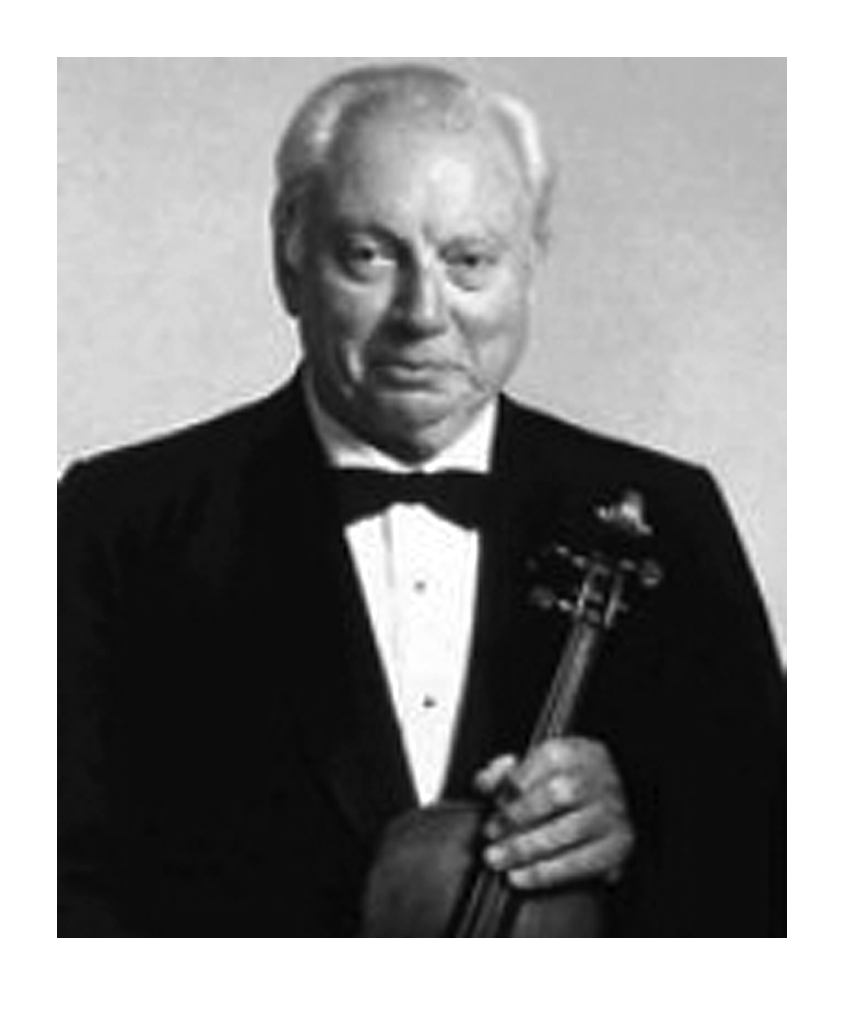
Isaac Stern was born in 1920 in what is now Ukraine.His parents moved to San Francisco,California the following year.His mother began teaching Isaac the piano when he was six. He began taking violin lessons after hearing a friend play the instrument.Later,he began studying music at the San Francisco Conservatory(音乐学院).He progressed quickly.When he was 16,he played with the San Francisco Symphony Orchestra.The next year,he performed in New York City and was praised by music critics.
During World War II ,Mr.Stern played for thousands of American soldiers.It was the first time many of them had heard classical music.After the war,he was the first American violinist to perform in a concert in the Soviet union.He also supported young musicians and cultural organizations in Israel.
In 1979,Isaac Stern visited China.He met with Chinese musicians and students.He taught them about classical Western music.His visit was made into a film,which is called From Mao to Mozart:Isaac Stern in China.It won an Academy Award for best documentary film.
In 1984,Isaac Stern received the Kennedy Center Honors Award for his gifts to American culture through music.He expressed his thoughts about the part that music plays in life.He said he believed that music makes life better for everyone,especially children.
Mr.Stern supported and guided younger classical musicians.They include violinists Itzhak Perlman and Pinchas Zukerman,cellist YoYo Ma,and pianist Yefim Bronfman.
Isaac Stern died in 2001 at the age of 81.He was a major influence on music in the 20th century.He leaves the world richer with his many recordings.
-
(1) Which of the following statements is TRUE about Isaac Stern?A . He was born in California in the 1920s. B . He had visited many countries to advertise his recordings. C . He played less than one hundred concerts in all. D . His excellent music life lasted over 60 years.
-
(2) The underlined word“cellist”in Paragraph 6 may refer to________.A . someone who supports young musicians B . someone who wants to be a musician C . someone who has a gift for music D . someone who plays a certain kind of instrument
-
(3) From the passage,we can infer that________.A . Isaac Stern influenced the culture in the 20th century a lot B . Isaac Stern was one of the most active musicians of his day C . Isaac Stern was so busy that he couldn't spare time to educate the youth D . Isaac Stern led a rich life in his later life
-
(4) What will be the best title for the passage?A . Isaac Stern and the Awards He Got. B . Isaac Stern's Life of Pursuing Music. C . Isaac Stern:One of the Most Honored Musicians. D . Isaac Stern's Visit to China.
Siri is an artificial intelligence (AI) that you can carry around in the pocket, where it waits patiently to be told what to do. In the week we spend together, my AI assistant has performed admirably in finding me restaurants, or the location of the nearest coffee shop.
A typical command might be: “Reserve a table for two at a good French restaurant in San Francisco.” Siri responds by presenting a list of top-rated restaurants that can be booked on OpenTable.com. If you say which time you want, it can book you a table without your lifting a finger. In some ways Siri is just a fancy program to the 35 websites it can connect to, from taxi booking websites to movie review databases (数据库). But what's new is the way it can analyze the intentions of its users and use those sites to put them into action.
Siri attaches possibilities to the explanation of each word and compare your location with other data, some of which you must provide yourself. To send email reminders, Siri obviously needs to know your email address. To “find me the flower shop closest to work”, it needs to know where you work. To pay bills or buy airline tickets, it would need to be linked to your credit card.
That raises the question of how far we are willing to trust a piece of software that can go and do things for us based on what it “thinks” we mean. Siri may be simple, and always shows its explanation of a command before carrying it out. But it gives users a preview of a new balance between privacy, trust and convenience that the expansion of AI into everyday life is likely to develop.
-
(1) What is Siri?A . A digital e-book reader. B . A music-sharing software. C . A voice-controlled website. D . An artificial intelligence software.
-
(2) When asked “do I need my umbrella today”, what will Siri probably respond with?A . The list of umbrella shops. B . The local weather forecast. C . The list of umbrella makers. D . The local climate conditions.
-
(3) Siri is new in that it has the ability ______.A . to connect a lot of websites B . to understand what you speak C . to give a variety of commands D . to create computerized database
-
(4) What question does Paragraph 4 answer?A . Can I trust you, Siri? B . Will Siri be popular? C . Is Siri simple for use? D . Does Siri think itself?
— !
阅读下面短文,在空白处填入 1个适当的单词或括号内单词的正确形式。
In recent years many TV shows have become extremely popular among Chinese audience. Those programs, ranging from talent or dating shows to reality shows (receive) both commercial success and public attention.
Their popularity is (main) based on simple facts. First, they care social concerns. Second, without exception, they explore a perfect balance between the international forms and Chinese expressions.
Despite apparent highlights, much room (leave) for improvement. Above all, commercial interests often outweigh (education) purposes, causing many complaints about the (bearable) advertisements. In addition, some sharp remarks, they are eye-catching, may have misleading effects on the youth.
In my opinion, such shows should shoulder more responsibility instead of merely (entertain) the public. is expected, these programs should be positive in their forms as well as functions. Meanwhile, the (medium) should also safeguard the values of our society.
Do you often lose things? Don't worry. Now a new tool that can be connected to any object you might lose may be the way to solve your problem. The Tile, a small square connected to your iPhone or iPad by means of Bluetooth, allows you to see how close you are to your missing item, within a 50-to-150-foot range (范围). If the item goes out of your phone's 150-foot range, it can still be found on other smart phones with the same app.
When you drive the app on your phone, it shows you, with green bars that increase or decrease, how close or far away you are from the Tile. You can also program it to make a sound when you get close to the Tile. And you can connect your phone with up to ten Tiles. And if your lost object—a dog, for example, or a stolen bike—go out of your own phone's 150-foot Bluetooth range, you can set it as a “lost item”. If any of the phones with the Tile app comes within range of your lost item, a message will be sent to your phone, telling you its position. The Tile app also has the ability to remember where it last saw your Tile, so that you can easily find where you left it.
Since the Tiles use Bluetooth rather than GPS, they are never out of battery or needn't to be charged, and they work for one year before needing to be replaced. And the app works with all generations of iPhones and iPads.
For further information, please visit www.tile666.com.
-
(1) What can the Tile app help you?A . To find other phone users. B . To find your missing items. C . To save your phone's power. D . To use your phone more wisely.
-
(2) Which of the following about the Tile is TRUE?A . The Tile needs to be charged after a year of use. B . One smart phone can only be linked up with one Tile. C . The Tile app can send a message, but it can't make a sound. D . The Tile cannot be connected with a phone without Bluetooth.
-
(3) What does the second paragraph mainly tell us?A . What the Tile app is. B . How the Tile app works. C . Why the Tile app was created. D . The advantages of the Tile app.
-
(4) Where does the passage probably come from?A . A health report. B . A personal diary. C . An advertisement. D . A tourism magazine.
For several years, we lived at the end of a long Texas country road. Every evening when I was away from home on business, my little boy would ask 1 of his mother to take his black2 and my walking stick, to make the half-mile 3from the house to the fence (栅栏) which 4 the beginning of the avenue to home.
One day, I was busy with my business and was 5 for about an hour, completely forgetting about the 6 little boy down the road who might be 7 for his daddy.
On my way home, the rain was so thick that I could not8 ten feet in front of me. All I could 9was finishing my journey and getting out of the rain.10 the downpour began to become weak. It was only a drizzle (细雨) by the time my car turned the last11 and approached the final street between me and a warm home and nice meal.
12 I caught sight of my little boy, who was 13 an umbrella in one hand, a walking stick in the other, and was wearing the biggest and most beautiful smile ever to lighten the14 of a little boy.
As I stopped the car and 15 the door, he ran into my arms and held me. He was wet and 16 with cold, but he never 17the rain, nor the hour-long wait. He simply said, “Daddy, I am so glad you are home.”
Last year, we 18 to a wonderful new home provided for a special season in our lives. We no longer have a long country road.19 I have never forgotten the rainy day and the little boy and his black dog. Often, perhaps a thousand times, that 20has appeared in my mind. Like all events in our lives, it happens once, and must be treasured.
-
(1) I think my long and active life must be due the healthy life I live.
-
(2) The old man brought my father's letter me from a place far away.
-
(3) Evidence provided by the school proved that John's grades fell as he became addicted playing computer games.
-
(4) It takes time to really get to know someone and find what they are like.
-
(5) This means that after a while your body becomes accustomed having nicotine in it.
-
(6) Smoking could do terrible damage your heart and lungs or that it was more difficult smoking couples to become pregnant.
-
(7) When he reached the final line, everyone burst laughing.
-
(8) When I was taken the school football team because I was unfit, I knew it was time to quit smoking.
-
(9) Roy was one of the few people who were kind me.
-
(10) If you start to feel nervous or stressed, do not reach a cigarette.
Get a Thorough Understanding of Oneself
In all one's life time it is oneself that one spends the most time being with or dealing with.
When you are going upwards in life you tend to overestimate (高估) yourself. It seems that everything you seek for is within your reach. It's likely that you think it wise for yourself to stay away from the outer world. Actually, you may keep the following tips in mind.
Gain a correct view of oneself.
You may look forward hopefully to the future but be sure not to expect too much, for dreams can never be fully realized. You may be brave to meet challenges but it should be clear to you where to direct your efforts.
Self-appreciate.
Whether you compare yourself to a tall tree or a piece of grass, a high mountain or a small stone, you represent a state of nature. If you sincerely admire yourself you'll have a real sense of self-appreciation.
In time of anger, do yourself a favor by releasing it in a quiet place; in time of sadness, do yourself a favor by sharing it with your friends; in time of tiredness, do yourself a favor by getting a good sleep.
A. It has its own value.
B. Do oneself a favor when it's needed.
C. Do yourself a favor when you meet with the attack of illness.
D. But it is precisely oneself that one has the least understanding of.
E. Especially if it is well within your reach, you are just too blind to see it.
F. When you are going downhill you tend to underestimate yourself for not being qualified.
G. So long as you have a perfect knowledge of yourself, there won't be difficulties you can't overcome.
- 下列关于0.1 mol·L-1硝酸钾溶液的叙述中,正确的是( ) A.1 L该溶液中含有硝酸钾101 g B.10
- (2007·宁夏文综15)在现代市场经济中,政府越来越多地运用税收、利率等经济杠杆调节经济运行。经济杠杆能够起到调节作用
- 依次填入下面一段文字横线处的语句,衔接最恰当的一组是(3分)() 抚仙湖的蓝不在表面,它是透了的;___________
- 已知,复数(为虚数单位),则的最小值为
- 右图是某生态系统示意图,下列有关叙述正确的是( ) A.该生态系统中有5条食物链 B.该图中蝉鸣叫的现象是生态系统中
- 某学生在配制100 mL 1 mol·L-1的NaOH溶液时,最终配制的溶液浓度比要求的低, 造成该误差的原因可能是(
- 下列植物中,能产生种子的是 ( ) A、水绵 B、墙藓 C、满江红
- 下列加点字注音完全正确的一项是( )(1分) A、归咎( jiù ) 冗杂(rǒng ) 拾级而上(s
- 下列化学用语表示正确的是() A.HClO4中氯元素的化合价:+5 B.胆矾的化学式:CuSO4·5H2O C.NH3的
- 已知数列{an}中,a1=1,a2=3,且2an+1=an+2+an(n∈N+).数列{bn}的前n项和为Sn,其中b1
- 下列顺序不正确的是( ) A.热稳定性:HF > HCl >HBr > HI B.微粒的半径:Cl
- “某教授,1950年1月生,1968年高中毕业,1969年作为知识青年到黑龙江上山下乡。1978年考入厦门大学经济学系,
- 阅读下列材料: 材料一:根据本章程批准、制定或颁布的一切公平竞争法则、协议和执照,均需包括以下条件: (1)雇员组织起来
- 11.填入下面横线处的句子与上下文衔接最恰当的一项是( ) 蜿蜓曲折的沙底小河,顺着山脚涓涓地流着, ,
- 一个口袋中有4个白球,5个红球,6个黄球,每个球除颜色外都相同,搅匀后随机从袋中摸出一个球,这个球是白球的概率是 ▲
- 下列说法不正确的是() A. 检验Cl﹣离子的试剂是硝酸银溶液和稀硝酸 B. 检验SO42﹣离子的试剂一
- 近年来,人类探索太空的热情空前高涨,研究的新成果与新进展令人振奋。据此回答1—3题。 1.2007年4月,美国宇航局发表
- 材料我国是世界上最早开采、利用石油的国家之一。作者 著作 内容摘要 (晋)张华 《博物志》 (石油)与膏无异,膏车(润滑
- 阅读下面一篇散文 母亲 莫言 ① 我5岁的时候,正处于中国历史上一个艰难的岁月。生活留给我最初的记忆是母亲坐在一棵
- KMnO4是一种常用的强氧化剂,工业上可以以软锰矿(主要成分MnO2,另含Al2O3、SiO2杂质)为原料,通过液相法生


