期中专区 知识点题库
—Yes, they're not in my class.
It's Sunday. There are many people in the bus. And an old man is looking here and there. He wants to find an empty seat(座位). Then he finds one. He goes to it. A small bag is on the seat. And a young man is sitting beside it. "Is this seat empty?" asks the old man. "No, it's for a woman. She goes to buy some bananas." says the young man. "Well," says the old man." Let me sit here please. When she comes back, I will(将) leave here."
The bus starts(启动). "She doesn't come, but her bag is here. Let me give her the bag." Then the old man throws the bag out of the bus window.
The young man jumps up and shouts "Don't throw! It's my bag!"
-
(1) The old man finds an empty seat. He goes there and finds there is _______ on it.A . a man B . woman C . a bag D . a coat
-
(2) The young man says the seat is for _______.A . a man B . a woman C . a boy D . a girl
-
(3) The bus starts. The old man _______.A . asks the woman to sit on the seat B . takes the bag to the woman C . throws the bag to the young man D . throws the bag out of the window
-
(4) The bag is _______. The young man doesn't want the old man to throw it away.A . the woman's B . the old man's C . the driver's D . the young man's
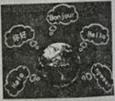
Every year, November 21 is World Hello Day. On this day, all you have to do is to say hello and give a good day greeting(问候) to at least ten people you meet! Of course this can be family and f, but be brave to strangers(陌生人). It started on November 21, 1973. The meaning(含义) behind it is : Say hello and stop war(战争).
Shello to someone can make a lot of difference(不同). For example, a small thing la greeting can mean a lot to shy(含羞  ) people. Because they find it hard to t with people. A hello to a stranger is also a small thing, but through it we can make the w a better place.
In China, people u say "Ni Hao." when they meet each other. How do people say hello to each other in English-speaking countries? You may have some i in your mind(头脑). People usually say, "H are you?" You can answer, "I'm fine," "Very good, thank you," or "Not bad, thanks." You can also ask "And you?"
In the UK, b good friends, they say, "You all right?" "I'm good. Any plans (计划) for the weekend?" People also say "How's it going? " B it's not a question. It just means hello. People often answer, "Good," or "Not bad." Another popular greeting is "Hey, boy." But it is usually among boys. Girls may say "Hey, g."
In the world, people use at least 2,796 languages to say hello to each other.
We can find emojis (表情符号) in our life every day. "Funny" is a made-in-China emoji. It is from Baidu Tieba. And now lots of people like using it. People can buy "Funny" emoji bolsters (抱枕) on the Internet. They are just so cute, so people feel very happy when they see the bolsters.
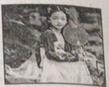
Look, this girl is wearing a long and beautiful dress. Do you know what it is? It is Hanfu. Hanfu is traditional Han Chinese clothing (传统汉族服饰). It is about 5,000 years old. Hanfu is different now, but it is still loose (宽松的) and long. More people are wearing Hanfu these days. Do you like it?
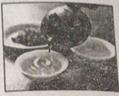
Chinese tea is very popular around the world. White, yellow, green, oolong, black and dark tea are the 6 main types (主要种类). People in Guangdong and Fujian love to drink "Kung Fu Tea" in small tea cups. In Beijing, people love green tea. Remember to make the cup only seven-tenths full(七分满).If the cup is too full, it will get too hot.
|
Topics |
Information |
|
Emoji bolsters | People like using emojis. The emoji "Funny" comes Baidu Tieba. People buy many emoji bolsters. They feel very happy when they see the bolsters because they are. |
| Hanfu | This girl in the picture is wearing a and beautiful dress. The dress is Hanfu. Hanfu has a long of about 5,000 years. But many people are wearing Hanfu these days. |
| Chinese tea | There are many types of tea in China. People in Guangdong and Fujian love to small tea cups to drink tea. Remember not to make the cup full. |

— Sure. You are really like the Monkey King.
Sam lives far away from school, so he school every day.
—Yes, but only ________.
— About 10 minutes' walk.
— _______.
— ________.
-
(1) What's Sandy's favourite subject?A . English. B . Maths. C . History.
-
(2) What does Simon think of Sandy's favourite subject?A . It's easy. B . It's not interesting. C . It's difficult.
-
(3) Who sings well?A . Miss Smith. B . Sandy. C . Simon.
-
(4) How many times does Sandy have music a week?A . Three times. B . Twice. C . Once.
|
doesn't too interesting from daughters different them playing also help |
My English teacher is Ms. Smith. She isAmerica. She has two . Their names are Lara and Gina. They are in my school, . But Lara and Gina are inclasses. Lara's Chinese is very good. She thinks it is. But Gina like it. She says it is difficult. Ms. Smith always lets Lara Gina with Chinese. Gina likes sports. She playsand often watches them. She likesbasketball very much. Sheplays ping-pong with Lara. But she doesn't have a ping-pong bat.
Miss Li is a worker. She works in a big factory. She gets up at 5: 00 every morning. She often has breakfast at 6: 30. After that she goes to the factory by bike. She cleans the machines(机器) when she gets there very early. Then her workmates come. They begin to work at 8: 00. They all work hard. She goes home at 16: 30. Then she does housework. After supper, she reads books. Sometimes she tells her father and mother about her factory. Sometimes she watches TV with them. She goes to bed late.
-
(1) What does Miss Li do?A . She is a doctor. B . She is a worker. C . She is a nurse. D . She is a teacher.
-
(2) After work, Miss Li .A . plays basketball B . is very hungry C . does housework D . gets home very late
-
(3) What can we learn about Miss Li from the passage?A . She often has breakfast before 7: 00. B . Her father does housework in the morning. C . She begins to work at 7: 00. D . She goes to work by bus.
 B .
B .  C .
C . 
- He joined the army for a time as a ____________ (外科医生) and w
- Mrs. Brown was much disappointed to see the washing machine
- 下列说法不正确的是 A、 C2H4O可能的结构有3种 B、 烃分子中连有甲基,则氢原子不可能都在同一个平面上 C、 组成
- 不等式的解集为 A. B. C. D.
- 下列各句加点成语使用恰当的一项是 A.站在青海与白海间的山脊上,一眼望去,蓝天白云让人心旷神怡,青山绿水秀色可餐。 B.
- 动物的卵细胞的形成与精子形成过程的不同点是( ) ①次级卵母细胞将进行普通的有丝分裂 ②一个卵原细胞最终分裂只
- 鉴别稀硫酸和浓硫酸既简单,又可靠的方法是 A、加酚酞试液 B、与铜片作用 C、加Ba
- 下列各句对文意的分析不正确的一项是( )。(3分) A.《闻一多先生的说和做》是以议论为线索来结构全文的,全文结构
- “中部高,四周低”是亚洲地形的一大特征,受其影响亚洲河流的特点是( )A.内流区面积广大 B.呈放射状分布
- “俄国的士兵在1855年和1822年一样英勇作战……总之战争是失败了。”这场战争失败的根本原因是
- 为了“扩内需、保增长”,2009年国务院同意地方发行2000亿元债券,由财政部代理发行,列入省级预算管理。居民购买地方政
- 【诗歌天地】阅读下面古诗,完成后面小题。(8分)破阵子·为陈同甫赋壮词以寄之醉里挑灯看剑,梦回吹角连营。八百里分麾下炙,
- 生活中,你也许遇到了许许多多:亲情、友情、幸福、快乐、成功、善良、丑陋、烦恼……总有一些触动了你的心灵。请你以“
- 下列叙述中,哪些是对的( ) A.人造卫星已进入轨道做匀速圆周运动,重力对卫星做功B.如图7-1-10所示,弹簧原
- 下列关于生态系统的叙述,错误的是 A.草原生态系统比农田生态系统的群落结构更为复杂 B.环境条件分布不均匀是形成群落水平
- 漫画《补充两字》启发我们A.要坚持实事求是原则 B.要坚持一分为二的观点 C.要坚信事物的前途是光明的 D.要集中全力抓
- 如图6所示,李华小心地在冷水杯和热水杯中滴入两滴墨水,他会看到 杯中的墨水扩散较快。这个实验表明
- 古诗文默写填空。(6分) (1)晴川历历汉阳树, 。(崔颢《黄鹤楼》) (2)复行
- 在图所示的电路中,电源电压为15伏且不变,滑动变阻器上标有“20Ω 2A”字样,闭合电键S后,电流表的示数为0.2安,
- 函数(为常数),若对任意的,恒为增函数,求最大值


