本单元综合与测试 知识点题库
—No, you ________. You ________ to leave until the bell rings .
Do as the Romans Do
The customs in different countries are rather different. If I have dinner with a Chinese host, he always puts more food onto my plates as soon as I have emptied it. That often discomforts me greatly. I have to eat the food even if I don't want to, because it is considered bad manners in the West to leave one's food on the plate. I have already noticed that when a Chinese sits at an American's dinner party, he often refuses the offer of food or drink though he is in fact still hungry or thirsty. This might be good manners in China, but it is not in the West at all. In the United States, it is impolite to keep asking someone again and again or insist on his accepting something. Americans have a direct way of speaking, if they want something, they will ask for it. If not, they will say, “No, thanks.” When an American is fed with beer by the host, for example, he might say, “No, thanks. I'll take some diet, Pepsy-Cola(百事可乐) if you have it.” That is what an American will do. So when you go to the United States, you had better remember the famous saying: When in Rome(罗马), do as the Romans do.
-
(1) From the passage, we can know that the Chinese are usually _______ to the guests.A . rude B . very polite C . impolite D . cold
-
(2) When a foreigner has dinner with a Chinese host, he often feels _______ .A . uncomfortable B . pleasant C . satisfied D . happy
-
(3) Why does a Chinese often refuse the offer of food or drink at a dinner party?A . He has had enough. B . He is shy. C . He is afraid that others will laugh at him. D . He thinks it's polite to do that.
-
(4) When an American wants something to eat or drink at a dinner, they will ______.A . ask for it boldly(冒失地) B . refuse the offer C . ask for it directly D . express himself indirectly(间接地)
-
(5) “When in Rome, do as the Romans do” means “_______”A . When you get to Rome, you should act as the Romans do. B . When you stay in Rome, you should do as the Romans do. C . Romans can be an example for you. D . When you are in a new country, you should do as the locals(当地人) do.
David is the boss of a big education company. He wants to know some information about education in China. Jenny is a pet lover. She wants to work with pets. Helen is a housewife. She wants to buy vegetables and fruit at low prices. Wang Lan just came back from England. She is looking for a job. She prefers to work in a big company. The students in No.2 Middle School plan to have a picnic. Whether they will do it depends on it will rain or other situations. | A. Lots of people miss their pets while they are on holidays. Our hotel can solve(解决)this problem. We lend cats or dogs to you. We are sure that you will be happy to stay with them. B. Many people like animals and take them as their pets. Now pet hospitals are very busy .Kind people who love animals are needed to work in busy hospitals. C. Living in another country can help you to learn a language, and about another culture. Many companies today need employees(雇员)who can speak a foreign language, or have the experience of living or working in another country. D. We sell eggs, apples tomatoes and pork at very low prices. Our business hours are from 6:00a.m. to 10:30p.m. E. Our city will have a cloudy day tomorrow .It will be rainy at times. There will be a strong wind. The day after tomorrow will be sunny. It will be a fine day to go hiking or to have a picnic. F. We have all kinds of video films, TV plays, and music videos. You can enjoy yourself and take time to watch your favorite videos at our shop. You can also borrow some videos home. Each video for a week for 1 dollar. G. A study of the people in China's largest cities shows that saving money for children's education has become an important reason for saving. It is the second most important purpose of people's saving habit. The result shows that people in China care much about education. The education market is very big in China. |
Some British and American people like to invite friends for a meal at home.You should not be upset (不安的) if your English friends don't invite you home.It doesn't mean they don't like you.
Dinner parties usually start between 7 pm and 8 pm and end at about 11 pm. Ask your hosts what time you should arrive.It's polite to bring flowers,chocolates or a bottle of wine as a gift.
Usually the evening starts with drinks and snacks.If you want to be very polite,say how much you like the room,or the pictures on the wall.But remember-it's not polite to ask how much things cost.
In many families,the husband sits at one end of the table and the wife sits at the other end.They eat with their guests.
You'll probably start the meal with soup or something small,then you'll have meat or fish with vegetables,and then dessert followed by coffee.It's polite to finish everything on your plate and to take more if you want it.
Did you enjoy the evening?Call your hosts the next day,or write them a short “thank you” letter.British and American people like to say “thank you,thank you,thank you” all the time!
-
(1) If your English friend doesn't invite you for dinner at home,it doesn't mean he or she .A . doesn't like you B . likes you C . can't afford to do so D . is too busy
-
(2) It's impolite .A . for a guest to ask about the price of a certain thing B . for a guest to have drinks and snacks before the party C . to take something with you when you are invited to dinner D . for a guest to eat up everything on his or her plate
-
(3) The meal ends with usually.A . soup B . coffee C . meat or fish D . dessert
-
(4) When you are invited to a dinner party,you'd better .A . ask what time you should arrive B . take your wife with you C . drink as much as possible D . eat as many snacks as you can
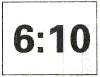 B .
B .  C .
C . 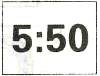
-
(1) Why does the girl feel nervous before going to Switzerland?A . Because she doesn't know the language. B . Because she has never been there. C . Because she doesn't know the culture there.
-
(2) What are famous in Switzerland?A . Time. B . Watches. C . Culture.
-
(3) What should the girl do if she goes to a party in Switzerland(瑞士)?A . She can't be late. B . She should buy a present. C . She should take some flowers.
—My pleasure.
—It's only 1 yuan! _________.
Table manners are how to behave when you eat a meal. They include how to handle knives, forks and spoons and how to eat in polite manners. To behave well abroad, you are to know some table manners.
Eating manners
Japan: It is "perfectly" okay to slurp when you eat noodles. Unlike making big noises, slurping slightly is not rude. Japanese also say it tastes better if you slurp.
Russia: Your wrists should be placed on the edge of the table while eating, a fork in the left hand, and a knife in the right hand. It is not good manners to rest them on your lap. Keep your elbows of the table. Leave some food on your plate to show that the host has given you enough to eat.
France: Never discuss money or religion over dinner. What is different from the manners in Russia is that finishing everything on your plate is considered good manners.
Mexico: Whenever you catch the eye of someone who's eating, even a stranger, its good manners to say "provecho" which means enjoy. In Mexico, dining is more than a meal. It's a social occasion-lunches are seldom quick and suppers can last for hours. Where you sit matters in the country. Before you get seated, look for place cards, or wait until the host seats you. And you must say"enjoy your meal"before you leave the table.
Drinking manners
America: If you empty a bottle into someone's glass, it obliges that person to buy the next bottle. It's polite to put the last drops into your own glass.
Australia: In a pub it's usual to buy a round of drinks for everyone in your group. When it's your turn, say "It's my round. "When it's their round, they will buy it for you. Don't leave before you' ve bought a round.
Japan: Don't fill your own glass of alcohol. Instead, you should pour for others and wait for them to do it for you.
-
(1) When you are at table in Mexico, you should______.A . keep silent if you catch the eye of a stranger B . eat as quickly as you can to save your time C . wish others happy with eating before leaving the table D . seat yourself anywhere before the host tells you to
-
(2) In__________, it's impolite to discuss money or religion over dinner.A . America B . France C . Australia D . Russia
-
(3) According to the passage, it is good manners to____________.A . keep quiet when eating noodles in Japan B . leave some food on your plate in France C . put the fork in the right hand in Russia D . take turns to treat each other in Australia
-
(4) Which of the following can be the best title of this passage?A . Eating manners B . Drinking manners C . Table manners D . Country manners
-
(5) The writer tells us the table manners in many countries in order to ___________.A . attract us to these countries to enjoy foreign food B . help us behave in polite manners in different countries C . teach us how to handle knives,forks and spoons D . make us able to express thanks to different hosts
Sometimes business can take you out of your home country. That means you have to communicate with people from other cultures. So it's important to1some international customs. Here are some special2customs.
In France, if you don't speak French, that's OK, but you are3to say sorry for you can't communicate easily first. If you don't have time to learn French before doing business there, learning a few phrases or greetings can serve as a4of good faith (诚意). Also, be prepared for5meals in France. Lunch can last up to two hours long.
Change your6to a little earlier when doing business in Australia. Being on time is very important when meeting to discuss business. If you're not going to be7on time, then you should arrive a bit early. It's quite impolite to be late.
While the business8hasn't been so important in the US, that is far from the9in Japan. When doing business with the Japanese, you should carry lots of business cards, which should be printed in both English and 10. The business card is held in very high regard in Japan. When giving your cards to others, you must pass them out11both hands, with the Japanese side facing up. When receiving a business card, you should accept12with both hands.13, the business card should never be written on or played with during the meeting, as both are signs of disrespect.
Left-handers (左撇子) may have some14doing business in the United Arab Emirates. In Middle Eastern countries, the left hand is considered15. It is important to eat, shake hands and pass things with the right hand only. Using the left hand to do any of those activities is a serious insult (侮辱) .
- 19世纪中期,资本主义列强对外扩张不断加剧,其基本的推动力是( ) A.资本主义制度的确立
- 阅读下面的文字,完成1-3题。 瓦斯的开发和利用 我国是煤炭生产大国,瓦斯突出的矿井约占煤炭矿井的一半。瓦斯是煤矿安
- 在一定温度下,向一个容积为2 L的密闭容器内(预先加入催化剂)通入2mol SO3,经过一段时间后,测得容器内的压强为起
- 一定温度下,10 mL 0.40 mol·L-1 H2O2溶液发生催化分解。不同时刻测得生成O2的体积(已折算为标准状况
- I have just received an invitation from a good friend of min
- 全国人民代表大会是()A.我国最高国家权力机关B.我国最高国家行政机关 C.我国最高国家法律监督机关D.我国最高审判机关
- 阅读《报任安书》选段,完成文后小题。 少卿足下:曩者辱赐书,教以慎于接物,推贤进士为务,意气勤勤恳恳。若望仆不相师,而用
- 数列的前n项和是 .
- 以下属于化学变化的是 A、轮胎爆炸 B、纸张剪成三角形 C、蜡烛燃烧 D、海水晒盐
- 将一定量的CO2 缓缓通入足量的澄清石灰水中,随时间的进行生成的沉淀质量如右图所示,回答下列问题: (1)反应达到t时生
- 下列词语书写没有错别字的一项是( ) A.告罄斫 痕挺而走险义愤填膺 B.羸弱追 溯吹毛求疵毛骨耸然 C.愧作嶙
- 已知中,角A,B,C,所对的边分别是,且; (1)求 (2)若,求面积的最大值。
- 价格变动影响企业的生产和经营。面对商品降价,企业必须努力提高劳动生产率。这样做的经济意义是 ( ) ①降低社会
- 2010年上海世博会场馆,大量的照明材料或屏幕都使用了发光二极管(LED)。目前市售LED品片,材质基本以GaA
- 由y=sin x,x=0,x=-π,y=0所围成图形的面积写成定积分的形式是S=________.
- 一理想变压器原、副线圈的匝数比为10:l,原线圈输入电压的变化规律如图甲所示。副线圈所接电路如图乙所示,P为滑动变阻器的
- 阅读下面的文字,完成19~22题 面对蚂蚁 叶延滨 ①“蚂蚁爬过暴
- 四大洋中,亚洲没有濒临的是( ) A、太平洋 B、大西洋 C、印度洋
- In modern society thereis a great deal of argument about
- 已知: (1)胆矾失水的热化学方程式为CuSO4·5H2O(s)===CuSO4(s)+5H2O(l) ΔH=+Q1 k


