广东省深圳市2020年初中毕业生学业考试英语仿真试卷(四)
教材科目:英语
试卷分类:中考
文件类型:.doc
发布时间:2026-07-01
授权方式:免费下载
下载地址:点此下载
以下为试卷部分试题预览
| 1. 阅读理解 | 详细信息 |
|
阅读理解
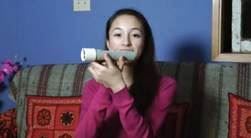
A 15-year-old student who invented a flashlight(手电筒) getting power from the holder's body heat is going home today from California with a big prize and a chance to do further research. Ann Makosinski was the only Canadian among the four winners at Google's international science competition. Thousands of young scientists from around the world took part in the competition. Winning the science and technology competition was "a surprise". Ann said, "I think it will have a great influence on my future." Ann thanked her family for encouraging her interest in science and said that her first toy was a box of transistors(晶体管). Ann's prize includes $ 25,000 and a "once in a-lifetime expericnce" from Google for her Hollow Flashlight, which has no moving parts or batteries. The idea for the invention came from seeing unwanted batteries and her friend's experience. When Ann visited a friend in the Philippines, she saw the friend couldn't study when it became dark because there was no electricity or light. She saw the need for a flashlight that has no batteries - Hollow Flashlight. In her project, Ann wrote "I made two flashlights that do not use any batteries or harmful materials. They do not create any noise and will always work. The flashlight needs at least a 5℃ temperature difference between the holder's body and the environment around to produce light." A video of Ann explaining how she creatcd the flashlight has been watched more than 1.4 million times on the Internet. Though Ann was successful, she has not made a decision about her career path. Ann hopes that she can find a way to join her love of film and science together. The four winners were chosen from 15 final competitors from eight countries. The competition attracted thousands of students in 120 countries.
|
|
| 2. 阅读理解 | 详细信息 |
|
阅读理解
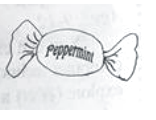
The Sixth Time I Went to the Principal's Office When I was in the seventh grade, I had problems behaving. My heart was in the right place, but I couldn't always follow the rules. I played many tricks on my schoolmates. Once, I even pulled a girl's hair on the school bus to get her attention. As a result, I was repeatedly sent to the office of the principal(校长). Although I hated going there, I did not hate the principal, Mr. Ratcliff. Mr. Ratcliff was a kind, elderly man. When he spanked( 打屁股) me for putting some ants into a classmate's pencil box, it didn't hurt at all, but it did hurt my feelings. I thought so much of him and moments like that seemed to prove I was hopelessly bad. When I got called to Mr. Ratcliff's office for the sixth time, I had no idea what I had done. I felt disappointed as I walked down there. I went into his office, sat down, and looked at the floor. Then he said the last thing I expected to hear:” Kevin, I've heard you've been behaving really well lately. I want you to know how proud I am of you, and I just called you down to my office to give you a peppermint.” “Really?” I was surprised. “Yes. Now you can take that peppermint and go back to class.” I carried the peppermint with me as if it was a gold coin. When I got into my classroom, I bragged ( 吹嘘) to my classmates about my turnaround, excitedly. I wasn't so bad after all. Mr. Ratcliff was really kind. He made me realize that I was just a kid who had problems with behavior. He bought some peppermints and took the time to notice me when I got something—anything—right. Mr. Ratcliff gave me some hope by giving me some love. I will just remember him for the rest of my life.
|
|
| 3. 单选题 | 详细信息 |
|
Your _______ is the way that your face looks at a moment. It shows what you are thinking or feeling.
A . expression
B . experience
C . experiment
|
|
| 4. 单选题 | 详细信息 |
|
—Putin _______ the other candidates and was elected president for his fourth time.
—Yes. Putin is very popular. His votes were far _______ the others' in the election.
A . beat; ahead of
B . defeated; better than
C . won; in front of
|
|
| 5. 阅读理解 | 详细信息 |
|
阅读理解
People use their mouths for many things. In the English language, there are many expressions using the word "mouth". But some of them are not so nice. Sometimes, people say something to a friend or a family member. Later they regret because it hurts that person's feelings. Or they tell the person something they didn't mean to tell. The speaker might say: "I really put my foot in my mouth this time." Sometimes when one person is speaking, he says the same thing that his friend is going to say. When this happens, the friend might say: "You took the words right out of my mouth!" Sometimes a person has a bad or sad experience with another person. He might say that experience "left a bad taste in my mouth." Or the person possibly has a very frightening(可怕的)experience, like having an angry dog running after him. He might say: "I had my heart in my mouth." Some people have lots of money because they were born into a very rich family. You might say the person "was born with a silver spoon (银勺) in his mouth". He is the opposite of a person living from "hand to mouth". This person is very poor and only has enough money for the most important things in life, like food.
|
|
| 6. 单选题 | 详细信息 |
|
Boys and girls, put your time to _____ good use in the coming three months and you are sure to become an honor to those who love you and care for you.
A . a
B . the
C . /
|
|
| 7. 单选题 | 详细信息 |
|
— There are some flies (苍蝇) here. They will _____________ diseases.
—Let me kill them.
A . spread
B . find
C . invent
|
|
| 8. 单选题 | 详细信息 |
|
— Did you see Mike at the harbor (港口) yesterday?
—No, I didn't. When I arrived there, the ship had _____________.
A . flown away
B . looked around
C . set sail
|
|
| 9. 单选题 | 详细信息 |
|
—Does Tom like eating fruits?
—Yes. He likes eating fruit such as apples, pears and bananas.
A . like
B . be like
C . look like
|
|
| 10. 单选题 | 详细信息 |
|
—It took over ten months to build the bridge.
—We planned to finish it in October, but it was over in December.
A . nearly
B . less than
C . more than
|
|
- 广东省广州市2019届中考英语模拟试卷(十八)
- 广西河池市南丹县2020年九年级英语教学质量调研检测(二模)试卷
- 冀教版初中英语八年级下册Unit 1 Lesson 4 The Spring City
- 仁爱科普版初中英语九年级下册Unit 6 Topic 2 Section A 同步练习
- 浙江省台州市天台县2018-2019学年七年级下学期英语期末考试试卷(含小段音频)
- 新目标(Go for it)版初中英语八年级上册Unit 2 Section B 随堂小练笔
- 浙江省湖州市吴兴区2019-2020学年八年级上学期英语期末考试试卷(含听力材料)
- 浙江省宁波市2018-2019学年七年级上学期英语教学质量检测(一)(含听力音频)
- 新目标(Go for it)版初中英语九年级上册Unit 1 Section A 随堂小练笔
- 浙江省温岭市2018-2019学年七年级上学期英语期末模拟测试卷
- 外研(新标准)版七年级英语下册Module 11 Unit 2 Here are some ways to welcome them. 课时练习
- 江苏省南京市玄武区2019-2020学年八年级上学期英语期末考试试卷
- SF6是一种优良的绝缘气体,分子结构中存在S-F键。已知1molS(s)转化为气态硫原子吸收能量280kJ,断裂1mol
- 如图所示,在长约80cm~100cm,一端封闭的玻璃管中注满清水,水中放一个用红蜡做成的小圆柱体(小圆柱体恰能在管中匀速
- The maninsisted that he ________not ill, but the doctor sugg
- HA 是一元弱酸,难溶盐MA 的饱和溶液中 而变化, 不发生水解。实验发现,298K时 ,如下图中实线所示。下列叙述错误
- 已知sinα=,sinβ=,且α、β为锐角.求α+β的值.
- 下列生理过程或生物技术中,可发生碱基互补配对的是 ①种子的萌发 ②病毒的
- 阿伏加德罗常数的值为NA,下列说法正确的是( ) A. 标准状况下,22.4L四氯化碳中含有C-Cl 数目为4NA
- 为了使临时装片内不产生气泡或少产生气泡,盖盖玻片时应( ) A、把盖玻片平放在载玻片上; B、事先多滴几滴清水;
- 某有机物分子式为C16H23Cl3O2,分子中不含三键和环,则分子中双键数目为()。A.2 B
- 积土成山,风雨兴焉( ) A.在那里 B.什么 C.助词
- 四大洋中面积最大的是: ( ) A、大西洋 B、印度洋 C、太平洋 D、北冰
- 2002年2月“哥伦比亚号”航天飞机在进入地球高空大气层时,发生意外事故,7名宇航员全部遇难.该航天飞机进入大气层时与地
- 在某H2O2溶液中氢元素与氧元素的质量比为2︰17,现向19g该H2O2溶液中加入1g二氧化锰,充分反应后,生成氧气的质
- 下列句子中加点成语,使用有误的一项是( ) A.就业形势的不容乐观,让找到一份理想的工作成为很多人魂牵梦萦的事。
- 下列反应,硝酸既表现了酸性,又表现了氧化性的是()A.FeO+HNO3B.Fe2O3+HNO3C.SO2+HNO3
- 题目:那一片山水 提示:可能你曾流连过桂林山水的奇异,可能你还沉醉于东湖水库的灵秀,也可能你更神往西藏雪山的神秘
- 4. He is _____, but he doesn't feel _____. Because he likes
- 10.下列各词中,没有语病的一句是( ) A.“中国城市少年儿童生活习惯研究”课题组的报告指出,中国中小学生睡眠状况
- 如图为一直角支架AOB,AO水平放置,表面粗糙,OB竖直向下,表面光滑。AO上套有小环P,OB上套有小环Q,两环质量均为
- 把钠放入滴有酚酞试液的水中,下列现象不会出现的是 ( )A.钠


