浙江省杭州公益中学2024-2025学年九年级上学期12月英语月考试卷
教材科目:英语
试卷分类:九年级上学期
文件类型:.doc
发布时间:2026-07-01
授权方式:免费下载
下载地址:点此下载
以下为试卷部分试题预览
| 1. 完形填空 | 详细信息 |
完形填空Frances had been blowing bubbles (气泡) in her milk "Act your age, " said Aunt Augusta 1 . Though Frances had made sure the bubbles weren't going over the edge (边缘) of the glass, it seemed that Aunt Augusta was 2 anyway. Frances was quiet. She felt better when Aunt Augusta had 3 visiting them and gone home. The next day, Frances was playing with her five-year-old sister, Grace, and several of Grace's friends. Just then Frances's friend Julie 4 . "You'd better act your age, " said Julie. "Or what will our 5 think? They may not want to play with you. " The next day was Saturday. Frances wasn't feeling as excited as she usually did about going to Grandma's house for dinner—especially 6 Aunt Augusta was invited as well. When they sat down to eat, Aunt Augusta started 7 her fights with her next-door neighbor. "… and yesterday I came home to find his dog burying a bone (埋骨头) right in the middle of my flower bed!" she said. "Do you know what I did next?" 8 answered her question, so she answered it herself. "After the dog left the 9 , I dug up the bone, gift-wrapped (用礼品包装纸包装) it, and put it in that man's mailbox. " "Oh, Augusta, " said Frances's mom, "you should learn to act your age. " At the thought of proper Aunt Augusta being 10 to act her age, Frances started to laugh. The more she tried to 11 , the more she laughed. Finally even Aunt Augusta managed a small 12 and said, "I guess I should. " Grandma laughed quietly and said, "You know, that's the first time I've heard Frances laugh all evening. 'I'm glad she remembers 13 to smile. " The next afternoon Frances was playing hopscotch (跳房子游戏) with Grace when Julie walked by. "Hopscotch?" asked Julie. "You 14 play a baby game like hopscotch?" "Yes, I do, " said Frances in a 15 voice. For a while Julie watched Frances and Grace hopping and laughing. Then quietly she asked, "May I play, too?" (1)
A .
nervously
B .
shyly
C .
strictly
D .
awfully
(2)
A .
sad
B .
angry
C .
excited
D .
relaxed
(3)
A .
practiced
B .
started
C .
forgotten
D .
finished
(4)
A .
arrived
B .
guessed
C .
waited
D .
left
(5)
A .
sisters
B .
teachers
C .
friends
D .
parents
(6)
A .
although
B .
since
C .
if
D .
so
(7)
A .
worrying about
B .
thinking about
C .
talking about
D .
dreaming about
(8)
A .
Somebody
B .
Anybody
C .
Everybody
D .
Nobody
(9)
A .
kitchen
B .
garden
C .
hill
D .
river
(10)
A .
told
B .
encouraged
C .
refused
D .
punished
(11)
A .
understand
B .
stop
C .
achieve
D .
help
(12)
A .
cookie
B .
mistake
C .
surprise
D .
smile
(13)
A .
who
B .
how
C .
when
D .
where
(14)
A .
never
B .
only
C .
still
D .
almost
(15)
A .
tired
B .
clear
C .
silly
D .
weak
|
|
| 2. 阅读选择 | 详细信息 | |
阅读短文,回答问题
|
||
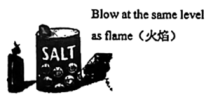 What to do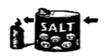
| 3. 阅读选择 | 详细信息 |
阅读短文,回答问题A star athlete at the college where I work recently stopped by my office. After making a few mistakes during a weekend match, she couldn't stop blaming herself. "I'm in the best condition, and I practice hard. How is this happening?" she asked. Many students, like this girl, have a sense that the nights in the library and the hours on the field should lead them to success. When they win, they feel powerful and smart. When they fail, they always can't help thinking "It must be all my fault. " It's common to see some young adults have difficulty in facing failure. Most people believe that's because, they were well protected by their parents throughout their childhood. But there is something else at play: a wrong promise that they can achieve anything if they are willing to work on it. However, they sometimes fail although they try their best. Psychologist Suniya Luthar believes some teens push themselves toward impossible goals. The fact is that you can do everything in your power and still fail. Instead of beating yourselves up when things don't go your way, you should ask adults for help to go for success in healthier ways. You should learn to see failure as a natural part of learning. Parents and teachers can help you find purposes, or goals you really love to achieve, which may help you get greater life satisfaction. The point is to remind yourself that something unexpected always happens in your life. It's often the people who learn to say "stuff happens" who get up the fastest.
|
|
| 4. 阅读选择 | 详细信息 |
阅读短文,回答问题① When talking about obeying rules, Abby will never forget her experience with her father and her pet Tobias, a small mouse at the airport years ago. ②One day, Abby's father was taking her to visit her grandmother and they are not allowed to take a mouse into another country. It was a rule. But Abby put the mouse into her sock in her bag secretly without telling her dad. When they arrived at the airport, they had to be checked by the X-ray machine. Abby felt her legs shaking and her heart beating fast. Unexpectedly, they passed. ③On the plane, Abby opened up the bag after her dad and the woman next to her fell asleep. Tobias was excited to jump out from the bag. He landed upside down on the woman's knee. The woman screamed loudly so that many people on the plane heard the voice. At that moment, Abby put Tobias into her bag quickly. Her dad didn't know at all but slept. ④ After they landed, Abby's dad ticked (打勾) NO on a paper to: "Are you bringing any live animals into the country?" But a man at the X-ray machine asked Abby to open her bag. Abby had to open the bag and there was Tobias! So the man led Abby and her father into a small, dark room. There were some people in uniforms. Tobias was in the sock on the desk. One police officer talked to Abby's dad. "This is very serious, " he said, "You have tried to smuggle (偷运) an animal into this country and you have lied on the paper. "" It's my fault, " Abby said in a low voice, "Dad didn't know I had Tobias. " The police officer stared at her, "What's your name? Have you ever been in trouble before?" Abby opened her mouth, but no sound came out. At last, her dad had to pay a big fine for what Abby did. It cost a lot of money. And Tobias had to go into quarantine (隔离检疫) for six months. ⑤It must be a real lesson for Abby. From then on, she never breaks the rules any more.
|
|
| 5. 阅读填表 | 详细信息 | |||||||||||
任务型阅读-完成表格The Communist Youth League of China (CYLC中国共产主义青年团) was born in May 1922. It is 100 years old this year. Almost every year in May, hundreds of teenagers get together at Tuanyida Square in Guangzhou. It is the place which the CYLC was born in. In 1932, a special school opened in a small village of Ruijin, Jiangxi. It's the first school of the CYLC. Its first 124 students arrived in December. They were between 14 and 25 in age. They learned about history, politics (政治), geography and other skills. Every night, the students read books and newspapers. They not only learned knowledge, but also put what they learned into practice. At that time, the young people who wanted to join the CYLC made the application form (申请书) by themselves. They needed to write why they wanted to be a CYLC member and how they would do it. Now the application form is printed in a standard form. The form might be different over time. However, the spirit of the CYLC has never changed. Do you know the song of the CYLC? In 1987, Hu Hongwei wrote the lyrics (歌词). He sees young people as a sea of flowers in May and the rising sun. Later, Lei Yusheng composed (作曲) the song, it became the song of the CYLC in 2003.
|
||||||||||||
| 6. 阅读选择 | 详细信息 |
任务型阅读-多任务混合Have you ever heard of dyslexia (失读症)? Many people believe that the famous physicist, Albert Einstein (1879-1955), had dyslexia. But did you know that researchers at the Cass Business School in London have found that a large percentage of business owners—possibly as many as 35%—are dyslexic? A person with dyslexia has difficulty reading, understanding and memorizing written information. Anybody can be dyslexic—even a genius (天才) like Einstein. If you haven't realized it yet, dyslexia has nothing to do with intelligence, and it can be an advantage. At least 10% of the world population is dyslexic. It often runs in the family, from one age group to the next. Michael, 23, has had trouble with dyslexia for years. He has recently finished university, where he studied Business Management. He's intelligent, kind and funny—but things haven't been easy for him. When he was seven years old, Michael's teacher noticed that he couldn't read easily. After a few weeks, an expert found out that the problem was dyslexia. Soon after that, Michael started learning new ways to read during his childhood and teenage years, studying was a huge challenge. "If my non-dyslexic classmates needed ten minutes to read and understand something, ▲ " We have to admire the courage and efforts it takes dyslexic people to study and pass exams. For centuries, education has depended on reading, writing and memory. These skills are important, but the 21st-century workplace needs other talents, such as creativity. Here's where people with dyslexia may have an advantage. People like Michael have spent years creating strategies (策略) to manage their dyslexia, and being able to solve problems gives them a big advantage in the world of business, too. "I really believe dyslexia has made me stronger. I've never been afraid to take risks. I've already faced a lot of challenges in my life, but with patience and hard work, things have gone really well for me so far! "
|
|
| 7. 选词填空(多句) | 详细信息 | |
选词填空-句子
|
||
| 8. 单词拼写(语篇) | 详细信息 |
阅读填空Once there was a (兔子) named Pete with two big ears. It was a (遗憾、可惜) that Pete hardly put any of others' words in his ears. He just forgot about everything others said! He always performed b and was never patient enough to listen carefully while people were speaking. His friends and (亲属) got mad and disappointed as Pete always forgot what they had agreed before. "Where are all the words I've heard?" Pete examined his ears many times until one day a tiny ant called Word-Eater (掉落) out of his ear and warned him, "You can recall nothing because I eat all the words you hear when you are not listening carefully. " Pete (后悔) what he had done before. Then he made a (明智的) decision. He made an (努力) to listen carefully whenever others were speaking. Then the ant had nothing to eat, and finally it was dead without d. From then on, Pete was used to listening carefully and nothing could p him from remembering others' words. |
|
| 9. 语法填空(语篇) | 详细信息 |
阅读填空I am quite devoted to volunteering. Whenever I am asked why I want to help as a volunteer, my answer always (remain) the same: It allows me to connect with my community and make it better place. Growing up in Hawaii, my dad took me to the city center every month (offer) food to the poor. We never skipped (跳过) it even once I left my hometown to go to university. My idea to help others also grew from there. In my (four) year of university, I founded my own food program, the Lunch Box. I will never forget the day when I started it. A student (happy) walked in the door and hugged me, "It's said you've opened the Lunch Box. What a great job you've done to prepare food for (we) ! Thank you so much. your help, I won't have enough food in the following days. " That was two and a half years ago, but the (moment) like that still happen to me today. I now work on several food programs for poor people in Indianapolis. And I will continue to make myself available as long as there is still someone is in need. |
|
| 10. 书面表达 | 详细信息 | |
当前,各地正在积极响应"传播中国声音,推广中国文化"的精神。假设你是李华,请你给一个对中国文化非常感兴趣的英国笔友Mike写一封信,从下列几个相关话题中选择至少2个进行介绍,并针对该话题具体举例讲解。
注意:(1) 文中不得出现真实校名和人名;(2) 词数100左右,邮件格式已给出,不计入总字数。 Dear Mike, It's so exciting to hear that you are interested in Chinese culture! Li Hua |
||
- 浙江省义乌市稠州中学教育集团2021-2022学年七年级下学期寒假检测英语试题
- 浙江省湖州市吴兴区2020-2021学年八年级下学期英语期末试题
- 黑龙江省鹤岗市2020-2021学年七年级上学期英语期末试卷
- 广东省汕头市龙湖实验中学2020-2021学年九年级下学期英语开学考试试卷(含听力音频)
- 广东省深圳市2021年初中毕业生学业水平考试英语全真模拟试卷(2)
- 浙江省温州市瑞安市莘塍一中2021-2022学年九年级下学期英语开学考试
- 四川省乐山市高新区嘉祥外国语学校2021-2022学年八年级上学期入学测试英语试卷
- 备战2021年中考英语专题复习——选词填空 2(真题)
- 湖北省天门市多宝一中2021年九年级下学期英语4月考试试卷
- 河北省邢台市2021届九年级上学期英语9月摸底考试试卷
- 浙江省湖州市吴兴区农村学校2020-2021学年七年级下学期英语期中联考试卷
- 吉林省松原市乾安县2021-2022学年九年级上学期期中考试英语试题(含完整音频)
- 光滑的水平面上放有质量分别为m和的两木块,下方木块与一劲度系数为k的弹簧相连,弹簧的另一端固定在墙上,如图所示。已知两木
- 设变量满足约束条件则目标函数的最大值为() A.4 B.11 C.12 D.14
- Most American students have said goodbye to fancy (高档的)fruit
- 孙权大将周瑜利用曹军不习水战的的弱点,指挥联军用火攻的办法大败曹军。该战役是 A. 巨鹿
- 阅读下面这首宋诗,然后回答问题。(8分) 舟中二首(其一)① 陈师道 恶风横江江卷浪,黄流湍猛风用壮②。 疾如万骑千里来
- 若,则整数x的个数是__________________。
- 关于温度、内能和热量,下列说法正确的是() A.物体的内能越多,放热一定越多 B.温度相同的物体,其内能一定相等 C.物
- 对下列句子的顺序,排列正确的一组是 ①1677年,我国茶花由英国医生甘宁引种,开始传到欧洲。②于是,我国茶花成了世界性的
- 有“亚欧大陆桥”之称的铁路是() A. 西伯利亚大铁路B. 贝阿铁路 C. 莫斯科到圣彼得堡的铁路D. 莫斯科到叶卡捷琳
- 2009年1月1日土耳其中央银行开始在全国范围内发行新货币“土耳其里拉”,以取代原来的“新里拉”,满足国内商品经济发展需
- 若复数是实数(是虚数单位),则实数的值为 ( ) A.-2 B.-1 C.1 D.2
- 函数f (x ) =+的定义域是
- 设双曲线的离心率是3,则其渐近线的方程为( ) A. B. C. D.
- 实验时可用推拉注射器活塞 的方法检查右图中装置的气密性。当向外拉活塞时,如果装置气密性良 好,可能观察到A.长颈漏斗下端
- 己知铝的密度为2.7×10³kg/m3,小明的父亲外出时买了一个用铝材料制造的艺术品球,用天平测得球的质量是594g,体
- 已知磷酸二氢铵(NH4H2PO4)是磷肥中的一种,下列说法错误的是( ) A.磷酸二氢铵是一种复合肥料 B.磷酸二氢铵
- 著名教育家陶行知先生原名文浚,大学期间推崇某一哲学家的学说,取名“知行”。43岁时,他在《生活教育》上发表《行知行》一文
- 在利用自由落体“验证机械能守恒定律”的实验中,(1)(4分)下列器材中不必要的是_______ (只需填字母代号).A
- 已知,如图,反比例函数的图象经过点A(1,3)和点B,若点B的纵坐标为1,点C的坐标为(2,0)(1)求该反比例函数的解
- 2010年4月10日,___总统卡钦斯基乘坐的专机在俄罗斯坠毁,机上97人无一生还。 A.俄罗斯


