上海市闵行重点中学2023-2024学年高一上学期12月月考英语试题
教材科目:英语
试卷分类:高一上学期
文件类型:.doc
发布时间:2026-07-01
授权方式:免费下载
下载地址:点此下载
以下为试卷部分试题预览
| 1. 听力题 | 详细信息 |
Section A, you will hear ten short conversations between two speakers. At the end of each conversation, a question will be asked about what was said. The conversations and the questions will be spoken only once. After you hear a conversation and the question about it, read the four possible answers on your paper, and decide which one is the best answer to the question you have heard.
1. I need a first-class ticket to Tokyo, leaving on the 16th.<br />Yes, sir. Let me see. The flight on the 16th is non-stop and leaves at 9 a.m.<br />Question. What is most probably the woman's job?<br />2. Excuse me. Did anybody find a black umbrella after the last show?<br />I left it under my chair.<br />As a matter of fact we did, please check with the ticket office.<br />Question. Where does the conversation most probably take place?<br />3. Have you read the author's latest bestseller?<br />I've just finished it. I really recommend it.<br />Question. What are the man and woman discussing?<br />4. It seems Nancy never wants to do anything but play tennis.<br />That's what she likes to do most.<br />Question. What can be inferred about Nancy?<br />5. It's surprising that Tom came out of the accident alive.<br />That's true. The car crashed into the wall and was completely damaged.<br />Question. What was the consequence of the accident?<br />6. I'm thinking of going to Austin for a visit. Do you think it's worth seeing?<br />Well, I wish I had been there.<br />Question. What can we learn from the conversation?<br />7. Our neighbour, the Thompson's, adopted a disabled girl from Africa.<br />Again? Wow. They are a great family. Warm-hearted and full of sympathy.<br />Question. What do we learn from the dialogue about the Thompson's?<br />8. When I go on a diet, I eat only fruit and that takes off weight quickly.<br />I prefer to eat whatever I want and then jog regularly to lose weight.<br />Question. How does the man control his weight?<br />9. Could you give me a hand moving this cupboard, please?<br />Well, I'd rather not if you don't mind. I'm not feeling well today.<br />Question. What does the man mean?<br />10. Did you watch the 7 o'clock programme on Channel 2 yesterday evening?<br />I was about to watch it when someone came to see me.<br />Yeah. It reported some major breakthroughs in cancer research.<br />People over 40 would find a programme worth watching.<br />Question. What do we learn from the conversation about the TV programme?
|
|
| 2. 听力题 | 详细信息 |
Questions 11 through 13 are based on the following passage.
Good morning, ladies and gentlemen. Welcome aboard Air China Flight CA 4117 Chengdu to Beijing via Xi'an.<br />The distance between Chengdu and Beijing is 13,982 kilometres. Our flight will take 3 hours and 35 minutes.<br />We will be flying at the altitude of 10,000 metres and the average speed is 800 kilometres per hour.<br />In order to ensure the normal operation of aircraft navigation and communication systems,<br />passengers are not allowed to use laptop computers and other electronic devices throughout the flight and during takeoff and landing.<br />We will take off soon. Please make sure that your seat belt is securely fastened and that you refrain from smoking during the flight.<br />We will now demonstrate how to use the emergency equipment. Your oxygen mask is above your head.<br />It will drop down automatically in case of emergency. When it does so, pull the mask firmly towards you to start the flow of oxygen.<br />Place the mask over your nose and mouth and slip the elastic band over your head.<br />On our flight today, the chief person with all your crew members will be sincerely at your service.<br />We hope you will enjoy your flight. Thank you. Now listen again please.<br />Good morning, ladies and gentlemen. Welcome aboard Air China Flight CA 4117 Chengdu to Beijing via Xi'an.<br />The distance between Chengdu and Beijing is 13,982 kilometres. Our flight will take 3 hours and 35 minutes.<br />We will be flying at the altitude of 10,000 metres and the average speed is 800 kilometres per hour.<br />In order to ensure the normal operation of aircraft navigation and communication systems,<br />passengers are not allowed to use laptop computers and other electronic devices throughout the flight and during takeoff and landing.<br />We will take off soon. Please make sure that your seat belt is securely fastened and that you refrain from smoking during the flight.<br />We will now demonstrate how to use the emergency equipment. Your oxygen mask is above your head.<br />It will drop down automatically in case of emergency. When it does so, pull the mask firmly towards you to start the flow of oxygen.<br />Place the mask over your nose and mouth and slip the elastic band over your head.<br />On our flight today, the chief person with all your crew members will be sincerely at your service.<br />We hope you will enjoy your flight. Thank you.<br />Questions<br />11. Who is the announcement intended for?
|
|
| 3. 听力题 | 详细信息 |
Questions 14 through 16 are based on the following passage.
New report, driven by what people in eight Chinese cities buy on their phones after the<br />night falls, reveals just how different the nightlife is among Chinese urban residents.<br />According to data gathered from Alibaba Group on payment services across eight platforms,<br />including Alipay, Food Delivery Unit L.Me, as well as the video streaming site Youku,<br />Chinese people go to bed at 1am on average. Additionally, it also shows Beijingers order<br />Starbucks after 6pm the most, go to bed late and rise at the earliest times. Residents in Shanghai<br />purchase movie tickets and pay the most hospital visits at midnight, and East China's Nanjing<br />City has the most bookstore visits. As for its night food orders, they start coming in at 9pm<br />with fried chicken and barbecued sticks of meat ranking as people's favorites. Down southwest<br />in Chengdu, people spend the most on dinner gathering around tables for hot pot. Citizens<br />in Hangzhou City in eastern China prefer drinks over food with its highest sales of alcohol at night.<br />Mobile payment has been an essential part of people's lives in China as consumers<br />can place a food order, shop online and also pay utility bills on their smartphones no matter<br />what time it is. However, the active nightlife also reflects the pressure of urban life.<br />Now listen again please. A new report driven by what people in eight Chinese cities buy on<br />their phones after the night falls reveals just how different the nightlife is among Chinese<br />urban residents. According to data gathered from Alibaba Group on payment services across eight<br />platforms including Alipay, Food Delivery Unit, L.me as well as the video streaming site Youku.<br />Chinese people go to bed at 1am on average. Additionally, it also shows Beijingers order<br />Starbucks after 6pm the most, go to bed late and rise at the earliest times.<br />Residents in Shanghai purchase movie tickets and pay the most hospital visits at midnight,<br />and East China's Nanjing City has the most bookstore visits. As for its night food orders,<br />they start coming in at 9pm with fried chicken and barbecued sticks of meat ranking as people's<br />favourites. Down south west in Chengdu, people spend the most on dinner, gathering around tables<br />for hot pot. Citizens in Hangzhou City in eastern China prefer drinks over food with its highest<br />sales of alcohol at night. Mobile payment has been an essential part of people's lives in China<br />as consumers can place a food order, shop online and also pay utility bills on their smartphones<br />no matter what time it is. However, the active nightlife also reflects the pressure of urban life.<br />Questions 14. What is the favourite nightlife activity of people in Nanjing?<br />15. Which of the following can be inferred from the report?
|
|
| 4. 听力题 | 详细信息 |
Questions 17 through 20 are based on the following conversation.
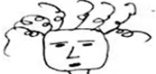
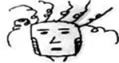
Thanks very much for coming down to the station, Mrs. Dalson.<br />I'd just like to go over some of the things that you told Officer Johnson at the bank.<br />All right.<br />Well, could you describe the man who robbed the bank for this report that we're filling out here?<br />Anything at all you can remember would be extremely helpful to us.<br />Well, just, I can only remember basically what I said before.<br />That's all right.<br />The man was tall, standing six feet seven, and he was bald, and he had a beard.<br />Very good. All right.<br />Did he have any other distinguishing marks?<br />Er, no. None that I can remember.<br />Do you remember how old he was by any chance?<br />Oh, well, I guess around 30, maybe younger.<br />Hmm. All right.<br />Do you remember anything about what he was wearing?<br />Yes. He had on a dark sweater, a solid colour.<br />Okay. Anything else that struck you at the moment?<br />I remember he was wearing a light shirt under the sweater.<br />All right, Mrs. Dalson.<br />I really appreciate what you have been through today.<br />I'm just going to ask you to look at some photographs before you leave if you don't mind.<br />It won't take very long. Can you do that for me?<br />Of course.<br />Now, listen again, please.<br />Thanks very much for coming down to the station, Mrs. Dalson.<br />I'd just like to go over some of the things that you told Officer Johnson at the bank.<br />All right.<br />Well, could you describe the man who robbed the bank for this report that we're filling out here?<br />Anything at all you can remember would be extremely helpful to us.<br />Well, just, I can only remember basically what I said before.<br />That's all right.<br />The man was tall, standing six feet seven, and he was bald, and he had a beard.<br />Very good. All right. Did he have any other distinguishing marks?<br />Er, no. None that I can remember.<br />Do you remember how old he was by any chance?<br />Oh, well, I guess around 30, maybe younger.<br />All right. Do you remember anything about what he was wearing?<br />Yes. He had on a dark sweater, a solid colour.<br />Okay. Anything else that struck you at the moment?<br />I remember he was wearing a light shirt under the sweater.<br />All right, Mrs. Dalson.<br />I really appreciate what you have been through today.<br />I'm just going to ask you to look at some photographs before you leave if you don't mind.<br />It won't take very long. Can you do that for me?<br />Of course.<br />Questions.<br />Seventeen.<br />What do we learn about the woman?<br />Which of the following is true about the suspect?<br />What did the man finally ask the woman to do?<br />According to the woman's description, which person is probably the suspect?
|
|


| 5. 语法填空(语篇) | 详细信息 |
After reading the passage below, fill in the blanks to make the passage coherent and grammatically correct. For the blanks with a given word, fill in each blank with the proper form of the given word; for the other blanks, use one word that best fits each blank.The term "killjoy parents" has been trending on Chinese social media platforms as many young people complain that their parents would rather criticize than (praise) them for their accomplishments. One poster, for example, remarked that his parents said his high score in math wasn't good enough because several other students had scored higher. Another complained that, after getting accepted into a "second-tier (二流的)" university, the response he got from his father was "Congratulations. You got admitted to a garbage university." It's a terrible feeling to have someone "burst your bubble" when you think they should be sharing your Joy. And your parents, after all, are probably the people you most want to share the best moments in your life. But why do some parents seem to be so hard to please? I think a lot of it has to do with Chinese society. Parents know that life can be full of hardship and difficulties, and they want their children to be hardened" to these realities. Another reason probably be found deep in Chinese culture. When I asked a Chinese friend Chinese parents don't praise their children, he said it's because they don't want to bring their children bad luck. He told me the story of two women sitting in a park and watching their children play. One of the mothers said to the other, "Your boy is so handsome and healthy." That other mother replied, "No, he's very ugly and he's a very sickly child." The mother, my friend explained, didn't want her son praised the "gods" heard and punished him. It's an old superstition (迷信), but it does have some basis in fact. American parents, at the other extreme, (teach) to never criticize their children because it may hurt their feelings their self-esteem (自尊). Instead, they are told to always praise their children, even for failure. Psychologists (心理学家) now believe this is a bad idea. According to one study, too much praise can result in negative effects. kids with low self-esteem felt even worse about themselves, kids with high self-esteem became narcissistic (自恋的) or self-centered. Moreover, children who got too much praise were (likely) to take risks, were unable to deal with failure, and tended to give up when (face) with challenges. Having "killjoy parents " may not be enjoyable, it' s important to recognize that their seemingly critical nature doesn't negate (否定) the love they have for you. In their hearts, they genuinely (真诚地) share in your joy. |
|
| 6. 选词填空(语篇) | 详细信息 | |
Fill in each blank with a proper word chosen from the box. Each word can be used only once. Note that there is one word more than you need.
Live Shows are back, and so are street stalls With the revival of live music gigs in China this year, stalls outside of concert venues have become increasingly popular again across the country. Vendors offer goods from essentials like water and raincoats to fan merchandise such as bracelets(手镯)and tattoo stickers. They aim to attract the large groups of fans going to the concerts. The China Association of Performing Arts (CAPA,中国演出行业协会)reported that in the first half of 2023, the country hosted over 190,000 performances. The number in-creased by 400.86% with the previous year. These performances have attracted over 60 million music enthusiasts. Another report that China's performance market would reach 90.3 billion yuan by the end of this year. "Where there are business opportunities, there is potential for stalls," said Hu Xiaowu, an expert on urban science. "As more concerts are organized in different cities, many young people have found the chance to sell goods related to the events." Zeng Dexiong, a professor of social sciences, believed more people would take of this new wave. This, he said, would probably bring about fierce competition, which in turn would lead to more creativity and . Sun Ximin,25, set up a stall as a side hustle when a large venue near her home in Guangzhou hosted its first concert in April. There weren't many stalls back then, and she sold simple hair accessories(配饰).When more vendors gathered outside, Sun had to offer more services, like braiding(编发),to stand out. To attract more customers,she styled her own hair in complex braids., she offered free Polaroid photos. For Li Zhenzhen, a 23-year-old citizen of Xi'an in Shaanxi province, success lies in seeking the best location. She found it was more beneficial to locate her stall near a subway station rather than the concert venue's entrance. She explained that concertgoers are likely to buy the goods on impulse(一时冲动)as they get out of the station. However, as they walk past stalls on the way to the entrance, their desire to purchase wanes. The rapid development of the street stall economy offers young people flexible opportunities to earn money, Hu noted. Recognizing this, local governments are now easing to encourage the entrepreneurial spirit. Cities like Beijing and Shenzhen have alreadypolicies to support stall operations, setting aside specific areas for vendors. |
||
| 7. 完形填空 | 详细信息 |
For each blank in the following passage there are four words or phrases marked A, B, C and D. Fill in each blank with the word or phrase that best fits the context.The last thing Jack wanted to do was wake up early and go to work on Monday morning. Getting out of the bus, Jack found there was still 30 minutes before his 1 began, so he2 to take a walk around the block to adjust(调整) himself to another busy working day. While walking, he3 a young couple talking to each other in a foreign language. "Excuse me! Could you help us please?" the woman called to him in strange English. "We are tourist, lost. Need ‘Dolphin' hotel. You know where is?" She was courageous as she spoke a (an)4 language. "I'm sorry, I don't know. I'm in a hurry," Jack said, and moved off. He was so upset about his problems that he5 without thinking. Having walked about 100 feet, he felt he was wrong and6 back. Luckily, the couple were 7 there. He walked up to them. "I remembered where the ‘Dolphin' hotel is. I'm sorry, I just got 8 : there are hundreds of hotels in New York. It's not far from here. you may9 there. Just go straight to that crossroad, then turn to the left, and you will see a white-blue building. That will be the10 you're looking for." The couple thanked him, and Jack11 lightly this time. But when he turned his back, he saw that the couple didn't move, and the look on their faces was the12 . "Maybe I was talking too 13 , and they couldn't understand me well enough", he thought. All of a sudden, he felt that he could do something more important than sit in his office all day long. He knew that he couldn't leave these young people behind: they couldn't14 get to the hotel by themselves. He walked up to them once again. They looked at him in surprise. "I could15 you to the hotel, if you still need my help," Jack said. For the first time since the beginning of this month, he felt relaxed. (1)
A .
plan
B .
walk
C .
trip
D .
work
(2)
A .
decided
B .
agreed
C .
remembered
D .
offered
(3)
A .
stared at
B .
laughed at
C .
ran into
D .
pointed at
(4)
A .
similar
B .
special
C .
artificial
D .
foreign
(5)
A .
refused
B .
lied
C .
said
D .
smiled
(6)
A .
turned
B .
won
C .
hit
D .
kept
(7)
A .
already
B .
almost
C .
still
D .
even
(8)
A .
amazed
B .
confused
C .
bored
D .
tired
(9)
A .
cycle
B .
walk
C .
fly
D .
drive
(10)
A .
hotel
B .
restroom
C .
tourist center
D .
bus station
(11)
A .
answered
B .
escaped
C .
left
D .
passed
(12)
A .
new
B .
good
C .
true
D .
same
(13)
A .
strangely
B .
loudly
C .
quickly
D .
nervously
(14)
A .
simply
B .
necessarily
C .
directly
D .
possibly
(15)
A .
drive
B .
guide
C .
follow
D .
introduce
|
|
| 8. 阅读理解 | 详细信息 |
阅读理解Computer programmer David Jones earns $35,000 a year designing new computer games, yet he cannot find a bank ready to let him have a credit card. Instead he has been told to wait another two years until he is 18. The 16-year-old works for a small firm in Liverpool where the problem of most young people of his age is finding a job. David's firm releases two new games for the fast growing computer market each month. But David's biggest headache is what to do with his money. Even though he earns a lot, he cannot drive a car, take out a mortgage, or get credit cards. David got his job with the Liverpool-based company four months ago, a year after leaving school with six O-levels and working for a time in a computer shop. "I got the job because the people who run the firm knew I had already written some programs" he said. David spends some of his money on records and clothes and gives his mother 50 pounds a week. But most of his spare time is spent working. "Unfortunately, computing was not part of our studies at school", he said. "But I had been studying it in books and magazines for four years in my spare time. I knew what I wanted to do and never considered staying on at school. Most people in this business are fairly young, anyway" David added, "I would like to earn a million and I suppose early retirement is a possibility. You never know when the market might disappear."
|
|
| 9. 阅读理解 | 详细信息 |
阅读理解Caves in the Sahara Desert In today's lecture we will center on the people who lived five thousand years ago in the Sahara Desert. Most of these desert people moved across the countryside throughout the year. But if the journey was long, extra food and tools were sometimes stored in caves. One of these caves is now an exciting historic site. Even though the cave is very large, it was certainly too dark and dusty for people to live in, but it was a great place to hide things. And huge amounts of food supplies and daily tools have been found there. The food includes dried fish and nuts. Some decorations were also found in the caves. There are necklaces, earrings, and so on. Most of them are made of bone. From the above talk, we can see that there are really a lot of differences between ancient people's lives and our lives today. The Houston Museum of Natural Science Welcomes all school groups to explore technology and the natural environment on a field trip designed to meet the learning needs of the students. You can visit the museum from Monday to Saturday from 9:00 a.m. to 5:00 p.m. Groups must have at least one teacher for every ten students. Students must be supervised at all times, and teachers are responsible for their behavior inside the museum. Unsafe behavior is not permitted and will result in the entire group being asked to leave. No backpacks, headphones, candy, gum, or lunches are allowed inside the museum. Lunches may be eaten outside in the park. We regret that the museum is unable to provide a place to have lunch indoors. In the event of bad weather, please plan to eat in your vehicle.
|
|
| 10. 阅读理解 | 详细信息 |
阅读理解Nobel Prize winner Tu Youyou helped by ancient Chinese remedy Tu Youyou, in China, is being called the "three noes" winner: no medical degree, no doctorate(博士头衔), and she's never worked overseas. However, it was she that was the first female Chinese scientist who had won the Nobel Prize. When it comes to her work, she is totally devoted. In 1967, malaria(疟疾) spread by mosquitoes was killing Chinese soldiers fighting Americans in the jungles of northern Vietnam. A secret research unit was formed to find a cure for the illness and Tu was instructed to become the new head of Mission 523. She went to the southern Chinese island of Hainan to study how malaria threatened human health. For six months, she stayed there, leaving her four-year-old daughter at a local nursery. Her husband had been sent away to work at the countryside at the height of China's Cultural Revolution, a time of extreme political disorder. Despite much failure, finally, she with her team members found a brief reference to one substance, sweet wormwood (in Chinese Qinhao), which had been used to treat malaria in China around 400 AD. The team tested the drug but they didn't succeed until Tu Youyou returned to the original ancient text. After another careful reading, she heated the extract without allowing it to reach boiling point. Without any hesitation, Tu Youyou volunteered to be the first human recipient of the new drug." As the head of the research group, I had the responsibility," she explained to the Chinese media. Tu Youyou is typically described in China as a "modest" woman. Her work was published anonymously(匿名地)in 1977, and for decades she received little recognition for her research. In any case, Tu Youyou is consistently praised for her drive and passion. One former colleague says Ms Tu is "unsociable and quite straightforward", adding that "if she disagrees with something, she will say it". Another colleague who has worked with Tu Youyou for more than 40 years, describes her as a "tough and stubborn woman". She is actually stubborn enough to spend decades piecing together ancient texts and apply them to modern scientific practices. The result has saved millions of lives.
|
|
- 浙江省精诚联盟2021-2022学年高二上学期12月联考英语试题
- 广东省惠州市惠阳区中山中学2021-2022学年高一上学期英语期末质量检测
- 浙江省山河联盟2021-2022学年高二上学期12月月考英语试卷
- 浙江省宁波市慈溪2022届高三上学期12月适应性考试英语试题
- 浙江省金丽衢十二校2022届高三上学期12月第一次联考英语试题
- 浙江省嘉兴市桐乡市2021-2022学年高一上学期12月阶段教学质量检测英语试题
- 浙江省湖州市2021-2022学年高三上学期英语12月选考模拟(二)
- 浙江省北斗星盟2021-2022学年高二上学期12月阶段性联考英语试卷
- 广东省六校联盟2022届高三下学期第六次联考英语试题
- 新疆喀什市普通高中2021-2022学年高一下学期期末考试英语试题
- 新疆喀什市普通高中2021-2022学年高二下学期期末考试英语语试题
- 天津市和平区2021-2022学年高二下学期期末英语试题
- 已知点P(a-1,a+2)在平面直角坐标系的第二象限内,则a的取值范围在数轴上可表示为(阴影部分)( )
- 不等式组的解集在数轴上表示正确的是() A.B.C.D.
- It’sonly after three weeks into a new job that I made a se
- 下列关于育种的说法,错误的是 A.利用花药离体培养得到单倍体烟草植株
- 下列各句中,没有错别字的一项是( ) A.房价下跌20%后会不会诱发恐慌性抛售,抛售现象出现后有关方面能否采取
- 一些寓言故事虽然讲的是很具体的事例,但往往有很广泛的借鉴意义。这是因为( ) A矛盾的特殊性寓于普遍性之中 B矛盾的普遍
- 文言文阅读(14分)梁王嗜果,使使者求诸吴,吴人予之桔,王食之美。他日又求焉予之柑王食之尤美。则意其犹有美者,未予也,惎
- 下列说法中正确的是( ) A.原子间通过共价键而形成的三维网状结构的晶体一定具有高的熔、沸点及硬度 B.P4和C
- 生活中有许多光现象,下图所示的四种光现象中,属于光的直线传播现象的是 ( )
- 读下图,回答下列问题。(1)甲、乙两图所反映的气候特征中,与上图中A城市气候特征相吻合的是______地(填甲或乙),从
- 在 从2011年到2014年期间,甲每年1月1日都到银行存入元的一年定期储蓄。若年利率为保持不变,且每年到期的存款本息均
- 6.依次填入下列横线处的语句,与上下文衔接最恰当一项是 ( ) (1)在众多的杰出人物中,
- 给下面一段新闻加上引题和正题,注意字数要求。 北京讯 新近成立的中国国家发展和改革委员会第一号公告,直击社会方方面面关注
- (12分)阅读材料,回答问题。 材料一 “两千多年前,孔子有一次谈到自己的梦。“久矣!吾不复梦见周公。” ……在王室衰
- 已知函数,. (1)求函数的最小正周期和单调递增区间; (2)求函数在区间上的最小值和最大值,并求出取得最值时的值.
- 已知 (1)H2(g)+1/2O2(g)===H2O(g) △H1=a kJ·mol-1 (2)2H2(g)+O2(g
- 不同的植物,开花的年龄不同,开花的季节和时间也不一样。冬小麦秋季播种萌发,第二年夏初开花和结果,对这类植物来说,秋末冬初
- 下图表示某地区农业生产投入的变化过程,完成10-11题10.图中农业生产投入中,人类活动对自然因素改造比较明显的是 A.
- 社情民意反映制度是公民参与民主决策的重要形式。在这里“民意”与“决策”密切相关。下列说法正确的是 ①民意是正确决策最重要
- If you are a Lefty, then Left Handers Day is just for you!


