备战2021年中考英语专题复习——单词拼写 卷四(真题)
教材科目:英语
试卷分类:中考
文件类型:.doc
发布时间:2026-07-01
授权方式:免费下载
下载地址:点此下载
以下为试卷部分试题预览
| 1. 单词拼写(词汇运用) | 详细信息 |
|
根据短文内容和所给中文提示,写出空白处各单词的正确形式。每空限填一词。
Dear Future Self, This is you from ten years ago, the same girl that you used to be, I am sitting in my grade seven classroom, staring outside. Now, trees with green leaves seem so tall and (笔直的). Do you still find them large? Or perhaps they seem small to you now? Do you still find the squirrels cute? Do you still have a strong love for (动画片) Or perhaps are all of these childish for you? I (想知道)if my friends now are still friends with you, ten years later? Are you still in touch with them? Can you tell me how my high school graduation went? Did you like sitting and (听) to the headmaster and teachers speak? And can you tell me what I will become in the future. Am I a doctor? Am I a teacher, engineer, officer, (科学家), or writer? I'm not sure what I want to be but I'm sure that you have (已经)known. That reminds me, did I do well on my math test (昨天)? Oh. I've always wanted to travel around the world! Did you visit Japan, (加拿大), Italy, the United States or China yet? Or did you visit Russia, South Korea or Australia instead? Life will always (继续). Please remember all the happy times and all the terrible times, Please remember me, the you who (生活) ten years ago. Yours, Ten Years Past Self |
|
| 2. 单词拼写(词汇运用) | 详细信息 |
|
根据短文内容和所给中文提示,在空白处写出正确的单词。每空限填一词。
Smoking has not been allowed in public places in England since July 2007. This was a successful (决定)made by the government in years. It was popular with most people. In a survey last month, 78% of the people said they would still (支持) the smoking ban. It is now much more pleasant to go into a pub or a (餐馆). Before that, pubs were filled with smoke which made you cough and made your hair and clothes (发出气味). However, (最近), a study shows that 16% of the bar and pub owners are upset to notice a drop in business, because smokers prefer killing time at home and (很少地) go out for a drink. No smoking in public places is good for people's (健康). 400, 000 people in England have given up smoking (慢慢地) and the number of people with heart problems has fallen by more than 2%. It also has a good (影响) on non-smokers. For example, the number of children with asthma has dropped by around 20%. |
|
| 3. 单词拼写(词汇运用) | 详细信息 |
|
阅读下面短文,然后根据括号内所给汉语意思写出单词的正确形式(每空一词)。
Cooking was once regarded as a necessary part of education in England. But in recent years, it has become less important in schools. As a result, (基础的) cooking and food preparation skills are being lost. It is also making more children overweight, as parents use too much fast food that is (有害的) to their health. The government is worried and is looking for ways to (解决) the problem. A new law has been passed. All secondary schools should offer cooking (课程) to students aged from 11 to 14 years old. They hope that this will encourage people to cook instead of eating (准备好的) meals, fast food and snacks. Students will learn to cook for one hour a (星期) for one term. They will learn to use simple and fresh ingredients (原料) to prepare healthy, tasty food, following (说明). These cooking skills will be helpful in their future life. Schools are also setting up cooking clubs all over the country. The clubs will (提供) more children with the chance to learn to cook. There are still difficulties. Head teachers are worried about the things they will need for the cooking. And about 15% of schools do not have (厨房) and there are not enough teachers. The speaker from the government (允诺) to train 800 teachers and to give schools2.5 million pounds a year to help children from poorer families to pay for ingredients. |
|
| 4. 单词拼写(词汇运用) | 详细信息 |
|
根据短文内容和首字母提示,把文中所缺词语补充出来,使短文完整正确(每空限填一词)。
In some western countries, some people don't like the number 13 because they think 13 is an unlucky number. For example, they don't like to live on the thirteenth floor. One evening, Mr. Smith asked some friends to get t. When all of his friends arrived, he asked them to sit at the table for d. He began to c the people. Suddenly, he cried out, "Oh, there are thirteen people here!" Everyone's face looked pale e Mr. Brown. He said with a smile, "Don't wont', my friends. My wife will have a baby in a few weeks. So we have f people here." All of the friends became happy again. "Congratulations!" they said to Mr. Brown. They all had a good time that evening. |
|
| 5. 单词拼写(词汇运用) | 详细信息 |
|
阅读下面的短文,根据短文内容及首字母提示,在短文空白处填入一个恰当的词,使短文内容完整,通顺。
Most adults find it hard to remember the things happened while they were children. Now scientists have found exactly when these memories d. A new study has found that most three-year-old children can remember a lot of what happened to them a year e, and these memories are still clear while they are 5 and 6, but by the time they are over 7, these memories become weaker r. Most children by the age of 8 or 9 can only remember 35% of their e from under the age of 3 according to the new studies. The scientists say this is because at around this age the way we form(形成)memories begins to change. They say that before the age of 7 children do not have a s of time and place in their memories. In older children, however, the early things they can remember become more adult-like in the way they are formed. Children also have a far faster speed of f than adults. The discoveries also help to explain why children can often have clear memories of what they have done, b then forget them just several years later. The children were organized to the laboratory for the first time at the age of 3 and discussed 6 impressed(印象深刻的) things from their past, such as the first relaxing trip with your family, the first d accident you met, and the first day of school. The children then returned for a second s between the ages of 5 and 9 to discuss the same things. The scientists found that between the ages of 5 and 7,the amount(量)of memories that the children could remember r between 63%~72%. However, between the ages of 8 to 9, the amount of memories that the children could remember fell to between 35%~36%. |
|
| 6. 单词拼写(词汇运用) | 详细信息 |
|
请根据短文内容及首字母提示,填入所缺单词。
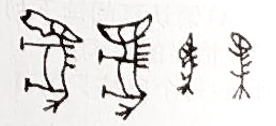
Chinese writing is one of the world's greatest writing systems. It is more win use than alphabetic(字母的) writing systems. More than half of the world's books are written in Chinese, including historical writing and novels, along with writing on government and law. At the beginning, written Chinese was a picture-based l. It dates back several thousand years to the uof animal bones and shells on which symbols were carved(刻) by ancient Chinese people. Some of the ancient symbols can still be seen in thanzi. By the Shang Dynasty, these symbols had become a well-developed writing system. Over the years, the system developed into different forms, as it was a time when people were dgeographically, leading to different dialects(方言 ) and characters. This, however, cunder Emperor Qinshihuang of the Qin Dynasty. Emperor Qinshihuang united 统一) the seven major states into one country where the Chinese writing system began to develop in one direction. That writing system was of great iin uniting the Chinese people and culture. Even today, no matter where Chinese people live or what dialect they speak, they can all still cin writing. Written Chinese has also become an important method to cChina's present with its past. People in modern times can read the classic works which were written by Chinese in ancient times. Today, Chinese writing system is still an important part of Chinese culture. As China plays a g role in the world, an increasing number of international students are beginning to appreciate(欣赏) China's culture through this amazing language. Written Chinese spreads Chinese culture wherever it goes. |
|
| 7. 单词拼写(词汇运用) | 详细信息 |
|
根据所给首字母、上下文或汉语提示完成空格中所缺单词,使短文完整通顺,语法正确。每空只能填一个词。
The Chinese high-speed railways have a quality all on its own. Tier 1(一线) c like Beijing have a couple hundred high-speed trains stopping at the city every day. China's (科技) on building the railway is leading the rest of the world. There is no sign that any country could be better than China in near future. I had my (第一次) opportunity to ride the high-speed trains last week when I had a business meeting in Zhengzhou. As someone w grew up with a disdain (偏见) for public transportation (not sure why the US hates it so much), I was afraid the experience. I hoped to fly, but was told that it would be much better if I (乘) the train. The train was amazing. I had traveled on a train before in the US, and hated how s it was and how many stops there were. Chinese high-speed trains are on a different level. The trains are clean and the seats are huge. You can't even (感觉) how fast the train is moving. If there were no windows, I wouldn't be a to tell when we were stopped or when we were traveling at 300 km/h—it is that smooth. I'm traveling again this week by train and I'm excited. |
|
| 8. 单词拼写(词汇运用) | 详细信息 |
|
根据短文内容及所给首字母提示写出所缺单词,使短文意思完整,每空一词。
As I entered an international high school, all my friends felt surprised at my short hair. This is because, my old school thinks teenage y aren't the time for looking pretty. Then I coloured my hair blue. For the first time, I felt free and beautiful. This international school s to meet my needs. I had a t education background. I went to public schools, received normal (常规的) education and was required to follow r like every other student. Later, I began to wonder w this education was truly suitable for me. However, in the new school my high hopes were not met. For a while, I found myself in a surprising situation as I faced before. It was s the biggest challenge I faced in my education-the freedom to try new things. In the old system, I was strongly advised a trying new things. But in my new school, it worked the opposite way-we had many chances to try new things. But if I f, I must be responsible (负责任的) because I put myself in such risk. Finally, it led me to get into trouble again. As time went by, I started to find my o balance. In fact, none of the education systems in the world are perfect. I am l enough to have a chance to bring great value from both systems together. As a result, I've built a system for myself. |
|
| 9. 单词拼写(词汇运用) | 详细信息 |
|
请认真阅读下面短文,并根据各题所给首字母的提示,写出一个合适的英语单词完整、正确的形式,使短文通顺。
Nothing is impossible to a willing heart. A short video about seven people wearing prosthetic devices(人造装置) who t on a desert race challenge has become popular. The seven disabled people jin the 108-kilometer desert race from May 11 to 14 in Dunhuang, Northwest China's Gansu Province. Six of the seven had one leg amputated(截肢), and ohad two legs amputated. Cheng Baojun, a man from Luohe, Central China's Henan Province, the double amputee, said he never i he could take part in the desert race. "It is great, I can do it, and you can also." "It is easy to say, but walking it is h." Cheng said. On the first day, they finished a complete section of 27 kilometers of the race, and on the second day, they finished 20 kilometers. "My legs were painful while I was walking. We also met with a very big sandstorm on the way. But s it was a challenge, we could not give up. We all encouraged each other to continue." he said. After getting t, they rested on the third day and walked on the fourth. Lao Tongyi walked the longest of the group, a distance of more than 70 kilometers. Team leader SunNaicheng said that they had to p through depulation (人烟稀少) areas of the Gobi Desert. He also added that team members challenged themselves and realized their d . They are good e for everyone to learn from. It's up to you how far you go. If you don't try, you will never know. |
|
| 10. 单词拼写(词汇运用) | 详细信息 |
|
阅读下面短文,根据中文、首字母、音标及语境提示,填写所缺单词,使短文意思完整,每空限填一词。
Ali and Albert were brothers. Their parents away early and left them a cow. The brothers were going to share the cow. Albert is an ['ɒnɪst] man and he listened to everything that his elder brother said. But Ali was cunning(狡猾的). One day, Ali said," I will be very (公平的) with you, Albert. You take the front pait of the cow and I will take the hind(后面的) side of the cow. Each of us can use we get. But we can't kill it.” Albeit gave the cow grass and water every day. The cow made lots of milk. Ali s the milk and got a lot of money. But he did not share the money with Albert. Albert felt a bit u . A (邻居) knew about this and said something to Albert. The next day, when Ali was milking the cow, Albert hit the cow in the head. The cow started k . Ali shouted to Albeit, "Don't you see me milking the cow?" “"The front part of the cow is, and I can do anything I want." Albert said angrily. Ali knew he was wrong and said sorry to Albert. From then on, the brothers fed the cow [tə'geðə] and shared the money from selling milk. Both of the brothers lived happily after that. |
|
- 浙江省外研版初中英语九年级上册期末复习(题型专练):书面表达
- (浙江)外研版初中英语八年级上册期中复习(题型专练):阅读理解
- 浙江省义乌市六校联考2019-2020学年七年级上学期英语第一次质量检测试卷(含小段音频)
- 牛津译林版初中英语九年级上册Unit 3单元测试
- 贵州省贵阳市白云区2019年中考英语一模试卷
- 浙江省杭州市萧山区城厢片五校2020届九年级上学期英语入学检测试卷(含小段音频)
- 外研(新标准)版初中英语2018-2019学年八年级上册Module 3 Unit 2 This year we are training more carefully 同步练习
- 外研(新标准)版2018-2019学年初中英语七年级上册Module 2 My family Unit 2 These are my parents. 同步练习
- 中考英语专题复习——语音和交际(真题)
- (新版)人教新目标版七年级英语下册 Unit 6 I’m watching TV Section A同步练习
- 外研(新标准)版九年级下册Module 1 Unit 1 课后小练习
- 北师大版初中英语九年级Unit 9 综合检测卷
- 2.下列各句中,没有语病的一句是( ) A.今日A股再次暴跌,截至收盘,沪指跌近6%,险守3500点。高速、铁路、
- 关于自由落体运动,下面说法正确的是 A.它是竖直向下,v0=0,a=g的匀
- 下列事实和解释相符的是 A.干冰用作致冷剂——干冰是冰 B.石墨可作电极——石墨具有润滑性 C.用炭黑墨汁书写的字经久不
- 下列句子中,没有语病的一项是(2分) ( ) A.针对舆论反映电影植入广告过度的问题,国家广电总局指出,能否打击盗
- 若α,β是方程x2﹣2x﹣3=0的两个实数根,则α2+β2的值为()A. 10 B. 9 C. 7 D. 5
- “猫叫综合症”是人的第5号染色体部分缺失引起的,这种遗传病的类型是( ) A.常染色体单基因遗传病
- 阅读下文,完成文后各题。 曹仁字子孝,太祖从弟也。豪杰并起,仁亦阴结少年,得千余人,周旋淮、泗之间,遂从太祖为别部司马,
- 下列性质的比较,错误的是 A. 稳定性 HI < HBr < HCl < HF
- 材料一:经考察“水泥+鼠标”,或者说砖瓦实体加信息技术才是传统商业银行数字化和网络化变革的正确方向。戴相龙表示支持商业银
- All (1)_______ things must fight to stay alive. They have
- 作为一种洁净能源,风能的开发越来越受到人们的关注。读陆地与海上风速剖面比较图,回答1-2题。1.随着高度的增加,风速 (
- 下面是两种生物细胞模式图,请据图回答: (1)图中所示的甲是 (填“植物”或“动物”)细胞。(2)动植物细
- 用大小不同的力弹奏同一个琴键,发出声音的 不同;用大小相同的力弹奏不同的琴键,发出声音的 不同;用大小相同的力
- 已知X、Y和Z三种元素的原子序数之和等于42。X元素原子的4p轨道上有3个未成对电子,Y元素原子的最外层2p轨道上有2个
- 某静电场沿x方向的电势分布如图所示,则 A.在0―x1之间不存在沿x方向的电场 B.在0―x1之间存在着沿x
- 中国“神州七号”宇航员翟志刚在太空出舱时,从太空中观察地球,发现地球是一个蔚蓝色的美丽星球,这是因为 A.天空是蔚蓝色的
- 实践与表达(40分)请以“____________也是一种幸福”为题,写一篇文章。要求:①先在横线上填上恰当的词语(如“
- 向Cu(NO3)2溶液中加入一定量的铁粉充分反应,下列情况中可能出现的是( ) ①溶液中有Fe2+、Cu2+、不溶
- 某同学在做“研究匀变速直线运动”的实验: (1)实验室提供了下列的实验器材: ①电火花打点计时器
- 日本曾于旧历甲午年发动了侵华战争,故此次战争称为甲午中日战争。那么这里的甲午年指的是( ) A.1894年


